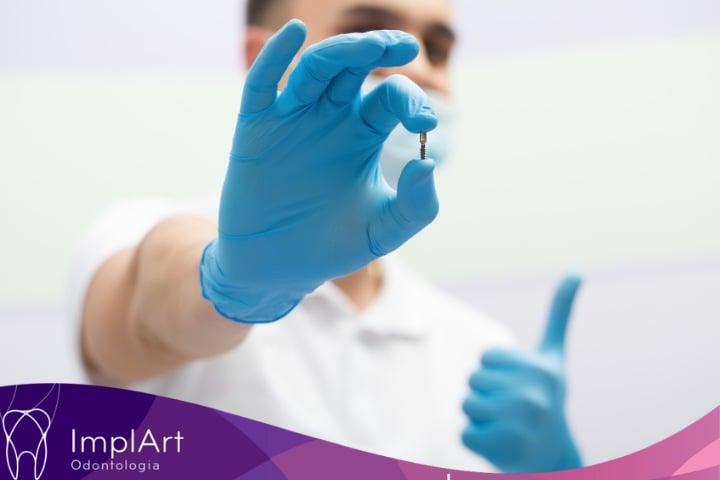
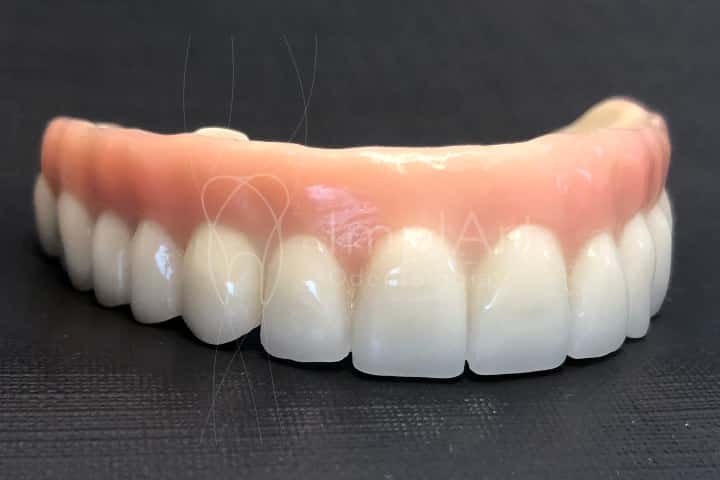
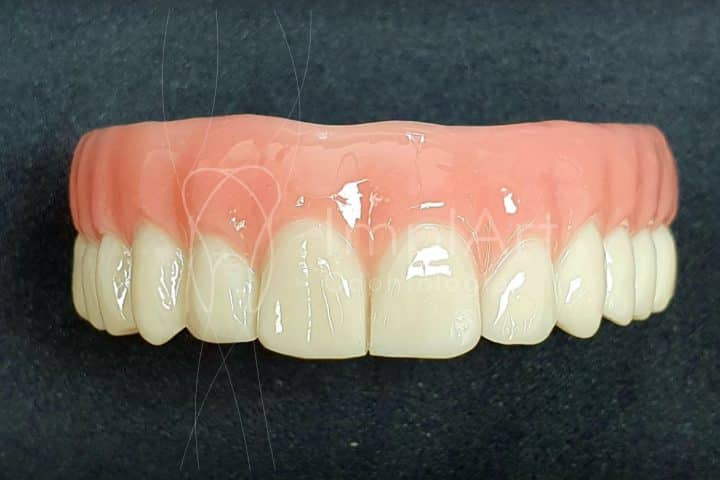
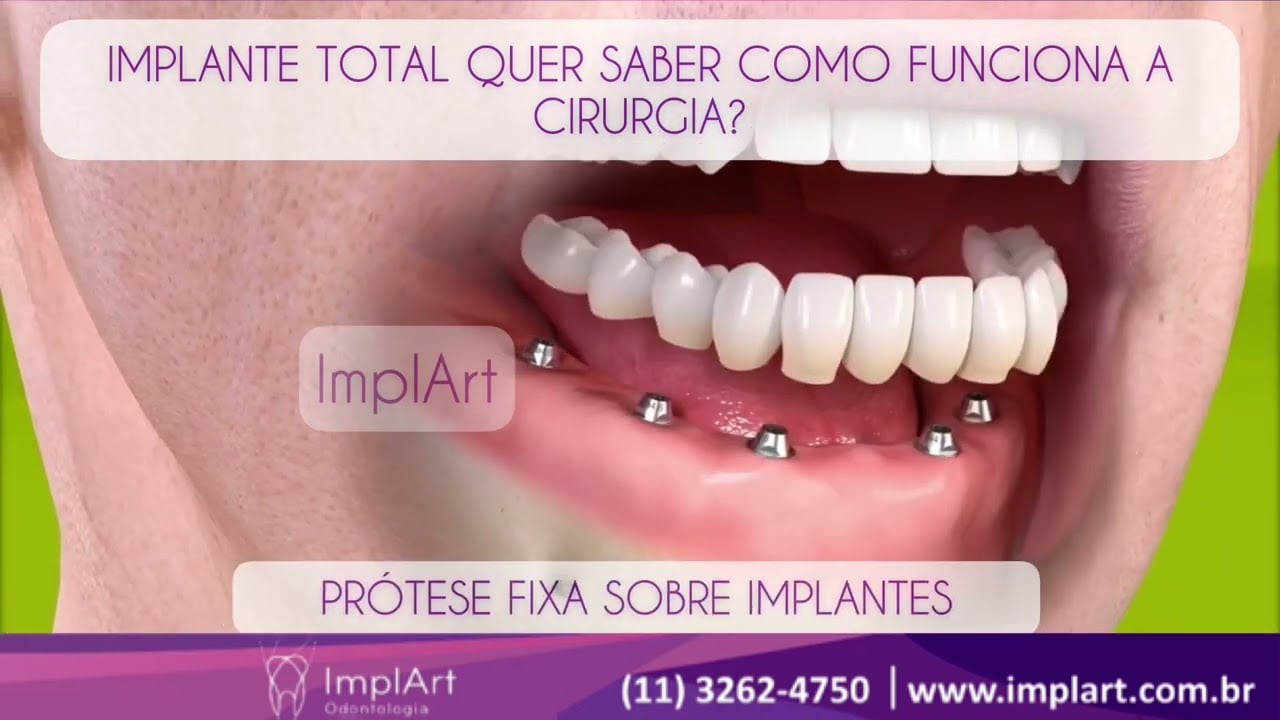
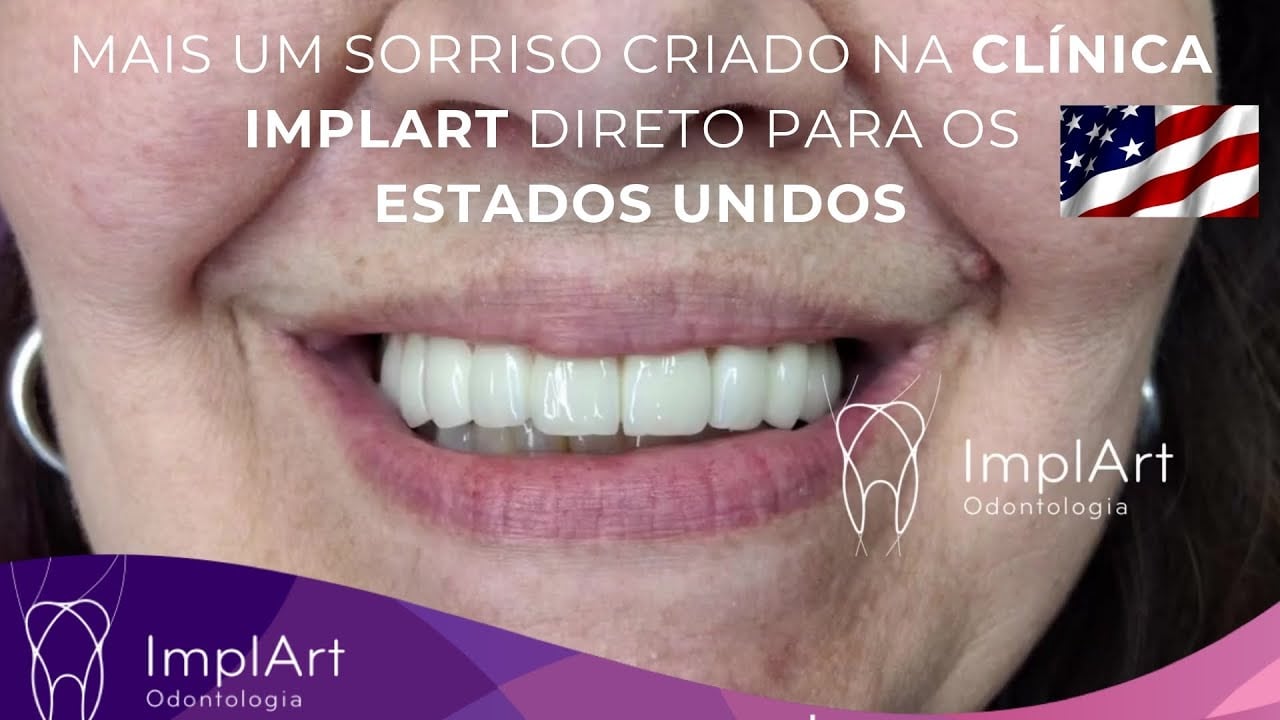
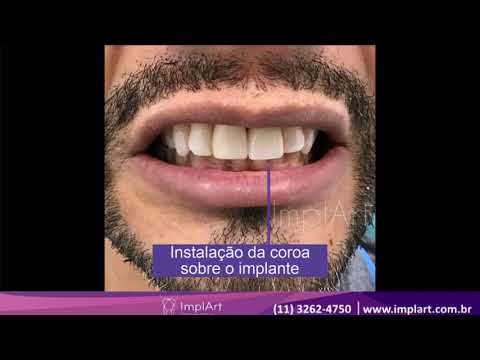
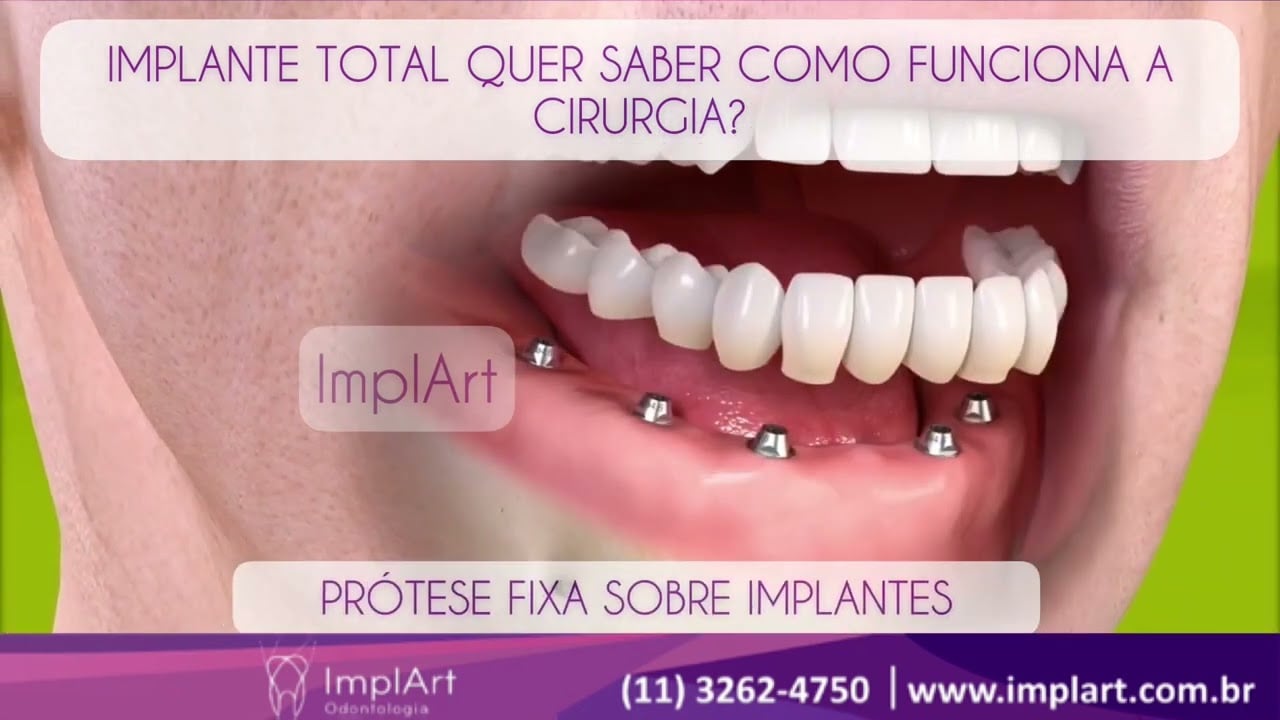
This treatment is also known as Fixed Full-Arch Prosthesis or Implant-Supported Denture. This type of implant treatment for all teeth, allows patients to regain their smile and chew.
Dental implant surgery is currently a fairly straightforward operation, carried out in an office or hospital environment, with hospitalization for the patient’s comfort. Implants make it possible to replace missing teeth even in large areas of the arch, including in patients with all their teeth compromised by periodontal disease. They can also be used in patients with bone loss, who may need bone grafting before or during the installation of the dental implant.
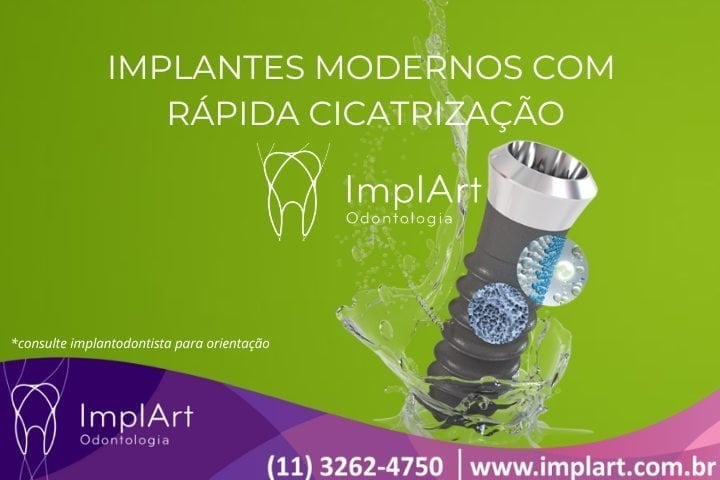
It is important to note that there are currently different types of dental implants, and the most modern ones, cone morse implants, allow for faster healing.
Full Arch Dental Implants . Implant-Supported Denturestep by step
With regard to the end result, the aim is to obtain fixed dental prostheses that will remain supported on the implants. This will allow the patient to regain their masticatory function and aesthetics.
Of course, as Fixed Full-Arch Prosthesis are screwed onto dental implants, the result is a very efficient dental prosthesis for chewing, as well as excellent aesthetics and comfort.
It is therefore a much better solution than a removable prosthesis, as it provides excellent fixation and stability. In the upper arch, the full arch dental implants treatment has the added advantage of completely uncovering the palate (roof of the mouth), which improves patient comfort.
Unlike removable prostheses (dentures), which cover the roof of the mouth to allow them to be fixed and make it difficult to perceive the taste of food, All-on-X prostheses with implants are thin and occupy only the region of the dentition, leaving the rest of the mouth free, similar to the situation found when there are natural teeth. Currently, the most modern materials are the Zirconia Fixed Full-Arch Prosthesis and the Porcelain Prothesis on a Full Arch DentalTreatment.
After radiographic examinations and a CT scan of the jaws, the dental implant specialist will be able to analyze the ideal planning for the case and thus indicate bone complements such as grafts to better prepare the bone if necessary.
The jaw bone (lower arch) is more rigid and resistant, so dental implants can be installed in most cases. The upper jaw bone, on the other hand, is less dense and delicate and has a more complex anatomy.
Certainly the proximity to the nose, the maxillary sinus cavities and the greater bone loss require further study.
Full Arch Dental Implants With or Without Bone Graft ?
If bone grafting is necessary, don’t be alarmed – it’s very common. Of course, dental grafting for full archa implants is not necessarily complicated, invasive or large. On the contrary, most of the time the bone graft for a full arch implant is simple, small and restricted to the position of the implant.
Less invasive implant surgery: in our clinic we use current concepts of minimally invasive surgery for dental implants, which make the procedure faster and offer greater comfort during the procedure and especially during the healing phase of the dental implant.
Computer-guided implant surgery: this is a type of dental implant surgery offered at our clinic that is planned by computerized scans of the jaws.
Full Mouth Reconstruction Prosthesis and other types
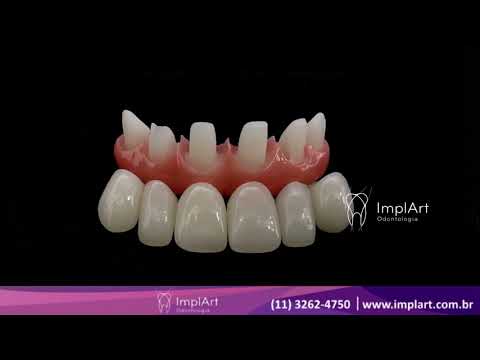
Certainly the most common prosthesis for implanting all the teeth in a full arch is the so-called protocol prosthesis. This is a resin prosthesis with a metal reinforcement bar inside.
Over time, however, more modern ways of making complete implant prosthesis have emerged. At the ImplArt Dental Clinic, we offer more technological implant materials, which are completely made on our premises and in our own dental prosthesis laboratory (see more):
If you have any questions, please make an appointment or contact us and make an appointment with our clinical director, Dr. Roberto Markarian, an implant dentist. We will be happy to assist you. The ImplArt Dental Clinic has a modern structure to serve patients and highly specialized professionals.
Full Arch Dental Implants - All-on-4 - All-on-6 - All-on-X
Dr. Roberto Markarian is a reference in dental implants and computerized dental prostheses in Brazil. As well as having more than 10,000 implants installed, he is a researcher who produces knowledge that is published worldwide in renowned scientific journals in the field of dentistry. He is responsible for promoting knowledge and high technology applied to all the treatments offered by the ImplArt Clinic.
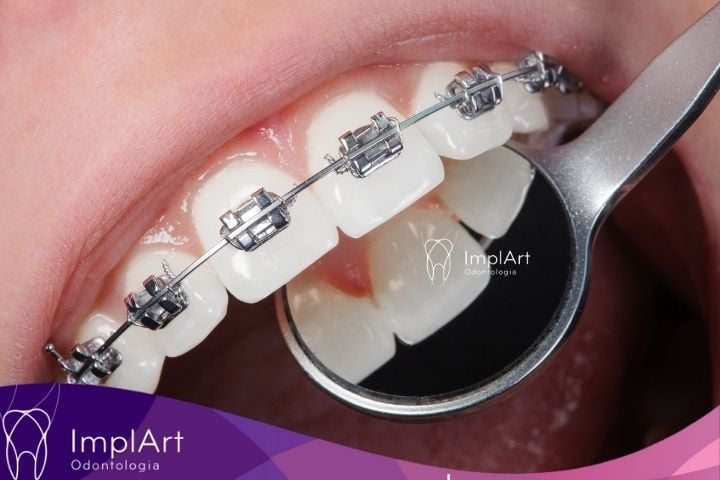
The combination of aligners or braces and dental implants is essential to ensure a complete, functional and aesthetic smile. When a tooth is lost, neighboring teeth tend to move and occupy the empty space, causing misalignment, incorrect bite and even chewing difficulties. Without proper replacement with an implant, this movement can compromise the tooth structure and even cause bone loss.
Orthodontic treatment, especially with innovative solutions such as Invisalign, repositions teeth precisely, correcting misalignment and creating the right space for a dental implant. The implant replaces the lost tooth permanently, restoring aesthetics, chewing function and preventing further tooth displacement.
At ImplArt Dental Clinic, this integration is carried out with state-of-the-art technology and a highly qualified multidisciplinary team, guaranteeing long-lasting and personalized results for each patient. In this article, you will understand how implants and orthodontic appliances can guarantee a harmonious, functional and long-lasting smile.
Braces and dental implant treatment combined to reposition teeth and re-establish bite
Why Integrate Braces and Implants?
The absence of a tooth directly affects oral health and the harmony of the smile. Therefore, treatment with braces will allow for better alignment of the teeth, whether for treatment with implants, dental crowns or even dental contact lenses. Integrating braces and implants treatment offers many benefits:
1. Braces and Implants: Correct Replacement of Lost Teeth
Without adequate replacement of the missing tooth, neighboring teeth tend to lean in and occupy the empty space. Orthodontic treatment realigns these teeth, preparing the site for insertion of the dental implant.
The lack of stimulation in the area of the missing tooth causes bone resorption. The dental implant is integrated into the bone, preserving bone density and preventing changes to the facial structure.
3. Braces and implants:Bite correction and chewing function
Misaligned teeth compromise bite and chewing. Braces reposition the teeth, while dental implants complete the chewing function.
The Role of Invisalign in Preparing for Dental Implants
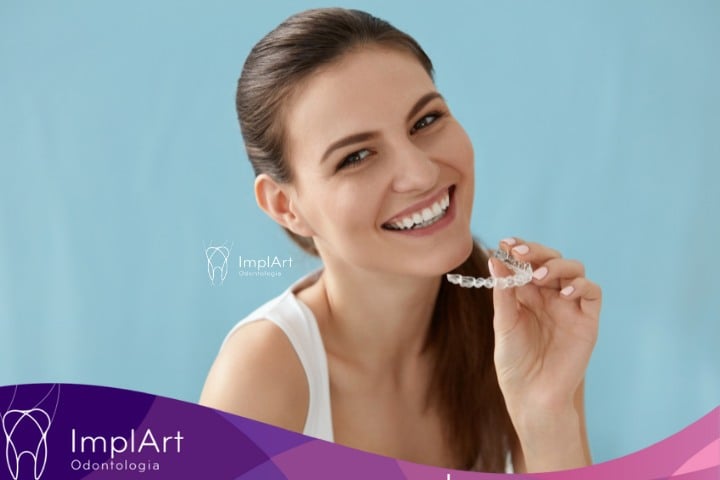
Invisalign is a transparent, comfortable and effective orthodontic aligner, ideal for preparing the smile for the placement of dental implants. It corrects the position of the teeth discreetly and efficiently, creating the necessary space for the installation of the dental implant.
Advantages of Invisalign for Integration with Implants
Discretion and Comfort: Almost invisible aligners, which do not interfere with aesthetics during treatment.
Removable: Facilitates oral hygiene and food consumption.
Digital Planning: Allows you to visualize all the stages of the treatment before it even begins.
Braces and implant treatment: Invisalign to align and implants to replace missing teeth
Zirconia Implants: The Best Aesthetic Option
Zirconia implants are the ideal solution for patients looking for aesthetics and biocompatibility. As well as being metal-free, these implants offer a more natural appearance, especially in the anterior region of the mouth.
Benefits of Zirconia Implants
Superior Aesthetics: Natural appearance without the risk of metal exposure.
Biocompatibility: Totally safe and hypoallergenic.
High durability: Superior resistance to wear and fractures.
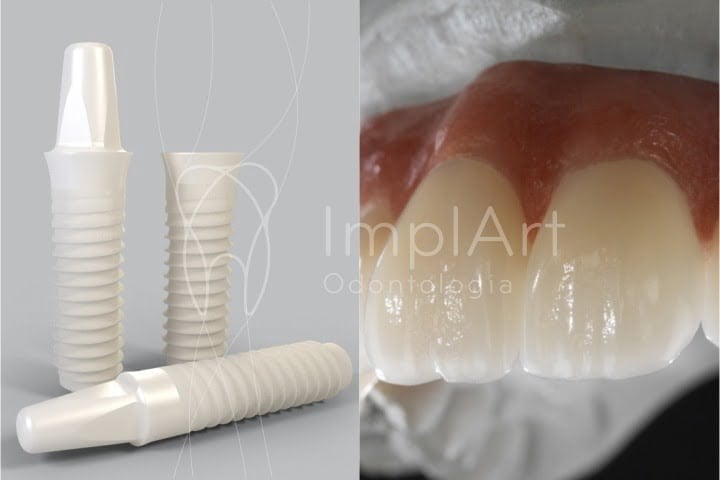
Zirconia implant and zirconia prosthesis the ultimate combination
Zirconia Implants and Prostheses: The Perfect Aesthetic Solution
Zirconia implants, offered at the ImplArt Clinic, are the most modern and aesthetic solution for rehabilitating smiles. This metal-free material provides natural, long-lasting results.
Benefits of Zirconia Implants:
Natural Aesthetics: The white color of zirconia resembles natural teeth, without metallic interference.
High Biocompatibility: Ideal for patients looking for safe and hypoallergenic materials.
Durability and Resistance: Highly resistant material, guaranteeing a long service life.
In addition, dentures made with zirconia are customized for each patient, ensuring a perfect fit and a natural appearance. 👉 Types of dental prosthesis materials
Digital Planning: Integrating Orthodontics and Implantology
At the ImplArt Clinic, the use of advanced technology, such as the 3D scanner, 3D digital tomography and guided surgery, allows for integrated planning between Invisalign and the implants. This process guarantees precision at every stage of treatment.
“The integration of orthodontics and dental implants is essential for restoring not only the aesthetics but also the full functionality of the smile. Aligning teeth precisely and repositioning implants at the right time guarantees long-lasting results and significantly improves patients’ quality of life.” – Dr. Roberto Markarian, specialist in implant dentistry and clinical director of the ImplArt Clinic.
Perfect Smile with Aligners or Braces and Dental Implants
Planning stages:
Initial Assessment: Clinical and digital analysis with Dr. Roberto Markarian, implantologist and director of the ImplArt Clinic, to understand the patient’s needs.
Coordination between specialists: Orthodontists and implant dentists work together to align teeth and fill spaces.
Precise execution: With digital technology, implants are optimally positioned to ensure functionality and aesthetics.
The ImplArt Clinic uses the most modern technologies to integrate orthodontics and implants precisely and safely. These include:
3D Computed Tomography: Complete assessment of bone and tooth structure.
Digital Planning and Guided Surgery: Precise definition of implant positioning.
Digital Prosthesis Laboratory: We make prostheses with a perfect fit and incomparable aesthetics.
➡️ See how we apply cutting-edge technology to our treatments:
Why Choose the ImplArt Clinic?
The ImplArt Clinic is a reference in personalized treatments that combine orthodontics and implantology. We offer:
Schedule your personalized assessment to find out more about our solutions: 👉 Contact us
Perfect Smile with Aligners or Braces and Dental Implants
Conclusion: Complete Smile with Orthodontics and Dental Implants
The integration between orthodontic treatment and dental implants is essential to guarantee an aesthetic, functional and long-lasting smile. The use of Invisalign to align the teeth and create the appropriate space for the placement of zirconia implants is the complete solution for those seeking excellence in oral health.
At the ImplArt Clinic, we combine cutting-edge technology, specialized professionals and personalized service to transform smiles and improve the quality of life of our patients.
⭐The ImplArt Dental Clinic is located in São Paulo and welcomes patients from all over the world. If you would like to know more about our treatments, ask questions about root canal treatment, dental implants in São Paulo, and schedule an appointment 📲WhatsApp(11) 99598-1866.
Perfect Smile with Aligners or Braces and Dental Implants
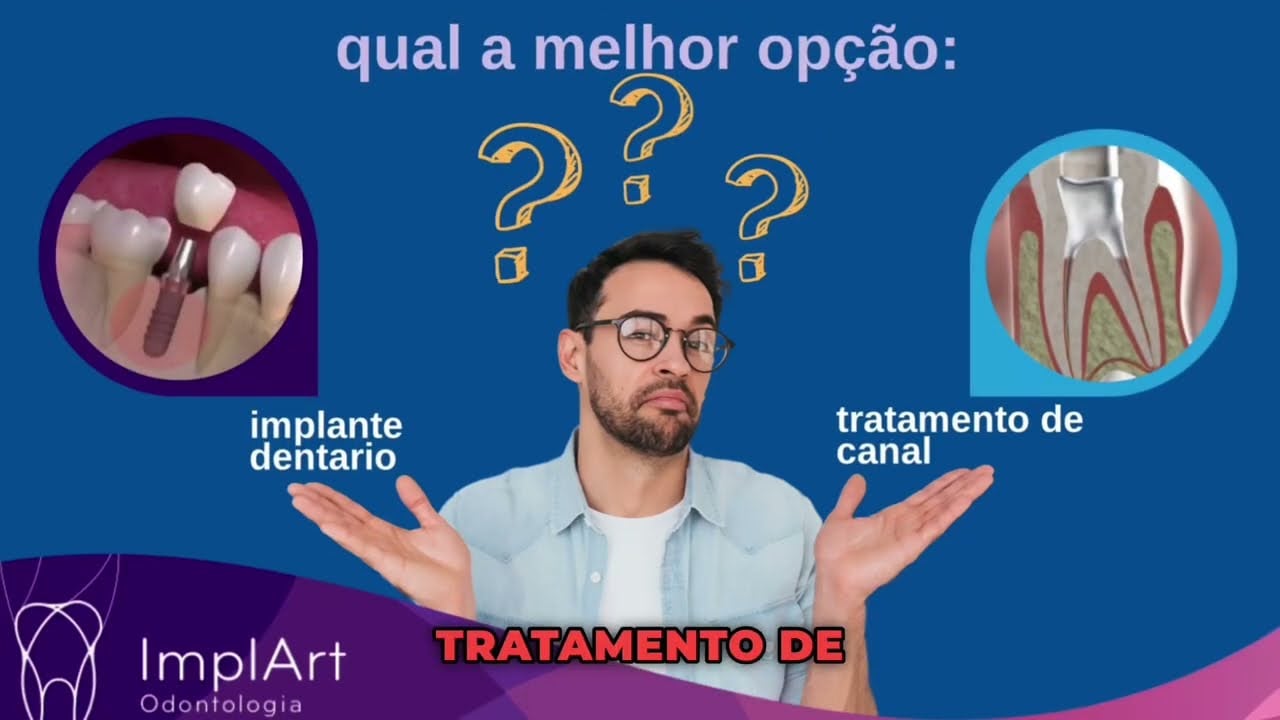
When faced with serious dental problems, such as infections or severe decay of a tooth, the question arises: should you opt forroot canal ordental implant treatment? According to Dr. Roberto Markarian, implant dentist and director of the ImplArt Clinic, the choice depends on a careful evaluation, considering factors such as the integrity of the tooth, general oral health and the technological options available.
The good news is that there are resources that allow you to visualize the dental situation beforehand and thus guide the initial course of action to be adopted. Even so, it’s important to bear in mind that the treatment may be altered if, during the process, a root fracture or more severe dental impairment than initially anticipated is identified.
Root canal or dental implant? When root canal treatment is the best option
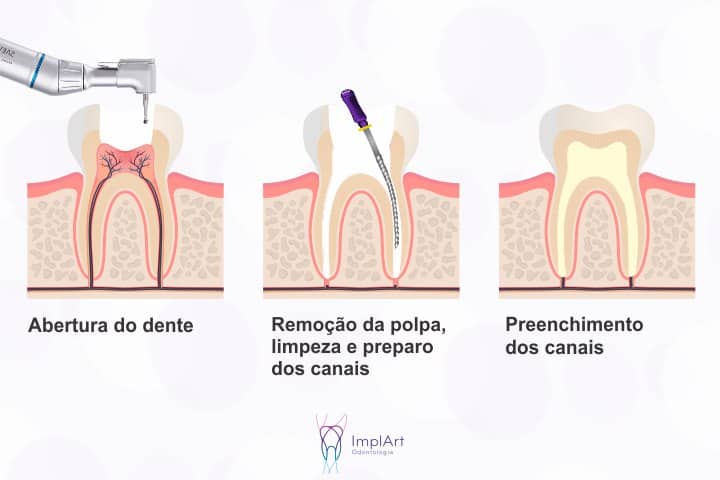
Root canal treatment is indicated when the pulp of the tooth has been compromised but its structure can still be preserved. This procedure is ideal for eliminating infection, restoring functionality and maintaining the natural tooth. According to Dr. Roberto Markarian,preserving the natural tooth whenever possible offers important advantages:
Dental Proprioception: Natural teeth have periodontal ligaments that allow them to feel chewing forces, something that is lost when using implants.
Maintaining Gingival Anatomy: Preserving the tooth helps to maintain the aesthetic harmony of the surrounding gums, facilitating a more natural restoration.
Possibility of placing crowns:After a successful root canal treatment , the tooth can receive a high-quality crown, guaranteeing functionality and aesthetics.
Root Canal or Dental Implant treatment?
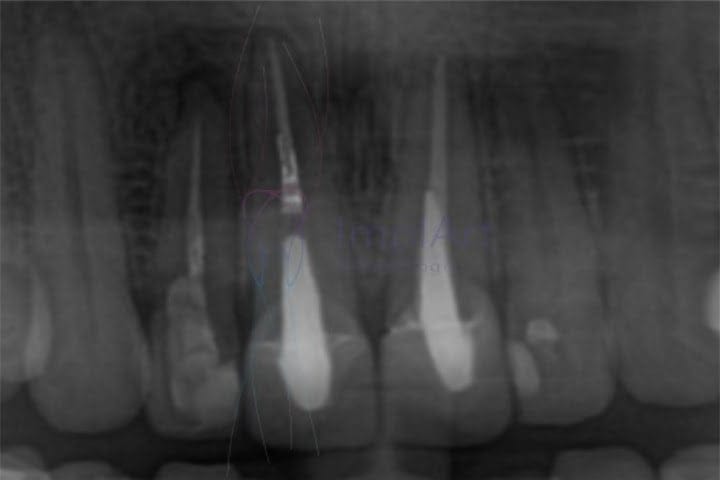
Is it possible to be 100% sure about saving a tooth with an X-ray alone?
Some of the most common questions patients ask when deciding between root canal treatment or dental implants are: can you be absolutely sure that the tooth will be saved just by looking at the X-ray? Or even: is it possible to know for sure whether or not the tooth needs root canal treatment just by looking at the X-ray?
According to Dr. Roberto Markarian, implant dentist and director of the ImplArt Clinic, dentistry is not an exact science and, as in any area of health, it is not possible to offer 100% guarantees on results because we are talking about an organism. Although radiography is an essential tool for diagnosis, allowing the professional to assess the integrity of the root, the presence of infections and other structural conditions, it does not reveal all the details of the case. Microscopic fractures or conditions that are not visible on the scan can influence the success of the treatment and require the specialist to change their approach.
“Our mission as health professionals is to use the best available resources, such as advanced imaging exams and modern techniques, to offer the best possible prognosis,” says Dr. Markarian. At the ImplArt Clinic, we combine clinical experience with cutting-edge technologies to increase the chances of success in every procedure, whether it’s root canal treatment or the placement of dental implants.
Photo shows dental radiograph: Some radiographs make it possible to clearly see the need for root canal treatment, while others require a combination of clinical assessment, radiographs and the patient’s report
Professional experience makes a difference when it comes to root canal treatment or dental implants
Of course, the dentist’s experience and knowledge are fundamental. In addition to radiographic analysis, it is necessary to clinically assess the tooth, the extent of the damage, possible hidden fractures, and the health of the surrounding tissue.“Our commitment is to act responsibly and offer the best alternatives available to preserve the tooth whenever possible, with a focus on long-lasting, high-quality results,” adds Dr. Markarian. Therefore, if there is a possibility of preserving the tooth, root canal treatment is the first option. Only secondly, if it is not possible to keep it, or even if irreversible damage to the tooth is identified, do we opt for extraction and a dental implant in the same surgery.
This approach demonstrates the importance of relying on a specialized professional, using the best practices and technologies to guarantee the most effective treatment for each patient, whether for root canal treatment or dental implants.
Is root canal treatment 100% guaranteed?
We know that root canal treatment is the last resort to save a tooth and therefore there is always a chance of failure. We must remember that although it is possible to evaluate radiographic examinations, we are talking about a health treatment whose planning may change over the course of the treatment and the next step is extraction followed by a dental implant.
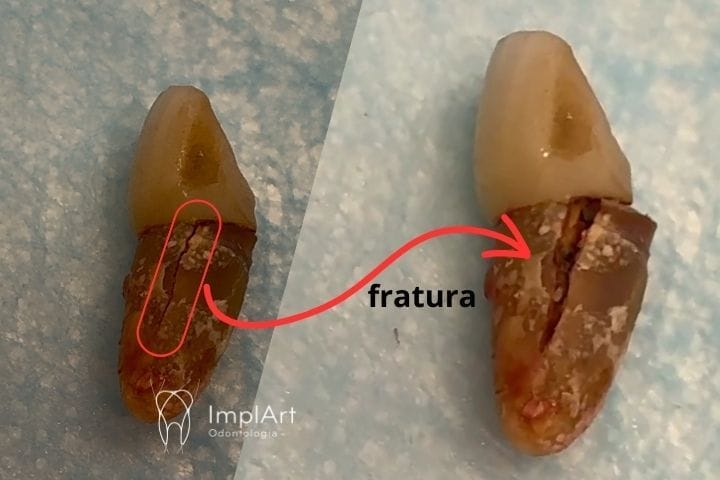
See the image below for an example of a particular case in which the X-ray alone could have led to uncertainty about the diagnosis. However, the combination of the clinical assessment(swelling, pus), the patient’s report ( pain after accidentally biting a bone) and the X-ray made it possible to identify that there was a fracture in the area, culminating in the indication of simultaneous extraction and dental implantation.
Photo shows a tooth that was removed because it had a crack. Radiographically, the case could be mistaken for a root canal, but root canal treatment would not solve the problem because bacteria would be lodged in the cracked area.
Can I insist on a root canal?: Cases where a root canal doesn’t solve the problem
Root canal or dental implant? Even with technological advances, there are situations in which root canal treatment or retreatment doesn’t solve the problem. Root fractures, for example, can make the tooth unfeasible, making it necessary to remove it and consider alternatives such as dental implants.
Therefore, in the vast majority of cases it is not a choice between root canal treatment or dental implants, but a necessity. That’s why it’s essential to trust the professional in charge of the treatment, so that he or she can be sure of the best course of action.
Biological dentistry and root canal treatment
The current trend of biological dentistry, which is very widespread today, does not recommend root canal treatments on the grounds of toxicity. However, this claim still lacks scientific proof. Studies show that treatment, when carried out with biocompatible materials and modern techniques, is safe. At the ImplArt Clinic, we use the best practices to offer safe, long-lasting results and we value the patient’s well-being.
When Dental Implants Are Necessary
In cases where the tooth cannot be saved, dental implants are the definitive solution. The ImplArt Dental Clinic is a pioneer in technologies such as the use of zirconia prostheses and digital implant planning, detailed on our advanced dental implants page.
However, according to Dr. Roberto Markarian, “the implant, no matter how good, will never be superior to the natural tooth in terms of biology and functionality.” Some considerations about implants include:
Loss of Proprioception: Implants have no periodontal ligaments, eliminating the ability to perceive masticatory forces.
Need for Aesthetic Planning: To achieve optimal results, careful planning of the gingival anatomy around the implant is necessary
Therefore, whenever possible, the ImplArt Clinic chooses to preserve the tooth. Dental implants are only indicated when there are no other alternatives to save a severely compromised tooth.
Conclusion: Keep Natural Tooth with root canal treatment or dental implant?
Whenever possible, preserving the natural tooth is the best option, bringing biological and aesthetic benefits. However, in cases where this is not feasible, replacement with high-tech dental implants, such as those offered by Clínica ImplArt, may be the ideal solution.
Today there are very modern resources for your treatment, with various types of dental implant and types of dental crown available at the ImplArt Clinic. If you still have doubts or would like an assessment, contact our team and make an appointment to restore your smile with health and confidence.
Topics: Root canal or dental implant?
ImplArt Dental Clinic
⭐The ImplArt Dental Clinic is located in São Paulo and welcomes patients from all over the world. If you would like to know more about our treatments, ask questions about root canal treatment or dental implants, or schedule an appointment 📲WhatsApp(11) 99598-1866.
Dr. Roberto Markarian is a reference in dental implants and computerized dental prostheses in Brazil. As well as having more than 10,000 implants installed, he is a researcher who produces knowledge that is published worldwide in renowned scientific journals in the field of dentistry. He is responsible for promoting knowledge and high technology applied in all the treatments offered by the ImplArt Dental Clinic.
For many people, fear of pain is one of the main reasons they put off dental treatments such as dental implants. However, with the latest technological advances, procedures have become much more comfortable, safer and faster, allowing painless dental implants surgery. Today, with methods such as digital planning using 3D tomography and computer-guided surgery, pain is no longer an obstacle for those looking to restore their smile. In this article, you will understand how these innovations are revolutionizing dental implant treatment and why the ImplArt Clinic is a benchmark in the field.
Why Are People Afraid of Dental Implants?
The fear of pain is still common and is often associated with past dental experiences or a lack of knowledge about the new technologies available. Fortunately, modern dentistry has evolved significantly, offering much more patient-friendly and comfortable solutions.
Among the new trends for pain-free dental implant treatment are fast-healing implants. These implants have nanotechnology on their surface, which speeds up the osseointegration process and further increases the chances of successful implant treatment.
Traditional dental implanttechniques have given way to more sophisticated methods that prioritize safety and comfort. At the ImplArt Clinic, we use up-to-date implant technologies that stand out in the dental market, with the aim of offering pain-free dental implant surgery:
Digital planning by 3D tomography: This modern technology allows the dentist to visualize the patient’s entire anatomy in high resolution, ensuring greater precision in implant planning and reducing possible complications.
Computer-guided surgery: Provides a faster, safer and more predictable procedure, minimizing cuts and, consequently, post-operative discomfort.
Conscious sedation: For patients seeking total comfort, we offer sedation during the procedure, eliminating the sensation of pain and reducing anxiety, allowing dental implant surgery to be carried out painlessly.
Electronic anesthesia: This modern feature allows the dreaded “little prick” of anesthesia to be much lighter and more comfortable for the patient
Digital smile planning: With this technique, which involves an intraoral scanner to design a dental crown, fixed prosthesis or protocol prosthesis, the prosthetic stage is much more comfortable. The prostheses are produced by means of a modern computer graphics system, without the old mass moldings.
The Benefits of a Painless Dental Implant Procedure
As well as making treatment more comfortable, these technologies bring a number of benefits to patients:
Fasterrecovery: Less invasive procedures reduce tissue trauma, promoting faster healing.
Less post-operative discomfort: The use of modern techniques minimizes swelling, pain and the need for medication.
High precision in aesthetic results: Advanced materials, such as zirconia, provide a natural appearance and excellent durability, guaranteeing fixed teeth that truly resemble natural ones.
Why choose the ImplArt Clinic for your dental implant?
Located in São Paulo, the ImplArt Clinic combines professional expertise with the latest technologies to provide a unique and personalized experience for its patients. Our team is always up to date with the latest trends in dentistry, guaranteeing excellent results and full satisfaction.
In addition, ImplArt offers a state-of-the-art infrastructure with modern equipment and a humanized service designed to transform fear into confidence and discomfort into peace of mind.
*Make an appointment to find out how we can transform your smile: Contact us.
Conclusion: Painless Dental Implants are a Reality
Thanks to technological innovations, the fear of pain is no longer a barrier for those who need a dental implant. At the ImplArt Clinic, we are committed to offering high-quality treatments, prioritizing the well-being and comfort of our patients and aiming to offer patients pain-free dental implant surgery.
Always thinking about patient comfort, the success of their treatment and providing pain-free dental implant surgery, here at the ImplArt Clinic, our clinical director, implant dentist Dr. Roberto Markarian uses the technique of simultaneous extraction and dental implantation, in the same surgery, whenever possible. This certainly allows for more comfort for the patient, who undergoes fewer surgeries throughout their treatment. See our clinical director’s explanations of the reasons for extracting the compromised tooth and implanting it in the same surgery.
⭐The ImplArt Clinic is located in São Paulo and welcomes patients from all over the world. If you would like to know more about our treatments, dental implants, ask questions or schedule an appointment 📲WhatsApp(11) 99598-1866.
Painless Dental Implants: Technology Makes Your Implant Surgery More Comfortable
Dr. Roberto Markarian is a reference in dental implants and computerized dental prostheses in Brazil. As well as having more than 10,000 implants installed, he is a researcher who produces knowledge that is published worldwide in renowned scientific journals in the field of dentistry. He is responsible for promoting knowledge and high technology applied in all the treatments offered by the ImplArt Dental Clinic.
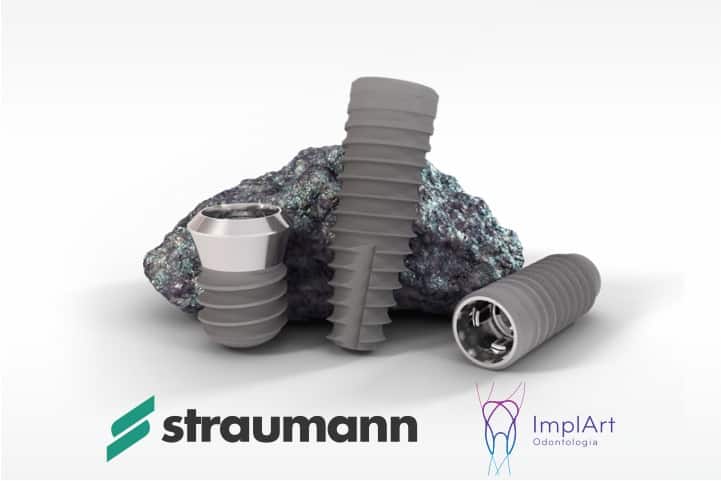
Straumann’s SLA Roxolid Swiss implants are made from a high-performance metal alloy consisting of 85% titanium and 15% zirconium. Together, these two metals form a material with superior strength to pure titanium implants .
The best dental implants in the world now
The surface of Straumann SLA Swiss implants
They have shown excellent long-term results, with documented success rates. In addition, it has excellent osseointegration capacity. Roxolid SLA implants have a reduced length and diameter, so they can be an option for dental implant treatment in patients with reduced bone volume and who are therefore unable or unwilling to undergo abone grafting procedure.
The Roxolid dental implant is highly resistant and also has options for shorter sizes and reduced diameters. Advantages of Roxolid swiss implants:
Faster healing and therefore less post-operative discomfort. As a result, osseointegration is expected within 2 months.
Small-diameter and/or short Swiss implants are mainly an option for patients who need small but strong implants.
Indicated for patients with reduced bone volume or other defects. It is therefore an alternative for some patients who have an indication for a bone graft procedure.
Thanks to the technology that favors osseointegration, the dentist is able to predict the results.
Highly resistant implants with smaller size options
Smaller implants help protect vital structures and vascularization
Swiss Straumann implants are considered the best in the world
The Swiss company Straumann has been researching and developing dental implants and related products since 1974. Straumann’s products and services are available in more than 70 countries, and of course at the ImplArt Clinic.
Dr. Roberto Markarian, implant dentist and clinical director of ImplArt, is a member of the ITI – International Team for Implantology, an entity linked to Straumann that brings together the world’s best specialists for the development of new products and techniques.
If you have any questions, please contact us through one of the channels below or schedule an appointment.
Dental implants in one day are done when the entire dental arch is rehabilitated with dental implants and a prosthesis in a few hours
First of all, we would like to point out that the implantation of all teeth is mainly indicated for patients with total edentulism (absence of all teeth) or with few compromised teeth, when extractions are indicated. Dental implants in one day is the best way to restore self-esteem and quality of life to edentulous patients. Patients in this condition are sometimes in a hurry to resolve the case. However, not everyone can be treated quickly, because it all depends on each case.
However, a patient who has been without teeth for a long time and has advanced bone loss, which until then was considered a complex case, can now receive a total implant with a fixed prosthesis in thirty days. Research in the field of implant dentistry is increasingly seeking to develop solutions so that implant healing can take place more quickly. For this reason, the Swiss company Straumann, a world leader in the research and development of solutions for implant dentistry, has created the SLActive implant. This modern implant enables rapid healing, expected to take 1 month.
Total Implant in 1 month – main requirements
Why is full implantation with dental implants in one day is possible with Straumann materials?
It has technology on its surface that stimulates and accelerates the healing process of the implants, making it possible in some cases to complete the total implant treatment in 1 month.
However the dental implants in one day, are placed in the jawbone and a temporary tooth is placed. The complete treatment cycle will take about a month.
The SLActive implants have a micro-roughness on the titanium surface that favors the adhesion of cells and proteins that will form new bone tissue around the implant. This process is called osseointegration of the dental implant, which is undoubtedly important for keeping it fixed and stable over the years.
In addition, the SLActive dental implant line has a special implant size (4 or 6 mm) ideal for cases with little bone volume.
Here are some of the proven advantages of SLActive dental implants in one day:
Healing time reduced from 6-8 weeks to 3-4 weeks;
60% reduction in the risk of implant loss;
There is a 98% success rate in cases of immediate or early loading – less than 1 month (21 days);
Improves bone deposition in the early stages of osseointegration;
Better implant stability in more advanced stages of healing.
The most common form of total implantation (dental implants in one day) is the placement of six titanium implant pins in the upper jaw and four in the mandible. Immediately after the healing period, dentures can then be attached to the implants. Unlike a removableprosthesis (dentures), which covers the roof of the mouth to allow it to be fixed, and makes it difficult to perceive the taste of food, the prosthesis on implants is thin and occupies only the region of the dentition, leaving the other spaces in the mouth free, similar to the situation found when there are natural teeth. Currently, dental implant treatment with the most modern materials is the Zirconia protocol and the porcelain protocol on a total implant.
Types of prostheses available for full-mouth dental implants in one day
Made of resin, it faithfully mimics the color of teeth and gums. However, it does require the patient to be more careful about eating certain foods and drinks with very strong pigments, as well as habits such as smoking, as the resin is susceptible to staining. These include beet, coffee, carrots and wine.
As previously mentioned, dental implants in one day can even be indicated in cases that are considered complex. However, each case must be assessed individually and the type of implant and prosthesis can only be proposed according to each need.
If you have any questions about dental implants in one day, please make an appointment or contact us. We at the ImplArt dental clinic will be happy to help you.
Dental implants All-on-four are an incredible procedure, but also considered the most complex in implant dentistry. This procedure, also known as total implantation and protocol prosthesis, is capable of revolutionizing the patient’s life. It is offered at the ImplArt Clinic by Dr. Roberto Markarian and involves various skills on the part of the dental surgeon to guarantee the success of the treatment. We’ll give you more details on how All on Four dental implants workand the 8 common mistakes to avoid!
The All on Four dental implant treatment can also be called a total implant or Branemark prosthesis. In English, this treatment is also called Full Mouth Dental Implantor All on X. If you have any doubts about how the All on Four dental implant treatment works, don’t worry, we’ll tell you all about it below.
All-on-Four dental implants are a revolutionary solution for people who have lost most or all of the teeth in an arch. This technique uses just four dental implants strategically positioned to support a complete dental prosthesis. This provides a stable and secure base for artificial teeth, significantly improving the functionality and aesthetics of the smile. The fact that precisely 4 implants are used determines the name of the technique, ALL ON 4.
But it’s important to note that there are modern prosthetic materials, such as Translucent Zirconia, which will require the implant dentist to carry out more dental implants in each arch. Therefore, total implant treatment usually involves 4 to 6 dental implants, depending on the type of prosthesis that will be installed.
Temporary bridge Dental Implants All on Four
Here are the top 8 common mistakes to avoid with Dental Implants All on Four.
Here are the common mistakes to avoid when getting Dental Implants All on Four
In the video below, Dr. Roberto Markarian, implant dentist and director of Clínica Dentaria ImplArt, tells us about the 8 main mistakes to avoid when doing All-on-4 dental implants:
1. Not choosing an experienced implant dentist
Dental Implants All on Four are one of the most complex dental surgical procedures. As with many things, there is a big difference between being able to perform the procedure and being able to do it well.
You can find many dentists who can perform the procedure, but not all of them do it with excellence. Part of the problem is that many dental practices offer All-on-4 implants these days, but who is behind this offer?
Dental implants All on 4: how to choose a specialist
All-on-4 implants are becoming very marketable, which means that many newly qualified dentists are being trained in the process from an early stage. Even more experienced dentists, but with little experience in oral surgery, are getting into the practice. This results in a market saturated with professionals who may have only performed a few All-on-4 surgeries, but who heavily advertise this treatment.
This can be a minefield for uninformed patients. At the ImplArt Clinic, under the direction of Dr. Roberto Markarian, you’ll find the expertise you need. Before you start, research the dentist’s credentials. Check how many All-on-4 cases he has performed and whether he has specific experience in this type of implant. At ImplArt, we offer a guarantee on our work, reflecting our confidence in the quality of our services.
Meet Dr. Roberto Markarian, clinical director of ImplArt, who tells us more about Dental Implants All on Four, and dental implant surgery where he performs tooth extraction and simultaneous implants. This situation certainly happens a lot with all-on-four dental implants, where extractions take place, in most cases, in the same surgery as the implants.
2. Do not consider whether you can perform more than 4 implants per arch
One of the attractions of All-on-4 dental implants is the number “4”. A full arch of upper or lower teeth with just 4 implants. Only 4 implants to be inserted, saving time and money. Minimum work, maximum results.
However, more dental implants can offer more support. While All-on-4 implants are an incredible tool for many people, restoring an entire arch of teeth with 4 implants is not the “standard” option for full-arch implants.
At ImplArt Dental Clinic, we use 3D scans to assess bone health and volume, ensuring that you receive the most appropriate treatment. And if you need bone grafting to allow for the insertion of dental implants, don’t worry: there are several modern bone grafting techniques that will allow for all-on-four dental implants.
4. Not checking and researching the brand of implants for Dental Implants All on Four
Many people pride themselves on saving money by buying generic brands. This is great for many items, such as food and even medicines. But sometimes you’re not just paying for the brand name, but for the history, reliability, longevity and quality assurance that the brand offers.
There are many types of dental implants on the market, and frankly, they’re not all the same. The cost of a dental implant will certainly depend on the brand you choose. Dental implants from generic brands are therefore risky for two main reasons:
Uncertainty about the quality of the implant itself.
Uncertainty about the company’s longevity.
At the ImplArt Clinic, we use renowned brands such as Straumann, Neodent and SIN, which offer high quality and longevity for your implants.
5. Assuming you’ll have final teeth on the same day with Dental Implants All on Four
The promise of “final teeth on the same day” is attractive, but not everyone is an ideal candidate for this approach. To be eligible for immediate loading implants, you need to have very good bone volume and meet certain characteristics for this technique. In addition, immediately after surgery, the anatomy of the area is altered by the surgery and becomes swollen, so making a final prosthesis on the same day as surgery may not be the ideal solution.
Post-operative care with Dental Implants All on Four
At ImplArt, we guarantee an honest and realistic assessment of the feasibility of immediate loading implants for you, clearly explaining the process and the time needed to obtain definitive results. We make sure you know that the teeth fixed on the day of surgery are temporary and that you will need to return after a few months to receive permanent teeth.
6. Assuming it’s better to extract all the teeth and start again
Keeping your natural teeth is always the best option. At ImplArt, we prioritize saving natural teeth when possible, using treatments such as root canals to avoid unnecessary extractions and preserve oral health. Extracting healthy teeth should be the last option, and it is preferable to work around existing teeth and keep them.
7. Wearing teeth prematurely after the first surgery
After All-on-4 implant surgery, it is crucial to allow time for osseointegration. One of the most important factors in dental implants is osseointegration, which is the growth of bone around the implant, fixing it in place.
At ImplArt, we provide detailed post-operative instructions to ensure that you avoid overloading the implants prematurely and compromising bone integration. For the first six weeks, avoid biting and chewing hard foods with your temporary prosthesis so as not to compromise the implants.
8. Choosing and comparing treatments based on price rather than quality
Although ImplArt uses high-tech materials, we offer competitive dental implant prices without compromising on quality. Our experienced team and the use of high-quality materials ensure that you receive the best value for your investment in oral health.
When it comes to the cost of dental implant treatment, it is very difficult to make a choice based on the price of the treatment alone. A number of factors must be taken into account, such as the experience of the team, knowledge and practice in the procedure, as well as the types of materials and technologies used in the treatment. Imported implants will certainly have a higher value than domestic implants. When it comes to prosthetics on All on Four dental implants, the same is true: materials such as resin will be cheaper than porcelain or zirconia.
EXAMPLE of finished of dental implants all on four
Consultation for dental implants All on Four
At the ImplArt Clinic, Dr. Roberto Markarian and his team are ready to offer you a detailed and personalized initial consultation, ensuring that you make informed and safe choices about your All-on-4 dental implants. Right from your initial consultation, you will be presented with all the options for dental implants and modern dental prostheses to choose from. See below how the evaluation consultation at Clinica Dentaria ImplArt works:
SO, HOW TO MAKE Dental Implants All on Four?
The first step to getting your treatment with ALL or 4 is to book your appointment today to find out how we can transform your smile with safety and quality.
During the initial consultation, the patient’s general and oral health is assessed, as well as the volume and quality of bone in the mandible/maxilla, aesthetics, gum shape and other aspects. To assess bone volume, radiological examinations such as panoramic radiography and computed tomography will be requested.
This stage also verifies the need for bone grafting prior to implant surgery, as well as the need for medical supervision if the patient has pre-existing diseases that could interfere with the success of rehabilitation with dental implants.
8 common mistakes to avoid when getting All on X dental implants
Dr. Roberto Markarian is a reference in dental implants and computerized dental prostheses in Brazil. As well as having more than 10,000 implants installed, he is a researcher who produces knowledge that is published worldwide in renowned scientific journals in the field of dentistry. He is responsible for promoting knowledge and high technology applied to all the treatments offered by the ImplArt Clinic.
Dental implants have revolutionized modern dentistry, offering effective and long-lasting solutions for replacing missing teeth. If you’re considering this option or simply want to better understand how the process works, this guide is for you. Here, we’ll explore everything you need to know about dental implants: from the benefits and types available to the surgical procedure and post-operative care. Get ready to discover how to regain the functionality and aesthetics of your smile with confidence.
What dental implants are used for
The state of our smile plays a fundamental role in our general well-being. We express many of our emotions when we smile. In addition, when we interact with others, we are always showing our teeth, this is inevitable and part of human nature.
The good news is that nowadays the problem of missing teeth is becoming easier and easier to solve with dental implants. This modern treatment is constantly evolving, with versions of dental implants that adapt to different situations: fast implants, short implants, narrow implants, modern implants, nanotechnology implants, total implants, etc.
In this article we’ve prepared a complete guide to everything about implants, so you can find out tips, benefits, indications, tips and much more about dental implants. Follow along!
What is a dental implant?
Dental implants can currently be made of two materials: titanium or zirconia, which act as artificial roots. In this way, they can be inserted into both the maxillary and mandibular bones to replace missing or compromised teeth.
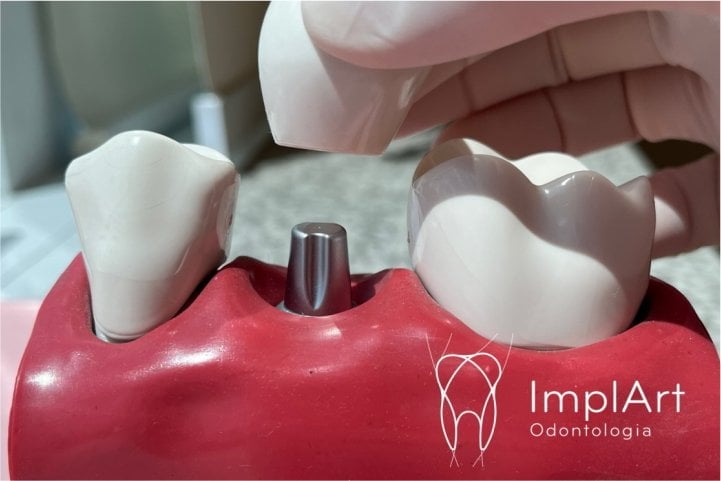
Basically, a dental implant replaces the root of a tooth, giving stability to the prosthesis or dental crown. After the implant placement surgery, a period called osseointegration begins. This is precisely the moment when the dental implant gains stability with the bone, which will certainly allow the implant to withstand the stresses and pressures of the chewing process.
Undeniably, dental implants are a revolutionary solution that allows patients to replace missing teeth with stable, long-lasting and effective solutions.
Certainly, the wide range of dental implant options makes it possible to reach an increasing number of patients. For example, even patients with poor bone structure can now have dental implants in most cases. In this way, more and more patients are able to experience the benefits of treatment, improving their quality of life, self-esteem and confidence to smile.
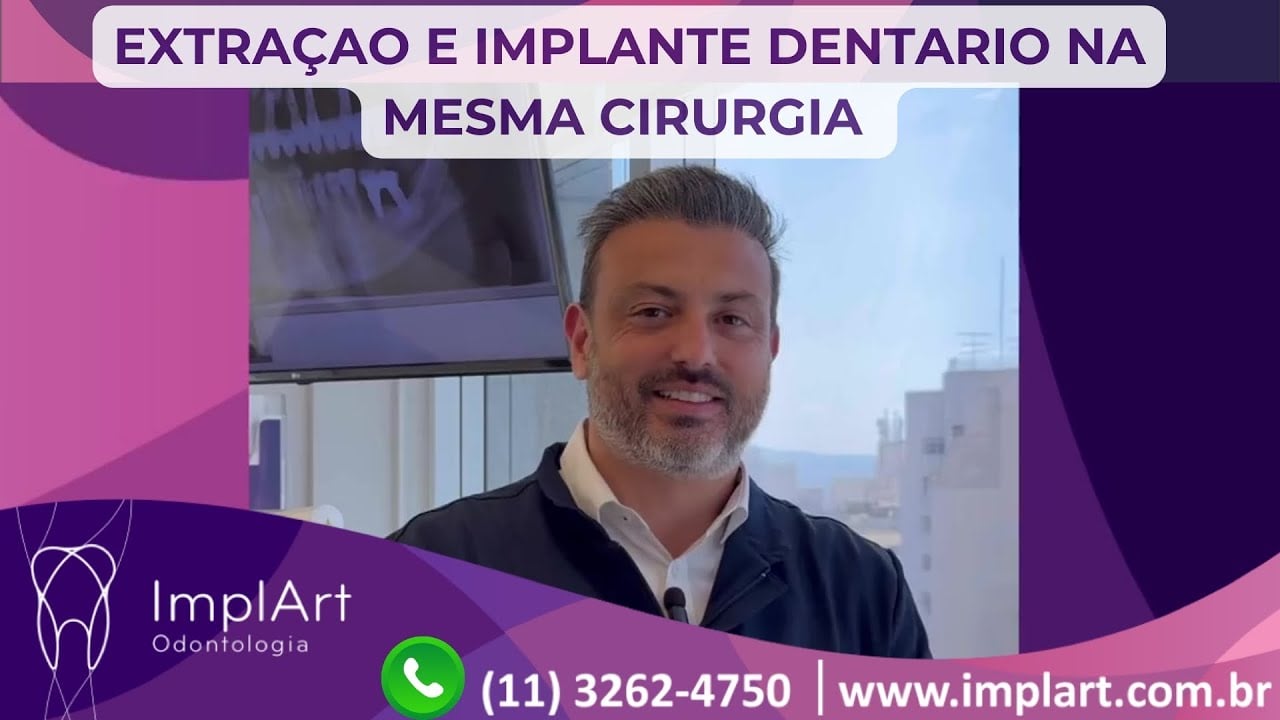
Extraction and dental implant in the same surgery
In the video below, our clinical director, Dr. Roberto Markarian, explains how the option of treatment with extraction and dental implant in the same surgery works:
What is the difference between an implant and a pivot?
The dental implant and the pivot have significant differences, although in both treatments the intention is to recover a damaged tooth. While the implant involves a surgical procedure, the pivot is a prosthetic procedure. The definition of the type of treatment must be carried out by the dental surgeon, and will certainly depend on the degree of damage to the tooth.
The pivot is a dental prosthesis that requires the installation of an intraradicular core inside its root. In other words, in this treatment option the tooth root is maintained after root canal treatment and a core is inserted to structure the tooth and support the dental crown.
Implants, on the other hand, are used when the tooth can no longer be preserved with conventional treatments and tooth extraction is necessary.
As mentioned above, the definition of the treatment will depend on an individual analysis by the specialist, who will also assess the desired aesthetic objectives.
What is the difference between implants and dentures?
Many patients confuse dental implants with dentures. It’s important to mention that when we’re talking about dental implants, we’re always talking about a surgical procedure. When we talk about rehabilitation with implants, the dental prosthesis or dental crown refers to the “tooth” supported on the dental implant.
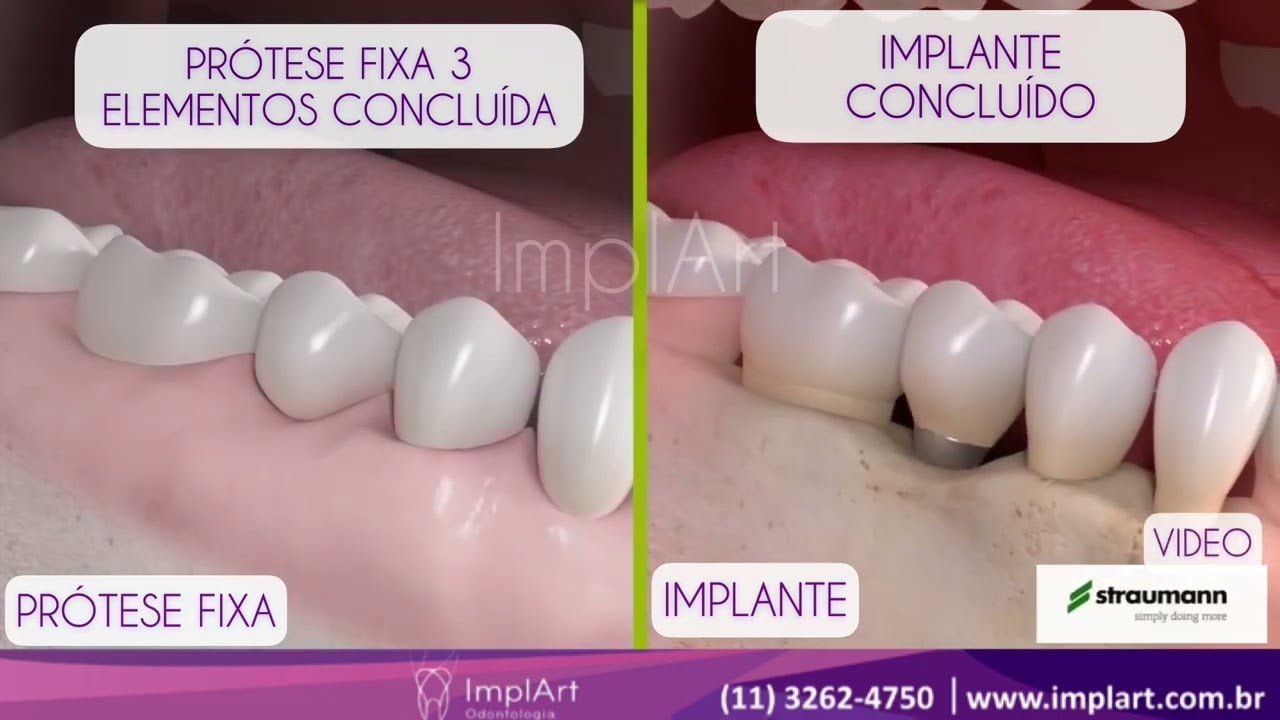
In the past, to replace a missing tooth, the solution used to be a 3-part fixed prosthesis. This meant that the teeth next to the lost tooth had to be worn down in order to support the prosthesis. Today, however, modern dental implants make it possible to replace a missing tooth without affecting the teeth next to it.
In the video below you can see the differences between fixed prostheses and dental implants:
When we talk about removable dental prostheses, we are referring to dentures, which are the old removable prostheses. Of course, dentures are being used less and less, being replaced by the modern protocol prosthesis, which is a prosthesis fixed on 4 to 6 implants. The most modern material for protocol prostheses is Translucent Zirconia.
Types of Dental Implants: Types of Dental Implants
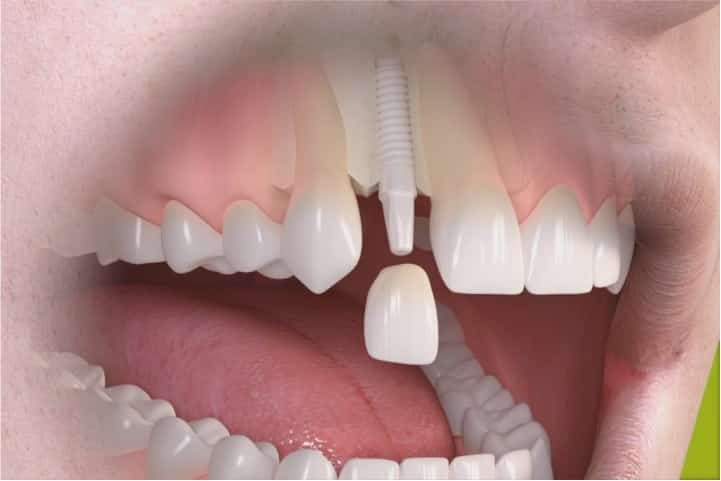
The first type of implant is the single tooth implant. This solution is ideal when the patient loses a single tooth and needs to replace it. The procedure consists of inserting an individual titanium or zirconia dental implant into the bone. It can be performed in either the maxillary or mandibular bone. After the implant has healed, a dental crown is made, which, if made of zirconia, will be very natural and similar to natural teeth.
Watch the video below about individual dental implants:
TOTAL IMPLANT WITH FULL ARCH FIXED PROSTHESIS
The second most important type is treatment with a total implant and a protocol prosthesis. This treatment is recommended for patients who have lost all the teeth in a complete arch. This treatment can be carried out on both the upper and lower arches. This type of treatment involves six to four implants on which the protocol prosthesis will be fixed. This treatment certainly makes the patient feel comfortable, both when smiling and when eating. See how the full implant and protocol prosthesis treatment works in the video below:
DENTAL IMPLANT TWO BY THREE (2 x 3)
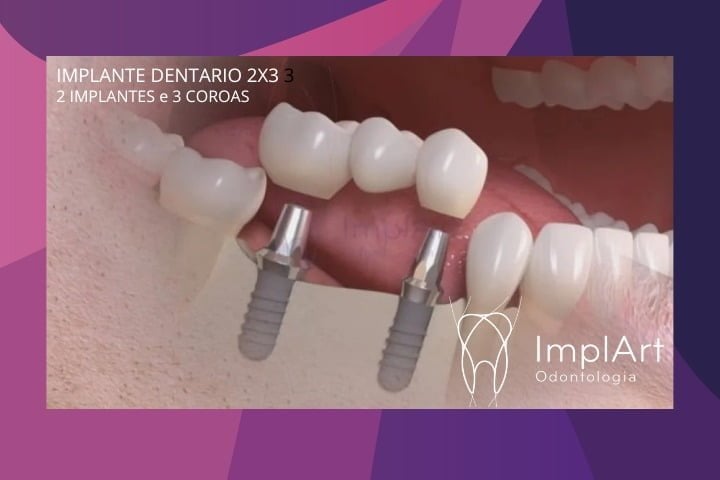
This treatment option can be used in cases where there are some bone limitations, or when patients need to reduce treatment costs. Therefore, instead of performing single tooth implants, 2 implants are performed which will support a prosthesis with 3 crowns. In this situation, the patient has a fixed bridge over the implants, rather than individual teeth. It is therefore not possible to floss between the teeth, for example, as is possible with the conventional single implant technique. Therefore, if the conditions are right, opt for a single implant if you are looking for a result similar to natural teeth.
In this case,02 dental implants support a prosthesis with 03 teeth
ZYGOMATIC IMPLANT
Treatment with zygomatic implants is used in some cases where there is extreme bone loss. They are anchored in the zygomatic bone (cheekbone) and are used to support fixed prostheses. The truth is that they are being used less and less these days, as there are less invasive treatment options. Certainly one of them is bone grafting in patients with bone loss, followed by dental implants.
IMMEDIATE LOADING IMPLANTS
Immediate loading dental implants is a technique in which the procedure of placing a dental implant and a fixed prosthesis is carried out more quickly. Immediate loading means placing a prosthesis – usually temporary – fixed to the implants immediately after surgery. Of course, the viability of immediate loading implants depends on a few prerequisites. These start with checking all the preoperative X-rays and CT scans. In addition, there are factors related to the surgery itself with conditions that can only be attested to at the time of implant insertion.
SHORT IMPLANTS
The new short dental implants are indicated for patients who, for whatever reason, have limited bone availability. They are therefore very versatile, increasing treatment predictability and the chances of acceptance in patients with compromised bone availability. Often, the need for bone grafting to increase the vertical dimension can be dispensed with, bringing greater peace of mind and speed to the treatment.
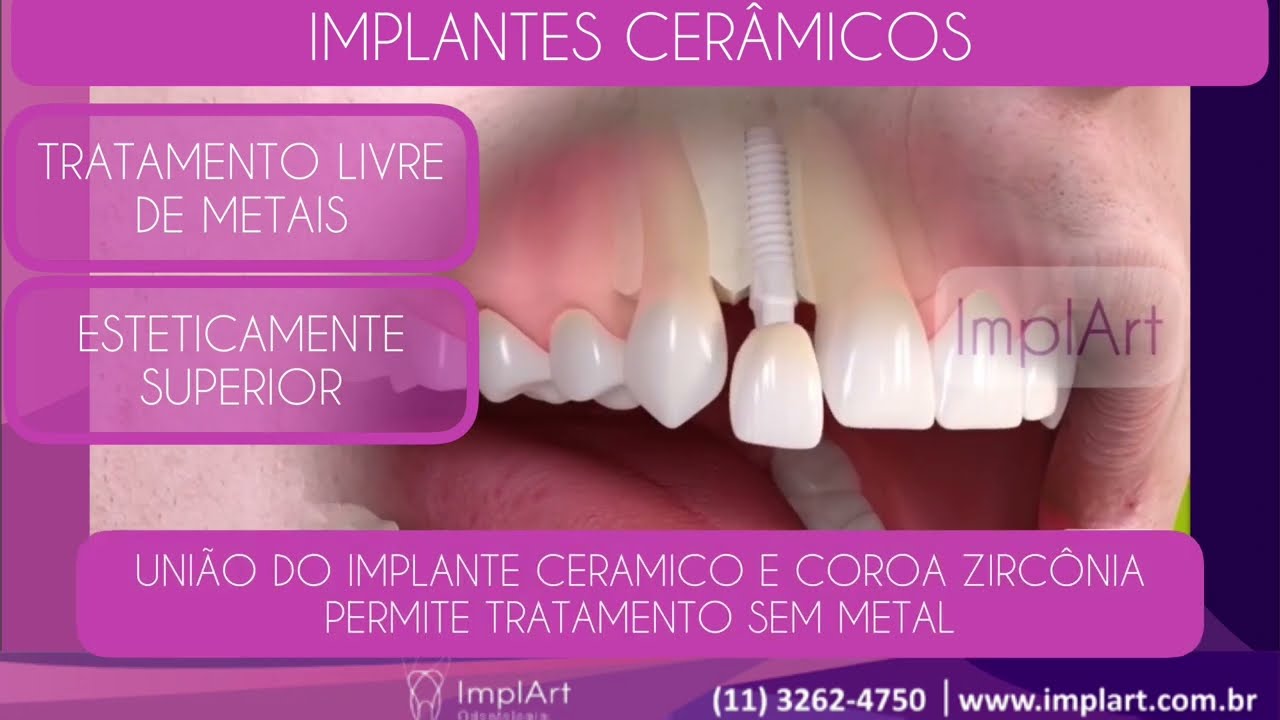
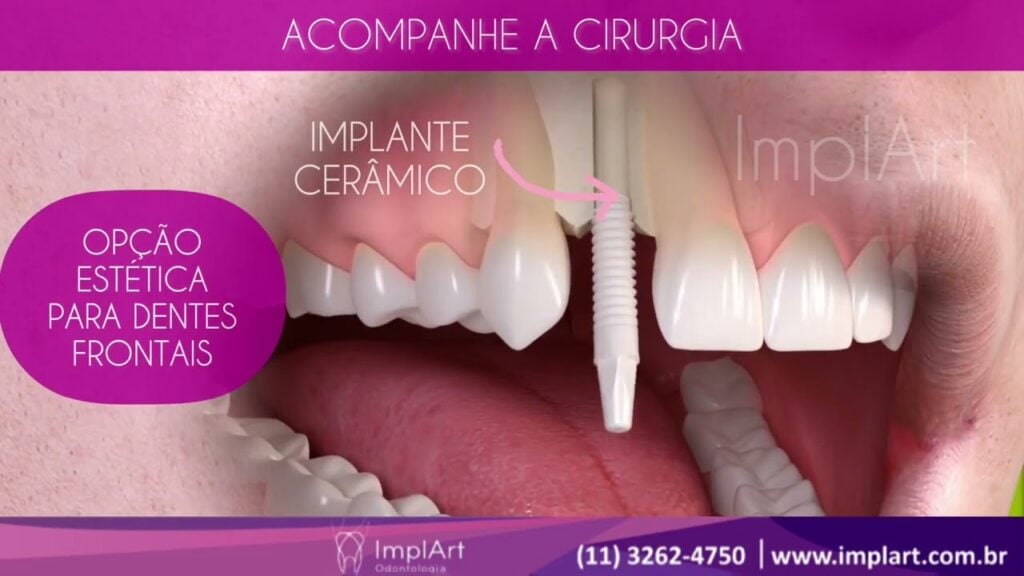
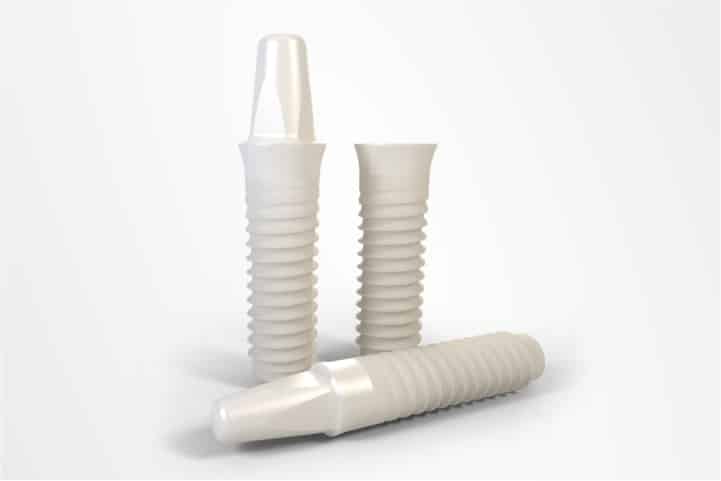
Zirconia implants are metal-free, made of highly resistant ceramic and therefore have an ivory hue. They are an excellent option for those patients who have very thin or atrophied gums. This is especially important for front teeth. They are also an excellent option, especially when these conditions occur in the anterior region (the most visible part of the arch). It is therefore an excellent option for those looking for a dental implant treatment with the best aesthetics available. Watch the video below showing the zirconia implant surgery:
NANOTECHNOLOGY IMPLANTS
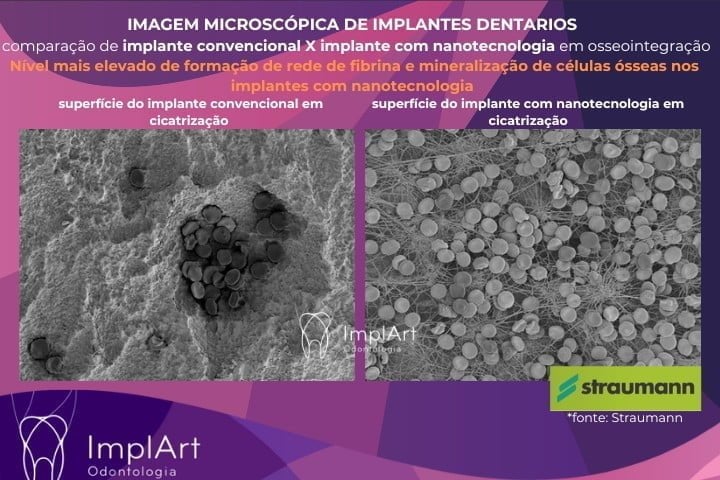
Modern nanotechnology implants present a revolution in dental implant production because they add nanometric particles to the surface of the implant. These particles are prepared to perform healing functions as soon as they come into contact with human tissue. In this way, these nanometric particles act as catalysts or coadjuvants to stimulate the process of osseointegration. Therefore, by using these implants we have a reduced healing time and a greater chance of success.
Comparative image shows the difference between the surface of a conventional implant and a nanotechnology implant during the healing process
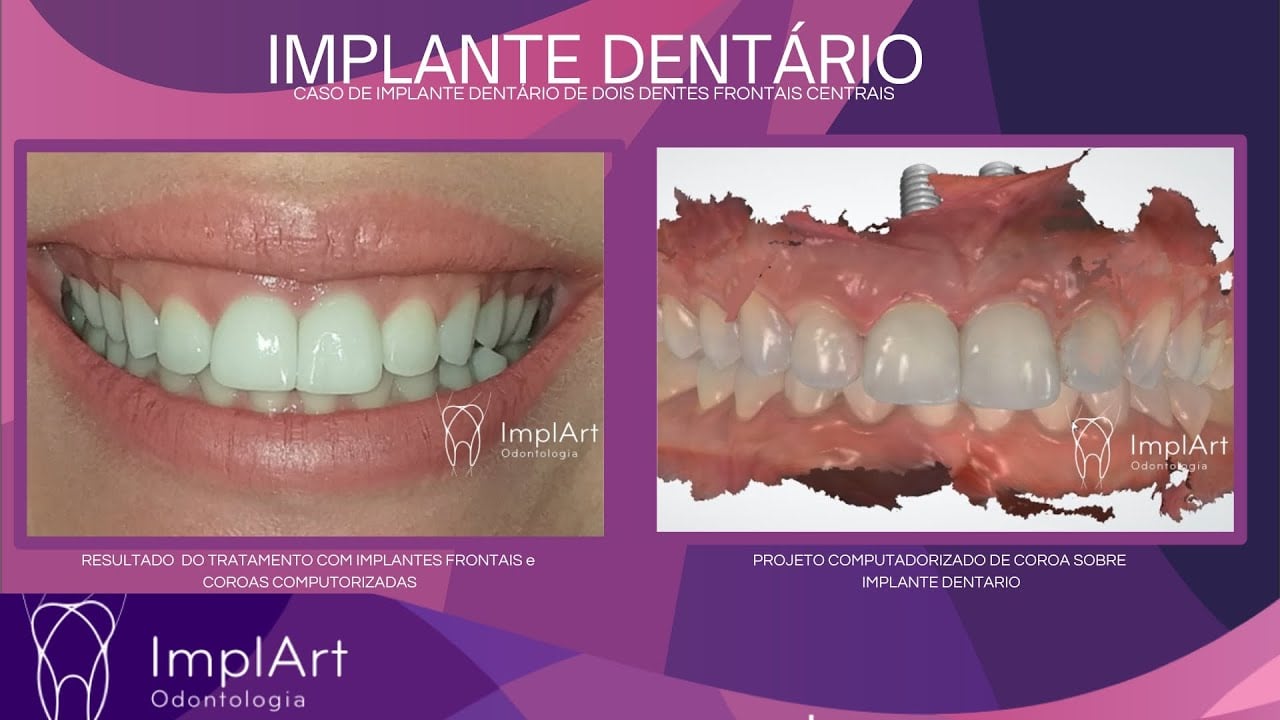
Certainly the main advantages of dental implants are that they unite two important points in anyone’s smile: aesthetics and chewing function. In these respects, dental implants are unbeatable and are undoubtedly the best alternative for replacing one or more missing teeth. If the tooth loss is frontal, the front tooth implant can provide natural results, bringing comfort and security to the patient’s smile. Check out the video below showing the real results of a front tooth implant treatment:
Undeniably, the implant, by allowing the dental arch to be rebalanced, brings direct benefits to the patient through comfort when eating and confidence when smiling. All these factors provide a direct increase in the patient’squality of life and well-being
Advantages of dental implants: restores aesthetics and chewing function
Here are some of the main advantages of implants:
Quick replacement of a lost tooth
Restoring aesthetics: Dental implants are designed to look and function like natural teeth, making them the best way to replicate them. That’s why they allow you to regain the aesthetics of your smile.
Maintaining long-term results: Dental implants are effective structures, capable of lasting for many years and enabling long-term results.
Balanced chewing: The dental implant is a structure capable of withstanding the intense chewing efforts to which the teeth are subjected. Therefore, they allow the patient to eat with great comfort and stability, even more so when compared to old dentures.
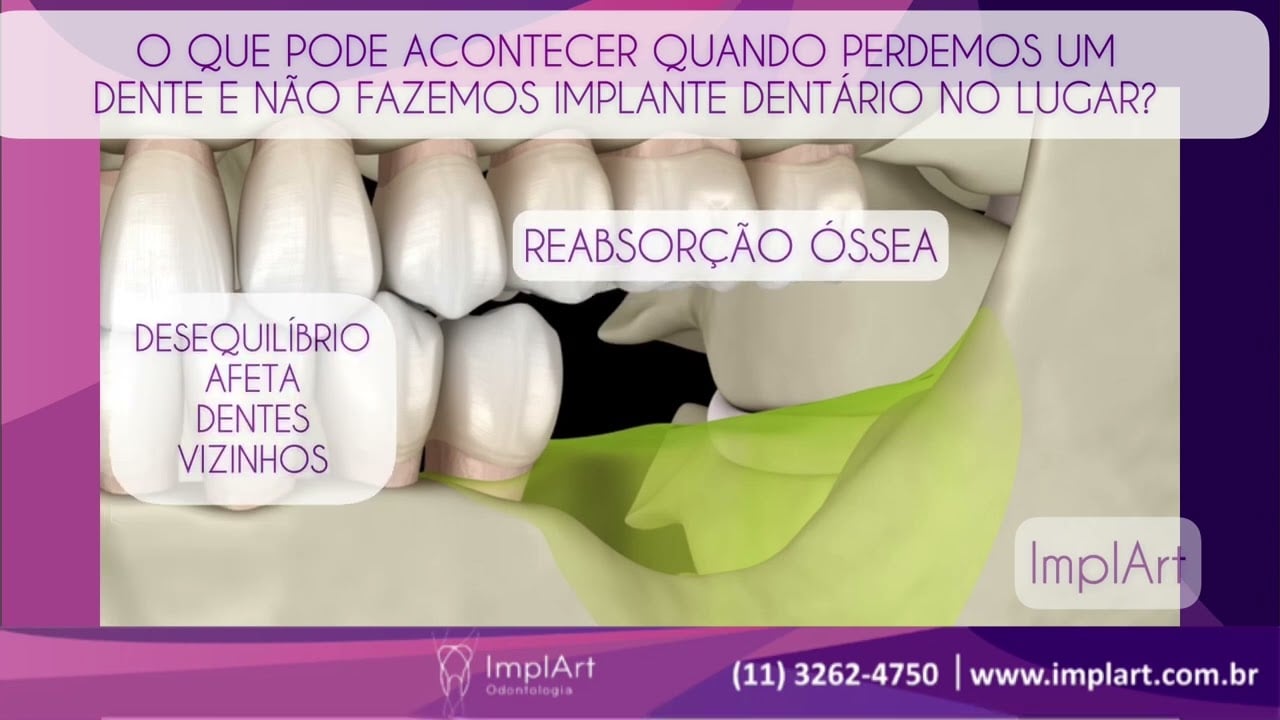
Bone maintenance: The dental implant is able to stabilize the natural bone absorption that occurs in the area that has suffered tooth loss. In this way, the bone structure is maintained and there is no impact on neighboring teeth. See below for a video showing the consequences of missing teeth that are not replaced by implants.
How are dental implants performed?
Dental implant surgery can be carried out in the office or in hospital. The implant can be installed under local anesthesia or intravenous sedation. Implant installation surgery is usually quick and can last between 15 minutes and 1.5 hours, depending on the number of implants and the patient’s bone situation.
Dental implants are designed to adequately replace the root of a lost tooth and can be made of either titanium or zirconia. Below is a photo of the zirconia dental implant surgery.
Photo of zirconia dental implant surgery
In most cases, during the implant’s osseointegration period, the patient has a temporary crown installed. After the implant has healed, the definitive crown can be made. There are currently several types of dental crowns, including the modern CAD/CAM Pure Zirconia Crown and CAD/CAM Pure PorcelainCrown. These crowns are made using modern 3D scanning and printing systems, which allow the patient’s smile to be designed using computer graphics. In this way, the aesthetic results are enhanced and the crowns look even more like natural teeth.
CONFIRMS THE STEP BY STEP OF THE DENTAL IMPLANT:
INITIAL ASSESSMENT AND PLANNING FOR IMPLANTS
The purpose of the evaluation appointment is to assess the patient’s case, identifying the patient’s needs and expectations. It is at this stage that the implant dentist, Dr. Roberto Markarian, is able to assess the best treatment for the patient, as well as indicating the types of implants and dental prosthesis options recommended for the patient. Of course, each case is thoroughly assessed and each plan is personalized.
See in the video below how the initial consultation at the ImplArt Clinic works:
In addition to the clinical assessment, specific tests are requested to analyze the patient’s oral structure, anatomy and bone structure. These examinations are certainly a fundamental part of careful case planning.
In addition to the following procedures for treatment planning:
3D intraoral scanner
Dental Photography;
In general, dental implant surgery is very similar to tooth extraction surgery. It usually takes place in a dental office, under local anesthesia, or with the use of conscious sedation performed by an anesthesiologist from the Clinic’s team. The use of sedation is a treatment option for those patients who are afraid of dental procedures, or even for those who prefer the comfort of the procedure. See how sedation works for dental implants in the video below:
In the first surgical stage, the implant is installed in the bone. Using specific equipment, the implant dentist positions the implant in the area of tooth loss. In many cases it is possible to perform tooth extraction and implantation in the same surgery. Of course, the surgery is carefully planned beforehand, based on the patient’s examinations. In this way, the implant dentist is able to choose the implant size, defining the most appropriate height and width.
Immediately after the implant is placed, a kind of cover is put in place to protect the implant while it awaits osseointegration. This process is common to all types of implants.
Immediately after surgery, it is recommended that the patient rests for the rest of the day. The usual certificates for implants are for two or three days, which is the period of greatest care, with ice applied to the area. As the days go by, activities are slowly released, and after 7 days the patient can resume normal activities.
What’s more, in the vast majority of cases, the superficial healing of the gums is fairly rapid. Within a week to 10 days, the patient returns to the clinic for follow-up and removal of stitches, when the surgery is performed conventionally. In cases of surgery without cuts, with a surgical guide, there are no stitches to be removed.
In this phase of treatment, we basically wait for the implant to heal. Depending on the type of implant chosen, this period can take between one and six months, and certainly in the case of simultaneous bone grafts, this period can be increased.
It’s worth noting that this stage is extremely important for the success of the treatment, so following the recommendations is essential. Hygiene guidelines must be followed, as well as avoiding smoking, which can compromise implant healing. In fact, the lack of proper hygiene, as well as smoking, be it electronic cigarettes, conventional cigarettes or cannabis, are factors that impair implant healing.
DENTAL IMPLANT REOPENING
This is the second stage of surgery, when the dental implant specialist reopens the gums to remove the protective cap. After this, the implant healer is installed, which is a device that prepares the gum tissue to receive the prosthesis and serves to make it heal properly, leaving only the access to the implant exposed.
MAKING THE PROSTHESIS
The last stage of treatment is when the implant has healed and the prosthesis or dental crown is made in the chosen material: translucent zirconia, pure porcelain, zirconia + porcelain or metal-ceramic. If the patient opts for modern materials such as CAD/CAM Pure Zirconia and CAD/CAM Pure Porcelain, the crown will only be made using a 3D intraoral scanner, without the need for the old mass molding. Once this stage has been completed, the treatment is finished and the patient can enjoy all the benefits of their treatment.
Indications for Dental Implants: Who Can Get an Implant?
Every patient who is a candidate to receive a dental implant must have their health assessed through anamnesis and general health assessment, as well as clinical analysis. The result is that the vast majority of people meet the necessary conditions to undergo the procedure. However, there are some rare exceptions. Let’s take a look below:
patients with uncontrolled health problems: such as uncontrolled diabetes, for example. It is worth clarifying that even if you have diabetes, if it is controlled, you are a candidate to receive implants
pregnant patients
children and adolescents, as they are still growing;
How many dental implants are needed for the protocol prosthesis?
The number of dental implants required for treatment will certainly depend on the treatment objectives and the patient’s initial situation. If the treatment involves total implants and a protocol prosthesis, 4 to 6 implantswill be used. The number of implants will certainly be defined by the implant dentist based on an analysis of the patient’s bone condition and the type of prosthesis to be used
By analyzing panoramic X-rays and CT scans, the implant dentist is able to determine the number of implants needed to ensure better stability of the protocol prosthesis. In addition, if the patient opts for a resin protocol, 4 dental implants are usually used. If the treatment involves a total prosthesis in metal-ceramic or zirconia, up to 6 dental implants can be used.
When many teeth are lost, are the implants done individually, one by one?
In general, when patients have lost many teeth, they opt for a treatment called total implant and prosthesis protocol. This treatment guarantees stability in chewing and oral aesthetics. In some specific cases it is possible to perform individual implants one by one. However, the patient must meet a number of prerequisites, such as abundant bone structure.
Are there any contraindications to dental implants?
As we saw earlier, the benefits of dental implant treatment are numerous! However, it is important to know that there are situations that can jeopardize the success of the treatment. For example, poor hygiene and smoking can compromise the healing process of implants.
Bone Condition
Nowadays, with advances in bone grafting techniques, the vast majority of patients can have dental implants. In fact, it is very rare for a patient not to be able to do so. In cases of bone loss, bone grafting is essential for the success of the procedure. So nowadays, thin bone is no longer an impediment to implants.
Poor oral hygiene – lack of hygiene after implants
Some patients start implant treatment as a result of tooth loss aggravated by periodontal disease. It is important to note that prophylaxis is essential for monitoring and combating peridontal disease. It also makes it possible to identify tooth decay and eliminate tartar. Hygienization is certainly aimed at preserving the patient’s oral health, including that of their implants. Lack of cleaning can affect the health of dental implants and lead to peri-implantitis, an infection of the implant.
Dental surgeons are unanimous in their opinion that smoking is one of the most damaging habits for oral health and the health of your dental implants. This applies to almost all types of smoking: cigarettes, cigars, e-cigarettes, cannabis, straw cigarettes, pipes, among others. Smoking certainly poses risks to implant treatment, increasing the likelihood of failure. Therefore, to increase the chances of success with implants, this is the ideal time to create new healthy habits!
Being in good health is certainly one of the starting points for having a surgical procedure. Therefore, patients should not neglect their general health when considering dental implants. Today, medicine is preventive, and dentistry goes hand in hand.
That’s why an annual check-up is essential to identify any disorders that could jeopardize the success of your implant treatment. Heart disease, diabetes, coagulation problems and hormonal disorders are among the points that deserve attention for patients who are going to have dental implant surgery. In this case, the dental surgeon and the doctor responsible for the patient’s health exchange information to define the best alternatives for implant surgery.
Can implants be done at any age?
an adult in good health can have a dental implant at any age. The limiting factor is certainly not the patient’s age, but their general health. Implants are not recommended for children and adolescents because their bone structure is not yet fully formed. Therefore, in cases of missing teeth due to agenesis, for example, you should wait until the minimum age for dental implants.
Can dental implants be done during pregnancy?
Normally, when pregnant, the patient is told by her obstetrician to avoid surgical procedures at the dentist precisely because of the anesthesia she has to undergo. Of course, this can pose risks to the baby’s health.
Therefore, if the procedure is not an emergency, the patient will be advised to wait until the end of her pregnancy before having the implant. However, if the procedure is urgent, it should only be carried out with the obstetrician’s permission.
Alternatives to dental implants
Don’t want to get dental implants or can’t and are looking for an alternative? Oral rehabilitation with dental implants can restore your smile by giving you back one or more missing teeth. It is certainly a very safe procedure. However, this procedure may not be suitable for all cases. For these situations, the patient can have:
Fixed dental prosthesis on teeth
Adhesive resin dentures
Dental prosthesis with tooth suspended without support (cantilever)
Removable partial dentures
It should be noted that dental implants are the most comfortable and efficient solution for replacing a missing tooth, and that the patient should be aware of the pros and cons before deciding on a type of treatment. But don’t worry, your dental surgeon will be there to help you make this decision with all the information you need.
The duration of dental implant treatment will depend on the patient’s bone situation. Thus, if the patient needs bone grafting, the treatment period can be extended. In addition, the total treatment time will also be determined by the type of dental implant chosen. Nowadays, there are fast-healing implants that can heal in 1 month under ideal conditions. So if you want to complete your treatment more quickly, opt for implants with nanotechnology!
What are the possible risks and complications of dental implants?
Dental implants are certainly a very safe and effective dental procedure! However, as with any health procedure, there are always risks, however minimal. Find out what they are:
Excessive bleeding: In some situations, there may be more obvious bleeding in the implant surgery area. Normally, if this happens, the implant dentist acts to stop the bleeding. However, for patients who use anticoagulants, it is always advisable to stop taking them a few days beforehand.
Infection: In fections are very rare in the dental implant procedure, as the patient is given antibiotics to take before and after surgery
Poor osseointegration: In some cases, the implant may not heal as expected. In addition, smoking and poor hygiene compromise implant healing.
Incorrect implant positioning: If the implant dentist is inexperienced, there may be aesthetic or functional problems due to incorrect implant positioning. Is
It’s worth noting that the chances of a successful dental implant are very high. The procedure is therefore very safe and the chances of complications are minimal!
Care immediately after placing a dental implant
During the first two days, which are the immediate post-dental implant period, it is recommended to remain at rest. In addition, we can summarize the recommendations of:
Apply ice to the face to prevent swelling
Food / what to eat? Eat cold or icy foods. For example: ice cream, açaí, gelatine, juices, vitamins, soups. We can also recommend that these foods do not contain grains or particles. Also prefer soft or pasty foods. Above all, do not chew hard foods.
Do not eat foods with irritating potential (spicy, acidic, salty, fizzy or hot).
Avoid physical exertion
No mouthwashes (even for 7 days)
Sanitize the area with a cotton swab moistened with an antiseptic solution (Periogard, Listerine, Plax).
Normal brushing of other teeth
Wear prostheses or braces for as short a time as possible
Take medication as directed by the dentist
Avoid the sun and hot environments
In addition to this care, follow the specific instructions provided by your dental surgeon, as each case may have individual needs. As the osseointegration process takes between 1 and 6 months, it is essential that the patient follows the specific care instructions for each stage of the process. This will certainly enable them to obtain the best results and avoid any complications during treatment.
Post-operative implant care
The intensity and duration of recovery after dental implant surgery obviously depends on the extent of the procedure, the technique used and the type of implant used. In general, the post-operative period is fairly uneventful. The patient should follow the guidelines and take the recommended medication: antibiotics, anti-inflammatories and analgesics.
First of all, it’s important to bear in mind that when it comes to quality dental treatment, theprice of a dental implant can’ t always be the deciding factor, but rather the quality of the treatment. For this reason, it is essential that the patient assesses the technical knowledge of the professionals, their qualifications, as well as their years of practice and the type of treatment proposed.
There are certainly several options for materials and techniques that influence the composition of a budget. Already at the initial consultation, patients can find out how much their treatment will cost. If the patient is far away, in another state, city or abroad, it is possible to plan your dental implant surgery remotely, with an online consultation with Dr. Roberto Markarian, director of the ImplArt Clinic.
At theImplArt Dental Clinic, the patient will also be evaluated by Dr. Roberto Markarian, an implant dentist.
Dr. Roberto Markarian holds important academic degrees such as a Master’s, Doctorate and Specialist in Prosthodontics and Implantology. After the evaluation, with a definition of the type of implant and prosthesis chosen, it will be possible to draw up a complete budget for the treatment.
After all, do dental implants hurt? This is certainly the biggest fear of anyone who needs a dental implant. However, we’re going to show you that nowadays, modern resources make the surgery more pleasant, with a more relaxed post-operative period! In addition, we’ll talk a little about the types of prostheses and the myths that exist.
Find out if the implant causes any pain and learn some myths and truths about the procedure:
1. Do porcelain prostheses on both arches make noise?
Myth!Total implant treatment, called a protocol prosthesis, is characterized by the creation of dental implants that will receive a fixed prosthesis resting on them. There is a myth that porcelain prostheses on implants in both arches could generate noise when they collide during chewing or speaking. It’s worth clarifying that implant-supported prostheses, when properly adjusted, will definitely not make noise when they touch each other during speech or chewing.
One misconception that some people have about dental implant prostheses is that porcelain or ceramic prostheses can be heavy. Dental implants are designed to withstand the very high forces produced by chewing, so there’s nothing to worry about. The weight of the dental prosthesis will be irrelevant compared to the strength of the implant. The dental implant that will receive the fixedprosthesis will be ready to receive any type of dental prosthesis you choose.
Therefore, if you can, opt for modern Translucent Zirconia or Porcelain prostheses– the results are worth it. These materials certainly offer high durability, as well as superior aesthetic results compared to resin prostheses, which are made from plastic material.
3. I no longer need to clean after having implants
Myth: Even those with dental implants should not neglect their oral hygiene. Regular cleaning aims to prevent the dreaded peri-implantitis, which can lead to the loss of the dental implant. So keep up your brushing and flossing at home, and go to the dentist every 6 months for a prophylaxis!
4. I can chew normally after dental implant surgery
True. Although care must be taken during the first few days, within 7 days of the surgery, the gums have usually healed and the patient is able to eat normally again. Of course, it is expected that throughout the process of osseointegration of the implants, the patient will have to follow specific precautions. However, once the implants have healed and the final prosthesis has been made, the patient will be able to chew and eat normally!
5. The body may not accept the implant and reject it
Myth: Dental implants are made of inert materials, and this applies to both titanium and zirconia implants. In cases where osseointegration does not occur as expected, the reasons should be investigated. It is worth noting that one of the main reasons is smoking and lack of post-surgical care, such as proper hygiene. It should be noted that patients who smoke greatly increase the chances of implant failure.
Do dental implants hurt?
Do dental implants hurt? Many people stop improving their smile believing that dental implant surgery is painful. The reality is that advances in techniques mean that dental implant surgeries today are less and less invasive, avoiding excessive tissue damage, pain and discomfort.
Dental implant surgery has become increasingly simple, and surgical techniques and prior planning, such as computerized tomography, for example, make the implant procedure much more predictable.
In addition, the surgery is always performed under local anesthesia to make it painless. Electronic anesthesia can also be used, with a feature that makes even the sting of anesthesia painless. Of course, the ImplArt Dental Clinic uses various techniques to reduce discomfort during surgery and make the recovery period more peaceful.
So if you’ve been putting off your implant surgery because you think dental implants hurt, you don’t have to worry about that! We’ll show you that Clinica ImplArt uses all the modern resources available to make your implant surgery go much more smoothly!
Dental Implant Results: Before and After
Dental implant treatment is always transformative. When patients seek dental implant treatment at the ImplArt Clinic, there is always a lot of anticipation to see the results. Of course, this is natural, as many patients report that they have waited for years to be able to have their treatment and therefore want to improve their smile quickly.
Here at the ImplArt Clinic, it is always a pleasure to accompany patients through this very important moment of transformation and regaining the self-esteem to smile.
Check out the dental implant testimonial below from our patient Sandro, who came straight from the United States to have his treatment at Clinica ImplArt. Watch:
Where to get a dental implant?
The ImplArt Clinic is located in Sao Paulo and welcomes patients from all over the world. ImplArt has been operating for over 15 years and has installed thousands of implants and solved hundreds of cosmetic dentistry cases. It is known for its modern dental treatments, and relies on the expertise of Dr. Roberto Markarian, a reference in Brazil for implants and computerized prostheses.
With all this know-how, the ImplArt Dental Clinic is able to offer the most modern techniques for individual dentalimplants, total implants and protocol prostheses. It also offers modern computer-generated contact lenses and 3D Pure Zirconia prostheses.
The smiles created by ImplArt are spread around the world, as it receives patients from all over the world for Day Clinic treatments: Japan, the United States, Canada, Switzerland, Portugal, Spain, the United Kingdom, Italy, Australia, the Netherlands, Germany, Angola and others! The high quality of ImplArt’s treatments makes the clinic an international standard treatment center, in line with the high demands of world standards.
ImplArt has a team specialized in dental implants, made up of implant dentists, prosthodontists, endodontists, among other specialties! Schedule your appointment at the ImplArt Dental Clinicnow! If you’re looking for technology and the best results for your dental implant treatment, the ImpArt Clinic is the right place for you!
Dental implants: Learn all about dental implants in this guide
Dr. Roberto Markarian is a reference in dental implants and computerized dental prostheses in Brazil. As well as having more than 10,000 implants installed, he is a researcher and produces knowledge that is published worldwide in renowned scientific journals in the field of dentistry. He is responsible for promoting knowledge and high technology applied in all the treatments offered by the ImplArt Clinic.
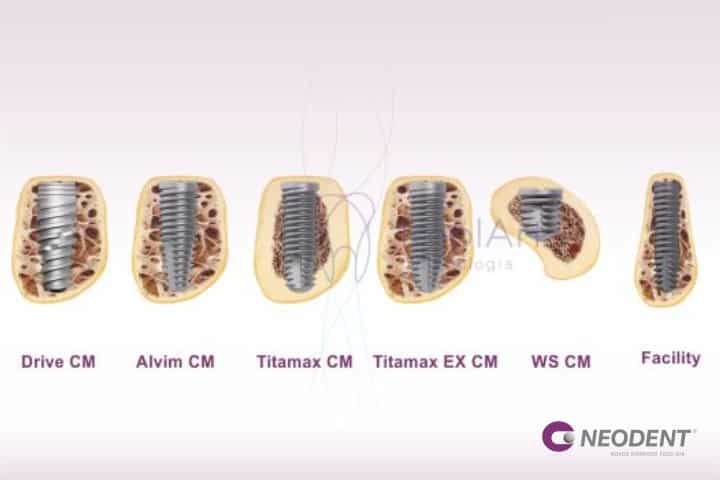
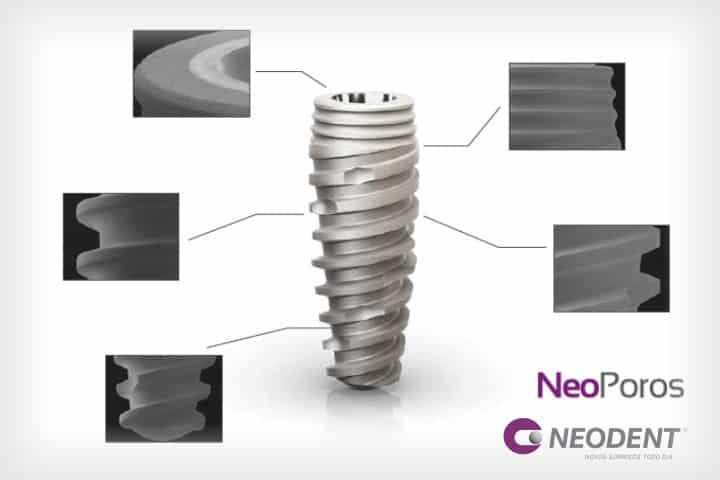
Neodent is a Brazilian company that manufactures and develops products and solutions for dentistry, such as titanium dental implants and related components. It has just launched the modern Zi white ceramic implant, an option for those looking for metal-free treatment.
Know the different types of Neodent Implants
Headquartered in Curitiba and with 23 branches throughout Brazil, it has been in the market for over 28 years and is part of the Swiss Straumann Group, which consequently guarantees the quality, origin and high technology of its products.It has an extensive range of dental implants, designed to offer primary stability and thus meet different needs and bone densities, with the possibility of screwed or cemented prostheses. Implant lines:
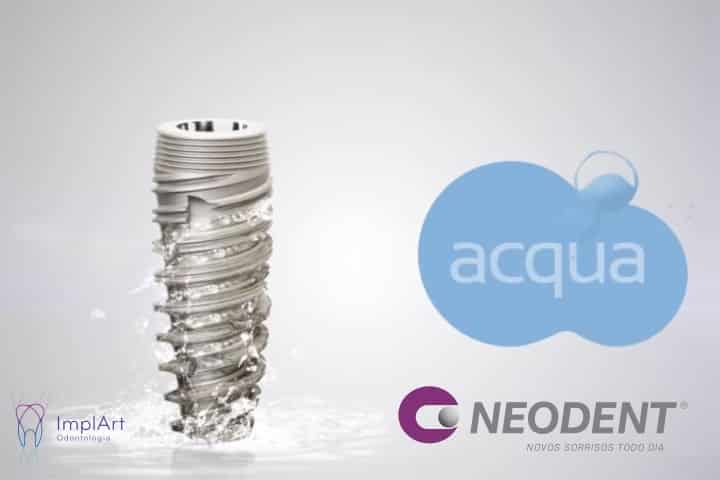
Hydrophilic surfacetechnology that allows the implant to wick better. This phenomenon is primarily important for promoting the integration of the implant with the body. The decision on which implant is best for your case will be made between you and your ImplArt dentist. The advantages and disadvantages of each system will be presented, taking into account the needs of each patient. It’s important to know that there are different types of implants, each with its own characteristics and healing time. If you have any questions, please contact us!
ImplArt Dental Clinic brings you another great novelty: the Zirconia implant, a highly biocompatible and resistant white ceramic.
The zirconia implant is a revolutionary innovation in the field of dentistry, offering an aesthetic and biocompatible alternative to traditional titanium implants. In addition to being metal-free, zirconia implants have a natural white color that resembles the root of the tooth, providing a more harmonious visual result, especially in aesthetic areas.
This advanced zirconia implant technology also offers benefits in terms of strength and durability, making it an excellent choice for patients looking for a functional and discreet solution for replacing missing teeth.
Certainly, the absence of metals in its composition, the ivory shade (similar to the color of human tooth roots) as well as the absence of sparkling reflections, characterize this implant as an aesthetic alternative in cases where the patient has very thin or atrophied gums, especially when these conditions occur in the anterior region (the most visible part of the arch).It is therefore an excellent option for those looking for a dental implant treatment with the best aesthetics available.
Pure Ceramic zirconia dental implant and other high-quality implants at ImplArt dental clinic
In addition, they have been developed with ZLA technology, similar to SLA, which favors and accelerates the osseointegration process, important for speedy treatment and the success of the implant, as well as its stabilization.
Above all, it is important to note that Straumann’s PURE Ceramic implants have undergone rigorous scientific research before being introduced to the market. Each implant is mechanically tested before being supplied to the dentist.
Pure Ceramic zirconia implant applied in the anterior region
White ceramic implants indicated for anterior areas and cases of high aesthetic demand
The Swiss company Straumann has been working in the field of implant dentistry, researching and developing dental implants, surgical instruments, prosthetic components and biomaterials for regenerating oral tissues since 1974. As a result, Straumann’s products and services are available in more than 70 countries and, of course, at the ImplArt Dentistry Clinic.
Implant dentist Dr. Roberto Markarian, director of the ImplArt dental clinic, is a member of the ITI – International Team for Implantology. This organization is linked to Straumann and brings together the world’s best specialists for the development of new products and techniques. So, if you have any questions about ceramic dental implants, please make an appointment or contact us. We’ll be happy to help you.


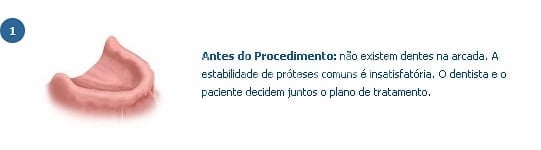
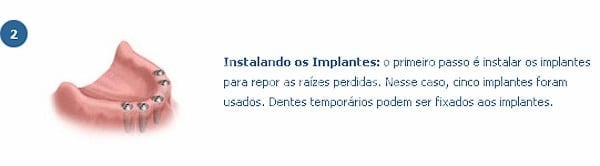
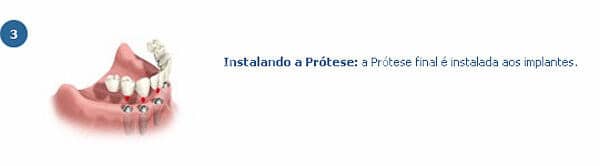
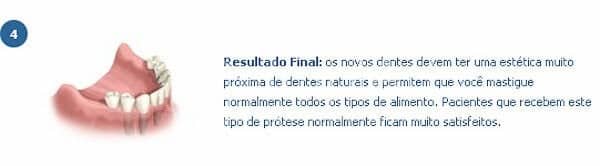
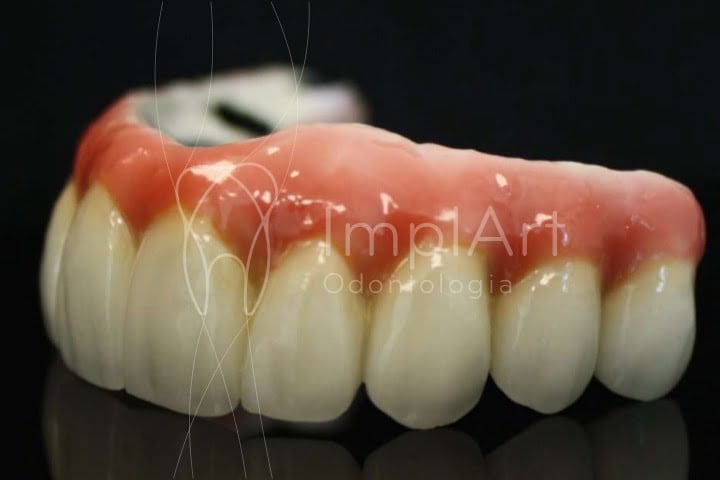
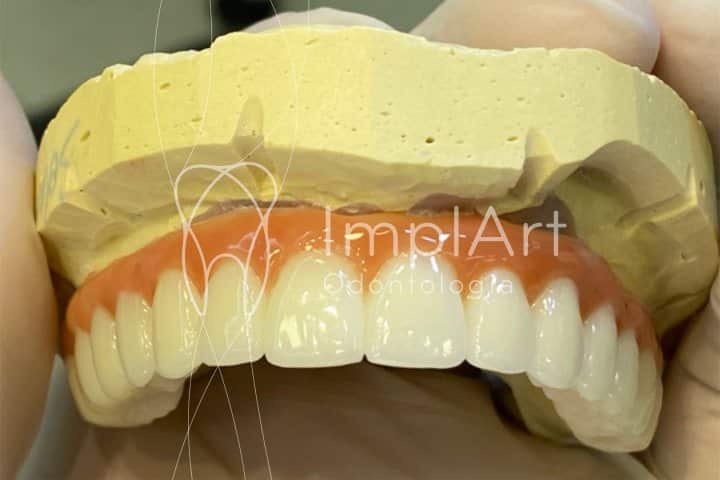
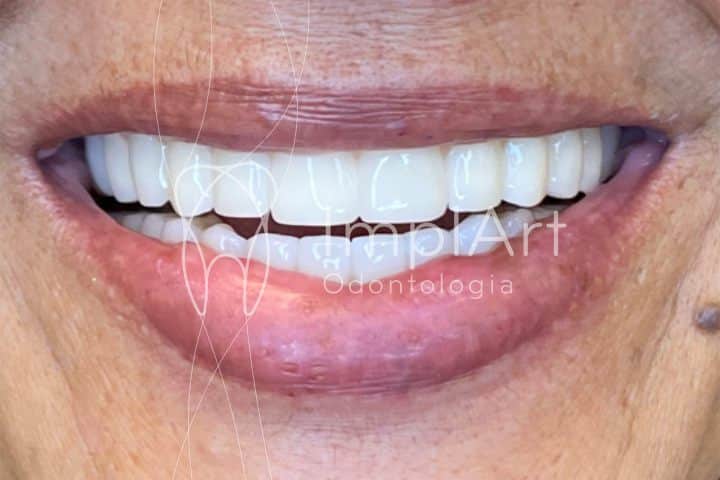
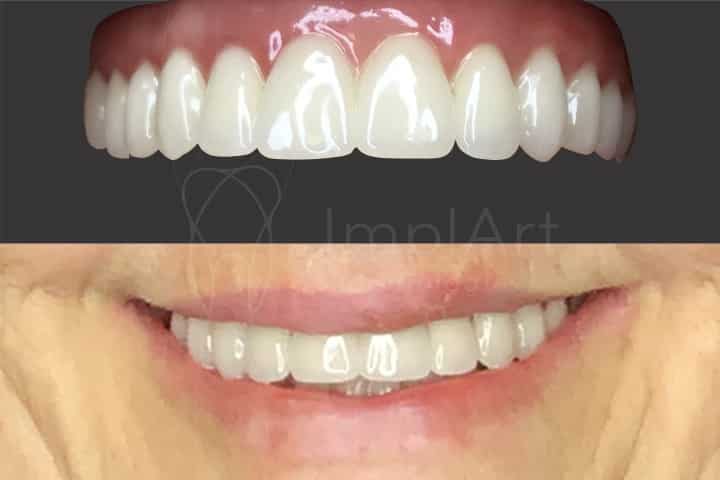
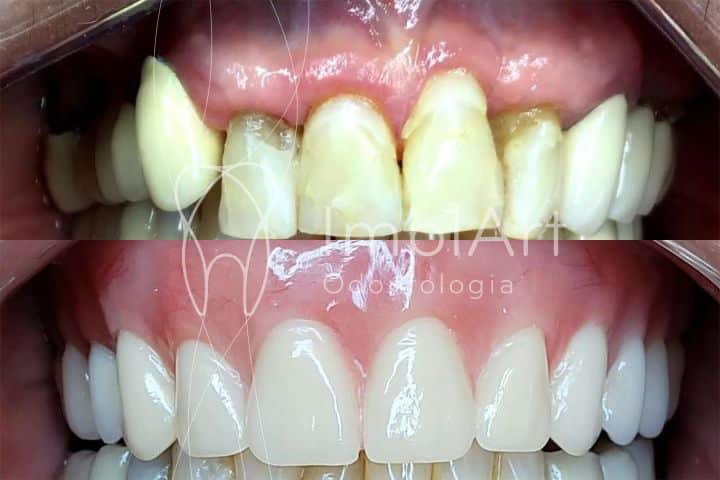
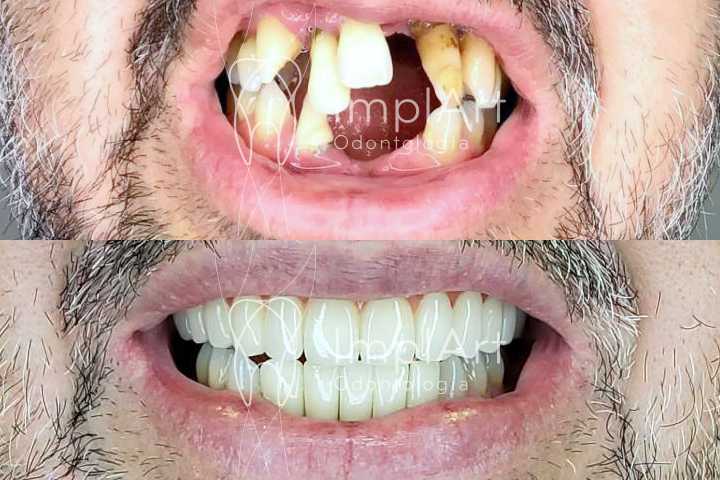
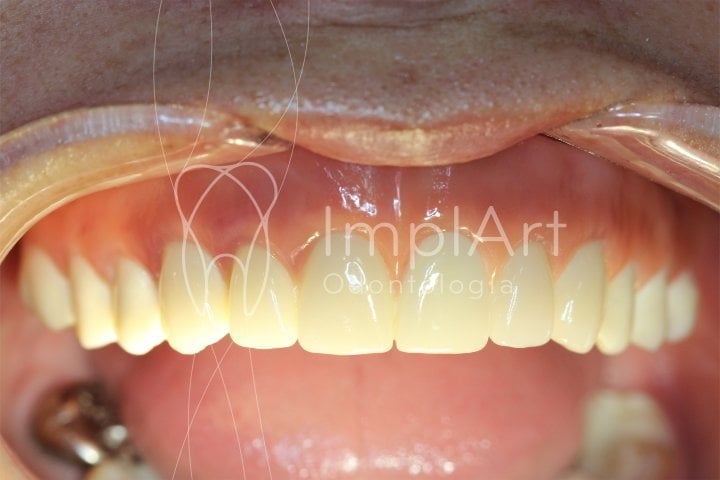
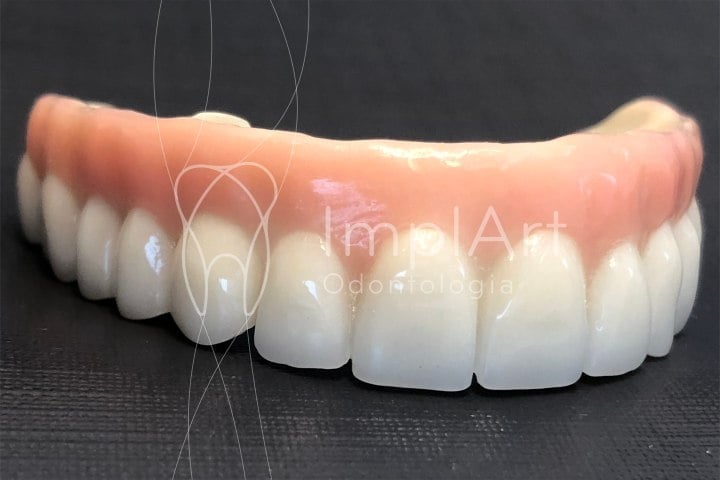
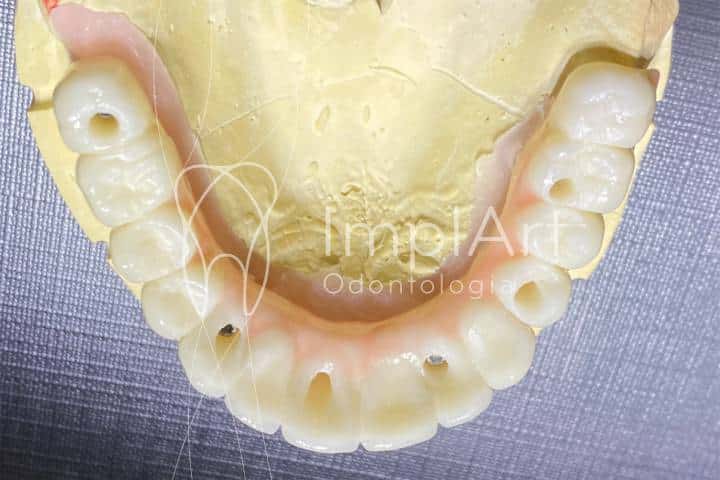
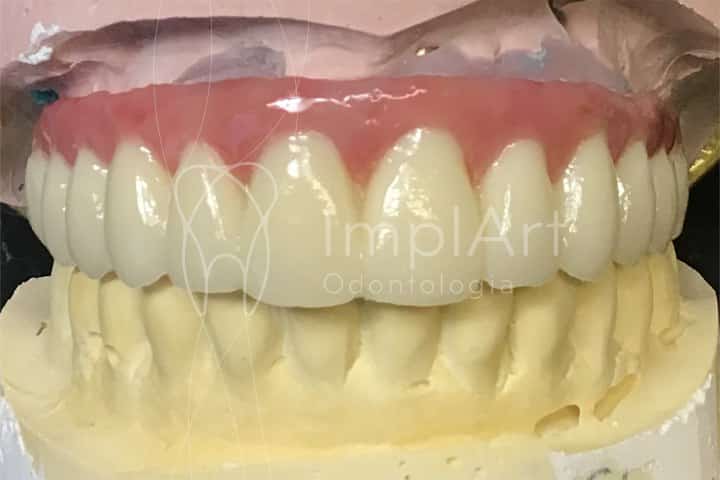
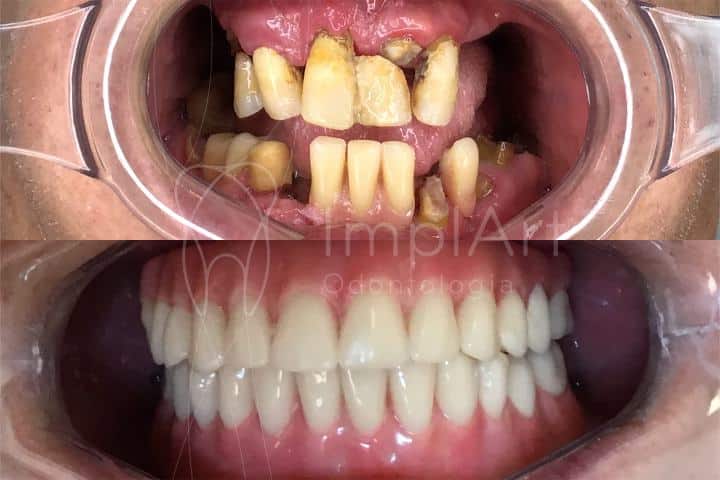
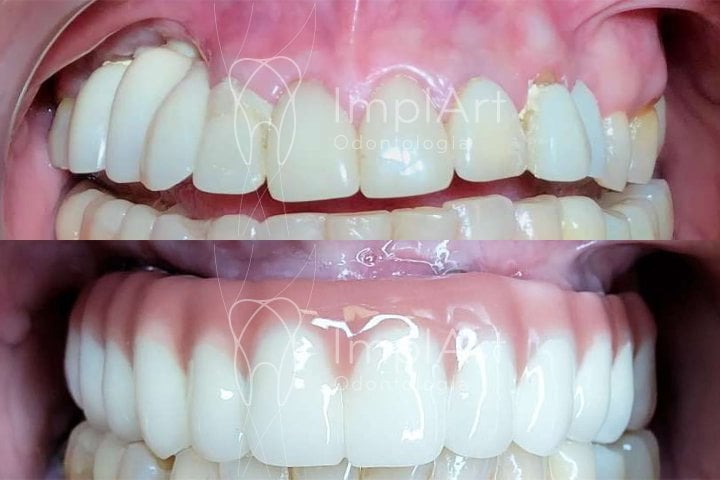

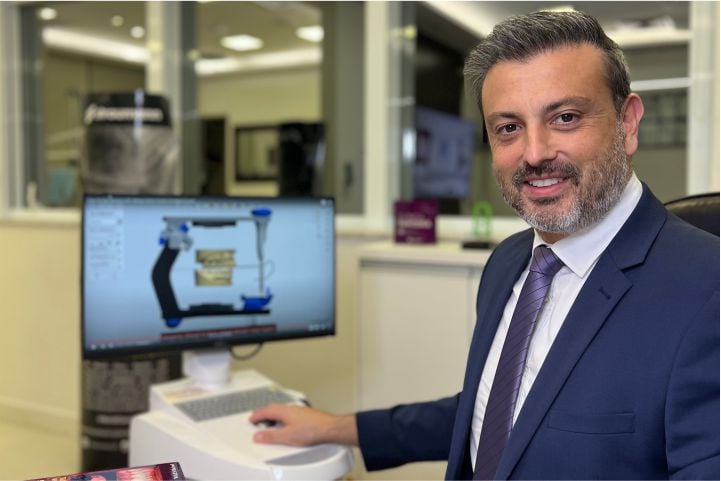
 Agende sua consulta agora por WhatsApp