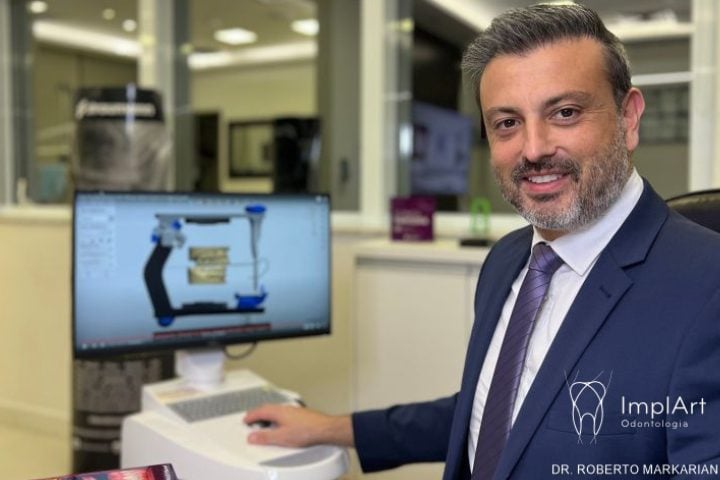
Dr. Roberto Markarian is a specialist in Implantology and Prosthodontics, with a solid academic background including a PhD, Master's degree, and Post-Doctorate in Implantology. As the director of ImplArt Clinic—a reference in aesthetic oral rehabilitation and implantology in Brazil—he brings over 25 years of clinical experience and a track record of more than 12,000 dental implants and oral rehabilitations performed.
As a researcher and educator, he has authored scientific publications in high-impact international journals and contributed chapters to international scientific books, including a publication by Springer Nature on Artificial Intelligence in Prosthodontics (2026, DOI: 10.1007/978-3-032-24895-4_10) and another by Wiley on Digital Implantology and Computer-Guided Surgery (2022). Believing that clinical excellence stems from the integration of up-to-date scientific knowledge, cutting-edge technology, and a genuine commitment to patient satisfaction, he pioneered digital implantology and computer-guided surgery in Brazil. CRO-SP 73583.
Metal-ceramic prostheses, also known as porcelain-fused-to-metal (PFM) prostheses, offer a reliable and durable solution for patients seeking tooth replacement with both aesthetic appeal and structural strength. These prostheses consist of a metal framework covered with layers of porcelain, ensuring a natural look while providing long-lasting stability. Widely used in dental rehabilitation, PFM prostheses are ideal for patients who need durable solutions, particularly in areas of the mouth where the force of chewing is greater.
At Clínica ImplArt, the application of metal-porcelain prostheses combines advanced dental technology with expert craftsmanship, ensuring optimal results for each patient. The clinic’s dental specialists are well-versed in modern techniques that improve both the functionality and the aesthetics of these prostheses, delivering a solution that blends seamlessly with natural teeth while maintaining high resistance to wear and tear over time.
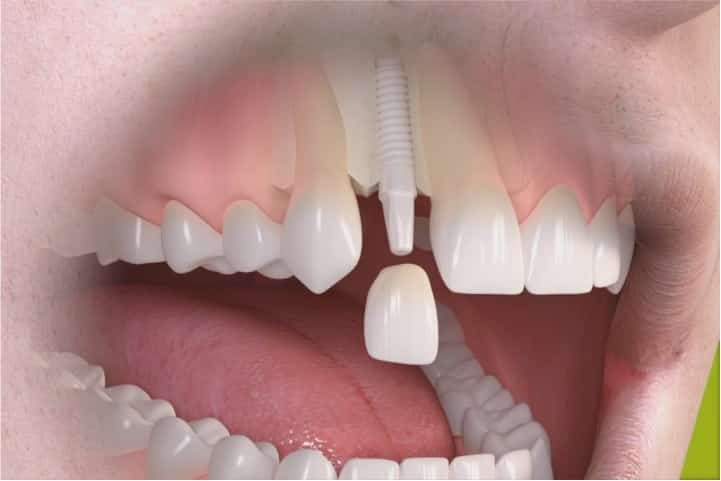
The metal-ceramic prosthesis is a traditional material for making crowns on implants
How do the prostheses work with this building materials?
Metal acts as a structural reinforcement, while porcelain offers aesthetics. Therefore, the positive points of this material are: resistance, great durability and aesthetics, characteristics that are very similar to natural teeth.
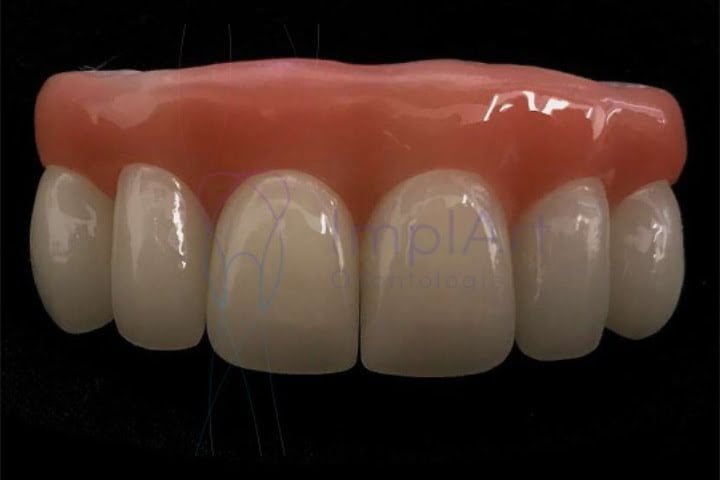
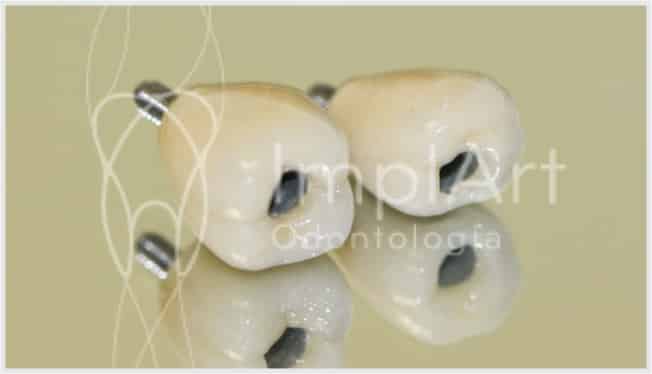
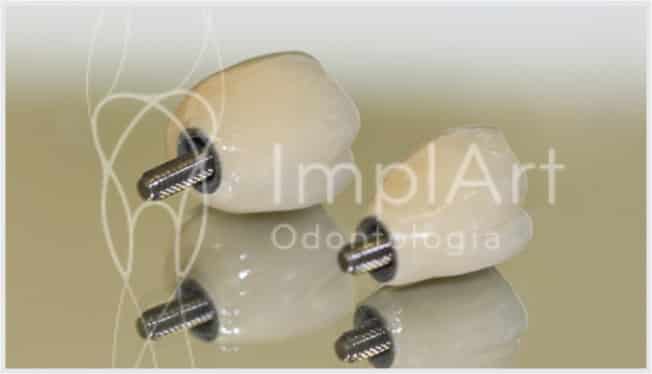
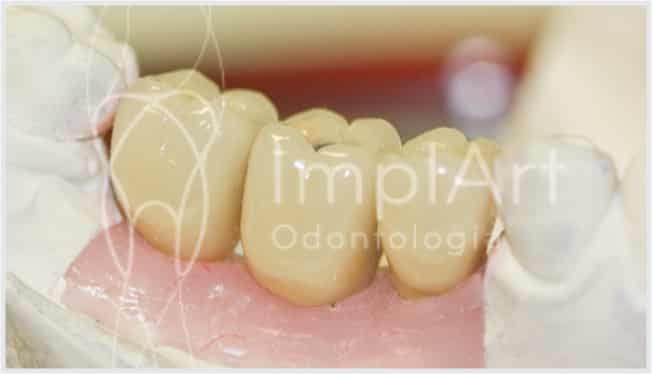
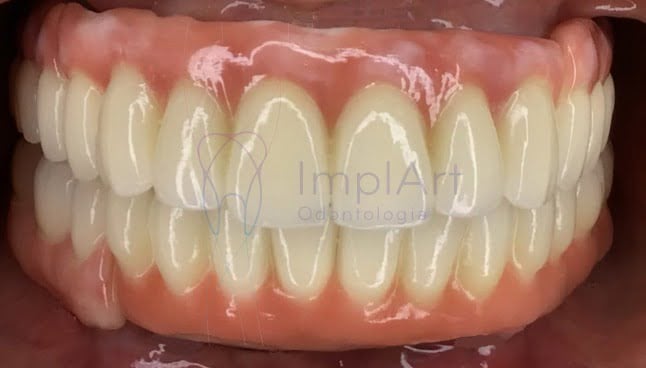
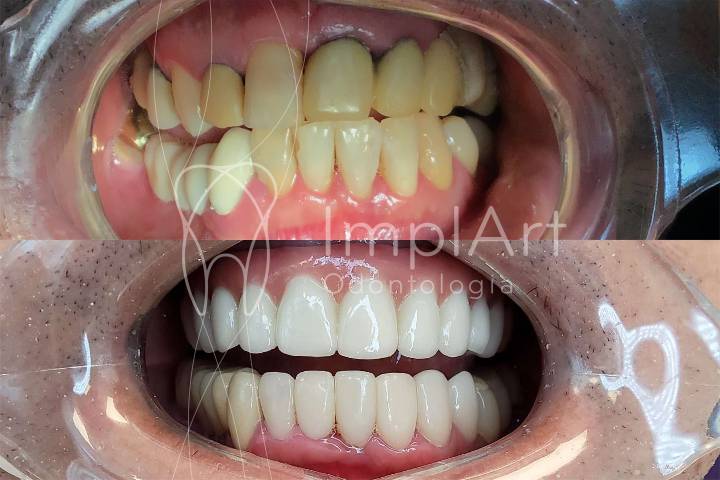
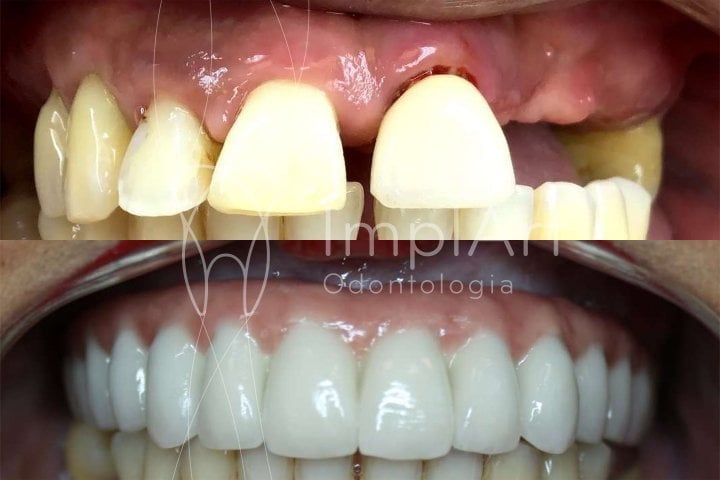
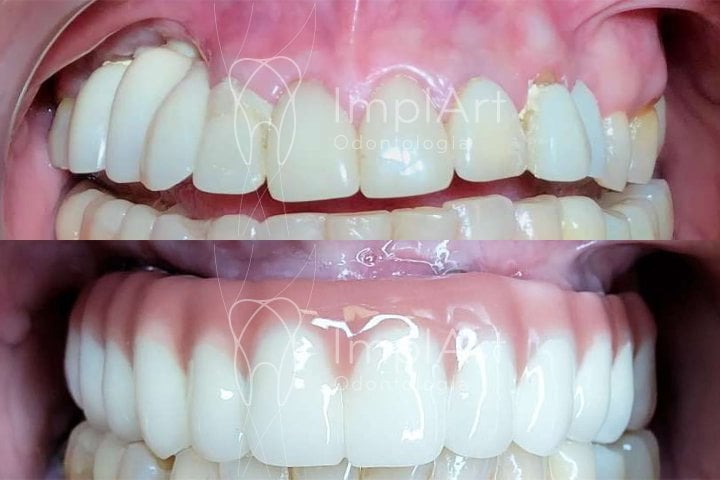
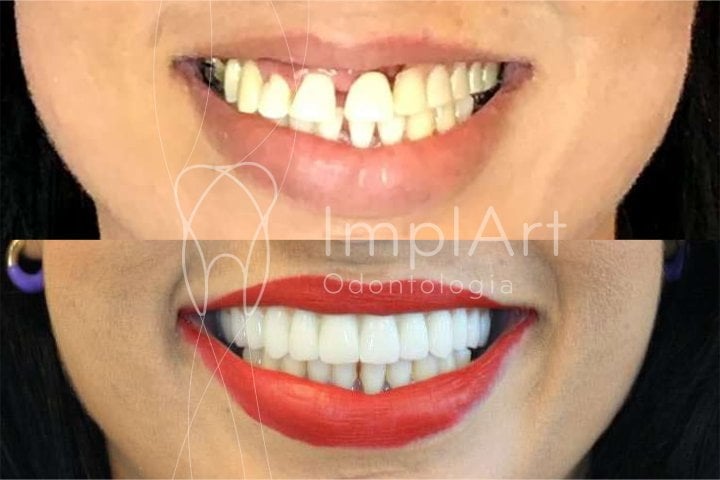
Metal-ceramic prosthesis for implantsMetal-ceramic prosthesis for implantsMetal-ceramic prosthesis for implants1 – Metal-ceramicprosthesisfor single implants 2 – Metal-ceramic prosthesis for individual implants 3 – Metal-ceramic prosthesis for implants – several teeth.
Among the indications for metal-ceramic crowns on implants are also crowns, bridges and complete fixed prostheses. One of the great difficulties in working with metal ceramics is the need to completely hide the metal.
Metal-ceramic prosthesis for implantsMetal-ceramic prosthesis for implantsMetal-ceramic prosthesis for implantsMetal-ceramic prosthesis for implantsMetal-ceramic prosthesis for implantsMetal-ceramic prosthesis for implants
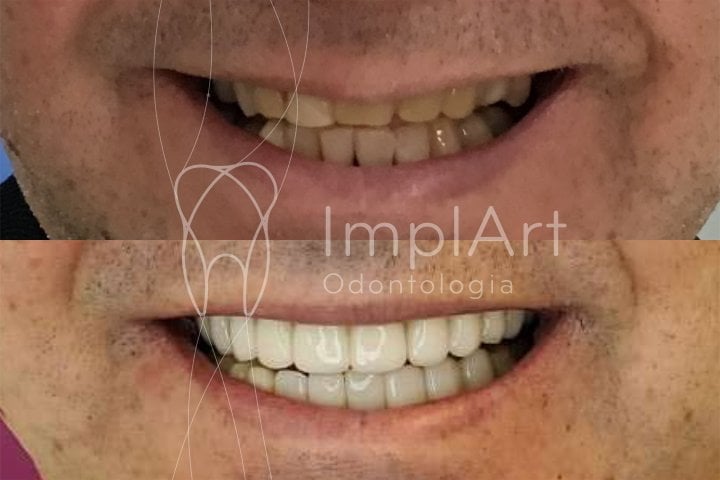
Example of metal-ceramic prostheses made at the ImplArt Clinic
We can do your metal-ceramic bridge in Brazil
How are the aesthetics of metal-ceramic dental crowns? Does the metal not show?
This model of crown can change over the years. Sometimes the gums can recede over time and expose a metal line, compromising the aesthetics of the smile.
Especially in areas where aesthetics are essential, we recommend zirconia crowns. These are prostheses with an internal structure made of zirconia, a white ceramic material with a shade and translucency very similar to human dentin.
In addition, the application of porcelain in metal-ceramic prostheses is completely handmade and the final aesthetic depends a lot on the skill of the ceramist (technician who works with ceramics).
If you have any questions about techniques, prices or treatments, please contact us or make an appointment. We’ll be happy to welcome you!
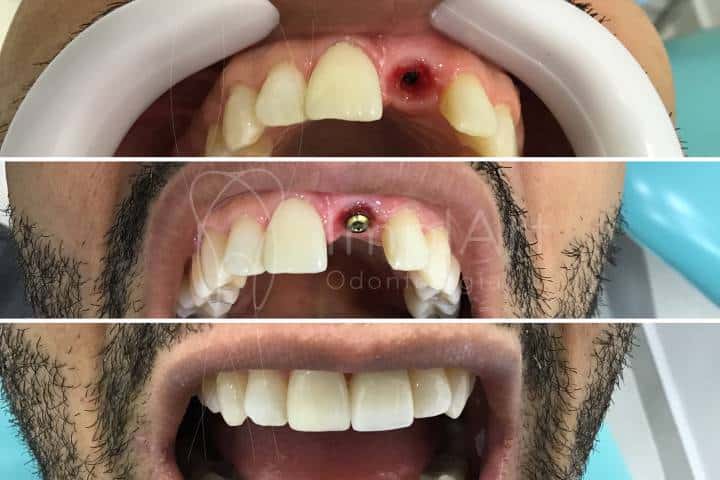
It is possible to replace a tooth by installing a dental implant with a CAD/CAM-designed crown within 1 month, in selected cases. This is possible because the ImplArt Dental Clinic works with Straumann Slactive implants.They have surface technology that favors and accelerates healing and the biological interaction between implants and bone (osseointegration).
A case of root fracture, for example, would require a dental implant as soon as possible, along with extraction. Successful osseointegration is what guarantees the stability of the implant to support the prosthesis and the masticatory load over the years. With normal implants, osseointegration usually occurs between 6 and 8 months.With Straumann Slactive implants, this time can be reduced to 3 to 4 weeks.
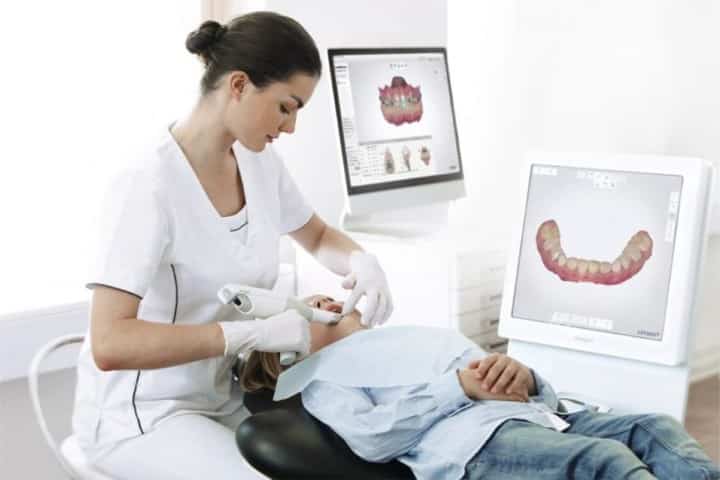
During this healing period, the patient wears a temporary prosthesis so as not to be left without a tooth.In the meantime, our prosthetics laboratory carries out the digital CAD/CAM design and manufacture of the definitive prosthesis using 3D printers. The design begins with a digital mold that is taken using an intraoral scanner, an intraoral camera that captures precise images of the patient’s mouth.
From these three-dimensional images, it is possible to design a prosthesis with the perfect fit and shape for tooth replacement. The prosthesis is made using a 3D printer. It can be made of porcelain, a very resistant, aesthetic material comparable to natural human teeth, and with a metal or zirconia internal structure.
Some people prefer to come twice to our clinic in a stage protocol for Implants instead of coming only once. This happens because if you stay for the full length of the treatment, you need to stay at least one month in Brazil but instead, if you choose a stage treatment you can come normally for one week and go back home. Then, after a few months, when you have availability, you can come again for another week and finish your work.
It is worth noting that the possibility of tooth replacement with implant installation, gum grafting or bone grafting, with the definitive prosthesis in just 1 month, is only possible in selected cases.
An assessment by our specialized team will determine this possibility taking into account certain characteristics, such as bone volume and general state of health (in general, as well as of the teeth and gums).
Alternatives to dental implants for tooth replacement
As an alternative to implants, we can use dental prostheses in some cases. Adhesive dentures are a way of replacing a missing tooth. The main feature of this prosthesis is that it is attached to neighboring teeth using metal fins and dental adhesive.
If you have any questions about tooth replacement with dental implants, treatments for bruxism or average prices, please make an appointment or contact us. We’ll be happy to help you.
Tooth replacement in 1 month with rapid implants and DayClinic
Dr. Roberto Markarian is a reference in dental implants and computerized dental prostheses in Brazil. As well as having more than 10,000 implants installed, he is a researcher who produces knowledge that is published worldwide in renowned scientific journals in the field of dentistry. He is responsible for promoting knowledge and high technology applied in all the treatments offered by the ImplArt Clinic.
A dental implant is a titanium or all-ceramic pin that has a similar function to a tooth root, i.e. to provide support for the teeth. Over the years, dental implants have been developed with different shapes and compositions, in order to always seek better initial stabilization and durability throughout life. Currently, the fastest implant option is the Slactivedental implant version with rapid healing of 1 month. This means that one month after implant surgery, the final crown can be fitted.
Straumann technology
We certainly can’t fail to mention the modern ceramic dental implant which, combined with the pure 3D zirconia crown, is the complete combination for metal-free oral rehabilitation. This treatment is especially suitable for people who are looking for excellence in aesthetic results, both when choosing dental implants and prostheses. In addition, it can be used for those patients who want to avoid the use of metals due to an allergic condition.
This option is gaining more and more ground as many patients want to eliminate the use of metal in their arches, either out of preference or even medical restrictions. There are currently several types of implant, each with its own characteristics, making it easier to choose according to the patient’s wishes. Let’s find out more about this very modern white implant option, which has allowed one version of the implant to be made of titanium.
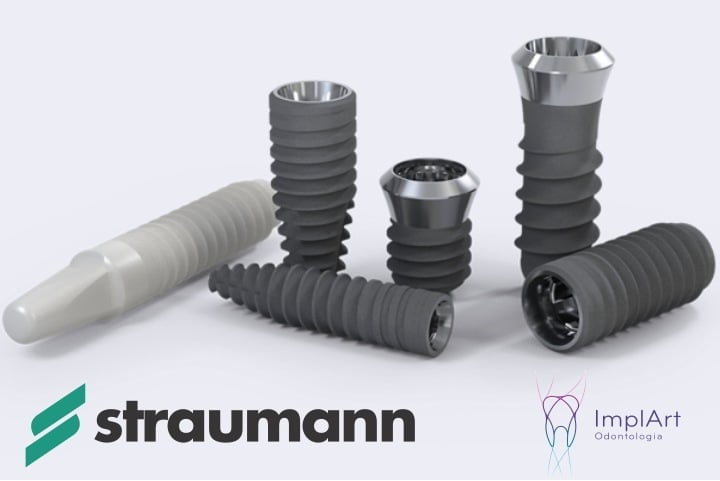
Some high-tech implant models
The ImplArt Dental Clinic in Brazil only works with high-tech implants, including Straumann Swiss implants (which are widely considered to be the best in the world). Straumann offers a wide range of implants in a variety of shapes, diameters and lengths to meet a wide range of needs in implant dentistry.
Implants of reduced length and diameter, they are suitable for people with bone defects who do not want or cannot undergo bone grafting procedures. They are composed of a high-performance alloy, specifically designed above all to provide greater strength than pure titanium. They have excellent bone integration capacity.
Ivory-colored all-ceramic implants, so they resemble the shade of the tooth roots. They can be a treatment option for more apparent areas of the arch or patients with very thin gums. They can also be an option for treating patients who are sensitive to metals such as nickel.
They have an internal prosthetic abutment connection, thus reducing manipulation of the gingival tissues. For this reason, they can be a treatment option for more apparent areas of the arches, as they provide a more aesthetic result.
They have a rough surface technology that provides an ideal structure for the adhesion of cells that stimulate and therefore accelerate the osseointegration process (bone formation and stabilization around the implant).
They have surface technology that stimulates and accelerates the osseointegration process (bone formation and stabilization around the implant).They have a hydrophilic surface for the formation of blood clots in the implant.
The hydrophilic and chemically active properties of the SLActive surface provide a larger accessible surface area for greater absorption of blood proteins and formation of the fibrin network.
These are ideal conditions for blood clots to form and for the healing process to begin. All Straumann implants are made from safe materials that are certainly biocompatible with the human body.
Swiss implant manufacturer Straumann offers a complete range with various clinical applications.
Improve your quality of life with high-tech dental implants!
High-tech dental implants – Advantages?
Tooth loss can lead to aesthetic, functional and bone problems, so a quick replacement is essential. More advantages:
Dental implants – Contraindications (each case is assessed individually)
In patients with general health problems
When there is not enough bone to place the implant (can be solved with bone grafting techniques)
Dental implants: how are they done?
The titanium implants are installed into the bone through a small operation in the dental office, under local anesthesia. Once the dental implant is in place, it takes an average of 1 to 4 months to adhere to the bone (osseointegration), depending on the type of implant chosen.
In some high-tech Straumann implant models, osseointegration can occur in less time. Therefore, after this period, the molds for the installation of the fixed prosthesis on the implants can begin.
In some selected cases, the prosthesis can be placed on the same day as the surgery with immediate loading. If you have any questions, please contact us or make an appointment. We at ImplArt Implants Clinic will be happy to help you!
Immediately loadeddental implants are a technique in which the procedure of placing a dental implant and fixed prosthesis is carried out more quickly. In this way, it helps patients regain their self-esteem and their smile without the need to visit the dentist’s office several times. Immediate loading means placing a prosthesis – usually temporary – on the implants immediately after surgery.
Here at the ImplArt Dental Clinic we perform implants with immediate loading. However, each case is assessed on its own merits to see if it is the most appropriate and safest way to ensure the success of each treatment. See more information below.
How does Immediate Load of Implants work?
Learn more about the technique – indications
But can it be done in all cases?
The answer is no. The possibility of an immediately loaded implant depends on fulfilling pre-requisites that can only be ascertained at the time of implant insertion. In addition to checking all the preoperative X-rays and CT scans, there are factors related to the surgery itself. Thus, the final torque of the implant at the time of bone insertion must be verified. It must therefore be checked after the implant has been installed.
In addition, it is important to note that the ideal is always to wait for the dental implant to heal before loading it. The making of a final prosthesis certainly involves aesthetic and functional studies, which have their own timeframe for preparation and testing by the patient. Therefore, if immediate loading is possible, it should ideally only involve a temporary prosthesis. In this way, the final prosthesis can be made with the implants already healed, and the aesthetics and functionality can be studied in depth, without putting the newly inserted implants at risk.
Immediately loaded implants – indications
The dental implant technique with immediate loading can be carried out when bone quantity and quality are normal and also when occlusal habits are favorable for the procedure so that there is no overload from chewing on the site.
Therefore, technique depends on certain conditions in the patient’s dental arch and general oral health. These conditions are assessed individually during a consultation here at the ImplArt Clinic.
The immediate loading dental implant technique can therefore be indicated for the following cases:
People with a completely missing lower arch,
Full arch with a few teeth,
Single or individual teeth in the anterior region of the mouth,
In some cases, dentures are fixed on some continuous teeth,
In all cases and situations, first and foremost the best course of action is to consult an implant dentist and carry out a full assessment to determine what and how will be done. Only this assessment can determine whether an immediately loaded dental implant is indicated or whether another rehabilitation procedure would bring a better result. In any case, implants are a great way to replace teeth, see before and after cases with dental implants.
Below is a video showing how total implant surgery is performed with a fixed prosthesis on implants, the protocol prosthesis.
Read more about immediate loading – indications:
There are some contraindications to immediate loading, as described in another article. Read more by clicking here.In our blog, we mention more differences between a conventional implant treatment and one using this technique. Click here to read the article.If you have any questions, please contact us. We at Clinica Dentaria ImplArt are happy to answer any questions you may have.
schedule your appointment at the implart clinic by phone or whatsapp
Immediate loading for dental implants - indications
Fixed zirconia prostheses with individualteeth (one by one) is the technique that fixes the crowns on each tooth individually, i.e. the crowns are separate and not joined together.Discover our new model of fixed dental prosthesis with teeth separated one by one, made using computerized techniques. It’s our best dental prosthesis on a total implant, made with the best materials and techniques, check it out!
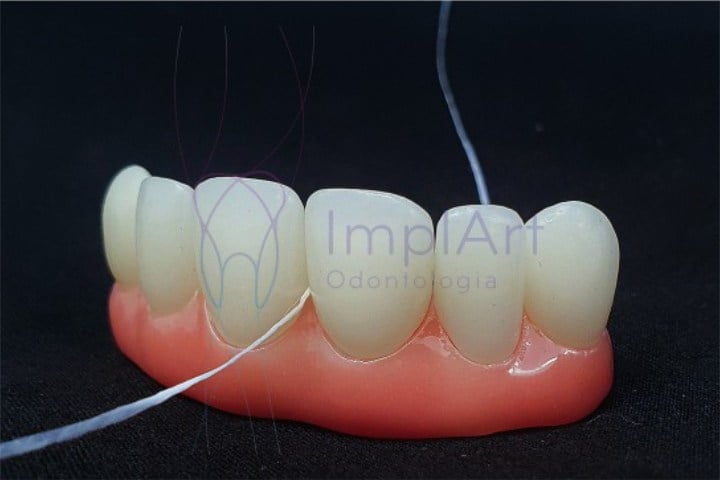
Dentures with fixed crowns allow flossing. With other types of fixed prosthesis, it is not possible to use dental floss for cleaning, as the teeth are made together.
New fixed zirconia prosthesis with individual teeth brings great satisfaction due to its naturalness
However, fixed prostheses with individual teeth are not suitable for those who have lost only one tooth, or teeth in alternating positions.
The procedure to further individualize teeth with a fixed dental prosthesis consists of inserting dental implant pins into the bone. The zirconia crown is then fixed onto a framework, which in turn is attached to the dental implants.
However, the indication for a fixed prosthesis with individual teeth needs to be examined by the implant dentist. In this way, the indication for a dental implant must be made and the feasibility of making this modern type of prosthesis with individualized teeth verified.
In fixed prosthetics with one tooth at a time, there is a reinforcing structure, and then each individualized zirconia crown of just one tooth is cemented onto this structure.
Can I make a more individualized fixed prosthesis in which the teeth look more natural?
In principle, the basic requirements for making fixed zirconia prostheses with individualized teeth are:
Possibility of dental implants: The bone should allow the necessary implant pins to be made. However, if the bone is not sufficient, bone grafting can be carried out in the area.
Small bone volume: Fixed prostheses with more separated teeth require a large volume of components. This is why in cases of severe bone loss or when the patient has lost their teeth a long time ago, it becomes easier.
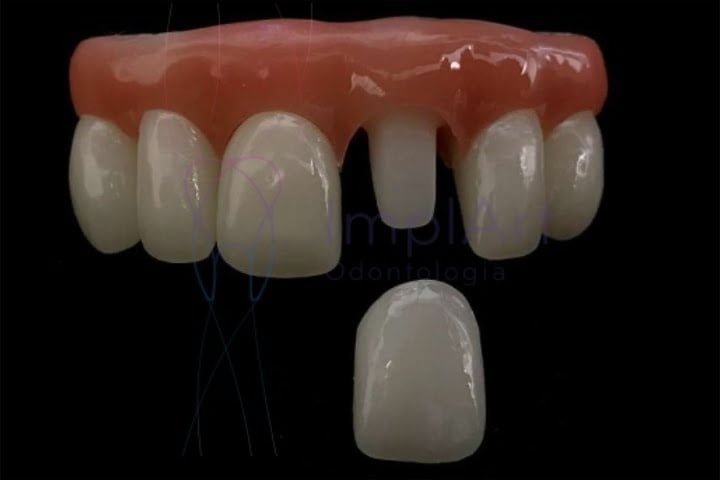
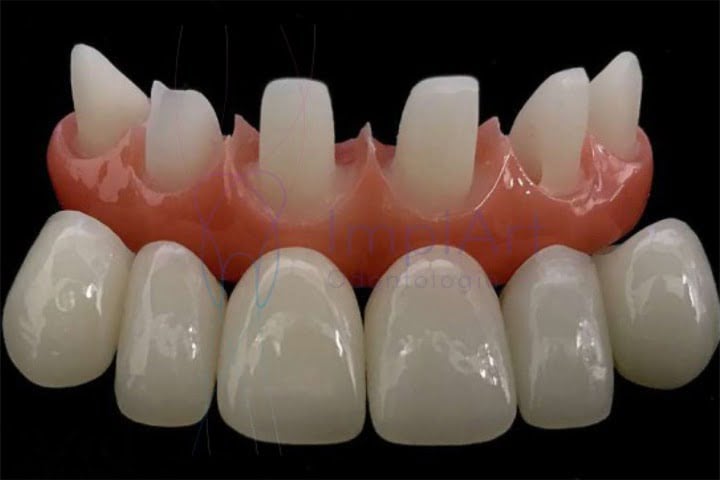
Fixed dental prosthesis with individualized zirconia crowns of several teeth (the teeth are separated) disassembled. A layer of gum of the same color as the patient’s original gum is applied to the structural part. Each tooth needs to be installed separately during the fixing of the prosthesis.
The main advantages of a fixed prosthesis with one tooth at a time:
It makes flossing possible. This is very pleasing to patients, as they feel they have a natural set of teeth
Fixed dentures with separated teeth offer an extremely natural and comfortable result.
Which materials can be used for prosthetic work on separated teeth?
For the structure: the main material used today for the structure of this type of fixed dental prosthesis is translucent dental zirconia. However, we can also use a very resistant metal as a reinforcing material (hybrid prosthesis), and there are now more technological resins (PEEK) that make it possible to make fixed prostheses.
For dental crowns: to make individual crowns (one by one), we can use any material that is used for this purpose, such as ordinary porcelain crowns. However, we prefer to use translucent dental zirconia, an extremely resistant and aesthetic material.
During the provisional phase, the crowns are made of resin so that we can check the aesthetics and symmetry of the smile together with the patient and make the necessary corrections before finalizing the individualized and customized dental prosthesis.
If you have any questions about pure zirconia fixed prostheses with individual teeth, about the value, price or step-by-step, please contact our team or make an appointment. We’ll be delighted to hear from you!
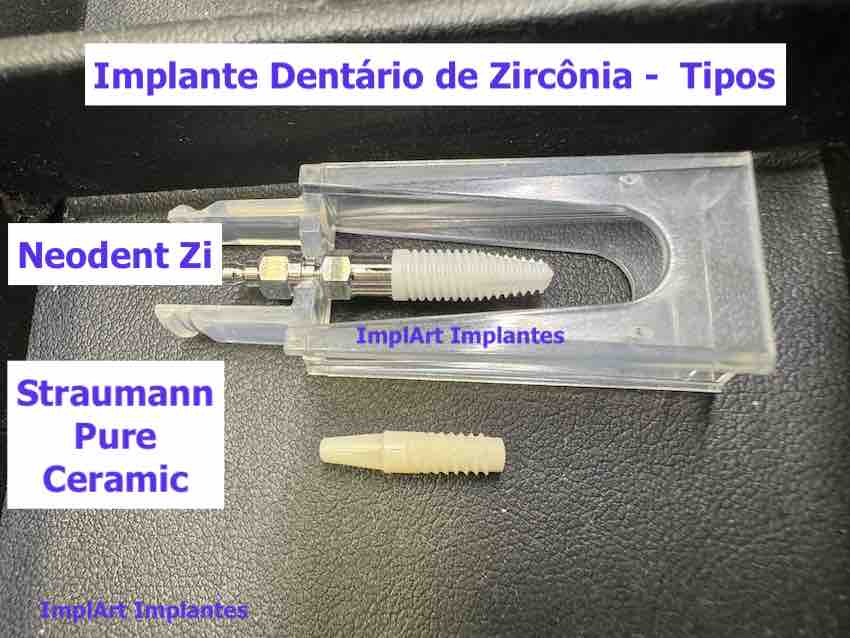
Neodent is a Brazilian company that manufactures and develops products and solutions for dentistry, such as titanium dental implants and related components. It has just launched the modern Zi white ceramic implant, an option for those looking for metal-free treatment.
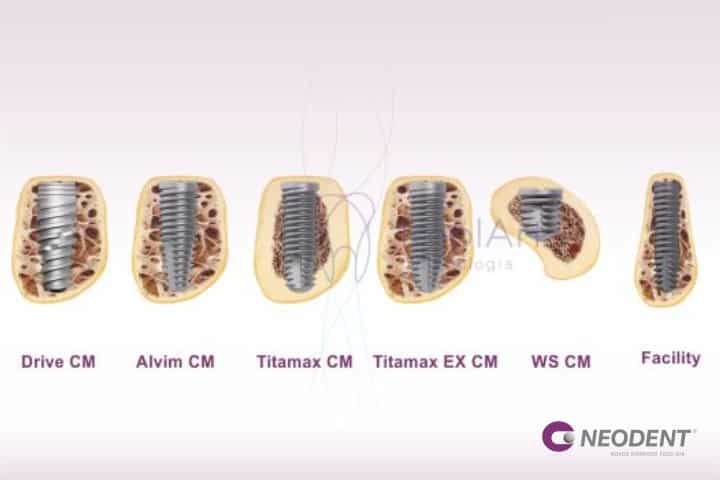
Know the different types of Neodent Implants
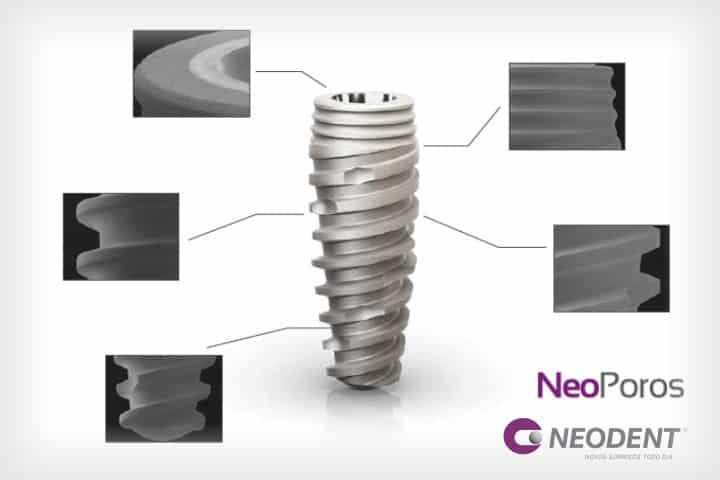
Headquartered in Curitiba and with 23 branches throughout Brazil, it has been in the market for over 28 years and is part of the Swiss Straumann Group, which consequently guarantees the quality, origin and high technology of its products.It has an extensive range of dental implants, designed to offer primary stability and thus meet different needs and bone densities, with the possibility of screwed or cemented prostheses. Implant lines:
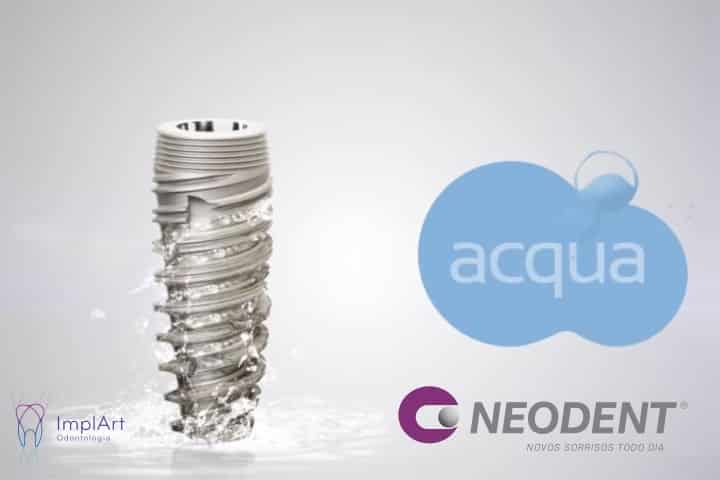
Hydrophilic surfacetechnology that allows the implant to wick better. This phenomenon is primarily important for promoting the integration of the implant with the body. The decision on which implant is best for your case will be made between you and your ImplArt dentist. The advantages and disadvantages of each system will be presented, taking into account the needs of each patient. It’s important to know that there are different types of implants, each with its own characteristics and healing time. If you have any questions, please contact us!
Digital dentistry and the use of advanced technologies are already a reality in dentistry. The ImplArt Dental Clinic is always investing in technologies that make computer-planned treatments not only faster and more precise, but also more comfortable.
Digital Dentistry – Discover the advantages of using computers in dental treatments
3D tooth printer
3D printers are very versatile, because they are able to build objects of various shapes according to a three-dimensional digital design. Prostheses and dental restorations are also being made using this concept at Clinica Dentaria ImplArt.
We have the two main 3D tooth printers developed in the world: Cerec from the German company Sirona (including the most up-to-date version of the system, Cerec Primemill), and Ceramill Motion II from Austria’s AmannGirrbach. They have robotic arms that mill the chosen dental material (which can be porcelain, ceramic, zirconia, etc.) until it acquires the shape of the computer-designed restoration.
The result is a piece made very quickly, completely customized to the patient’s needs, with perfect color and fit. It is also possible to make an identical copy of the shape of a prosthesis that the patient is already used to, but which needs to be replaced because it has suffered a fracture or was made with unsightly material (metal or stained resin).
Digital smile project
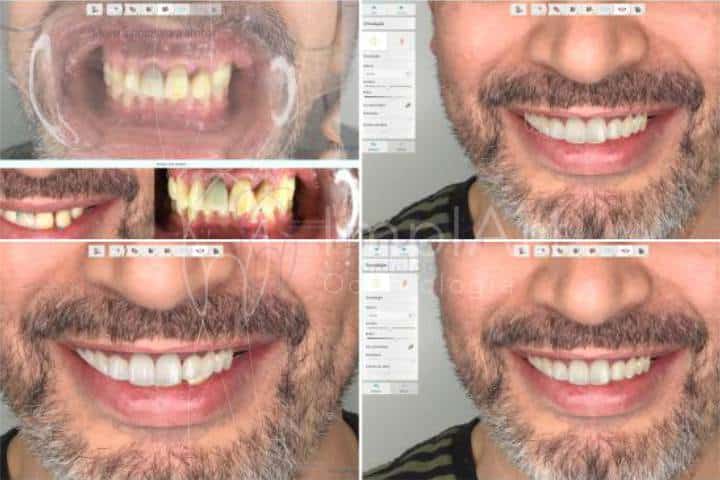
We use modern digital dentistry software to design computerized dental treatments. With the help of these programs, we can design aesthetic dental restorations, crowns, dental contact lenses and even full dentures on implants.
We also design orthodontic treatment by simulating tooth movement and planning dental implant treatment. The aim of the digital smile project is to carry out a treatment that seeks to harmonize the functionality and aesthetics of the smile.
We create restorations and prostheses with customized shapes and colors for each patient.
Intraoral scanner
The intraoral scanner is a high-precision camera that captures intraoral images, i.e. of the teeth and gums. These images are transferred to a computer which creates a three-dimensional digital mold of the dental arches, the basis for planning the entire treatment.
With digital modeling, our team is able to design restorations and prostheses according to each patient’s needs, even mimicking the shades of neighboring teeth.
For the patient, this type of molding is much more comfortable and faster, unlike the old putty molds. Computer modeling also avoids errors in dental prostheses made with conventional putty molds.
Computer-guided total implant surgery is a technique that allows for less invasive, precise and comfortable implant surgeries. It eliminates the need to make large cuts and sutures in the gums, thus making the post-operative period smoother and the recovery quicker.
The main purpose of this feature is to provide the patient with greater comfort, both during the surgical process and in the post-operative period. Find out more by clicking here.
If you have any questions, please contact our Dental Clinic or come and visit us.
The Pure Ceramic zirconia implant from the Swiss company Straumann is a highly resistant and aesthetic option for replacing a natural tooth. The dental implant is made of metal-free ceramic material and has a white color, which is more similar to the roots of natural teeth. With this implant, it is possible to achieve an aesthetic and functional result that is far superior to metal implants. In addition, zirconia is a biocompatible and anti-allergic material, which minimizes the risk of rejection or complications. Therefore, the Pure Ceramic zirconia implant is a great choice for anyone looking for a beautiful, healthy smile.
Why should you do your zirconia implant in Brazil
The dental zirconia implant combined with the use of a pure 3D zirconia crown is the complete combination for metal-free oral rehabilitation. This treatment is especially suitable for people seeking excellence in aesthetic results, both when choosing dental implants and prostheses. In addition, it can be used for those patients who want to avoid the use of metals due to an allergic condition.
This option is gaining more and more ground as many patients want to eliminate the use of metal in their arches, either out of preference or even medical restrictions. There are currently several types of implant, each with its own characteristics, making it easier to choose according to the patient’s wishes. Let’s find out more about this very modern white implant option, which has allowed one version of the implant to be made of titanium.
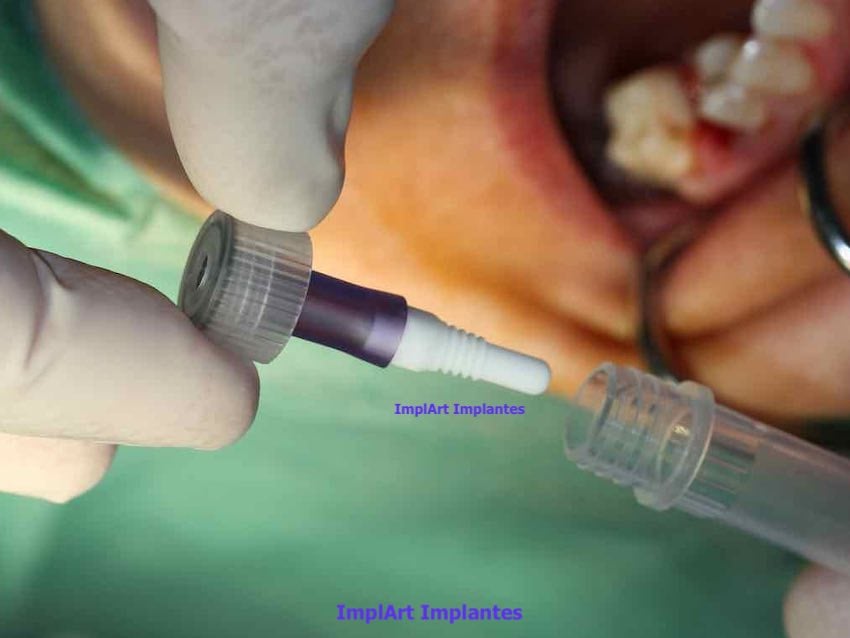
Image of a Zirconia Implant freshly removed from its sterile packaging during surgery
Using a zirconia implant is an option in cases of allergies or major aesthetic needs
In addition to their natural color, Straumann Pure Ceramic implants have a surface developed with ZLA technology, similar to SLA, which favors and accelerates the osseointegration process, important for the success and stabilization of the implant.
The implant has the color of a natural tooth, because it has no sparkling reflections, and is very useful in cases of thin or atrophied gums. This makes it possible to obtain a natural-looking and aesthetically pleasing end result, especially for application in the anterior region (the most visible part of the arch).
Zirconia implant surgery images – photos
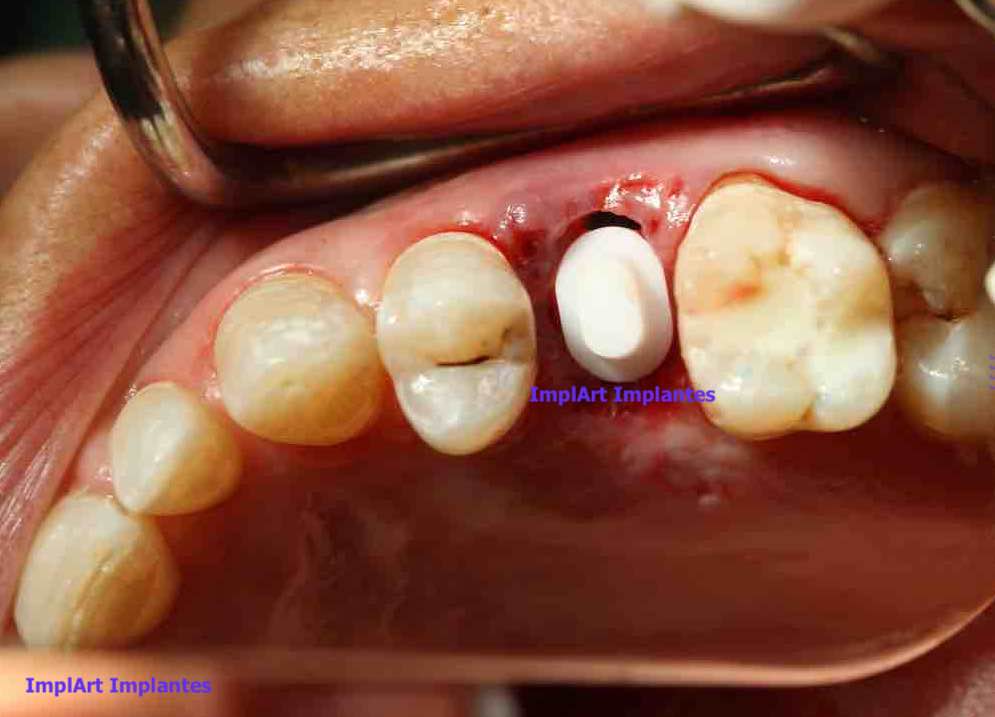
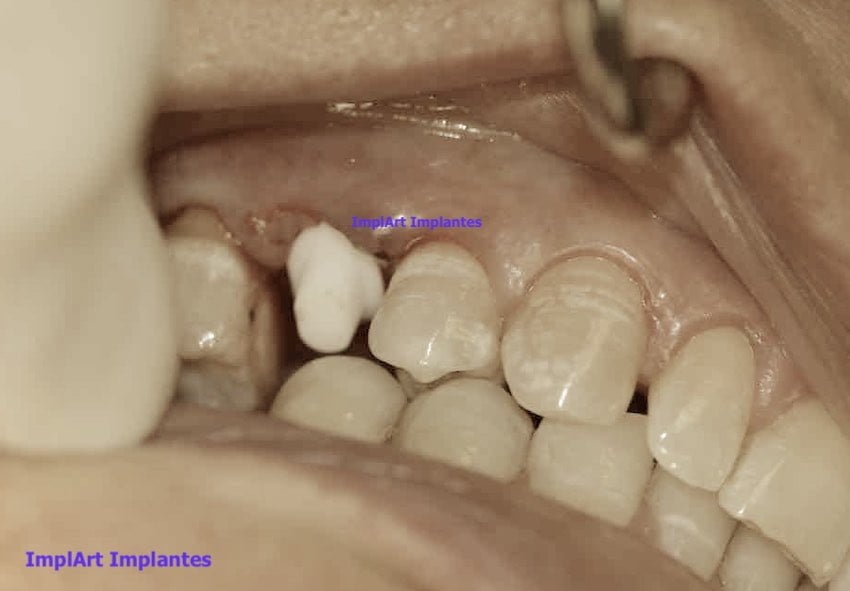
Image of a newly installed zirconia dental implant in the upper jaw.Image showing the immediate post-surgical appearance after the placement of a zirconia implant for the premolar tooth.
In these images of a surgery carried out in our clinic with a zirconium dental implant, the aesthetic nature of the material can be seen. After initial gum healing, bone healing begins, which takes an average of 2 months. After this time, the porcelain crown can be fitted over the implant.
The zirconia implant: Straumann Pure ceramic has been extensively tested and proven
The Straumann Pure ceramic implant was subjected to rigorous scientific research before being introduced to the market. Each implant is mechanically tested before being delivered to the dentist. This quality can only be guaranteed by a world leader in scientific research and the development of solutions for implant dentistry.
Pure Ceramic implant applied in the anterior region
Straumann has been researching and developing dental implants, surgical instruments, prosthetic components and biomaterials for oral tissue regeneration since 1974. Straumann’s products and services are available in more than 70 countries.
Image of the types of zirconia implants currently available in Brazil. We have the Straumann Pure Ceramic zirconia implant and the Neodent Zi implant available.
What is the healing time for zirconia dental implants?
The recovery period for the Straumann Pure zirconia implant can vary, depending on several factors, including the patient’s oral health and the type of procedure performed.
After implant surgery, the gums around the implant site need time to recover. This usually takes two to four weeks, but can vary according to the patient’s individual response.
In addition, the process of osseointegration, which is when the bone fuses to the implant, is a crucial part of recovery. Specifically for the Straumann Zirconia implant, osseointegration can occur between 2 and 6 months, while in the case of the ZI implant (Neodent) it can take 3 to 6 months to fully integrate.
Remember, each case is unique and recovery time can vary. It is always important for us to examine the patient in order to offer personalized advice.
Conclusion
Implant dentist Dr. Roberto Markarian, director of the ImplArt dental clinic, is a member of the ITI – International Team for Implantology, an entity linked to Straumann that brings together the world’s best specialists for the development of new products and techniques.
We are among the clinics that use the most Zirconia Dental Implants in Brazil today, so we are used to carrying out such treatments.
If you have any questions, please make an appointment or contact us. We’ll be happy to help you.
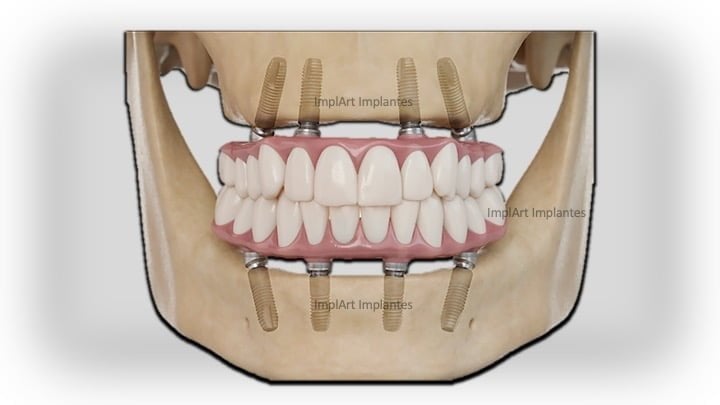
I’m sure many of you have heard of the Full Arch Dental Implants treatment. But do you know how the treatment works? Fixed Implant-Supported Prosthesis treatment involves two stages, one surgical, with the insertion of dental implants, and the other prosthetic, with the realization of the fixed prosthesis on the implants. It can be carried out on both the upper and lower arches. This treatment is also known as All-on-4, All-on-6 or even All-on-X.
Through simple and painless surgery, implants are inserted that will support a fixed prosthesis. Normally 4 to 6 implants are inserted in each arch. The surgery is carried out in an office and the patient can go home immediately afterwards. There are modalities with local anesthesia, or with intravenous sedation, if the patient prefers.
Here at ImplArt Dental Clinic, located in São Paulo, Brazil, there is also the option of performing dental implant surgery using the computerized guided surgery technique. This technique eliminates the need to make large cuts and sutures in the gums, making the post-operative period for implants easier and therefore faster to recover from. The surgical guide acts as a template with indications of where the incisions should be made to place the dental implants. The surgical guide is custom-made according to the patient’s computerized tomography images, using a 3D printing method.
See images of the Full Arch Dental Implants below
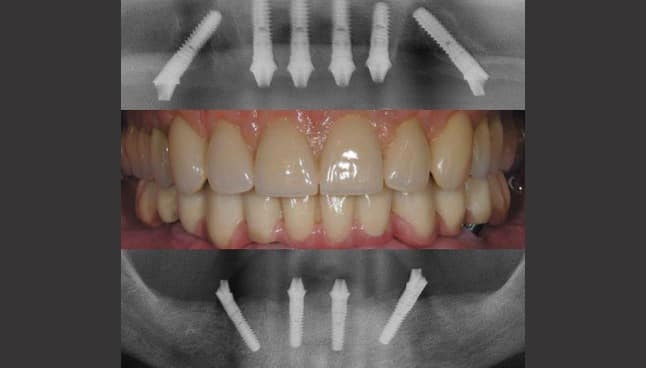
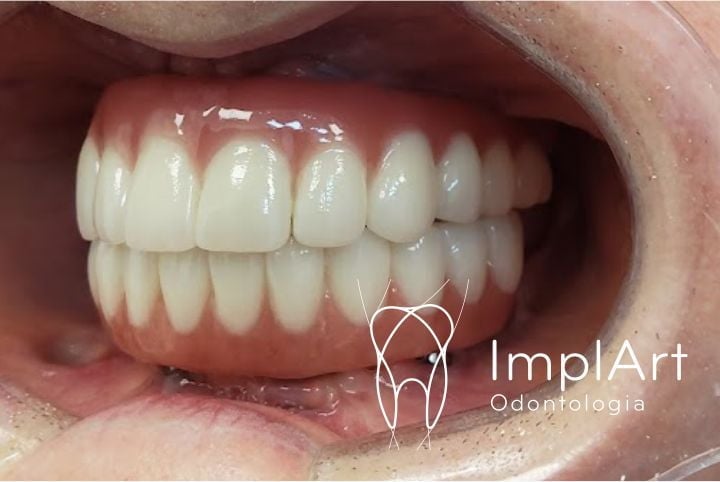
See below for this treatment with an upper Fixed Implant-Supported Prosthesis and a lower Fixed Implant-Supported Prosthesis. Firstly, implant surgery was carried out and a temporary fixed prosthesis installed on the day of surgery. Secondly, after the dental implants had healed, we made the Zirconia Prosthesis a fixed over the implants.
Image of Translucent Zirconia full arch prosthesis over implants – side view of the installed Zirconia prosthesis – Full Arch Dental Implants
Implant-Supported Fixed Full-Arch Prosthesis, what is it?
The Implant-Supported Fixed Full-Arch Prosthesis is a type of total fixed dental prosthesis that is indicated for people who have lost all their teeth in the same arch. It consists of 12 to 14 teeth attached to a single structure screwed onto 4 to 6 strategically placed dental implants.
It will also be necessary to carry out a radiographic examination, which is a computerized tomography scan, to visualize the volume of bone and its quality. This is essential for planning the number of implants that will be placed in the bone, both in the upper and lower arches.
When is Fixed Implant-Supported Prosthesis recommended?
Firstly, fixed Implant-Supported Prosthesis is recommended for patients who wear dentures, and for those who suffer from periodontitis or severe periodontal disease.
It is important that, even if the patient suffers from periodontitis, the disease is controlled by eliminating any sources of infection (plaque, tartar, calculus) and controlling gingivitis.
Thus, if the disease is well controlled and the bone is healthy, there is the possibility of replacing the extracted teeth with dental implants.
It is common for a patient, on receiving a poor prognosis for a tooth, to want to save it at all costs. Although in some cases it is possible to save a tooth with compromised periodontal structures, in most cases an experienced professional will be correct in recommending extraction and placement of a dental implant.
How do you change from dentures to a Fixed Implant-Supported Prosthesis? Full Arch Dental Implants Prothesis
People who have been wearing dentures for many years can experience a lot of bone loss in the jawbone, and this is a common concern for people who would like to have implants placed in order to wear a fixed prosthesis. Alternatively, we perform various bone grafting techniques, or use short implants designed for those with bone resorption.
Undeniably, it is always a great relief for patients to change their dentures for Fixed Implant-Supported Prosthesis. We, who specialize in this type of full-arch-dental implants treatment, follow the changes in the daily lives of patients every day, who are able to increase their quality of life with this treatment. Therefore, replacing dentures with implants only has benefits!
The difference between a Fixed Implant-Supported Prosthesis and a removable denture
The Fixed Implant-Supported Prosthesis provides stability when chewing and total confidence for the patient, since there is no need to remove it for daily hygiene. Patients report at the end of their treatment that they eat much better and have much more confidence in smiling, which brings great social gains to the patient’s life. It is therefore an important step for patients towards improving their quality of life.
Upper and lower arch Fixed Implant-Supported Prosthesis installed on 04 implants in each arch
Who can have All-on-X or Full Arch Dental Implants treatment?
Anyone can have a Full Arch Dental Implants treatment. First of all, the patient must have a panoramic X-ray and a computerized tomography scan to assess the bone in the area that will receive the dental implant. Even patients with diabetes, in most cases, can receive implants as long as their diabetes is under control. So don’t be alarmed if you have diabetes, implants could be a solution for you too. Of course, this is after a careful assessment of your health condition.
Fixed Implant-Supported Prosthesis treatment covers a wide range of patients of different ages. Elderly people can also have the procedure. Each case must be evaluated in detail so that the procedure is always safe and promotes the patient’s well-being.
In your initial consultation with our clinical director, Dr. Roberto Markarian, you will receive all the guidelines for your All-on-X treatment.
What are the advantages of the Full Arch Dental Implants?
When the use of a mobile prosthesis causes discomfort, be it functional, aesthetic or sensory, there is the opportunity to replace it with a fixed version. See the advantages of protocol treatment on implants:
Does not move and does not require adhesives for fixing
Does not fall, avoiding embarrassing experiences
The prosthesis materials are more beautiful and resistant, especially metal-free zirconia prostheses.
Does not hurt gums and mucous membranes
Safer chewing, smiling and kissing
Improves diction
No acrylic roof of the mouth, improving speech and food tasting
Increases lip support, improving the appearance of a thin lip.
Which material is the Fixed Implant-Supported Prosthesis made of?
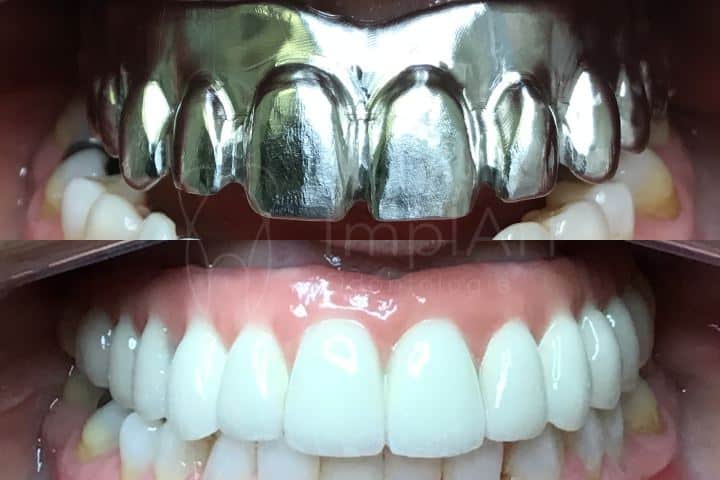
Here at Clinica Dentaria Implart you will find a wide range of materials for your prosthesis. From the simplest in Resin, through Metal-Ceramic (Porcelain), to the most modern prosthesis in Zirconia.
Do you know Zirconia, this innovative material for full arch prosthesis? Full Arch Dental implant Prosthesis in Zirconia are possible with this innovative computerized material. It is therefore an excellent choice for those looking for an aesthetically pleasing and durable material. What’s more, its computerized design system offers more precision, as well as greater comfort through the use of the 3D scanner.
Translucent zirconia is an implant-supported prosthetic option made using an extremely advanced production method. Based on digital intraoral molding, the zirconia prosthesis is computer-designed and manufactured on 3D printers. In other words, the zirconia disc placed in the 3D printer is milled into the shape of the computerized design. This is certainly the most modern and resistant option, as well as the most beautiful and realistic.
It is an opaque white ceramic structure called zirconia, covered with dental porcelain. In this way, the aesthetics are sculpted in porcelain with the shape of the teeth. It is also a new and technologically innovative material, as the structure of the prosthesis is completely planned on a computer and executed with the help of electronic scanners and 3D printers.
This is a prosthesis with an internal metal structure (titanium, Ni-Cr or Cr-Co) and an aesthetic porcelain finish that is hand-sculpted to the shape of the teeth. Metal-ceramic prostheses therefore have the advantage of porcelain strength and aesthetics. As a result, the final result is aesthetically and beautifully similar to natural teeth.
Resin Full Arch Prosthesis (acrylic resin + metal)
Also known as the Bränemark prosthesis, this is another option available for implant-supported prosthesis. This model of prosthesis has an internal metal structure and an aesthetic resin finish. The teeth are made of resin and you can choose the color, shape and size of the teeth.
However, this material has a disadvantage compared to the previous ones, which is the possibility of color change (yellowing) over time.
What care should be taken after full arch dental implant surgery?
After dental implant surgery, the total recovery period may vary at the discretion of the implant specialist, with a view to the success of the procedure. Therefore, the implant dentist, Dr. Roberto Markarian, will guide you according to the criteria of the type and extent of the surgery.
Light activities (7 to 10 days): Rest is recommended for light activities during the first week, which can be extended to 10 days.
Gradual return to normal activities (up to 3 weeks): The patient is instructed to gradually return to normal activities, which may take up to 3 weeks.
Will I lose my prosthesis after implant surgery?
Rest assured, the main concern of the entire team here at the ImplArt Dental Clinic is to make the whole process as comfortable as possible for the patient. In this way, the psychological aspect and the patient’s well-being are paramount. Therefore, in the vast majority of cases, we plan a temporary prosthesis that is installed immediately after surgery. The patient is therefore able to carry out their activities normally while we wait for the implants to osseointegrate.
New techniques – Zirconia total implants
Zirconia Total Implant: Natural and resistant Implant Supported Prosthesis
Dental implants with zirconia prosthesis are recommended for various clinical cases, such as bruxism, because zirconia’s resistance is superior to any other material. The material is a star in dental practices due to its versatility and the possibility of bringing a better appearance to the mouth, especially after the tooth has been darkened by root canal treatments or dental trauma, with a great loss of dental function and aesthetics. So, if possible, opt for Zirconia!
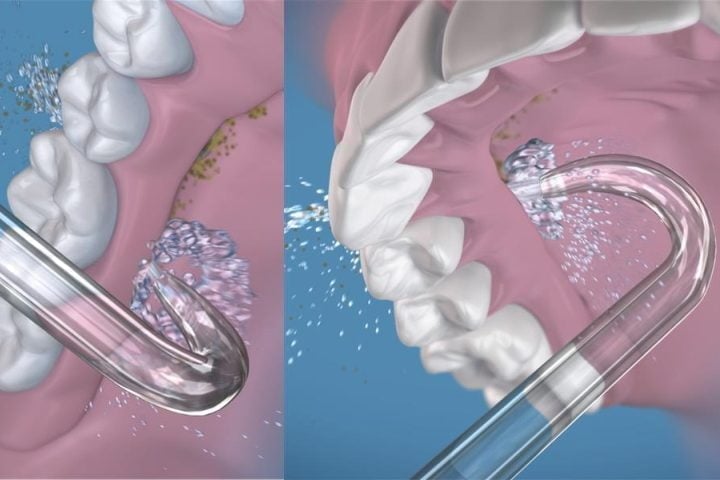
To clean the fixed implant supported prosthesis at home, the patient can use the interdental brush, in addition to the traditional toothbrush, which is effective and sufficient in the external regions. However, for the areas inside the prosthesis, around the implants or on the mucosa, interdental brushes and oral irrigators (pressurized water jets) are the most suitable. Certainly the best known of these devices is the Waterpik. These devices are certainly not easily found in Brazil, but in the United States they are sold in any pharmacy.
This way, with regular visits to the dentist every 6 months and proper hygiene of the fixed prosthesis at home, you’ll have a long-lasting and healthy treatment!
Sanitize the fixed implant supported prosthesis daily with waterpik
How to sanitize the fixed prosthesis / cleaning?
Care with the hygiene of the implant supported prosthesis is mainly to remove any food residue that may remain between the implant pins and the prosthesis (as in the image above), and to avoid the formation and accumulation of bacterial plaque on the surface of the prosthesis.
What is the best Full Arch Dental Implant Prosthesis?
It is also called Monolithic Zirconia, because it is made from a solid block of Zirconia that takes the shape of a dental prosthesis using a modern computerized system. The Translucent Zirconia prosthesis is made using 3D printers, a highly technological system. First of all, it’s worth clarifying that zirconia is a type of porcelain that replaces metal in dental treatments, as it offers a more natural and translucent appearance, without the presence of shadows, as happens in prostheses that use metal
In the ImplArt Clinic’s digital prosthesis laboratory, impressive robotic arms, which are present in modern milling equipment, are responsible for sculpting the prosthesis design previously drawn up on the computer. The design is certainly impressive as it uses only computerized systems for both its design and printing
It’s certainly a very modern system, which makes it possible to achieve aesthetically superior results in a more agile, fast and precise way. What’s more, zirconia is biocompatible with the human body, which means that the patient runs no risk of allergies or rejection.
What is the difference between a All-on-X prosthesis and an overdenture?
While in the implant supported prosthesis is fixed on 4 to 6 implants, in the overdenture the prosthesis is fixed on only 2 implants. As a result, the overdenture does not have the same stability as the All-on-X prosthesis. Therefore, the best alternative is the Full Arch Dental Implant Prosthesis.
How much does an upper Full Arch Dental Implant Prothesis cost? How much does a lower Full Arch Dental Implant prosthesis cost?
First of all, it’s important to bear in mind that when it comes to quality dental treatments, the price of the dental implant prosthesis can’t always be the deciding factor in the choice, but rather the quality of the service being offered. It is therefore essential that patients make their choice based on the trust and credibility of the clinic or professional providing the service, as well as the technical knowledge of the professionals, their years of practice and the technique to be used.
Undeniably, not all prosthesis and dental implant treatments are the same, firstly because of the differences in each case, and secondly because each professional has their own practice, technique and theoretical background. That’s why it’s very difficult to choose a professional based on price alone. If it’s too cheap, be wary! High-quality materials and qualified professionals who are in line with modern trends in implant dentistry have their value.
Remember that the effort put into qualification that the professional has put in throughout their career makes a direct difference to the outcome of your treatment! In addition, there are different types of materials, as mentioned above, from implants to different types of prostheses. Just to give you an example, here are the types of materials for implant supported prosthesis – Translucent Zirconia, Zirconia, Metal-Ceramic and Resin. The choice of prosthesis material, as well as the type of implant, will certainly influence the price of the Full Arch Dental Implants prosthesis. In this sense, we have various types of implants, from national implants to imported Straumann implants, a world reference in the field of implants.
Where can I have the Full Arch Dental Implants treatment?
The ImplArt Clinic has been ranked as the best dental implant clinic in Brazil, taking first place in the GCR (Global Clinic Rating) world ranking. The ranking was secured above all by its expertise in Digital Dentistry, Modern Structure and Patient Satisfaction. Our clinical director, implant dentist Dr. Roberto Markarian, is a reference in the field of implants and computerized prosthesis. So, if you want to have your Full Arch prosthesis treatment on implants, with knowledge and high technology, the ImplArt Dental Clinic is the right place for you!
We are located in the Avenida Paulista area of São Paulo, Brazil, in the heart of the metropolis.
If you are far away, in other states or abroad, please contact us to find out more about the online consultation. That way, we’ll be able to plan your Day Clinic treatment and your implant surgery remotely with Dr. Roberto Markarian. Also, if you already have dental implant exams such as CT scans and panoramic X-rays, they can be sent to you before your appointment to make your consultation even more productive!
Guide of Full Arch Dental Implants treatment
⭐The ImplArt Clinic is located in São Paulo and welcomes patients from all over the world. If you would like to know more about our treatments, dental implants, ask questions or schedule an appointment 📲WhatsApp (11) 99598-1866.
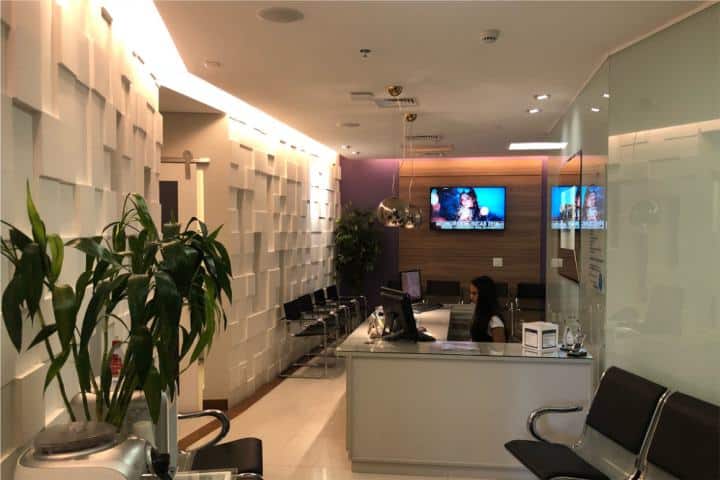
One Stop Clinic is a convenience of the ImplArt Dental Clinic, which has a complete structure, especially for carrying out diagnostic tests and dental treatments, all in one place. This modern concept aims to offer convenience to patients, given the limited time available to go to the dentist. At ImplArt Dental Clinic, we are aligned with the One Stop Solution concept. Therefore, patients are able to carry out everything from diagnostic examinations to major bone grafting surgeries and total dental implants, with protocol prostheses, or even individual dental implants, within the clinic itself.
In addition, the ImplArt Dental Clinic has a digital prosthesis laboratory within the clinic itself, which guarantees high quality and control of the prostheses made. ImplArt’s digital laboratory has state-of-the-art equipment that uses robotic arms and digital scanners to design high-quality, natural-looking prostheses.
Techniques and assistants in oral health – professional cleaning, guidance on daily oral hygiene care and other behaviors that, in short,serve to prevent diseases that can affect the teeth and gums.
Technologies that are sure to make your One Stop Clinic treatment faster, more precise and more comfortable:
Day Clinic – intensive care for people with limited time or odontophobia. Ask our team about this possibility.
Strategic location for One Stop Clinic
We are located at Rua Cincinato Braga, 37 – cj 112 in the Bela Vista district of São Paulo/SP, close to Av. Paulista (Paraíso) and Av. 23 de Maio (north-south corridor, easy access for those leaving Guarulhos and Congonhas airports). Easy access from the Vergueiro subway (line 1-blue) and Brigadeiro subway (line 2-green).
Those who live far away can plan their implant surgery remotely


 Agende sua consulta agora por WhatsApp