Tag: dentário

Pre- and post-operative care of dental implants

Dental implant recovery and care of dental implants before and after surgery

The post-operative period for dental implants and the preparation before dental implant surgery are certainly fundamental to the success of the procedure. We have therefore prepared recommendations for patients who are going to have a dental implant, which can also be applied to minor dental surgery.

We should certainly point out that the care of dental implant surgery is considered a simple and minor intervention from a medical point of view, with low risk for the patient. The duration of surgery is short and recovery after implant surgery is also considered to be easy for the patient, even in cases of complete oral rehabilitation.

Recommendations before dental implant surgery

What should I do before a dental implant?

  • Eat normally before the procedure if the surgery involves local anesthesia. If you have opted for sedation, follow the specific guidelines for your case, which may involve fasting.
  • Take the prescribed medication 1 hour before arriving at the clinic. If indicated for your case, preferably come accompanied by someone who can drive.
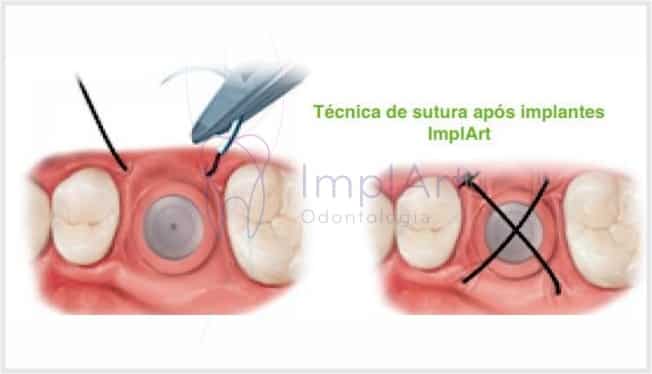
Pre- and post-operative dental implants
care of dental implants
Stitches for dental implants should be removed between 7 and 10 days.

After implant surgery – care of dental implants urgery

What should I do after dental implants, after implant surgery (for 48 hours)?

  • Apply ice to the face to prevent swelling
  • Avoid physical exertion
  • Sanitize the area with a cotton swab moistened with an antiseptic solution (Periogard, Listerine, Plax).
  • Prefer soft or pasty foods
  • Normal brushing of other teeth
  • Wear prostheses or braces for as short a time as possible
  • Take medication as directed by the dentist

What I can’t do after an immediate dental implant (48 hours)

What to eat after dental implant surgery?

  • For 2 days: you should eat cold or iced food. For example: ice cream, jelly, juices, smoothies, soups.
  • Also avoid hard, crunchy foods such as bread, peanuts, etc.
  • On the third day you can warm up the food more and normalize your diet according to your own tolerance

What can I do 3 days after my dental implant?

  • Apply warm compresses to the face to reduce swelling
  • Exercise in moderation

Tip: In cases where a surgical guide has been used to install the implants, the expected post-operative period is milder than in normal implant surgeries.

What can I do one week after my dental implant?

  • Brush the operated area lightly
  • Mouthwash with antiseptic solution
  • Physical activity released
  • Remove the stitches at the dentist

Are there implants without cutting or stitches/care of dental implants?

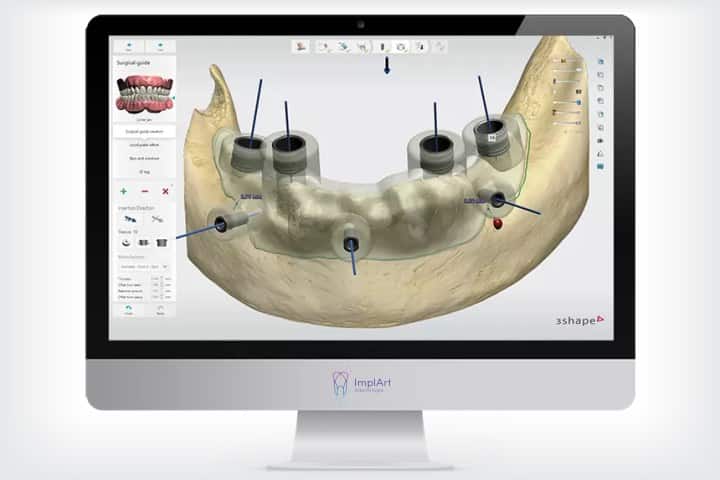
There are modern computer-guided planning techniques that minimize the need to cut into the gums and therefore often do not require stitches. This is computer-guided dental implant surgery, a very up-to-date and safe procedure for implant surgery.
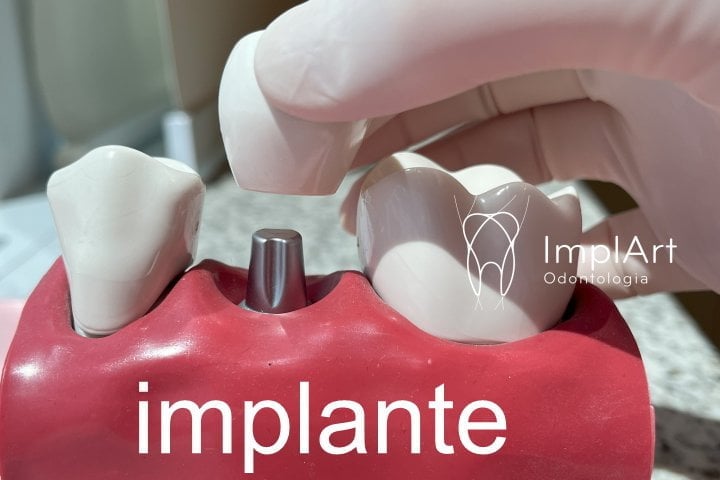
implante dentario como e a cirurgia
Post-operativecare for implants, medication and procedures make a difference

Frequently asked questions about post-operative implants:

Is dental implant post-op swelling normal? What is the post-operative period of implants like?

Swelling can occur in the first few days after implants, which is why anti-inflammatory drugs are prescribed to be taken as soon as necessary. Cold food and ice help to reduce swelling in the mouth.

How long does it take to resume physical activity after a dental implant?

Each case is assessed individually, but in general you should wait 7 to 10 days before returning to the gym in full.

How many days to remove the dental implant stitches?

On average, you should remove the stitches from the implant surgery within 7 to 10 days.

Is it normal to feel pain after a dental implant or bone graft?

Pain can occur after the placement of a dental implant or bone graft. For this reason, painkillers are prescribed to be taken as soon as necessary. In general, the pain is mild and can be controlled with painkillers, but it is not normal to experience severe or unbearable pain.

What should I do if I feel throbbing pain after a dental implant?

Mild, bearable throbbing can occur after dental bone grafting and implants. However, if the discomfort is too great and does not stop with medication, the patient should contact their dentist as soon as possible.

ImplArt Clinic’s care of dental implants conclusion

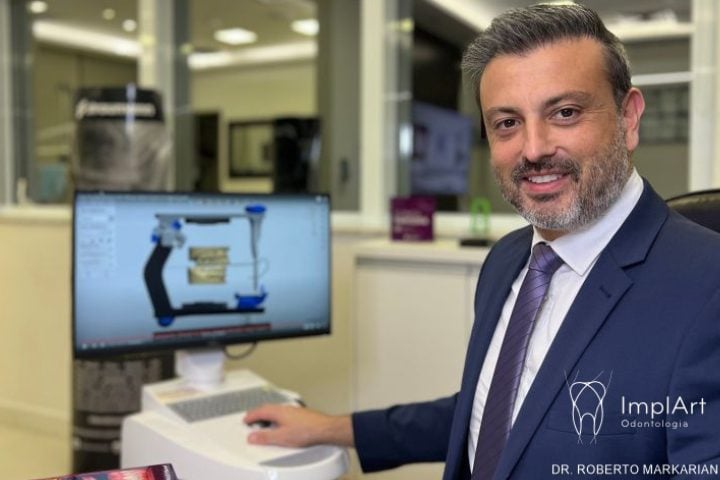
If you have any questions about post-operative implants, value, price or the best technique, please contact us or schedule an appointment with our specialized team via 📲WhatsApp (11) 99598-1866. Here at Clinica Dentaria ImplArt in Brazil your first consultation is with our clinical director, implant dentist Dr. Roberto Markarian, so you can clear up all your doubts about dental implants and discover that the surgery is simpler than you think!

5 Biggest Risks for Dental Implants

Are there any risks for dental implants? We’ll find out about 5 of them in this article. Dental implants are a more up-to-date, modern and low-risk alternative for tooth replacement than a fixed prosthesis on teeth or a removable prosthesis, the old dentures.

The technique for inserting dental implants is very safe, with an estimated 92% chance of success in non-smoking patients with good health and healthy habits. There are several types of dental implants available today, the most modern of which is the metal-free ceramic implant, an excellent option for those looking for metal-free implant treatment.

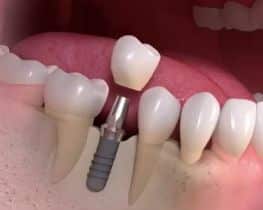
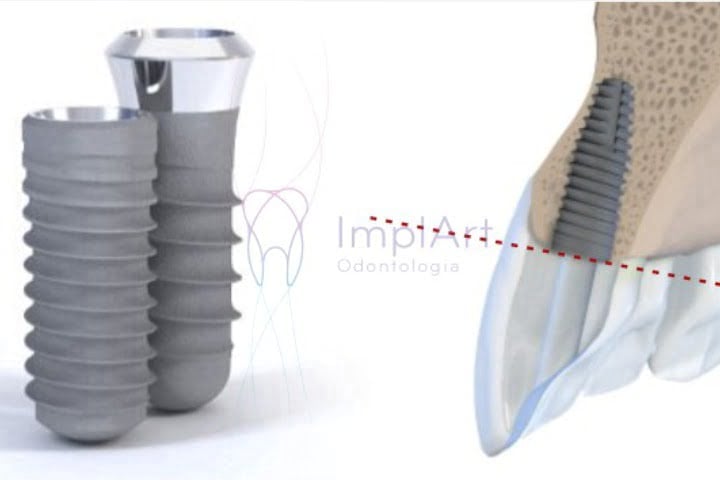
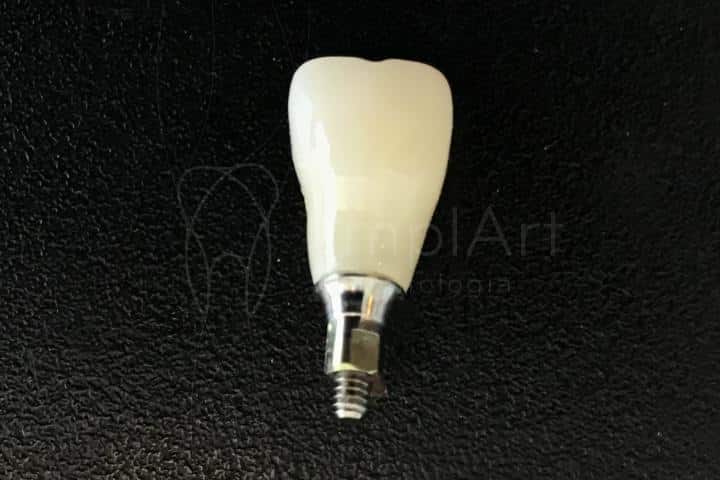
The single tooth implant, or total dental implant, is used to replace the root of one or more missing teeth and will serve as a support for an artificial tooth called adentalprosthesis or dental crown.

Crucial to the success of the procedure is the thorough planning of the implant surgery and the choice of specialist professionals who are qualified to carry out the dental implant surgery. This increases the chance of success of this important treatment, and therefore the chances of any complications are minimal.

So rest assured that you can enjoy all the benefits that this rehabilitative and safe treatment offers patients. The implant-supported prosthesis is made to resemble the person’s other natural teeth and also offer similar chewing strength.

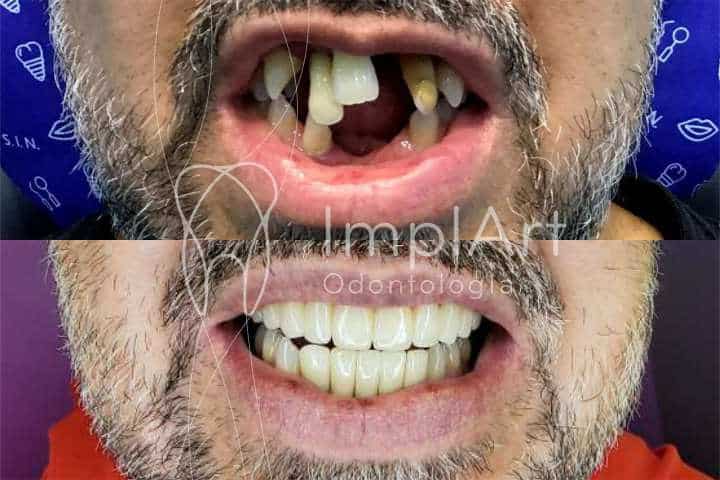
Oral rehabilitation with dental implants is usually the best option for re-establishing the patient’s aesthetic and chewing functions, a treatment called total dental implantation.

But in very few cases, there can be some risks with dental implants. Here are the 5 main risks of dental implants:

1 – Risk of implant breakage

Patients who grind or clench their teeth (bruxism) can exert a lot of force on the implants, with an increased chance of breakage or fracture of the implants or the parts that make up the implant prostheses.

Patients who bruxism also increase the risk of loosening the screws that fix the implant crown. When this happens, the patient reports that the implant is “soft”. However, we mustn’t confuse the prosthesis becoming loose with the implant pin coming loose from the bone (which is much more serious).

Most commonly, when the problem is just the loose implant tooth, the patient feels no pain, while when the implant is lost there is always pain. If the implant fractures or comes loose from the bone, it must be replaced, starting the dental implant process all over again.

Check complete PODCAST about 5 biggest risks for dental implants:

Is it the dentist’s fault that my implant fractured?

There are several factors to consider, some of which would be the material of the prosthesis, the number and positioning of the implants, correct surgical technique, material of the dental implant, type of prosthetic components chosen, type of prosthetic connection chosen.

Assuming that the professionals are working to do their best, it’s rare that there will be any negligence in this regard. What really counts is the willingness of the patient and the professional to start again, perhaps trying to improve or perfect one of the strategies.

riscos do implante dentário
Apresentação das partes do implante dentário: implante (no osso), pilar + coroa dental (dente artificial)  

2 – Inflammation in implants and risks

Inflammation can occur in a dental implant, manifesting itself as pain, swelling, pain when chewing, bleeding, and even the formation of pus in the implant. Please note that in any area of medicine where an artificial part is used inside the human body, there can be an adverse reaction of rejection.

This rejection phenomenon can occur in relation to the dental implant or an associated material such as a bone graft or a protective membrane. Bacterial infection can also occur in the implants, which can even prevent bone integration.

one of the risks of dental implants is peri implantitis
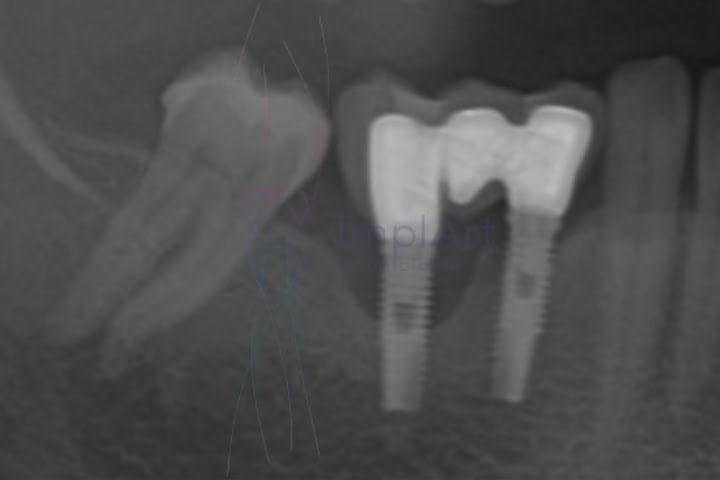
The implant on the left in the image has inflammatory bone loss, while the implant on the right has a normal bone level

That’s why all treatments at ImplArt begin with a thorough oral cleaning, as well as the removal of any infectious diseases such as cavities and periodontal disease. The patient will only have implant surgery if their mouth is clean and their oral health is good.

This is possible even if the patient doesn’t have all their teeth yet. When the prostheses on implants are finished, we teach the patient how to properly clean the dental implant. This correct hygiene is very important and certainly contributes to the chances of success of the dental implant.

care of dental implants
Inflammation in implants leads to aesthetic, gum and bone problems

3 – Risk of facial nerve damage

If the surgery is not well planned, with the use of CT scans and other imaging tests for mapping, damage to the jaw nerve can occur during dental implant surgery. In the area at the back of the mouth in the lower arch, there is a nerve that can be very superficial, especially if the patient has been without teeth for many years.

In patients with advanced periodontal disease, bone loss can also put the nerve at risk due to its proximity. To reduce the risk of nerve damage and paresthesia, the implant dentist will carry out imaging tests. The most commonly requested exam is a panoramic X-ray, but a cone beam CT scan helps to measure the bone and plan the implant.

Computer-guided surgery – reducing risks

To minimize the risks even further, we can perform computer-guided partial or total implant surgery, which offers little invasiveness and allows for perfect positioning of the dental implant, with no room for error.

Crooked or poorly positioned implants can have poor bone integration or even rejection. It is not in all cases that we are able to recover the patient from oral nerve damage or poorly placed implants.

Depending on the severity of the problem, an injury to the jaw nerve can lead to sequelae such as numbness in the jaw or loss of sensation in the tongue or to the sensation of tastes (gustation).

At the ImplArt dental clinic, 100% of cases are operated on with a CT scan, which can be done in our own radiology center.

care of dental implants
Guided implant surgery reduces the risk of dental implant positioning errors

4 – Risks in the bone around the implants

Bone loss can occur in an implant that has suffered infection while healing in the bone. In addition, in cases where immediate loading is carried out, i.e. a temporary or permanent tooth is placed in position immediately after surgery, there is a greater risk of bone and implant loss.

This is because the newly placed dental implant does not yet have a mature attachment to the bone and needs to rely exclusively on its mechanical locking into the bone in order to fix itself. Most of the time, if the indication and technique are correct, immediate loading works well.

But in cases of immediate failure, the consequences can be serious, for example leading to major bone loss in the area. There are more advanced dental implant models that have improvements to the fit of the tooth and also in the chemistry of the surface so that healing in the bone occurs faster and more efficiently.

Today we have dental implants that allow you to have a permanent tooth in 1 month! Get to know the dental implant models with the best advances, such as Straumann implants, Neodent cone-morse implants (national), SIN implants (national).

dental implant risks
Implant shapes and models have to do with clinical indications

5 – Increase in risk factors – patient health and habits

There are risks to the success of implant treatment that don’t depend on the professional or the materials used, but on patient factors. Failure to clean the teeth,smoking and diabetes increase the chance of problems with the dental implant.

In this article, we only discuss the RISKS in dental implants, however the success rates of dental implants are very high, especially for current implant dentistry techniques performed by a dental implant specialist.

Dental implants are an excellent treatment if they are well indicated, planned and executed.

care of dental implants

Come and see our work! The ImplArt Dental Clinic has been dedicated to implant dentistry and oral rehabilitation for 18 years. We are located in São Paulo, Brazil.

DR. ROBERTO MARKARIAN IMPLANTODONTISTA SITE
5 Biggest Risks for Dental Implants

Text written by DR. ROBERTO MARKARIAN – CRO-SP 73.583 – updated on 26-08-2024
Founder and Director of the ImplArt Dental Clinic – Dr. Roberto’s Linkedin profile

Dr. Roberto Markarian is a reference in dental implants and computerized dental prostheses in Brazil. As well as having more than 10,000 implants installed, he is a researcher who produces knowledge that is published worldwide in renowned scientific journals in the field of dentistry. He is responsible for promoting knowledge and high technology applied in all the treatments offered by the ImplArt Dental Clinic.

Porcelain crowns – Day Clinic

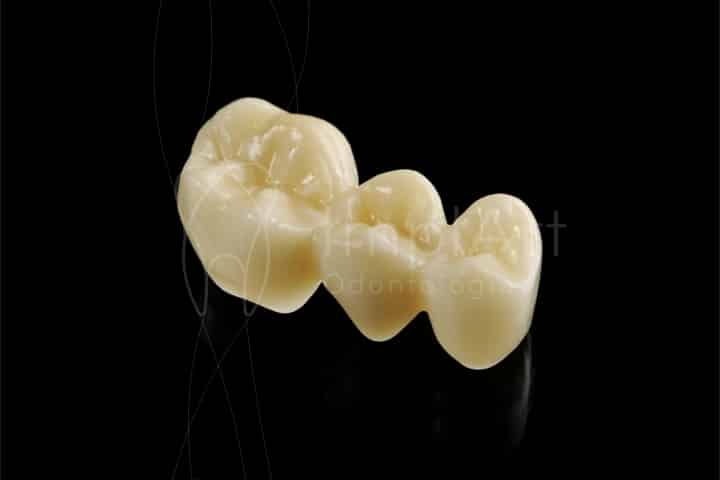
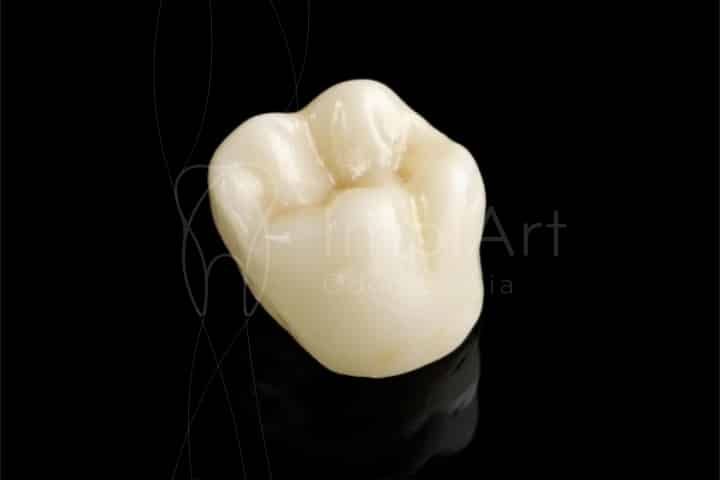
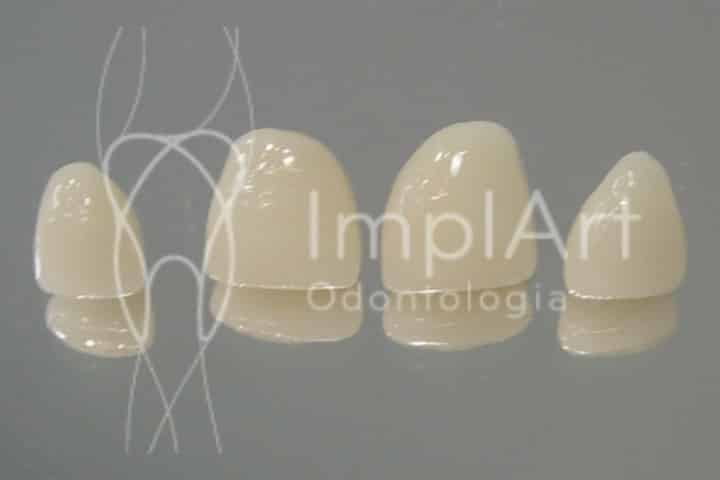
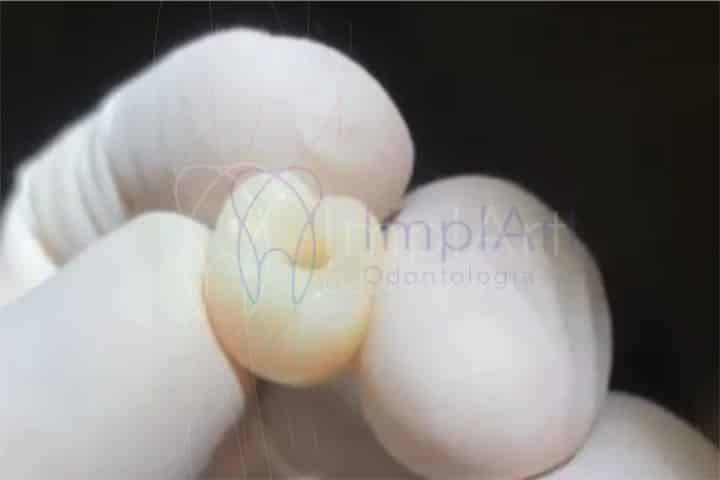
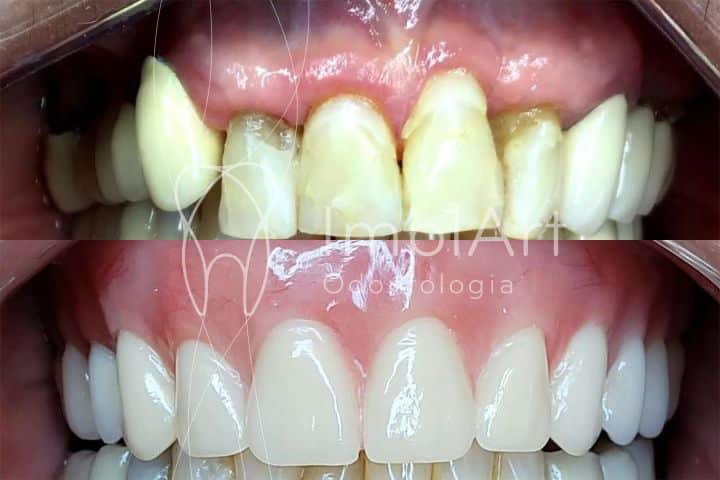
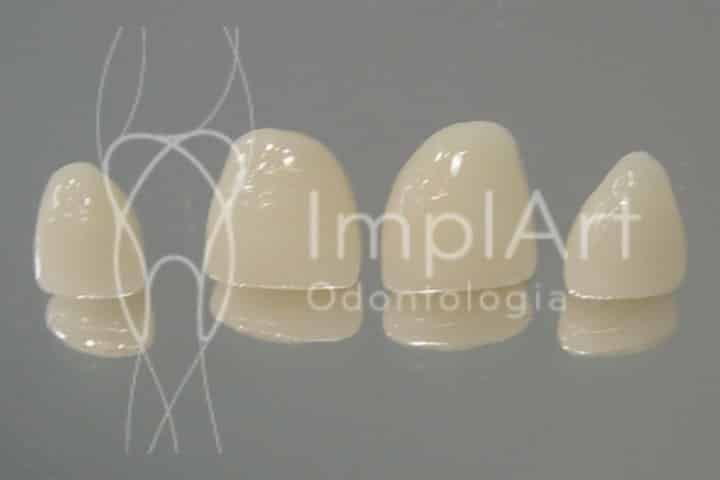
The placement of porcelain crowns is one of the procedures that ImplArt Odontologia performs with the convenience and agility of the Day Clinic – Dental Spa. A porcelain crown is a type of fixed prosthesis for application over a tooth or dental implant, indicated for replacing a tooth that has either been lost or cannot be maintained.

What are porcelain crowns?

For example: teeth with advanced caries, teeth broken as a result of an accident or teeth that are mobile due to periodontal disease and need to be extracted.

The Implart clinic offers dental implant services and porcelain crowns for them. Implants are performed to replace lost teeth or teeth that cannot be maintained. Porcelain crowns are prostheses that we recommend to restore damaged teeth, such as advanced caries or teeth broken due to accidents. They are also indicated in cases of tooth mobility caused by periodontal disease, when extraction is necessary.

The application of the crown on tooth in short is recommended when the root of the tooth can still be maintained and the application of the crown on implant is when the tooth is completely lost, i.e. the tooth root is also extracted must be replaced by a titanium dental implant pin.

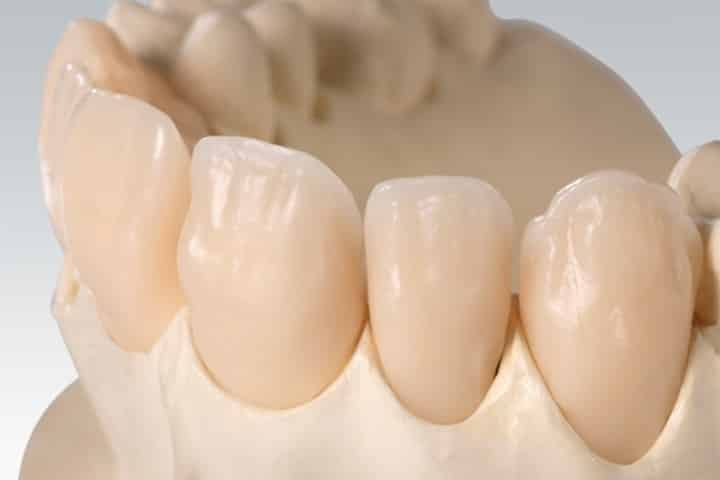
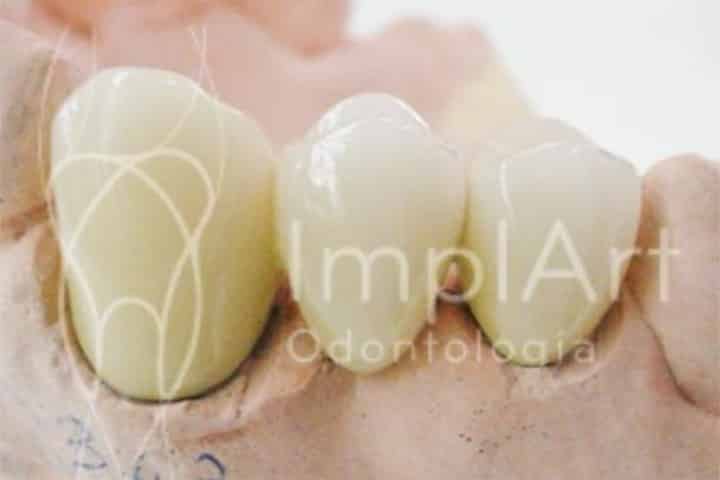
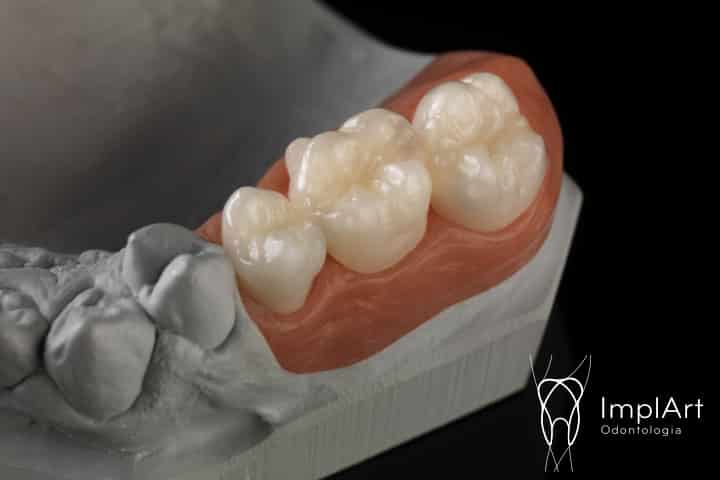
The porcelain crown is currently the material with the closest visual and physical characteristics to a natural tooth. ImplArt only works with high-performance porcelain so that the prosthetic crown looks almost indistinguishable from the neighboring teeth.

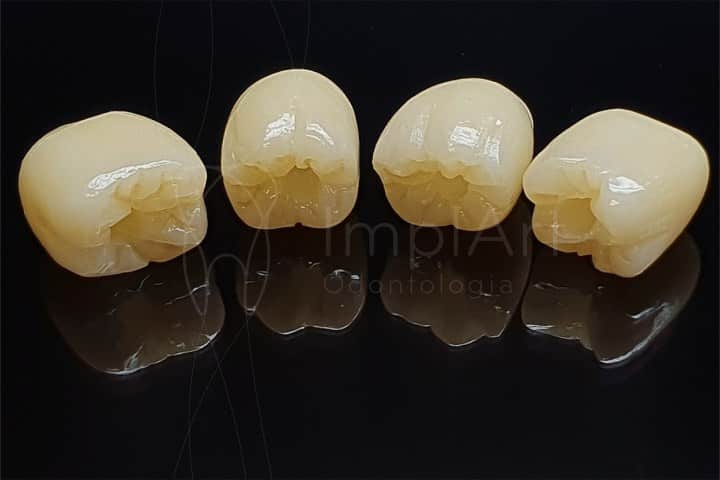
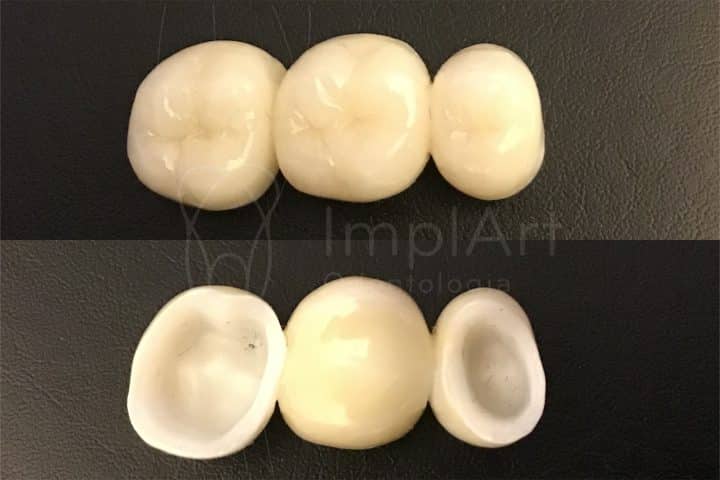
The porcelain crown can be made with internal metal reinforcement (usually recommended for posterior teeth) or with metal-free white zirconia reinforcement (recommended for anterior teeth due to the aesthetic needs of the smile).

What is the difference between a porcelain crown and a dental contact lens?

In general , lenses only cover the outside of the tooth, like a veneer. Their thickness is thin, corresponding only to the tooth enamel. A porcelain crown, on the other hand, surrounds the tooth completely (360 degrees), requiring more wear and tear on the tooth. Despite this, a crown is expected to last longer than a lens. Both porcelain crowns and lenses can be digitally designed and manufactured by robotic machines. Lenses can also be used to repair a dental prosthesis.

Learn about some of the indications for porcelain crowns:

  • Reconstruction or replacement of a tooth to improve the aesthetics of the smile
  • Reconstruction or replacement of a tooth to improve chewing
  • Replacing large or broken restorations when there is not much tooth structure left
  • Replacing a tooth with a metal restoration (unaesthetic) with a porcelain crown in the color of the neighboring teeth (aesthetic).
  • Protecting a tooth with a healthy root
  • Dental implant application
  • Replacing old or badly made crowns
  • Reconstruction and protection of teeth that have undergone root canal treatment
  • Because they are made from state-of-the-art porcelain, the crowns are highly aesthetic, resistant and durable.

How is the Day Clinic procedure done?

ImplArt Odontologia has a structure that allows several dental procedures to be carried out intensively at the Day Clinic, including the placement of porcelain crowns. The structure is made up of computerized systems that speed up the design and manufacture of prostheses, a dental laboratory within the clinic, as well as a multi-specialized team to carry out a complete treatment, from diagnosis to completion.

Porcelain crowns are a procedure carried out by ImplArt Odontologia. Porcelain crowns are fixed prostheses used to replace lost or damaged teeth. These crowns can be placed over natural teeth or dental implants. ImplArt offers the service of placing porcelain crowns at the Day Clinic – Dental Spa, with convenience and agility. These porcelain crowns provide patients with aesthetics and functionality.

The computerized design of the porcelain dental crown is made according to a digital molding of the teeth obtained through a scan of the teeth. This makes it possible to design pieces that are completely customized to each patient’s needs. The crown is made by 3D tooth printers.

Normally this whole process takes a few weeks, but with ImplArt’s Day Clinic this time is considerably reduced. The execution and durability of the treatment vary according to the complexity of each case. Contact us and make an appointment to see if your case could benefit from this technique.

Full Arch Dental Implants – All-on-4 – All-on-6 – All-on-X

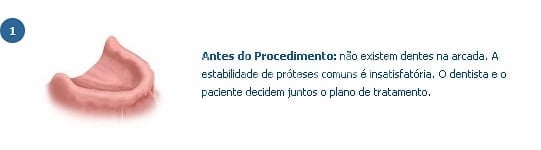
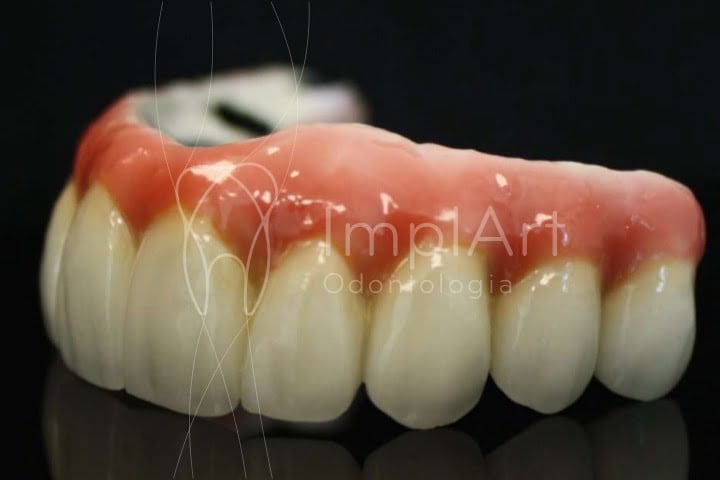
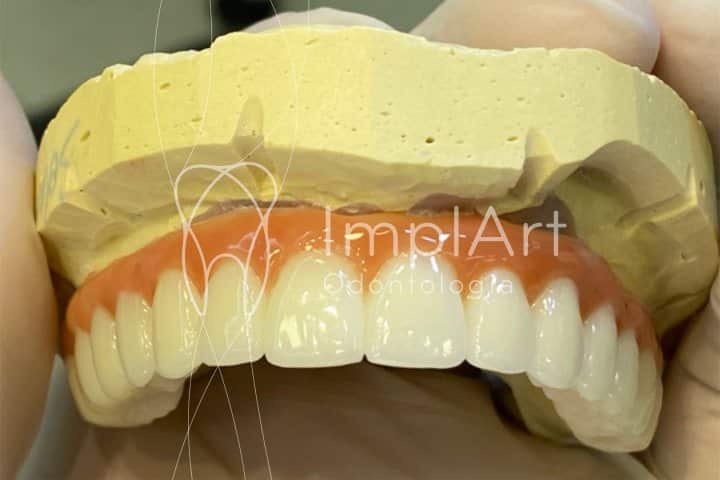
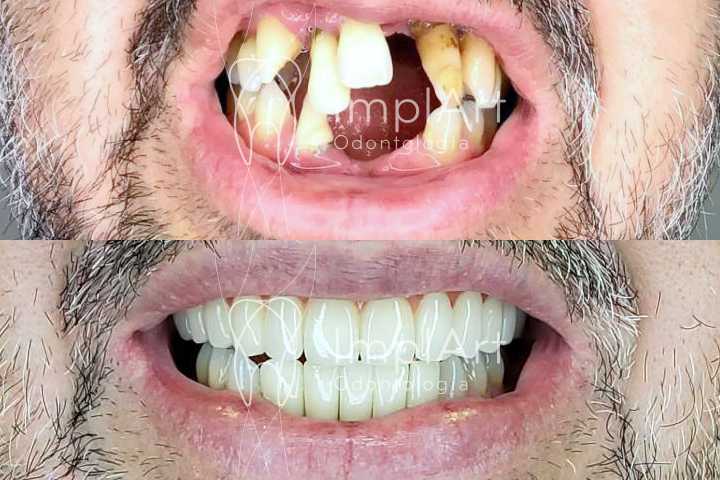
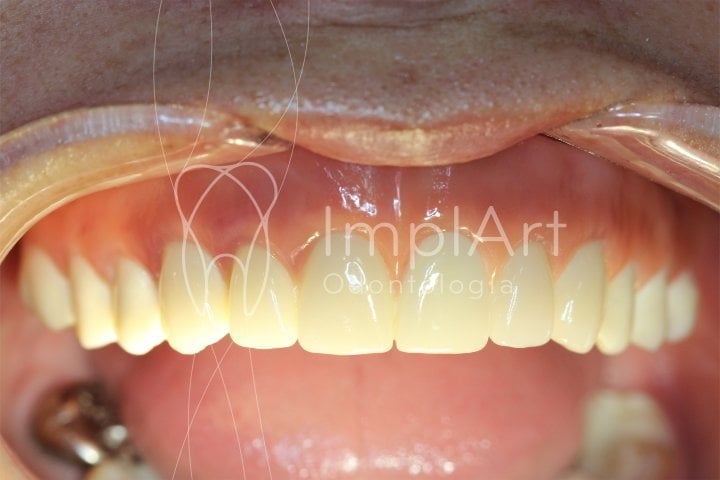
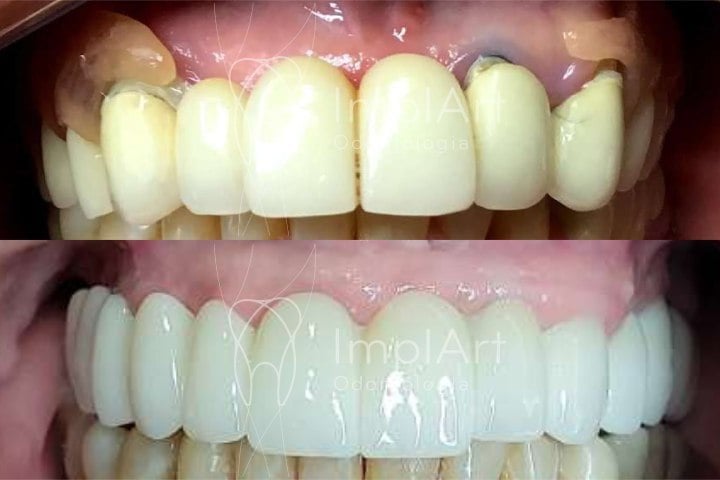
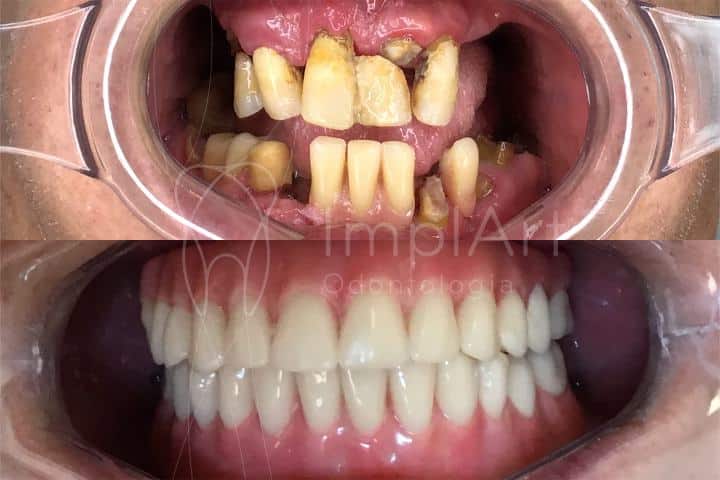
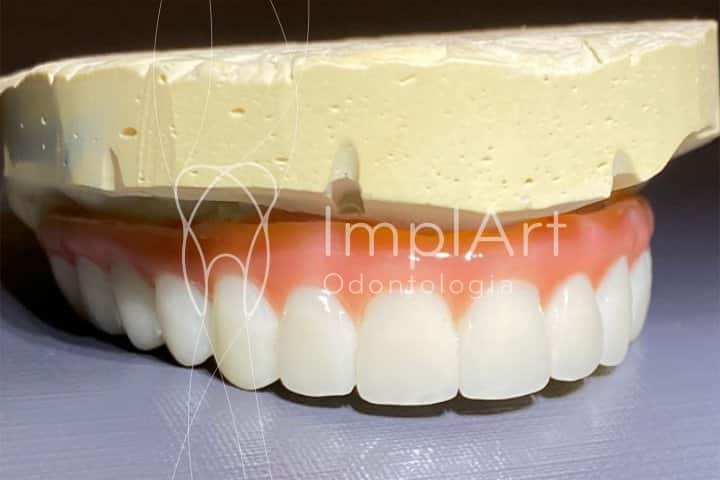
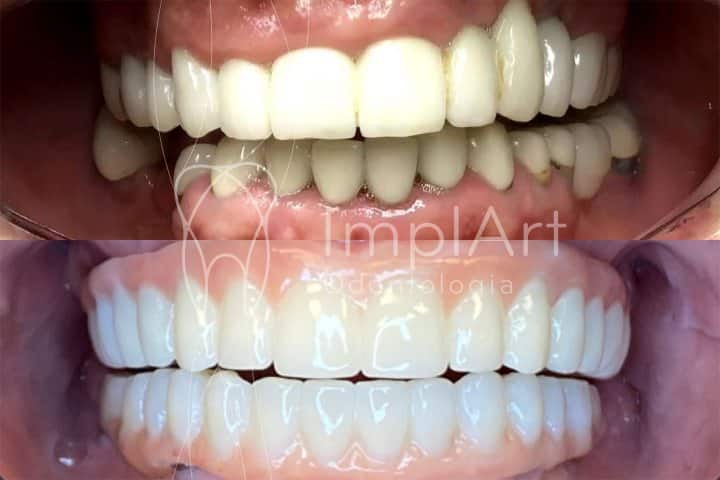
Full Arch Dental Implants is a Full Mouth Reconstruction treatment, that can be done in the mandible (lower arch) and maxilla (upper arch), although there are important anatomical differences that interfere with the planning of dental implant surgery. Fixed prostheses on dental implants can be made of Zirconia, Pure Zirconia, Porcelain(metal-ceramic), as well as Resin.

This treatment is also known as Fixed Full-Arch Prosthesis or Implant-Supported Denture. This type of implant treatment for all teeth, allows patients to regain their smile and chew.

Dental implant surgery is currently a fairly straightforward operation, carried out in an office or hospital environment, with hospitalization for the patient’s comfort. Implants make it possible to replace missing teeth even in large areas of the arch, including in patients with all their teeth compromised by periodontal disease.
They can also be used in patients with bone loss, who may need bone grafting before or during the installation of the dental implant.

It is important to note that there are currently different types of dental implants, and the most modern ones, cone morse implants, allow for faster healing.

*Read more about how dental implants are done: How are dental implants done? How to get a dental implant ?

Full Arch Dental Implants . Implant-Supported Denture step by step

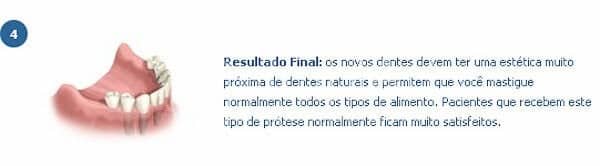
With regard to the end result, the aim is to obtain fixed dental prostheses that will remain supported on the implants. This will allow the patient to regain their masticatory function and aesthetics.

Of course, as Fixed Full-Arch Prosthesis are screwed onto dental implants, the result is a very efficient dental prosthesis for chewing, as well as excellent aesthetics and comfort.

It is therefore a much better solution than a removable prosthesis, as it provides excellent fixation and stability. In the upper arch, the full arch dental implants treatment has the added advantage of completely uncovering the palate (roof of the mouth), which improves patient comfort.

Unlike removable prostheses (dentures), which cover the roof of the mouth to allow them to be fixed and make it difficult to perceive the taste of food, All-on-X prostheses with implants are thin and occupy only the region of the dentition, leaving the rest of the mouth free, similar to the situation found when there are natural teeth. Currently, the most modern materials are the Zirconia Fixed Full-Arch Prosthesis and the Porcelain Prothesis on a Full Arch DentalTreatment.

*Learn more about dental implants All on Four: 8 common mistakes to avoid when getting dental implants All on Four

Fixed Full-Arch Prosthesis- Full Arch Dental Implants

This type of treatment is usually also called a Fixed Full-Arch Prosthesis ou All-on-4, even All-on-6 and All-on-X.

Visit the total implant photo gallery by clicking here

Read more frequently asked questions about total implants

See also this moving testimonial from a patient who had her whole mouth implanted.

Full Arch Dental Implants .Examinations and planning

After radiographic examinations and a CT scan of the jaws, the dental implant specialist will be able to analyze the ideal planning for the case and thus indicate bone complements such as grafts to better prepare the bone if necessary.

The jaw bone (lower arch) is more rigid and resistant, so dental implants can be installed in most cases. The upper jaw bone, on the other hand, is less dense and delicate and has a more complex anatomy.

Certainly the proximity to the nose, the maxillary sinus cavities and the greater bone loss require further study.

care of dental implants

Full Arch Dental Implants With or Without Bone Graft ?

If bone grafting is necessary, don’t be alarmed – it’s very common. Of course, dental grafting for full archa implants is not necessarily complicated, invasive or large. On the contrary, most of the time the bone graft for a full arch implant is simple, small and restricted to the position of the implant.

Less invasive implant surgery: in our clinic we use current concepts of minimally invasive surgery for dental implants, which make the procedure faster and offer greater comfort during the procedure and especially during the healing phase of the dental implant.

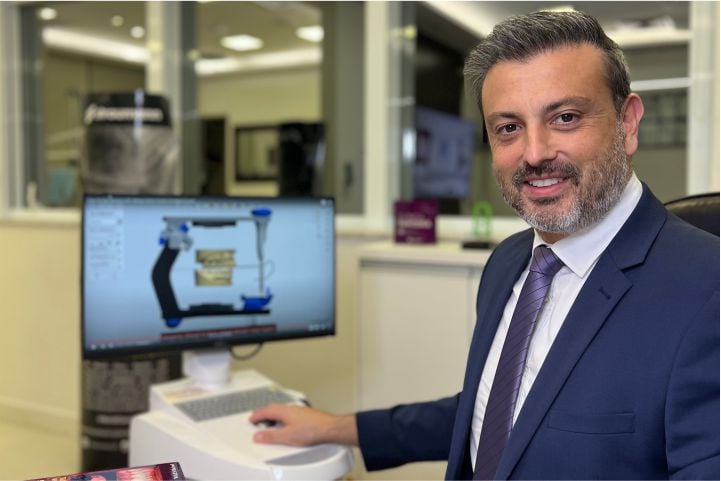
Computer-guided implant surgery: this is a type of dental implant surgery offered at our clinic that is planned by computerized scans of the jaws.

For example, computed tomography, in conjunction with a digital mold of the arch (scanner), generates guides for the quick and safe positioning of implants. Click here to learn more about guided surgery for total implants.

Full Mouth Reconstruction Prosthesis and other types

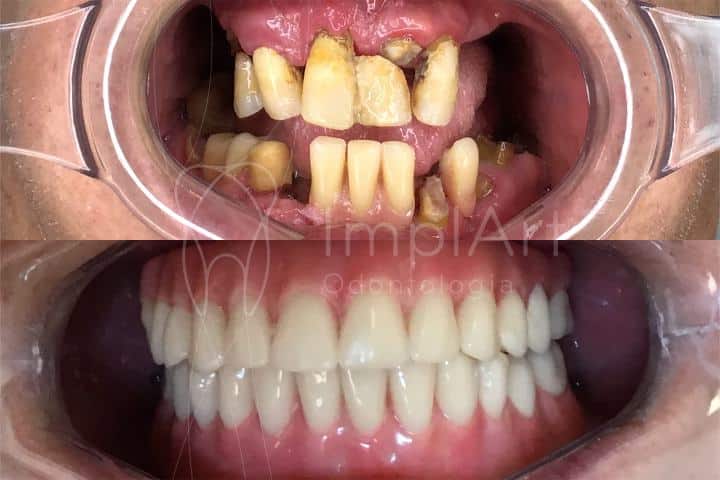
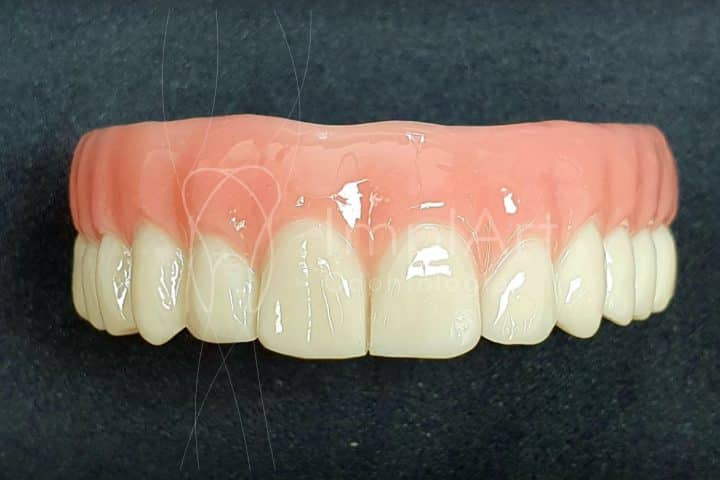
Certainly the most common prosthesis for implanting all the teeth in a full arch is the so-called protocol prosthesis. This is a resin prosthesis with a metal reinforcement bar inside.

Over time, however, more modern ways of making complete implant prosthesis have emerged. At the ImplArt Dental Clinic, we offer more technological implant materials, which are completely made on our premises and in our own dental prosthesis laboratory (see more):

If you have any questions, please make an appointment or contact us and make an appointment with our clinical director, Dr. Roberto Markarian, an implant dentist. We will be happy to assist you. The ImplArt Dental Clinic has a modern structure to serve patients and highly specialized professionals.

implantodontista
Full Arch Dental Implants - All-on-4 - All-on-6 - All-on-X

Text written by DR. ROBERTO MARKARIAN – CRO-SP 73.583
Founder and Director of the ImplArt Dental Clinic – Dr. Roberto’s Linkedin profile

Dr. Roberto Markarian is a reference in dental implants and computerized dental prostheses in Brazil. As well as having more than 10,000 implants installed, he is a researcher who produces knowledge that is published worldwide in renowned scientific journals in the field of dentistry. He is responsible for promoting knowledge and high technology applied to all the treatments offered by the ImplArt Clinic.

  • Post-Doctorate in Implant Dentistry – Univ SL Mandic (Campinas-SP) – 2020
  • PhD in Implant Dentistry – Doctor of Implant Dentistry, Univ SL Mandic – 2017
  • Dr. Roberto Markarian Specialist in Dental Implants at USP (Implant Dentist) – 2008
  • Specialist in Prosthodontics (Prosthodontist ) by the CFO – 2006
  • Master in Prosthodontics, USP – 2005
  • Graduated as a Dental Surgeon from USP (São Paulo) – 2001
  • Member of the Clinical Staff of Hospital Alemão Oswaldo Cruz

Complete dental implants improve chewing, self-esteem and aesthetics

A complete dental implant is a fixed dental prosthesis on implants that makes up for the absence of all the teeth and improves chewing, speech and the look of the smile. It is called a protocol prosthesis and aims to re-establish the patient’s chewing function by inserting a dental implant in the upper or lower arch.

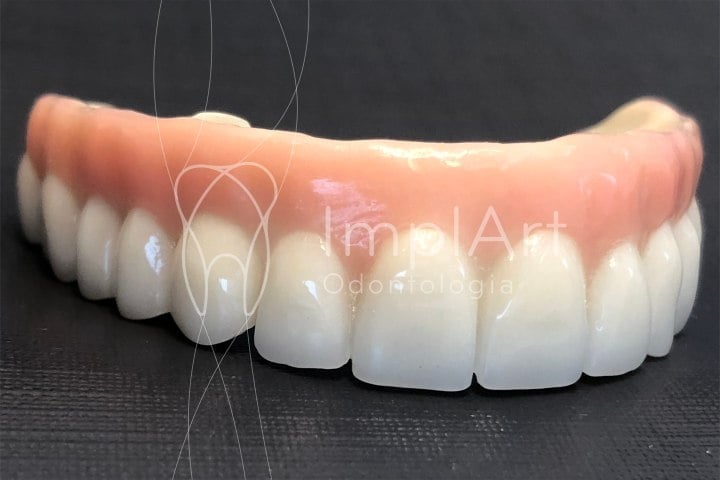
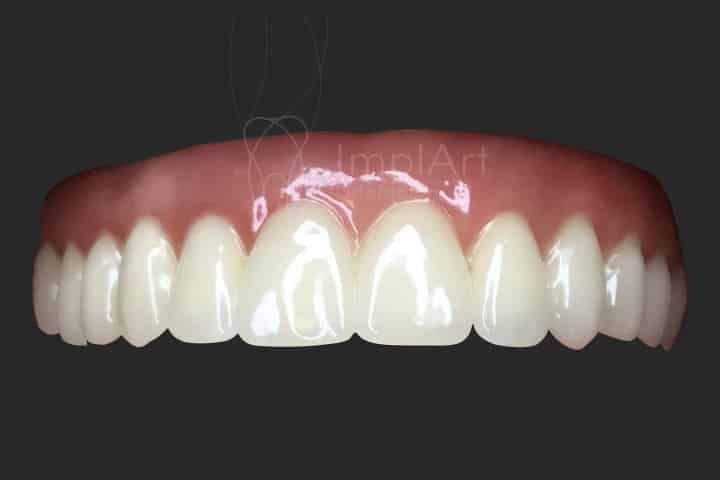
There are currently many types of protocol prosthesis to be installed on dental implants. Among them is translucent zirconia, which is the most modern option because it uses a computerized system for its execution, which improves precision, speeds up results and allows for superior aesthetics combined with high resistance.

The dental implant, on the other hand, can be made of titanium, or even ceramic, in Straumann‘s modern version, Pure Ceramic, or even the fast-healing titanium version, Slactive. There is also a national dental implant option, Neodent.

Complete dental implants to improve chewing and self-esteem

We are currently working with materials that are very comparable to natural teeth, both in terms of function and aesthetics. Patients who have lost their teeth for various reasons can have consequences that affect their health and well-being.

The absence of natural teeth (edentulism) hinders the ability to chew food, compromising the intake of essential nutrients for health and quality of life.

In addition, the person with total edentulism has their social life affected because they can’t smile and speak confidently in front of other people. As a result, they tend to become reclusive and have low self-esteem.

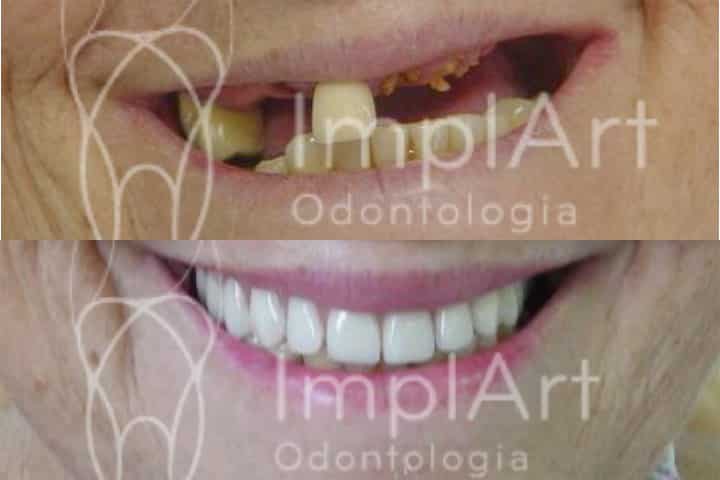
Undeniably, treatment with implants improves the patient’s quality of life, raising their self-esteem and allowing them to eat comfortably.

Advantages of a fixed prosthesis over a removable prosthesis

The fact that the prosthesis is fixed on implants makes it more comfortable and safer for the wearer to chew and speak than a mobile prosthesis, which can sometimes become maladjusted and move or even hurt.

Implants can be placed in different ways, as it varies according to the patient’s condition, especially if they have been edentulous for many years.

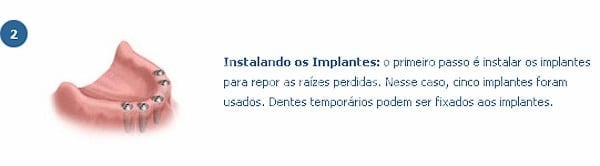
The most common method is to place six titanium implant pins in the upper jaw and four in the lower jaw. A temporary prosthesis is also always planned so that the patient doesn’t lose teeth.

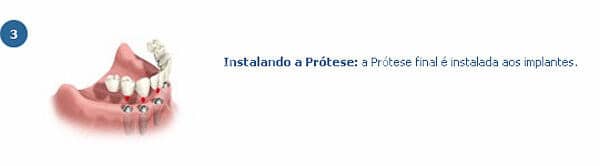
After the healing period (which varies according to each case), dental prostheses can be attached to the implants for complete oral rehabilitation.

Titanium implants replace lost tooth roots, while prostheses are similar in shape, color and strength to natural dental crowns.

Learn more about the full-arch implant.

Natural result of implants for all teeth

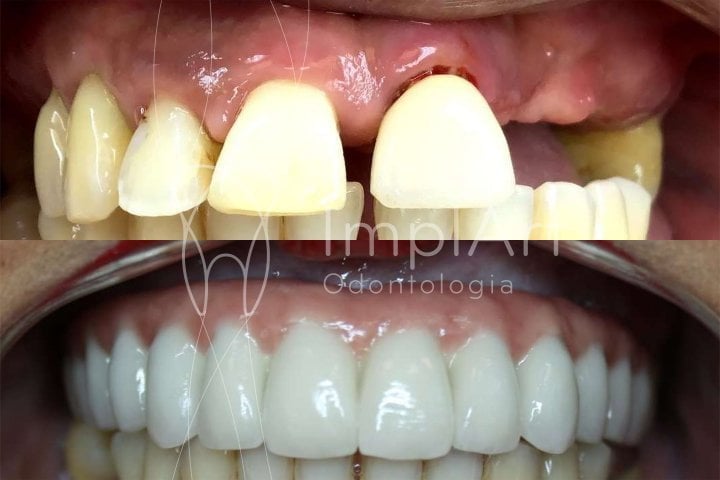
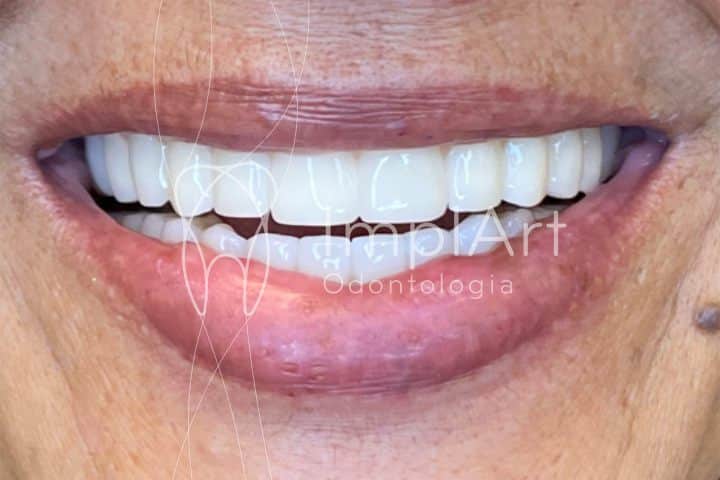
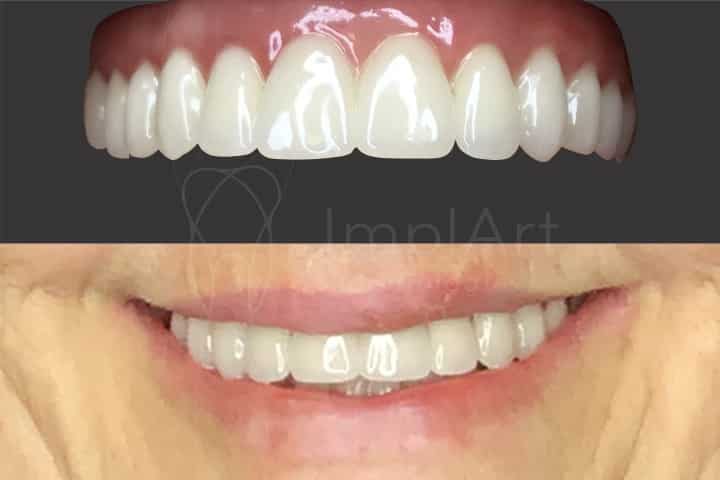
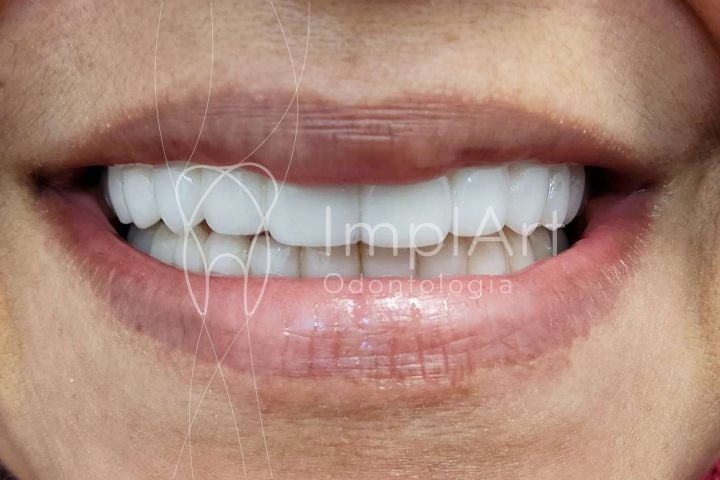
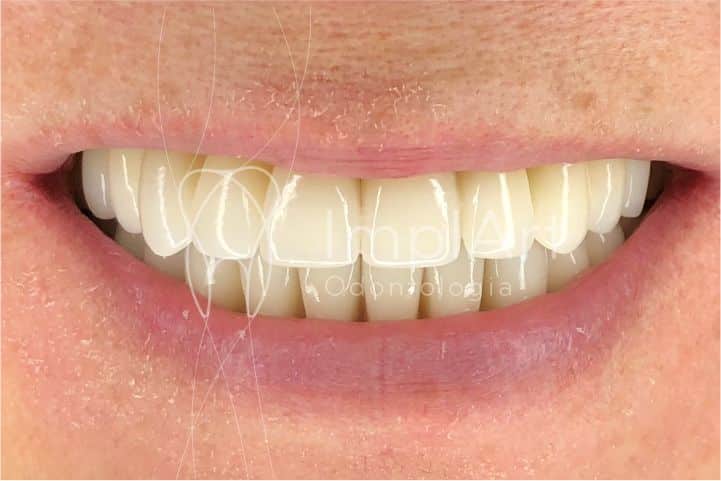
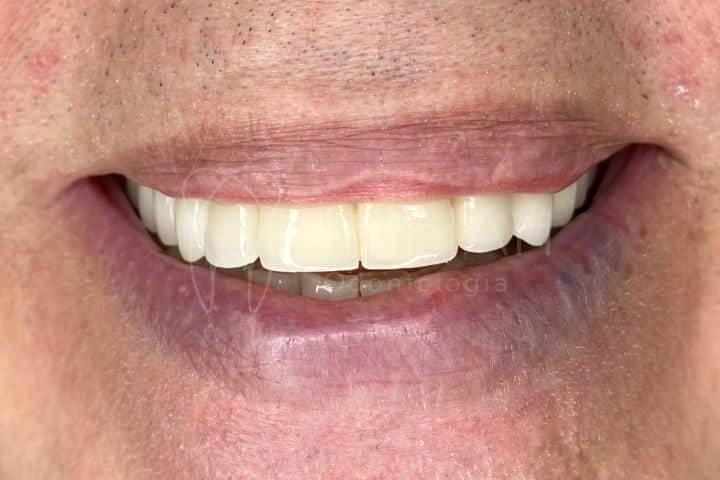
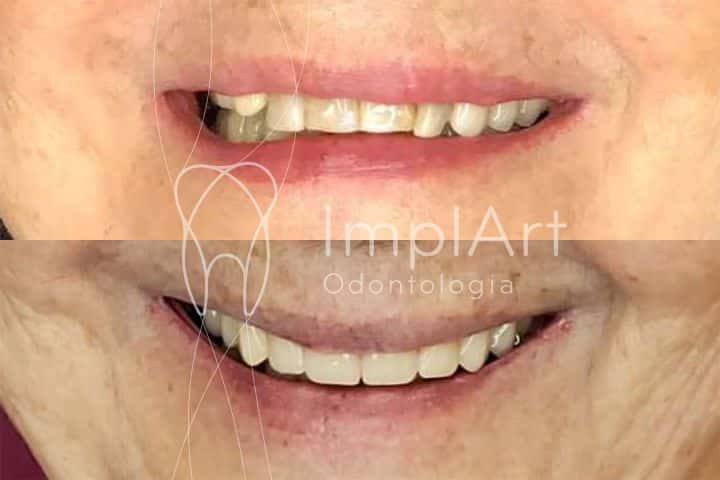
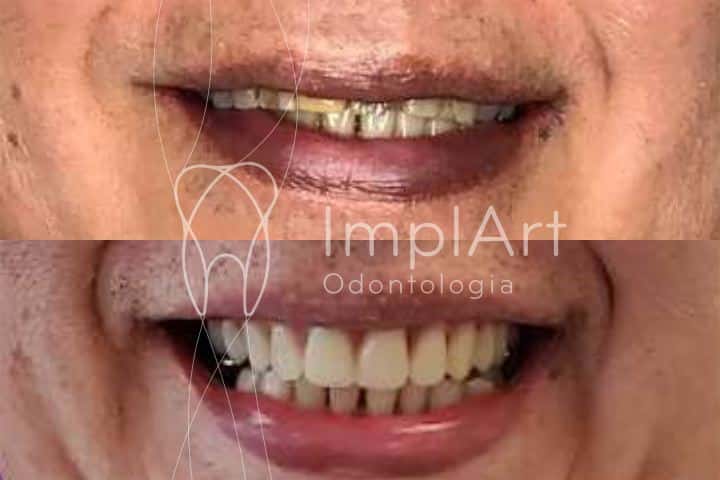
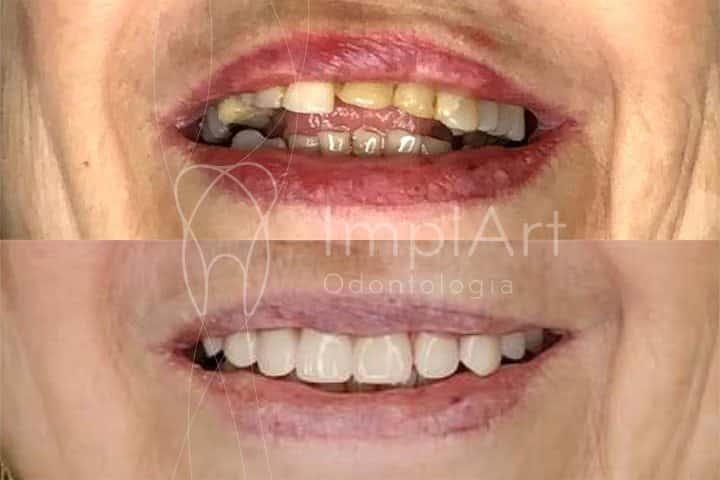
The complete dental implant is very similar to natural human teeth. As a result, the patient’s smile is once again harmonious and difficult for other people to distinguish as a prosthesis.

Social interaction is restored and the patient has more confidence to smile and speak. When the patient receives a complete dental implant, they are able to chew food that they couldn’t chew before.

This is a way of ensuring a richer, more nutritious diet and that the food reaches the stomach properly prepared for digestion. ImplArt Odontologia specializes in dental implants, in titanium or ceramic, and modern computerized prostheses, Zirconia or Cerec porcelain, in addition to traditional methods.

Make an appointment and get to know our team and our unique structure. Get in touch with us. We will be happy to assist you.

Zirconia prosthesis for dental implants

The zirconia prosthesis is a white ceramic used to make the internal structure of a dental implant prosthesis. It is currently considered the most aesthetic material for this purpose, as its shade is very similar to natural dentin and it also allows more light to pass through (translucency).

Zirconia provides a metal-free crown with high strength and aesthetics

A crown with a zirconia structure is an aesthetic alternative to a metal structure (metal-free crown). Although very resistant, the metal structure can leave the crown looking darkened when exposed to light.

In addition, if the patient has remodeling of the gums over time, a grayish line can appear at the gingival level and cause aesthetic compromise in the smile. For this reason, metal frameworks are often recommended for posterior crowns (which require a lot of strength, but not much aesthetics).

Meanwhile, the zirconia structure can be especially suitable for the anterior region, the most visible part of the arch where aesthetic requirements are greatest. The process of making a zirconia crown is computerized using Cad/Cam systems.

Read more about our digital dental laboratory

Read more about the new zirconia prostheses for fixed prostheses…

Zirconia implant opens up new rehabilitation possibilities

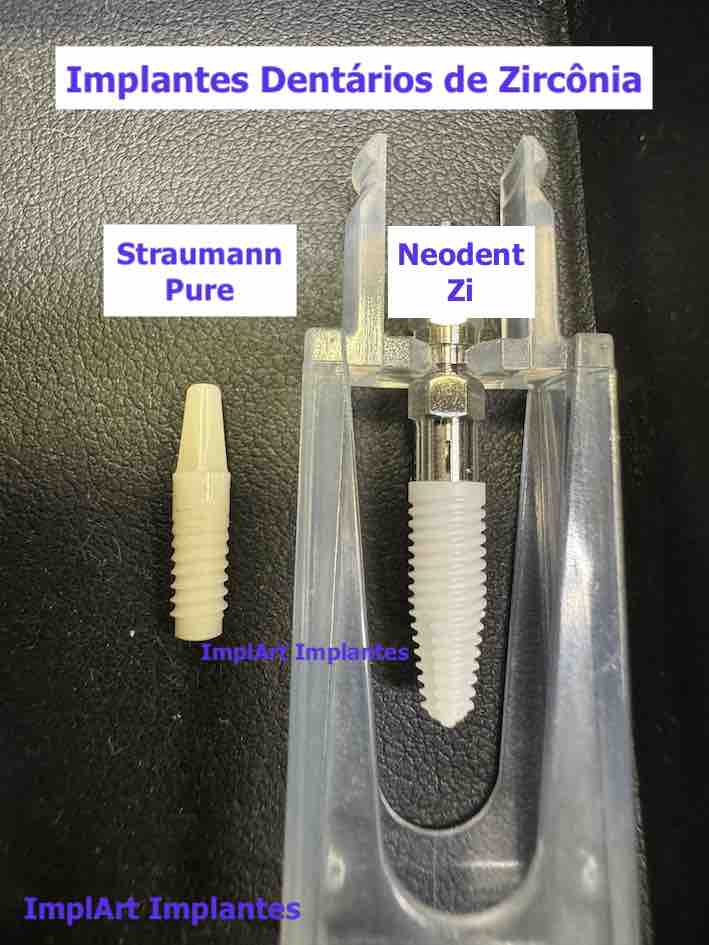
implante de zirconia straumann pure neodent zi
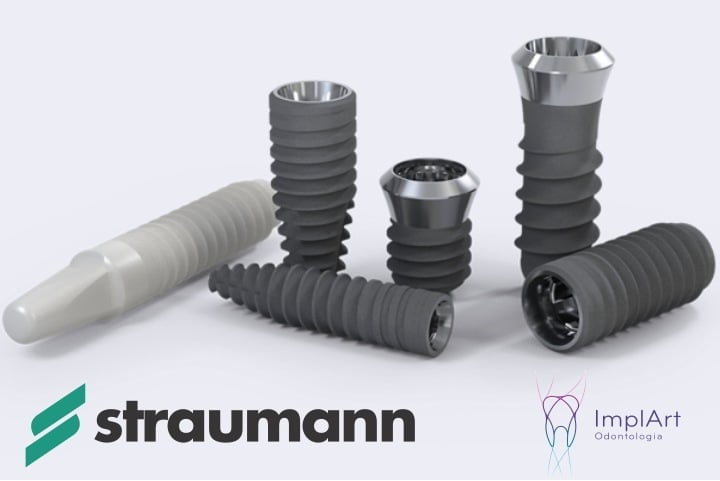
Image showing zirconia dental implant posts. Both Straumann zirconia implants and the national Neodent Zi implants are available at our clinic.

When you lose a tooth, you can have a zirconia implant placed, which is a piece of white ceramic that sits in place of the tooth root. After healing, you can place a zirconia prosthesis, which is a ceramic cap that sits on top of the implant and looks like a real tooth. This combination has some benefits, such as

  • Beauty: zirconia is as white as teeth and doesn’t turn the gums gray like metal. What’s more, zirconia is transparent and shines like teeth, making your smile look more beautiful and natural.
  • Health: zirconia is a material that adapts well to bone and gums without causing allergies or inflammation. This helps with the healing and firmness of the implant.
  • Resistance: zirconia is a very strong material that can withstand the forces of chewing and does not wear out easily. This makes the implant and prosthesis last longer.

Therefore, the zirconia implant together with the zirconia prosthesis is a good option to recover the function and beauty of lost teeth, with a safe, comfortable and durable material.

I want to know more about the Straumann Zirconia Implant – Swiss.

I want to know more about the Neodent Zi Zirconia Implant – Brazil.

The computer-designed zirconia prosthesis

Initially, the teeth are scanned using intraoral scanners to generate a 3D digital mold. The design of the crown is made on a computer and executed on 3D tooth printers.

Finally, the crown receives a layer of porcelain that makes it look very similar to a natural tooth and can be fixed onto the dental implant. Among the indications for zirconia crowns on implants are single crowns, bridges and complete fixed prostheses.

care of dental implants
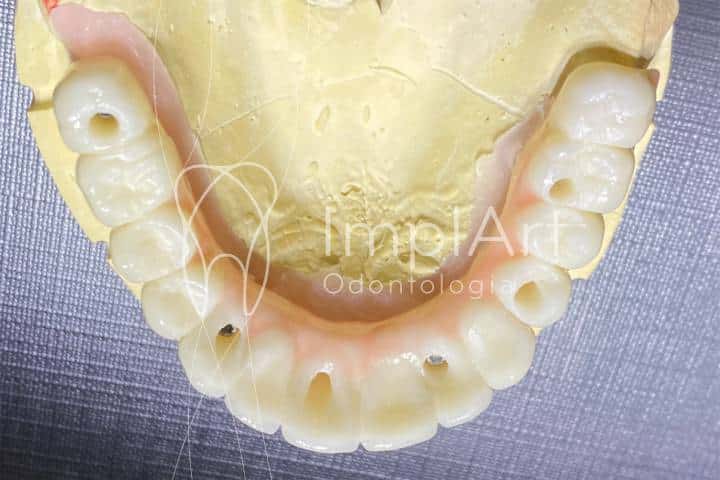
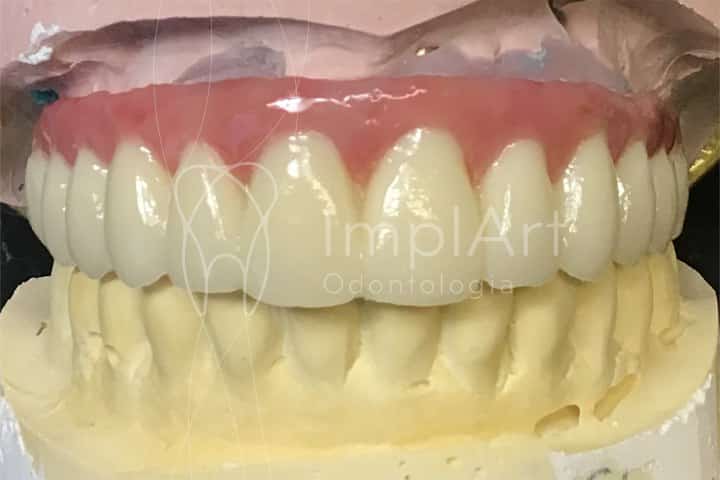
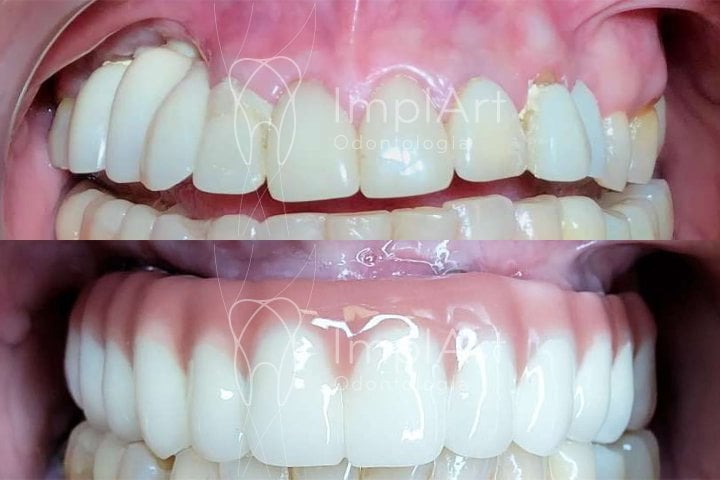
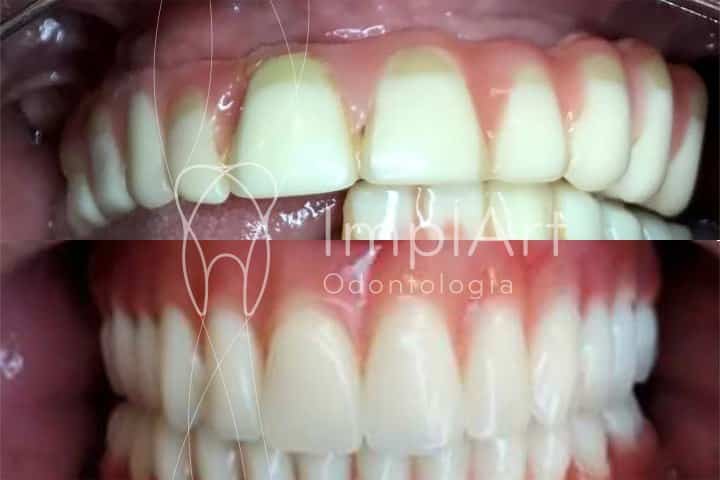
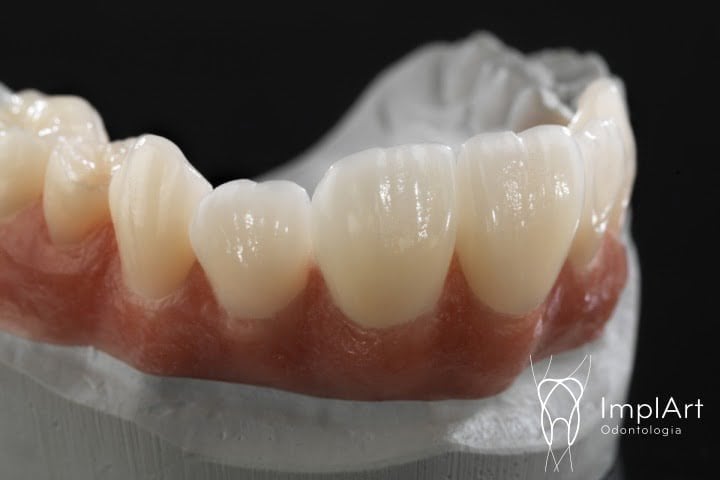
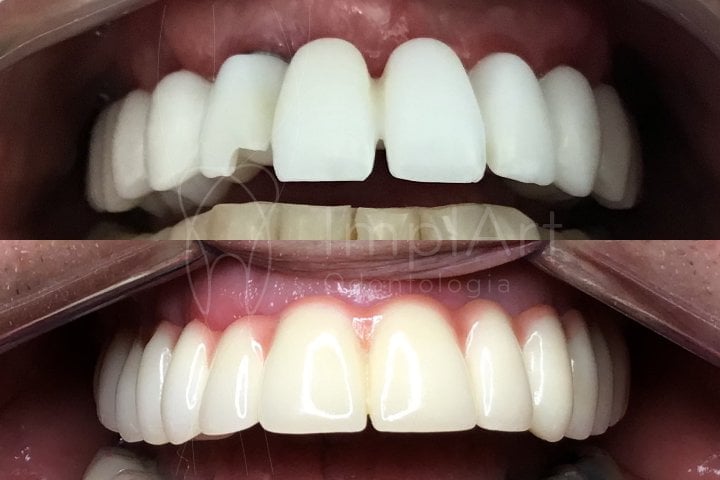
Zirconia implant prosthesis with porcelain applied. Above: bare zirconia framework ready for application. Below: porcelain applied to achieve proper form, color and function.

The main advantages of a zirconia prosthesis are:

  • High aesthetics
  • Resistance
  • Natural result
  • The fixed implant prosthesis is safer and more comfortable, and does not have the mobility of a mobile prosthesis
  • Improves smile aesthetics and self-esteem
  • Improves chewing and speech
  • Does not stain as it can with resin prostheses

If you have any questions, please contact us or make an appointment with our team. We’d be delighted to hear from you!

Fear of the dentist can complicate oral health

See the latest resources we use to help those who are afraid of the dentist

Odontophobia (fear of the dentist) is a condition that occurs in a small percentage of patients and can vary in intensity. In milder cases, the patient reports some anxiety and may experience tachycardia, a feeling of panic, excessive sweating, dizziness and even fainting.

In our clinic, we have received reports of patients experiencing tachycardia and perspiration when simply starting a conversation with the dentist. Occasionally, there are cases of odontophobia with atypical symptoms, such as nausea, excessive nauseaand intolerance when touching the mouth.

The team at the ImplArt Clinic provides humanized care, i.e. respecting each patient’s limits so that they feel welcome. This applies to simple procedures such as prophylaxis and restorations, root canal treatment and even surgical procedures such as bone grafting or dental implants.

Fear of the dentist can seriously damage your oral health

Dental treatment for patients with a fear of dentists can be difficult, even for simple procedures such as impressions, cleanings and restorations. In situations of severe phobia, a procedure such as implant surgery or even tooth extractions may be unthinkable for the patient.

As a result of the fear of the dentist, patients often refuse to go to the dentist for years, and as a result, oral problems such as cavities and periodontal infections arise, or even serious problems such as tooth mobility and loss, as well as aesthetic impairment of the smile.

The psychological origin of odontophobia is linked to traumatic episodes (trauma) that have been fixed in the patient’s subconscious, most often since childhood. The phobic patient can be treated with:

  • Psychotherapy
  • Sedation with nitrous oxide – however, in our clinic it has been abandoned because it doesn’t produce good results as it generates very light sedation.
  • Intravenous sedation – the technique is really effective. The patient remains in a state of deep drowsiness during the dental procedure (which can last up to 4 hours). The sedation is administered and monitored by a doctor throughout the procedure.
  • General anesthesia – in extreme cases, where even under sedation the patient still becomes agitated, we can indicate the procedure under general anesthesia in a hospital environment.

Read all the resources for those afraid of dental implants

Due to the inherent difficulty of dental treatment for an odontophobic patient, most of the time we can indicate simpler as well as faster treatments under the Day Clinic system. If you have any further questions or would like to give your testimony, please contact us!

Please note: We do not treat children or special patients.

fear of the dentist can get in the way of oral health care

Testimonials

“Excellent clinic and excellent professionals. I have a phobia of dentists, I had implant surgery with conscious sedation and other treatments over a few months and from start to finish I didn’t feel any pain. I recommend it 100%”

Alessandra Escobar

“I’m very anxious about going to the dentist and I’ve always avoided it as much as possible. Now it’s been five years without treating my teeth, so I ended up losing some dentures, had a lot of cavities and an episode of pain. Then I came across the ImplArt clinic and this sedation technique. It was very easy to have the treatment this way. The doctor who saw me was very attentive and looked after me until the end of the procedure. I also found that the dentist worked quickly and did some implants and treated the cavities while I was asleep. It was a bit magical but when I woke up everything was ready, I thought it was great.”

M.R.R., businesswoman, São Paulo-SP

“I was afraid of dentists, but this clinic gave me confidence and surprised me. Dr. Roberto is an excellent professional, he has a lot of experience and is always trying to learn more and more to be more efficient. I’ve always been very well received. Congratulations to all the professionals at this wonderful clinic, the doctors who are excellent professionals, the receptionists who are always kind and proactive. Thank you especially to Dr. Roberto, Dr. Pedro and Dr. Isabela!”

Karina Nascimento

“Dr. Roberto performed my surgery with great skill and mastery. I felt NO PAIN or discomfort. My recovery was excellent and now I’m going to start the final stage of my treatment. I chose the zirconia crown by scanner, because it’s quick, since I have to finish my treatment soon for a trip.”

Adriana Cardoso

“Anyone who is afraid of getting implants, I’ll tell you one thing: don’t be afraid, it doesn’t hurt at all and the clinic is top of the line. Dr. Roberto, who is the director, is super attentive, Dr. Bruno and Dr. Marcos are excellent professionals, none of the treatments hurt at all. I recommend it to everyone.”

kekeu51

“I was very pleased with the results and with the excellent service provided by the professionals. Dr. Pedro was very careful and attentive to me. Congratulations to the whole team and to Dr. Roberto, an excellent professional, may God bless you all.”

Júlio César Salles

Straumann Slactive dental implant

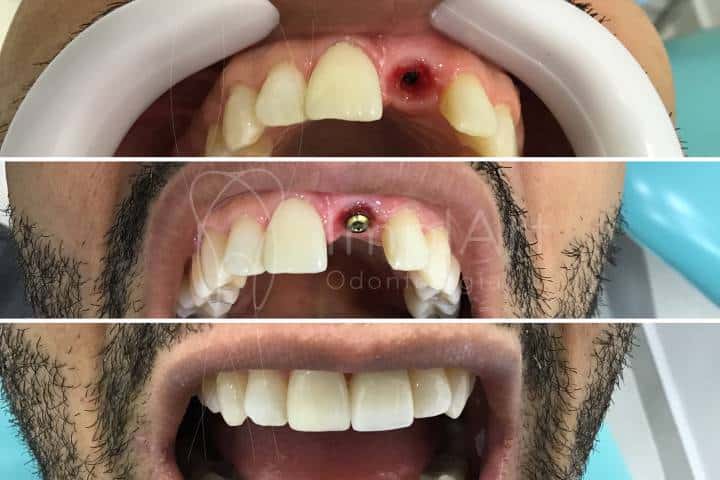
Tooth replacement in 1 month with rapid implants and DayClinic

Rapid tooth replacement with dental implants

It is possible to replace a tooth by installing a dental implant with a CAD/CAM-designed crown within 1 month, in selected cases. This is possible because the ImplArt Dental Clinic works with Straumann Slactive implants. They have surface technology that favors and accelerates healing and the biological interaction between implants and bone (osseointegration).

A case of root fracture, for example, would require a dental implant as soon as possible, along with extraction. Successful osseointegration is what guarantees the stability of the implant to support the prosthesis and the masticatory load over the years. With normal implants, osseointegration usually occurs between 6 and 8 months. With Straumann Slactive implants, this time can be reduced to 3 to 4 weeks.

*Learn all about implants: Dental Implants at ImplArt Dental Clinic Specializing in Dental Implants

Will I lose a tooth during implant healing?

During this healing period, the patient wears a temporary prosthesis so as not to be left without a tooth. In the meantime, our prosthetics laboratory carries out the digital CAD/CAM design and manufacture of the definitive prosthesis using 3D printers. The design begins with a digital mold that is taken using an intraoral scanner, an intraoral camera that captures precise images of the patient’s mouth.

See more about single-tooth implants: Single-tooth implants

tooth replacement with dental implant and CAD/CAM crown

From these three-dimensional images, it is possible to design a prosthesis with the perfect fit and shape for tooth replacement. The prosthesis is made using a 3D printer. It can be made of porcelain, a very resistant, aesthetic material comparable to natural human teeth, and with a metal or zirconia internal structure.

Some people prefer to come twice to our clinic in a stage protocol for Implants instead of coming only once. This happens because if you stay for the full length of the treatment, you need to stay at least one month in Brazil but instead, if you choose a stage treatment you can come normally for one week and go back home. Then, after a few months, when you have availability, you can come again for another week and finish your work.

Find out more about our digital prosthetics laboratory.

It is worth noting that the possibility of tooth replacement with implant installation, gum grafting or bone grafting, with the definitive prosthesis in just 1 month, is only possible in selected cases.

An assessment by our specialized team will determine this possibility taking into account certain characteristics, such as bone volume and general state of health (in general, as well as of the teeth and gums).

The patient’s age can also influence the planning of dental implants. The rapid installation of a dental implant with a permanent crown for tooth replacement restores chewing ability, smile aesthetics and confidence in speaking and smiling.

Alternatives to dental implants for tooth replacement

As an alternative to implants, we can use dental prostheses in some cases. Adhesive dentures are a way of replacing a missing tooth. The main feature of this prosthesis is that it is attached to neighboring teeth using metal fins and dental adhesive.

If you have any questions about tooth replacement with dental implants, treatments for bruxism or average prices, please make an appointment or contact us. We’ll be happy to help you.

Dr. Roberto Markarian, implant dentist

Text written by DR. ROBERTO MARKARIAN – CRO-SP 73.583
Founder and Director of the ImplArt Dental Clinic – Dr. Roberto’s Linkedin profile

Dr. Roberto Markarian implant dentist
Tooth replacement in 1 month with rapid implants and DayClinic

Dr. Roberto Markarian is a reference in dental implants and computerized dental prostheses in Brazil. As well as having more than 10,000 implants installed, he is a researcher who produces knowledge that is published worldwide in renowned scientific journals in the field of dentistry. He is responsible for promoting knowledge and high technology applied in all the treatments offered by the ImplArt Clinic.

  • Post-Doctorate in Implant Dentistry – Univ SL Mandic (Campinas-SP) – 2020
  • PhD in Implant Dentistry – Doctor of Implant Dentistry, Univ SL Mandic – 2017
  • Dr. Roberto Markarian Specialist in Dental Implants at USP (Implant Dentist) – 2008
  • Specialist in Prosthodontics (Prosthodontist ) by the CFO – 2006
  • Master in Prosthodontics, USP – 2005
  • Graduated as a Dental Surgeon from USP (São Paulo) – 2001
  • Member of the Clinical Staff of Hospital Alemão Oswaldo Cruz

schedule your appointment at the implart clinic by phone or whatsapp

como é feito um implante dentario
Tooth replacement in 1 month with rapid implants and DayClinic

📲(11) 99598-1866

📲WhatsApp(11) 99598-1866

High-tech Straumann dental implants in Brazil

A dental implant is a titanium or all-ceramic pin that has a similar function to a tooth root, i.e. to provide support for the teeth. Over the years, dental implants have been developed with different shapes and compositions, in order to always seek better initial stabilization and durability throughout life. Currently, the fastest implant option is the Slactive dental implant version with rapid healing of 1 month. This means that one month after implant surgery, the final crown can be fitted.

We certainly can’t fail to mention the modern ceramic dental implant which, combined with the pure 3D zirconia crown, is the complete combination for metal-free oral rehabilitation. This treatment is especially suitable for people who are looking for excellence in aesthetic results, both when choosing dental implants and prostheses. In addition, it can be used for those patients who want to avoid the use of metals due to an allergic condition.

This option is gaining more and more ground as many patients want to eliminate the use of metal in their arches, either out of preference or even medical restrictions. There are currently several types of implant, each with its own characteristics, making it easier to choose according to the patient’s wishes. Let’s find out more about this very modern white implant option, which has allowed one version of the implant to be made of titanium.

Some high-tech implant models

The ImplArt Dental Clinic in Brazil only works with high-tech implants, including Straumann Swiss implants (which are widely considered to be the best in the world). Straumann offers a wide range of implants in a variety of shapes, diameters and lengths to meet a wide range of needs in implant dentistry.

Straumann Roxolid implants

Implants of reduced length and diameter, they are suitable for people with bone defects who do not want or cannot undergo bone grafting procedures. They are composed of a high-performance alloy, specifically designed above all to provide greater strength than pure titanium. They have excellent bone integration capacity.

Straumann Pure Ceramic Implants

Ivory-colored all-ceramic implants, so they resemble the shade of the tooth roots. They can be a treatment option for more apparent areas of the arch or patients with very thin gums. They can also be an option for treating patients who are sensitive to metals such as nickel.

Straumann Bone Level Implants

They have an internal prosthetic abutment connection, thus reducing manipulation of the gingival tissues. For this reason, they can be a treatment option for more apparent areas of the arches, as they provide a more aesthetic result.

Straumann SLA implants

They have a rough surface technology that provides an ideal structure for the adhesion of cells that stimulate and therefore accelerate the osseointegration process (bone formation and stabilization around the implant).

Straumann SLActive implants

They have surface technology that stimulates and accelerates the osseointegration process (bone formation and stabilization around the implant). They have a hydrophilic surface for the formation of blood clots in the implant.

The hydrophilic and chemically active properties of the SLActive surface provide a larger accessible surface area for greater absorption of blood proteins and formation of the fibrin network.

These are ideal conditions for blood clots to form and for the healing process to begin. All Straumann implants are made from safe materials that are certainly biocompatible with the human body.

Straumann high-tech dental implants
Swiss implant manufacturer Straumann offers a complete range with various clinical applications.

Improve your quality of life with high-tech dental implants!

High-tech dental implants – Advantages?

Tooth loss can lead to aesthetic, functional and bone problems, so a quick replacement is essential. More advantages:

Dental implants – Contraindications (each case is assessed individually)

  • In patients with general health problems
  • When there is not enough bone to place the implant (can be solved with bone grafting techniques)

Dental implants: how are they done?

The titanium implants are installed into the bone through a small operation in the dental office, under local anesthesia. Once the dental implant is in place, it takes an average of 1 to 4 months to adhere to the bone (osseointegration), depending on the type of implant chosen.

In some high-tech Straumann implant models, osseointegration can occur in less time. Therefore, after this period, the molds for the installation of the fixed prosthesis on the implants can begin.

In some selected cases, the prosthesis can be placed on the same day as the surgery with immediate loading. If you have any questions, please contact us or make an appointment. We at ImplArt Implants Clinic will be happy to help you!

Read more about dental implants

Rapid immediate loading of dental implants

Immediate loading of dental implants

Rapid (immediate) loading is possible thanks to scientific advances. Today it is possible, in selected cases, to enter the office without teeth and leave at the end of the day with all the teeth fixed on dental implants with immediate loading. This technology gives patients great satisfaction due to the rapid results.

Immediate rapid loading can be planned for individual dental implants, or even total dental implants, the so-called protocol prosthesis. Its feasibility should be assessed in consultation with the implant dentist.

When to load implants quickly:

Implants with this rapid loading technique can be used in the following cases:

  • For total implants (replacement of dentures with all teeth fixed)
  • Several teeth (usually teeth or tooth roots with periodontal disease, badly decayed teeth as well as old dentures)
  • For a single tooth (mainly in the anterior region)
  • Fixed prosthesis of some teeth (in selected cases)

The rapid loading technique can be indicated for a single tooth or for all teeth.

Indications for immediate rapid loading dental implants

The dental implant technique with immediate loading can be carried out when bone quantity and quality are normal and also when occlusal habits are favorable for the procedure to be carried out so as not to overload the site with chewing.

Therefore, the immediate loading technique depends on certain conditions of the patient’s dental arch and general oral health. The conditions, planning requirements and feasibility of the implant with immediate loading are assessed individually in consultation. Not all cases can be immediately loaded.

immediate rapid implant loading

Therefore, the dental implant technique with immediate loading can be indicated for the following cases: people with a completely toothless lower arch, a full arch with a few teeth, single or individual teeth in the anterior region of the mouth, and in some cases fixed prostheses on a few teeth, depending on the region. In all cases and situations, the main course of action is to consult your dentist and carry out a full assessment to determine what and how will be done.

Only this assessment can determine whether an immediately loaded dental implant is indicated or whether another rehabilitation procedure would provide a better result. The technique is not always used in all cases, as it depends on the patient having some specific and favorable conditions that are assessed in consultation.

We must therefore plan your case carefully in order to achieve the expected success. The procedure aims to install a temporary prosthesis immediately after the implants have been placed. The time it takes to make the final prosthesis will be discussed with the dentist and varies from case to case.

Types of dental implants

If your concern is to complete your dental implant treatment as soon as possible, you can use fast-healing implants. The Swiss company Straumann is responsible for producing the most modern dental implants that allow rapid healing. Under ideal conditions, without bone grafting and good locking, these implants normally heal in between 1 and 2 months. So if your concern is time, opt for Straumann implants. These implants can be used for single implants or total implants.

In addition to titanium implants, there are also ceramic implants, an option for those who want a metal-free implant treatment.

Types of dentures

The type of dental crown or type of prosthesis to be used in your treatment should certainly also be evaluated, in order to shorten its execution time. If possible, opt for computerized crowns or prostheses. These modern prosthesis models use 3D tools that speed up the execution time and offer greater quality and naturalness. This includes the Translucent Zirconia Prosthesis, the single zirconia crown or the fixed zirconia prosthesis. As well as the Cerec porcelain crown.

At the ImplArt dental clinic, we have all the structure to carry out your procedure with peace of mind, so come in for an assessment and we’ll analyze whether your case can be solved with this technique. Contact us by WhatsApp (11) 99598-1866, we’ll be happy to talk to you and answer any questions you may have.