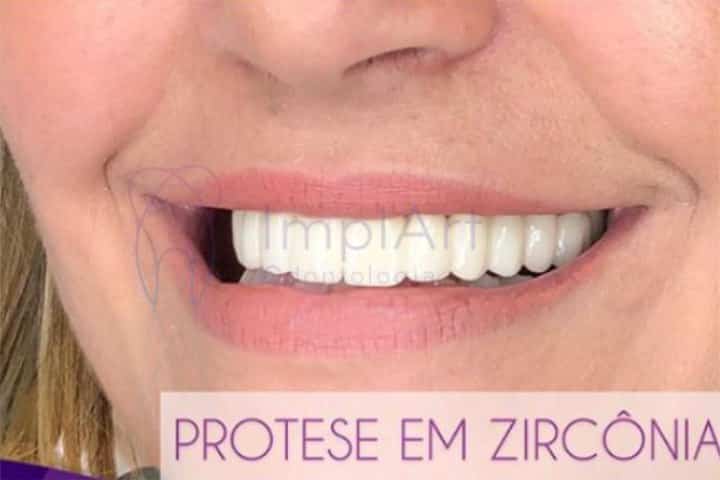
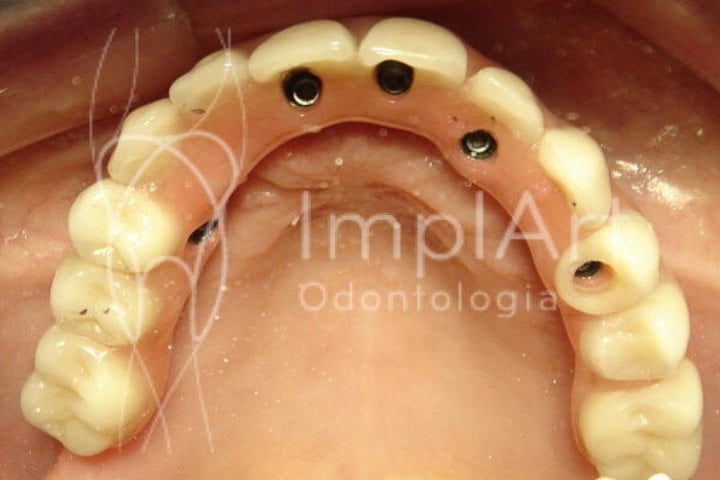
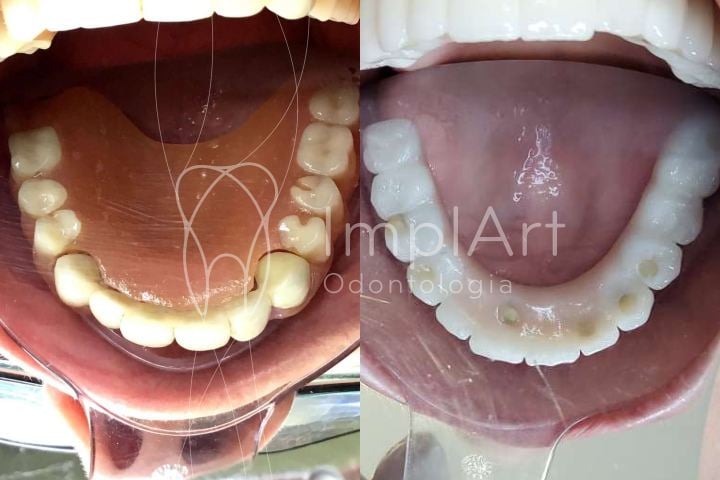
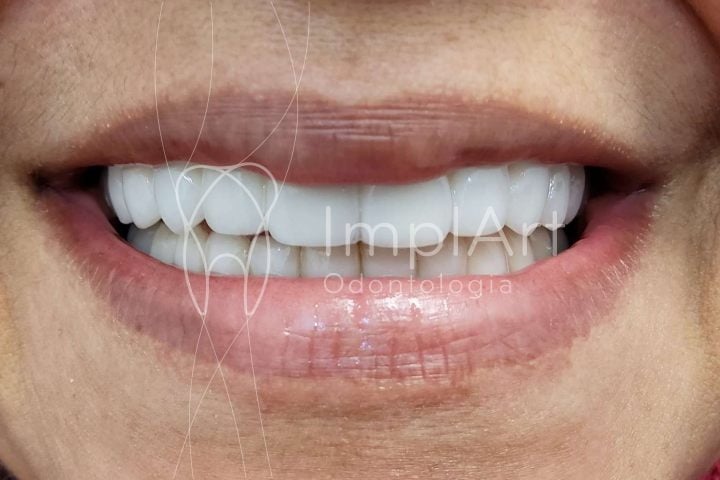
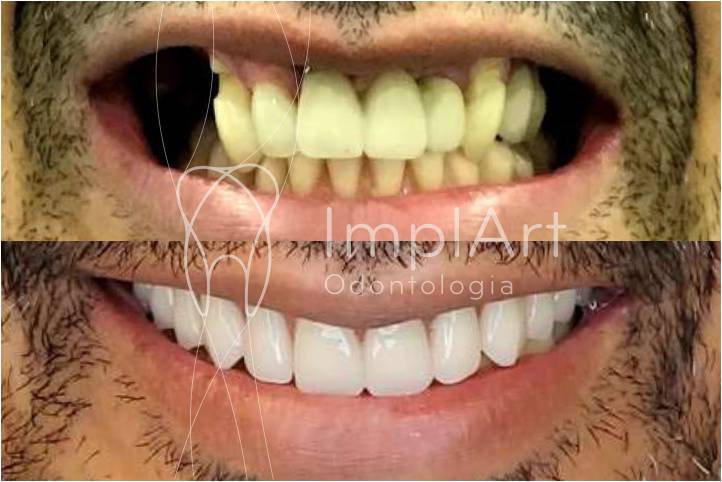
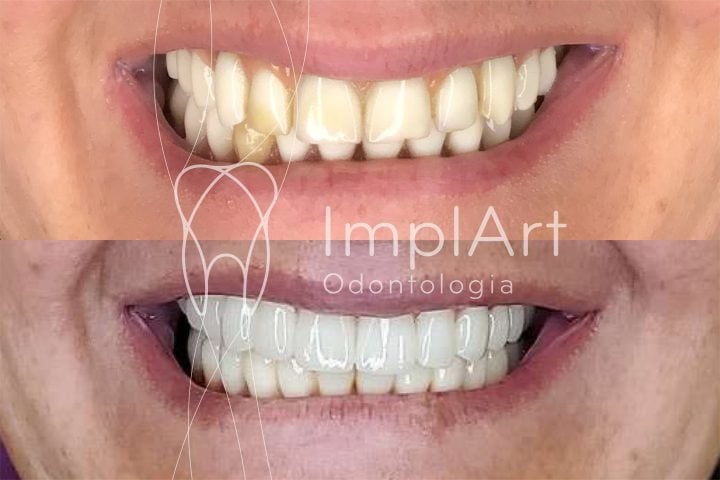
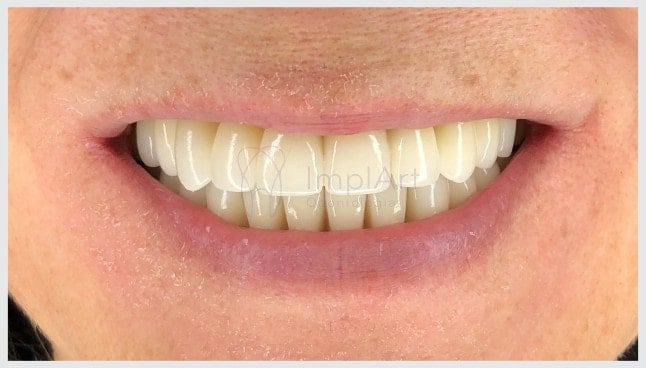
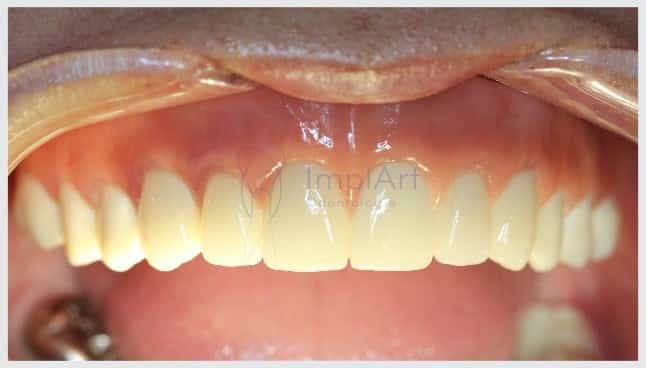
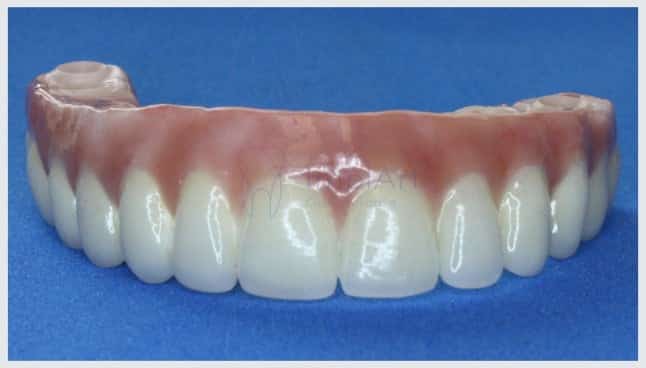
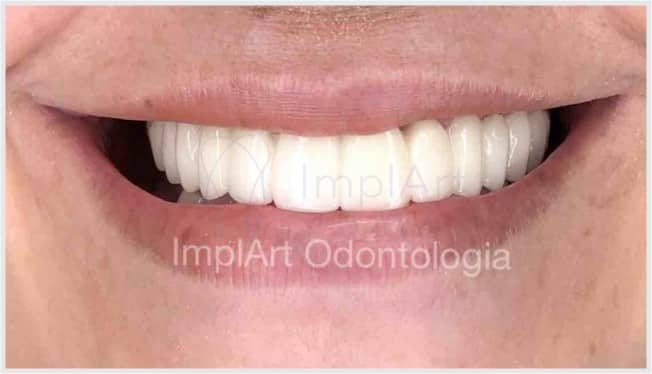
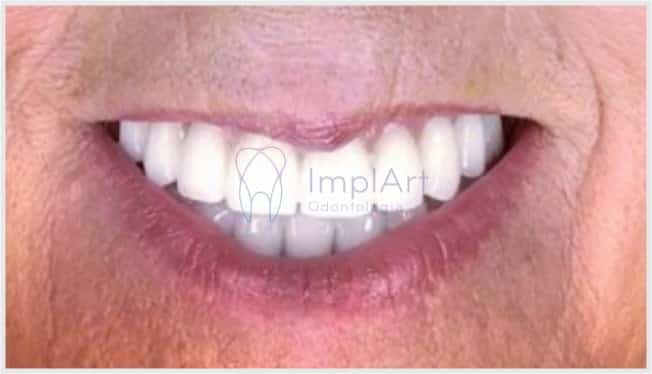
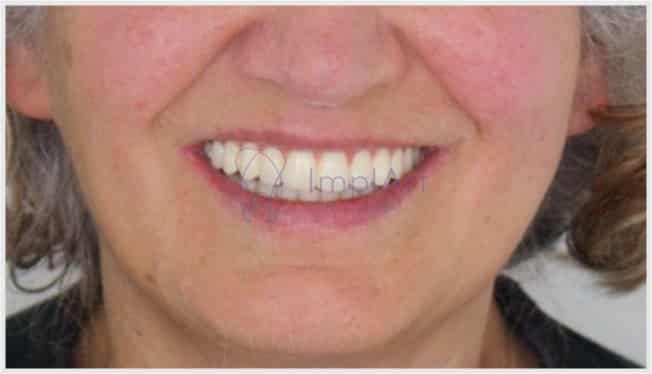
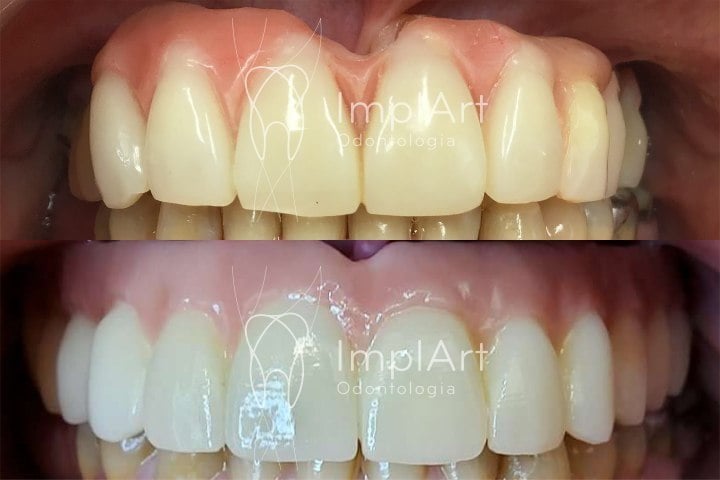
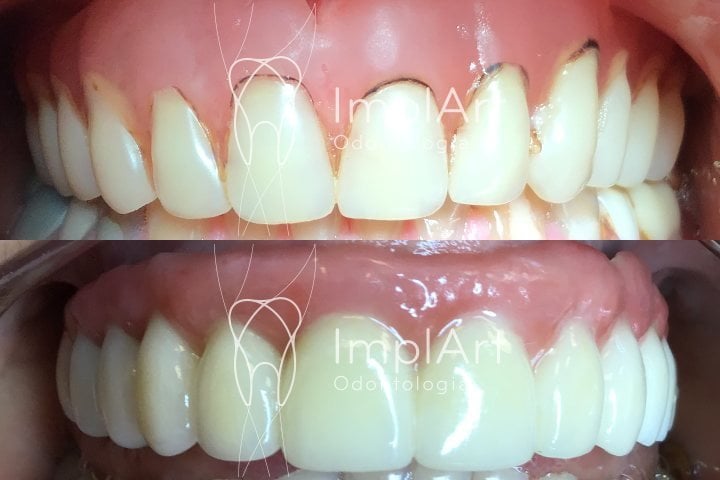
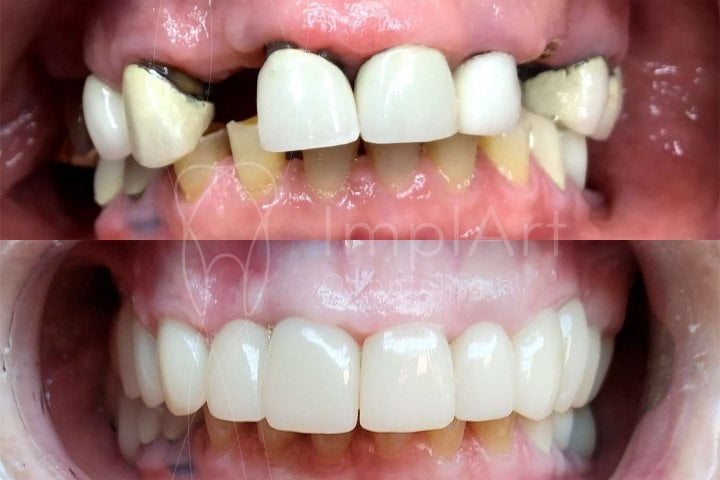
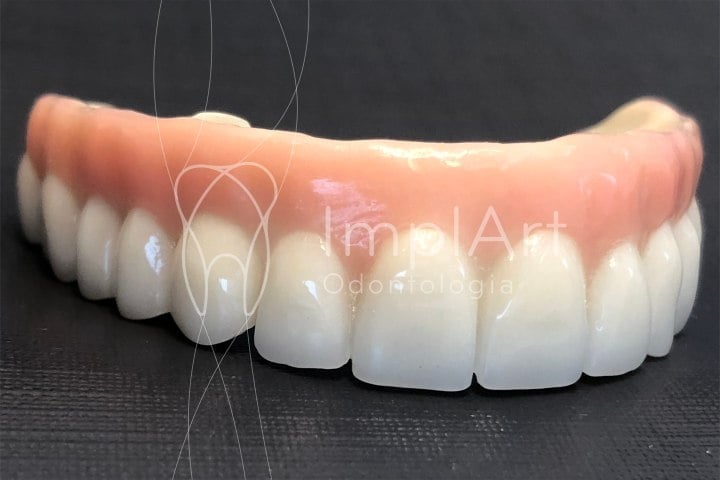
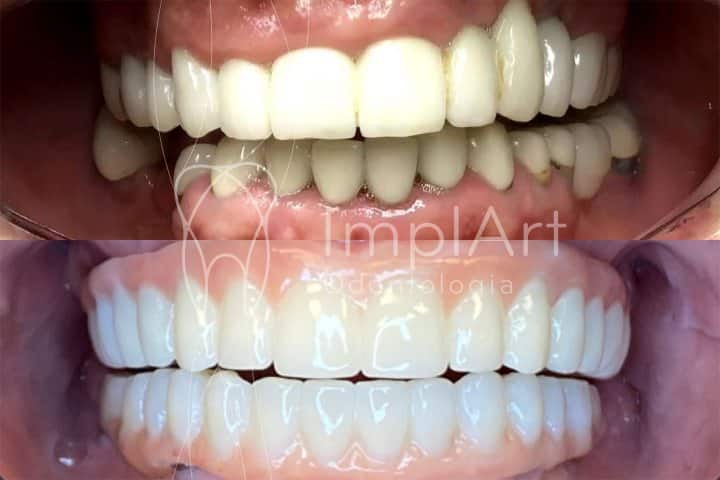
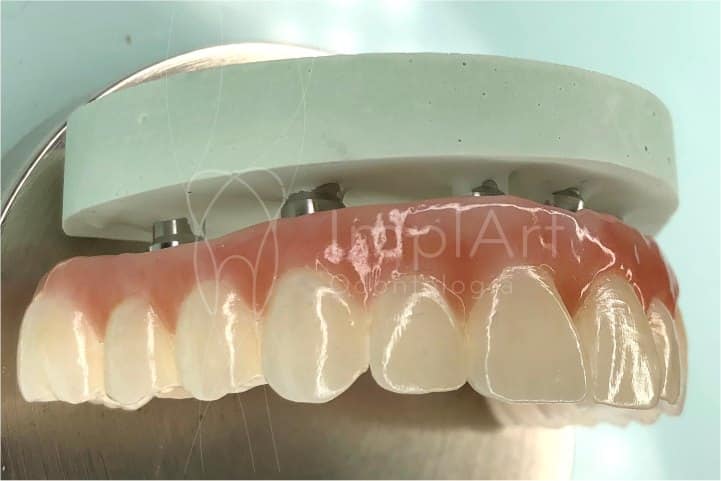
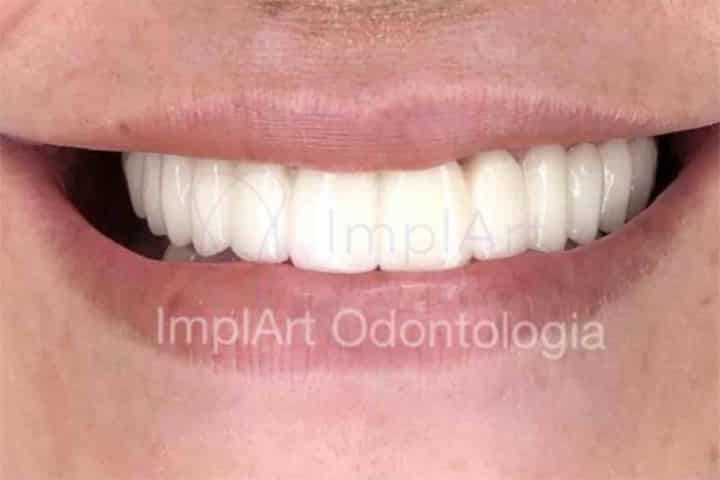
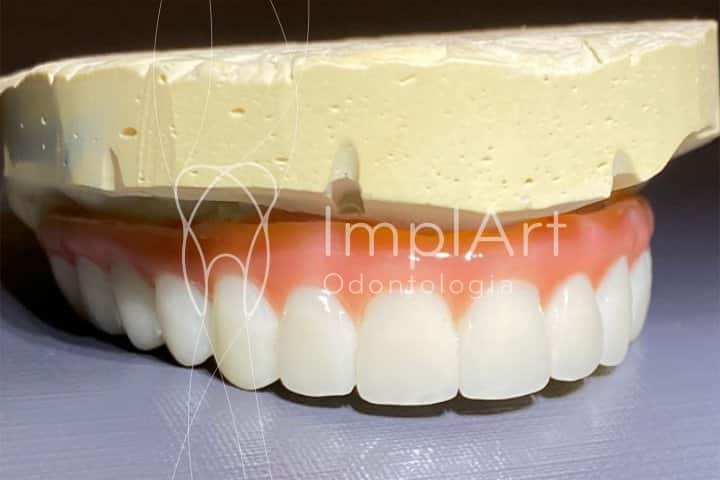
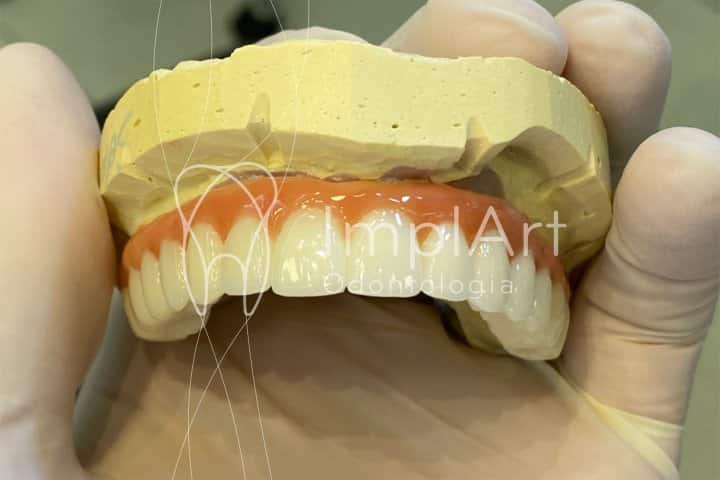
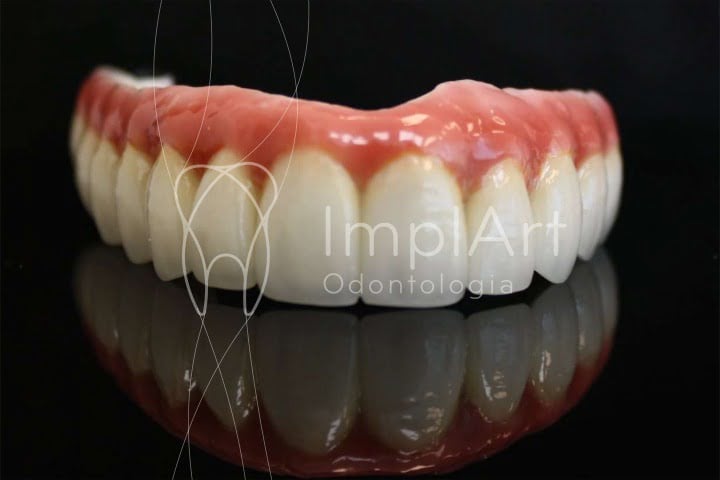
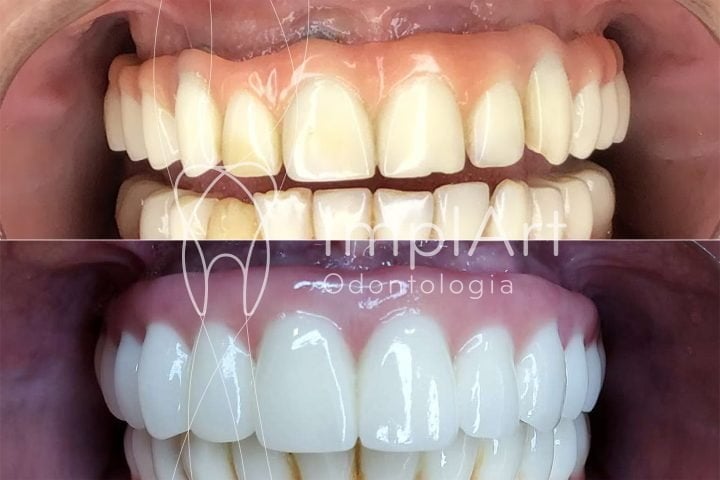
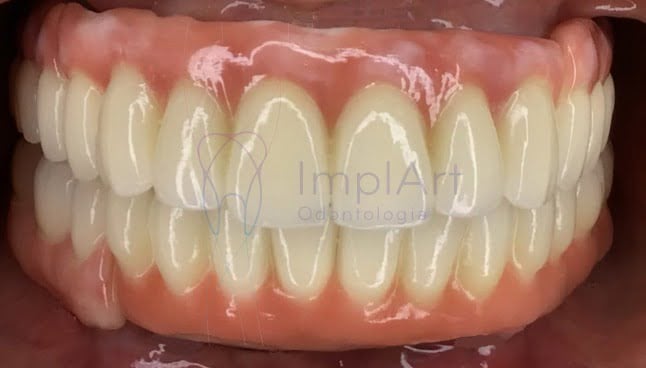
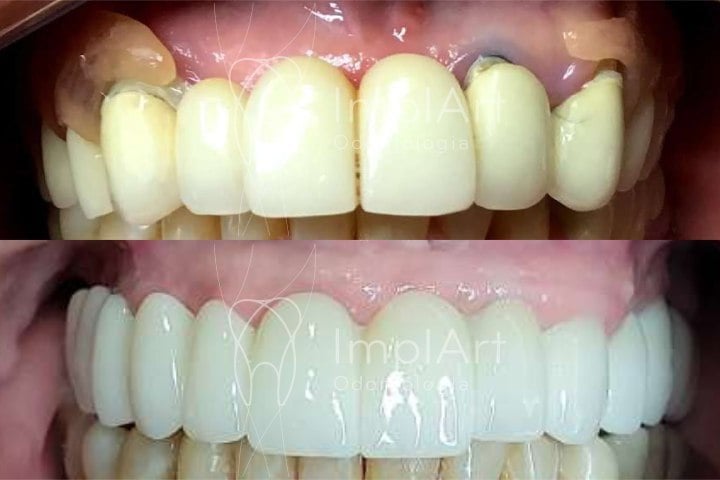
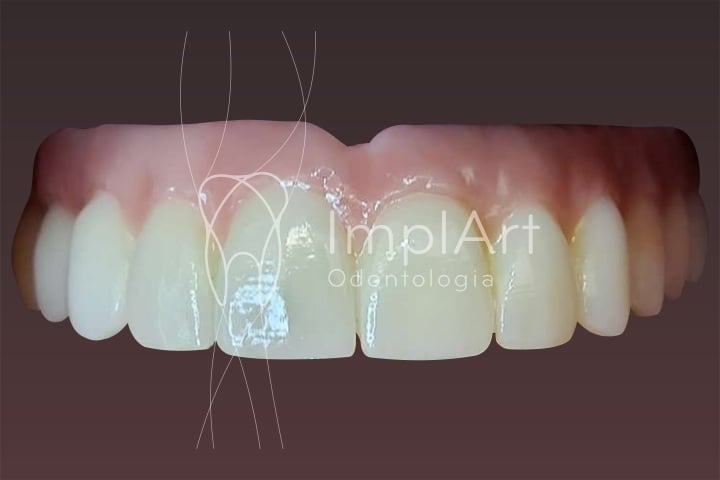
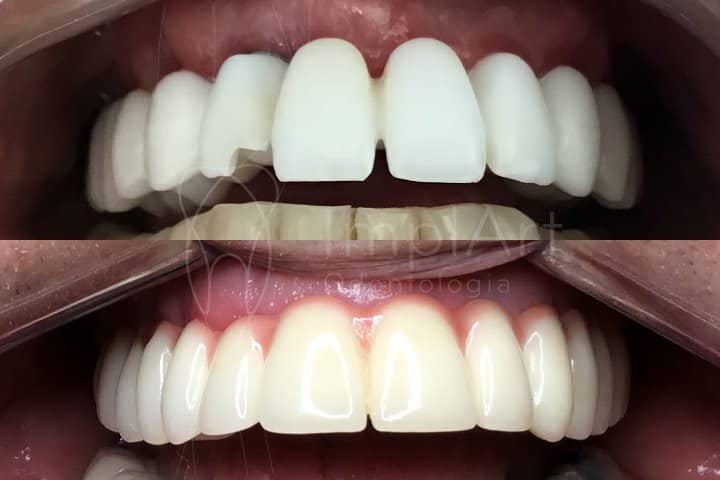
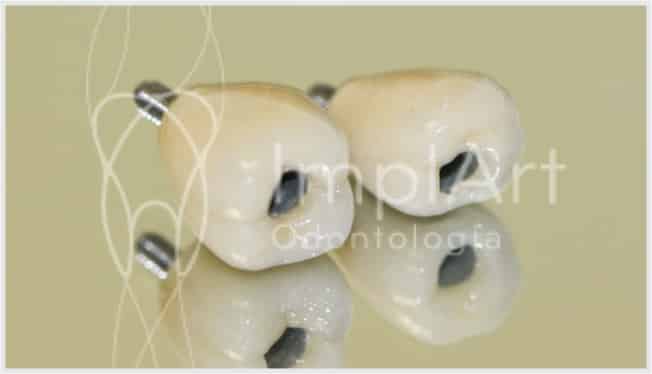
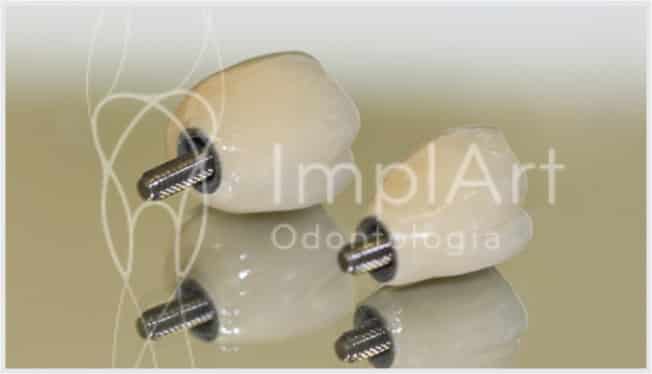
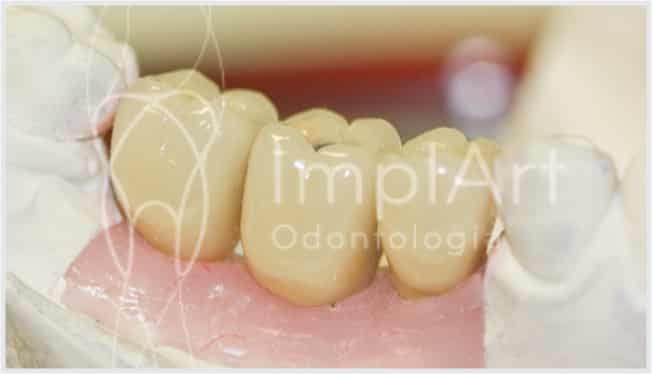
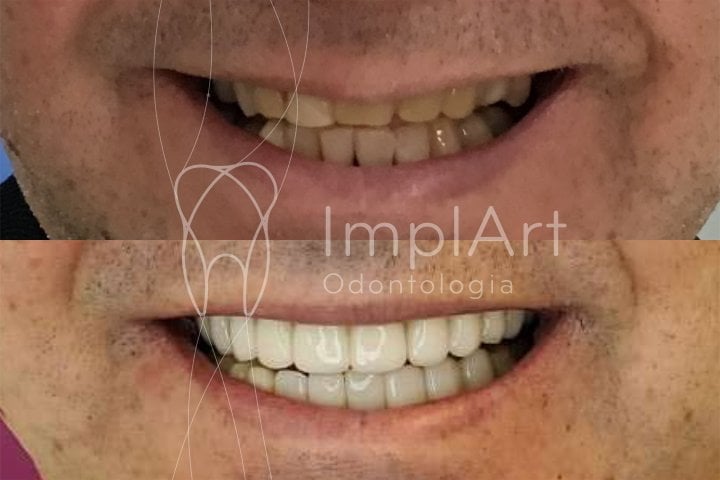
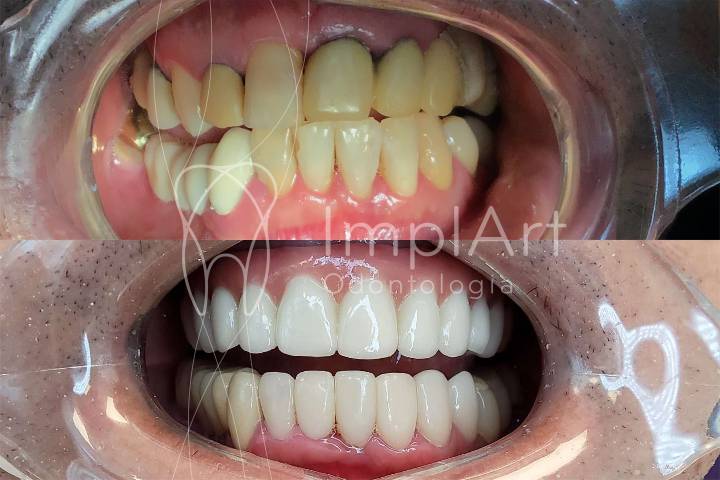
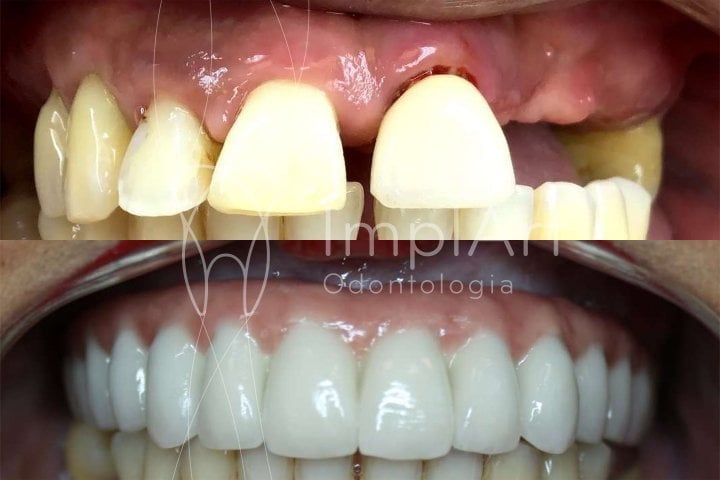
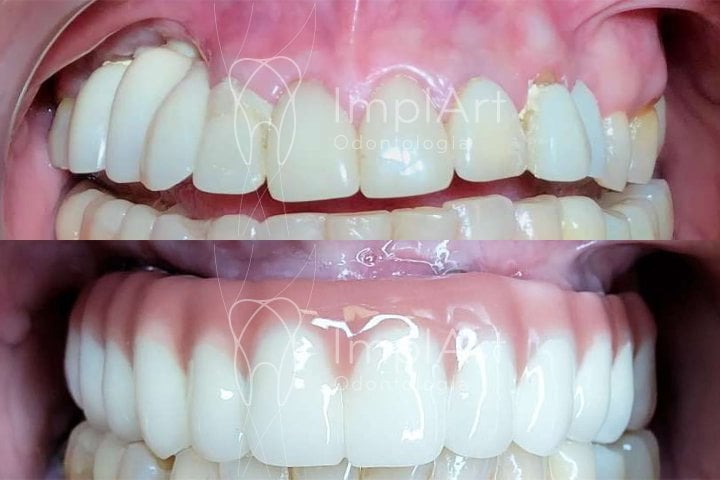
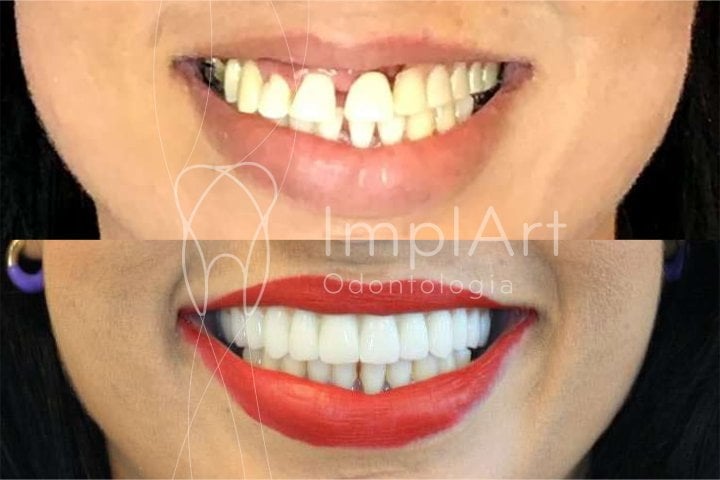
A complete dental implant is a fixed dental prosthesis on implants that makes up for the absence of all the teeth and improves chewing, speech and the look of the smile. It is called a protocol prosthesis and aims to re-establish the patient’s chewing function by inserting a dental implant in the upper or lower arch.
There are currently many types of protocol prosthesis to be installed on dental implants. Among them is translucent zirconia, which is the most modern option because it uses a computerized system for its execution, which improves precision, speeds up results and allows for superior aesthetics combined with high resistance.
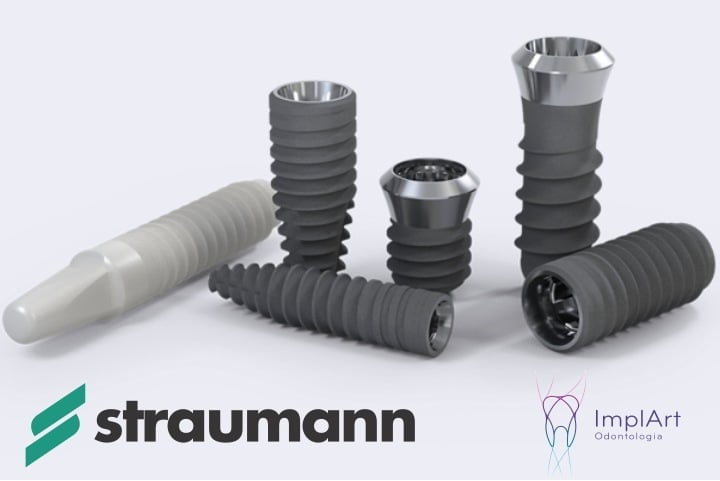
The dental implant, on the other hand, can be made of titanium, or even ceramic, in Straumann‘s modern version, Pure Ceramic, or even the fast-healing titanium version, Slactive. There is also a national dental implant option, Neodent.
Complete dental implants to improve chewing and self-esteem
We are currently working with materials that are very comparable to natural teeth, both in terms of function and aesthetics. Patients who have lost their teeth for various reasons can have consequences that affect their health and well-being.
The absence of natural teeth (edentulism) hinders the ability to chew food, compromising the intake of essential nutrients for health and quality of life.
In addition, the person with total edentulism has their social life affected because they can’t smile and speak confidently in front of other people. As a result, they tend to become reclusive and have low self-esteem.
Complete dental implants improve chewing, self-esteem and aestheticsComplete dental implants improve chewing, self-esteem and aestheticsComplete dental implants improve chewing, self-esteem and aestheticsComplete dental implants improve chewing, self-esteem and aestheticsComplete dental implants improve chewing, self-esteem and aestheticsComplete dental implants improve chewing, self-esteem and aestheticsComplete dental implants improve chewing, self-esteem and aestheticsComplete dental implants improve chewing, self-esteem and aestheticsComplete dental implants improve chewing, self-esteem and aesthetics
Advantages of a fixed prosthesis over a removable prosthesis
The fact that the prosthesis is fixed on implants makes it more comfortable and safer for the wearer to chew and speak than a mobile prosthesis, which can sometimes become maladjusted and move or even hurt.
Implants can be placed in different ways, as it varies according to the patient’s condition, especially if they have been edentulous for many years.
Oral rehabilitation with total implantation of all teeth (total implantation) is certainly a solution for people who have lost all the teeth in an arch or who would like to replace their mobile prosthesis with a fixed prosthesis on implants. The loss of teeth certainly damages a person’s quality of life and self-esteem.
The beauty of the smile is compromised and chewing is impaired. A fixed prosthesis is certainly capable of transforming the lives of those who suffer from missing teeth. However,implantrehabilitation is recommended assoon as possible after tooth loss to prevent bone loss (bone resorption).
The implants are surgically placed in the bone – usually 6 in the maxilla (upper) and 4 in the mandible (lower). Once healed, a prosthesis is fixed onto them. The dental prosthesis can be made from different materials, ranging from resin to porcelain with a metal-free zirconia structure (more aesthetic and free of metals).
How total implants are done (all the teeth in the arch)
The time that elapses between the installation of the implants and the placement of the definitive prosthesis varies according to each case, which is assessed individually. In short, the treatment time can vary from four months to a year, depending on the patient’s condition. However, in some selected cases, it is possible to perform full-arch implants and have all the teeth fixed with implants on the same day.
This technique, called immediate loading or rapid loading, gives patients great satisfaction due to the rapid results. All of the ImplArt clinic’s dental prostheses are made in a complete in-house dental prosthesis laboratory, which guarantees the quality of the products delivered.
In addition, we work exclusively with the most modern computerized technologies called Cad/Cam, which increase the precision of the parts produced. Click here to find out more.
Advantages of a fixed prosthesis on dental implants
More comfortable for the gums
More secure chewing, speaking and smiling
Restores the aesthetics of the smile
Free roof of mouth
It paralyzes or prevents bone resorption (a common phenomenon in people who lose their teeth).
Total implantation of all teethTotal implantation of all teethTotal implantation of all teethTotal implantation of all teethTotal implantation of all teethTotal implantation of all teethTotal implantation of all teethTotal implantation of all teethTotal implantation of all teeth
If you have any questions about implants for all your teeth, then contact us through one of the channels below or book an appointment.
The loss of multiple teeth can certainly affect your ability to chew, as well as the beauty of your smile. The best option for replacing multiple teeth is certainly the placement of a multi-tooth implant, i.e. the placement of several implants and the attachment of a dental prosthesis. A multi-tooth implant can also be called a total implant or a protocol prosthesis.
How to do several implants at the same time.
Fixed prosthesis or implants with several teeth provide good chewing ability and aesthetics
It is certainly recommended that implant surgery be carried out as soon as possible after tooth loss. This prevents bone atrophy (progressive bone loss) from occurring. Implants for 3 teeth, 4 teeth or more have some advantages over other types of treatment.
Advantages of multi-tooth implant rehabilitation
Neighboring teeth remain intact
The prosthesis is attached to the implants, offering comfort and safety for the user to chew, smile and speak
Ease of treatment, as the prosthetic components are prefabricated (approximately six sessions)
Not affected by cavities and infiltrations
In specific cases, it is possible to place the provisional prosthesis immediately after implant placement (immediate loading)
The installation of the implant prevents or stops the bone atrophy that normally occurs after tooth loss.
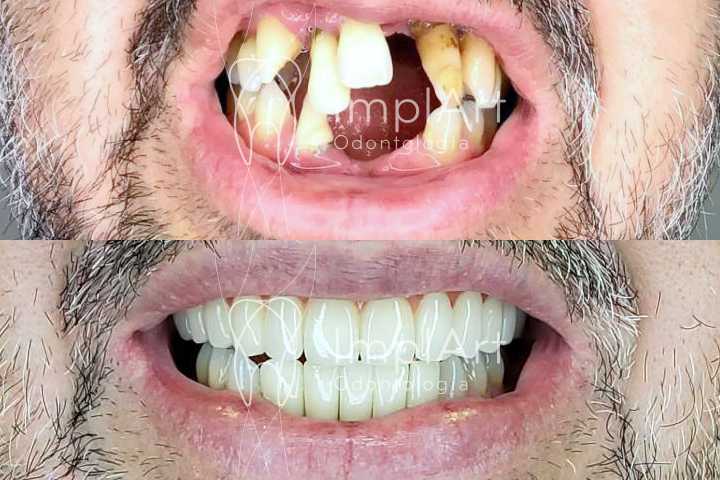
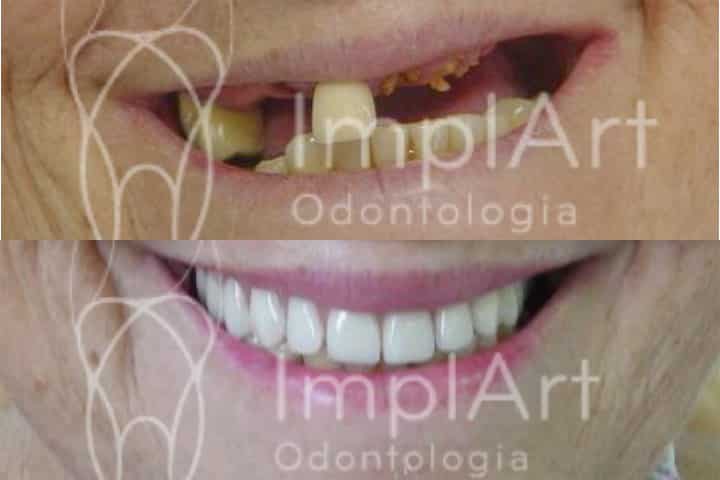
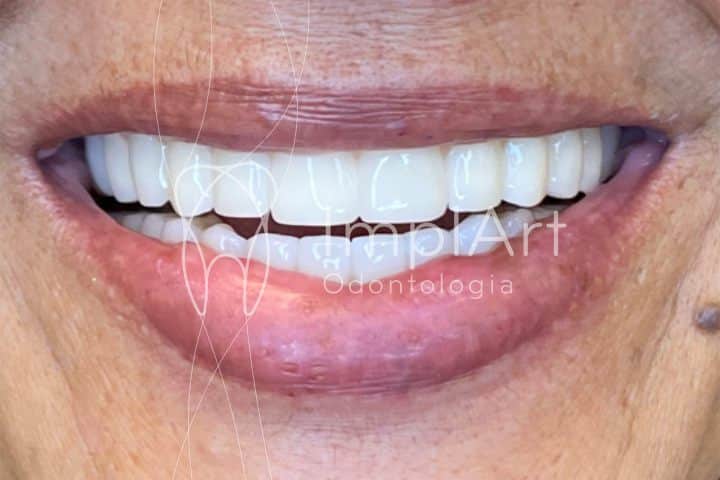
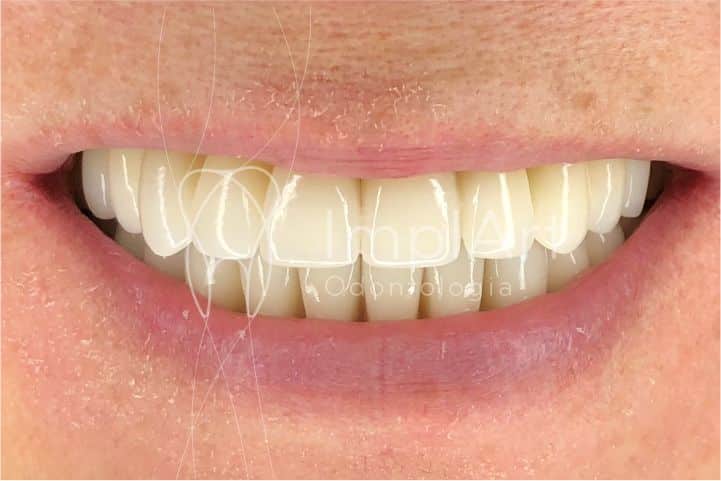
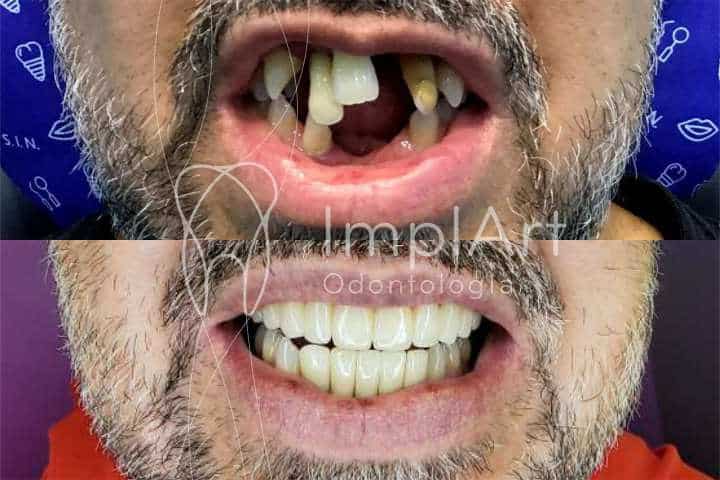
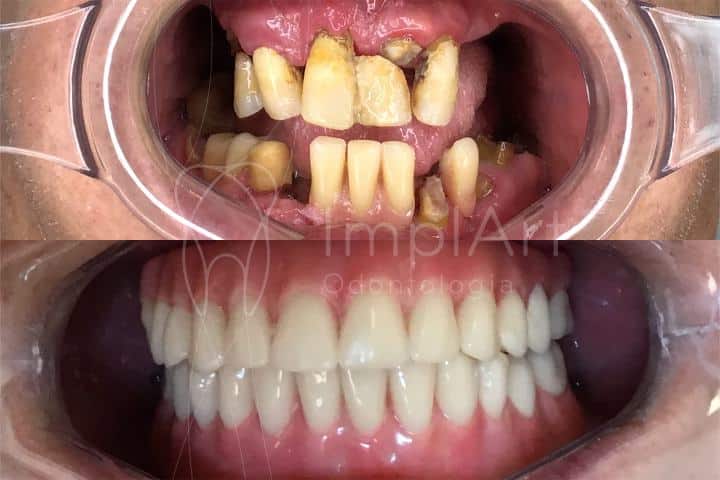
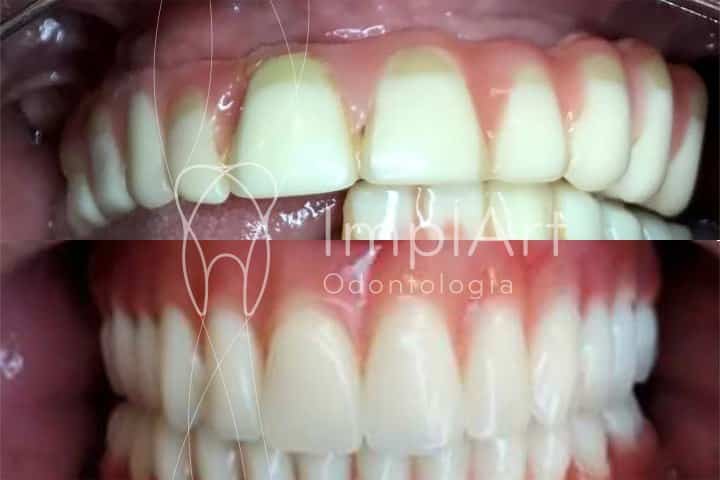
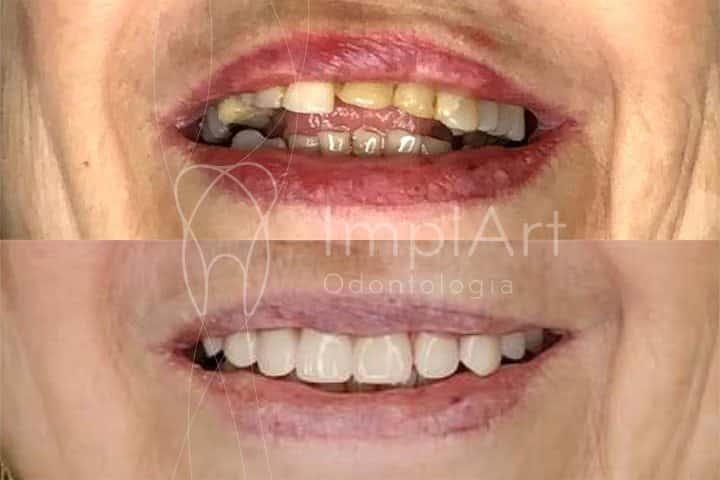
zirconia_protese_total_40kbImplanting several teeth at the same timeImplanting several teeth at the same timeImplanting several teeth at the same timeImplanting several teeth at the same timeImplanting several teeth at the same timeExamples of some cases of implantation of all teeth carried out at ImplArt
Implants with 3 teeth, 4 teeth or more have some advantages over other types of treatment with removable prostheses. As an alternative to placing several implants, we only have techniques that use common removable prostheses, without the use of implants. However, the indication is made after evaluating each case.
Should I have several teeth implanted or wear dentures?
Multi-tooth dental implants are an alternative to conventional dentures for those who have lost many or all of their teeth. They consist of placing metal pins, usually titanium, in the jawbone or maxilla, which serve as a support for fixed dental prostheses. These prostheses can be made of materials such as porcelain or zirconia, which mimic the appearance of natural teeth.
Multi-tooth dental implants have many advantages over conventional dentures, which are supported by the gums and can come loose or cause wounds. That’s why we’ve listed some of these advantages below:
Aesthetics, comfort and safety: Dental implants are more natural, comfortable and safe than dentures, which can move or fall out. They allow the patient to smile, speak and chew with more confidence and without fear of losing the prosthesis.
Preservation of bone against resorption: Dental implants preserve the bone structure of the mouth, preventing the atrophy that occurs after tooth loss. Bone atrophy can cause problems such as gum resorption, changes to the shape of the face, difficulty adapting dentures and the loss of other teeth.
Improved chewing function: In addition, dental implants allow for better chewing, speech and taste perception. Conventional dentures can interfere with chewing, making digestion and nutrition difficult. They can also hinder speech, causing noises or difficulty in pronunciation. In addition, they can cover the palate, reducing taste sensitivity.
Durability and resistance: Dental implants are considered to be more durable and resistant to cavities and infiltrations than dentures. They are made of materials that do not wear out or deteriorate over time. They are also easier to clean, as they don’t need to be removed for cleaning.
Conclusions on getting several teeth implanted at ImplArt Dentistry Clinic
With over 15 years of experience and thousands of implants installed, hundreds of cosmetic dentistry cases solved, and thousands of satisfied patients as a result. We are led by the expertise of our clinical director, implant dentist Dr. Roberto Markarian. With all our know-how , we are able to offer the most modern single-tooth implant techniques, total implants and modern contact lenses, as well as zirconia prostheses.
Get in touch with us, and schedule your evaluation appointment for implantation of several teeth, or other treatments, 📲WhatsApp (11) 99598-1866. We’re on hand to carry out your single-tooth, full-tooth or multi-tooth implant treatment and help you make a change in your life!
Implanting several teeth at the same time
Text written byDR. ROBERTO MARKARIAN – CRO-SP 73.583 Founder and Director of the ImplArt Dental Clinic.
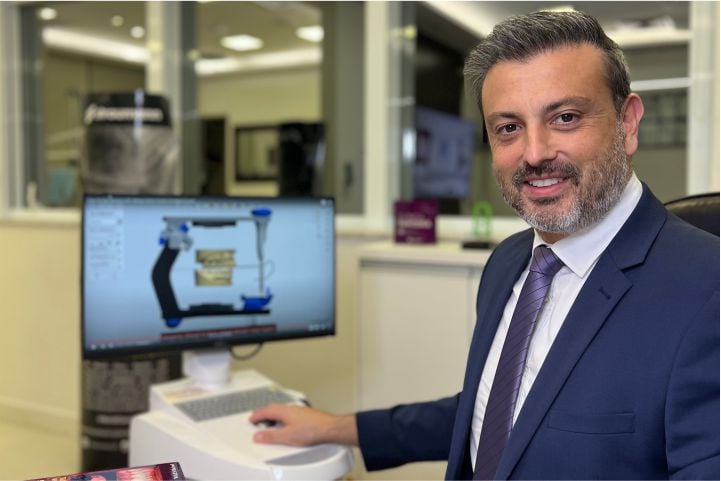
Dr. Roberto Markarian is a reference in dental implants and computerized dental prostheses in Brazil. As well as having more than 10,000 implants installed, he is a researcher who produces knowledge that is published worldwide in renowned scientific journals in the field of dentistry. He is responsible for promoting knowledge and high technology applied to all the treatments offered by the ImplArt Clinic.
Thezirconiaprotocol prosthesis for the complete upper jaw is a fixed aesthetic prosthesis on a titanium dental implant for oral rehabilitation. It involves computerized design methods, and has become the most requested option among patients looking to combine the strength of the material with its superior aesthetic result in a total dental implant and protocol prosthesis treatment.
Designed using computerized technology and a 3D scanner, zirconia protocol prostheses with full dental implants are the most modern option for replacing completely lost teeth. Combined with fast-healing implant types, such as the Straumann implant, they allow for complete rehabilitation in a short space of time.
Why is the zirconia protocol the best material today?
Zirconia protocol prosthesis treatment is fully computerized. In addition, it allows for faster results, much more predictability in treatment, as it relies on computer graphics. It also allows for an aesthetically impeccable result and a lot of resistance. In addition, the treatment is carried out using only 3D scanners, without the need for the old conventional molds.
The absence of teeth certainly compromises aesthetics and the patient’s quality of life, which is why the placement of implants with prostheses is able to give the person peace of mind when chewing, speaking and smiling.
The zirconia protocol has many advantages over the conventional resin protocol with a metal structure. Its main qualities are aesthetics and high resistance.
Dental zirconia (pre-sintered zirconium oxide) is a translucent, light-colored material that allows light to pass through, just like natural teeth, and therefore offers an aesthetic result. In this sense, the structure of the Zirconia protocol prosthesis looks discreet inside the prosthesis, even if exposed in brightly lit environments. Certainly the most modern materials are the Zirconia protocol and the porcelain protocol on a total implant.
Zirconia is made using a computerized 3D method and is not a manual job
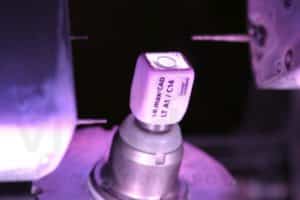
The structure of the zirconia prosthesis is a single piece, obtained by milling a rough block on a machine that works like a 3D printer. In other words, the treatment is planned on a computer using CAD/CAM technology. The milling machine then wears away the zirconia block until it reaches the shape of the structure of the prosthesis designed to be installed on a dental implant.
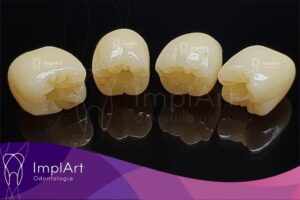
Finally, the zirconia structure is characterized with porcelain and the shade is obtained by brushing on specific coloring liquids for this purpose. It is possible to reproduce various shades that make up the same tooth, leaving the prosthesis looking very natural.
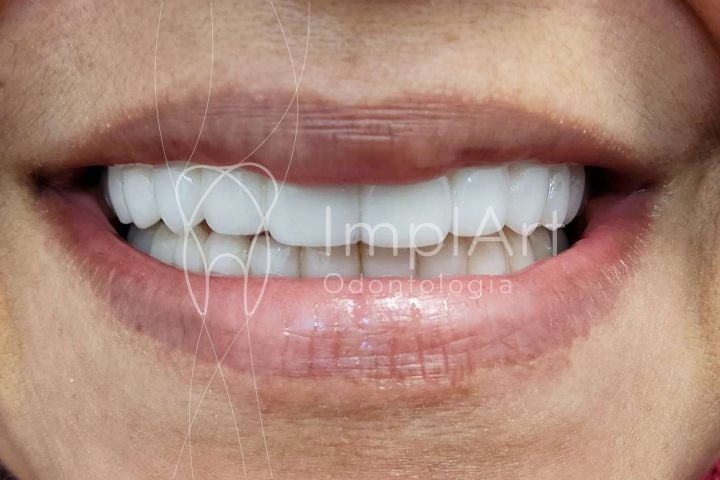
Protocol zirconia prosthesis for complete upper jaw full dental implantimage of a complete oral rehabilitation in zirconiaProtocol zirconia prosthesis for complete upper jaw full dental implantProtocol zirconia prosthesis for complete upper jaw full dental implantProtocol zirconia prosthesis for complete upper jaw full dental implantProtocol zirconia prosthesis for complete upper jaw full dental implantProtocol zirconia prosthesis for complete upper jaw full dental implantProtocol zirconia prosthesis for complete upper jaw full dental implantProtocol zirconia prosthesis for complete upper jaw full dental implantProtocol zirconia prosthesis for complete upper jaw full dental implantProtocol zirconia prosthesis for complete upper jaw full dental implantProtocol zirconia prosthesis for complete upper jaw full dental implant
The zirconia prosthesis is then screwed onto the dental implants, which are strategically placed in the jaw. The fixed zirconia protocol on implants can bring great relief, especially for patients who wear dentures. What’s more, this model of prosthesis leaves the roof of the mouth free and the patient feels more comfortable chewing and speaking.
Another great advantage of the zirconia protocol prosthesis over the resin protocol is its resistance to staining. In principle, resin is a material that can stain or yellow over time and with pigmented foods.
Materials that are biocompatible with the human body
Indications for fixed zirconia dental prostheses – Zirconia Protocol
In principle, the patient needs to go for a consultation with an implant dentist at the ImplArt Dental Clinic, so that clinical criteria such as bone volume and general oral conditions can be assessed.
Maxillary rehabilitation with a zirconia protocol can be indicated for people with total upper edentulism, even those who have been wearing removable prostheses for a long time.
If you have any questions, please contact our team through one of the channels below. We, at the ImplArt dental clinic, are a reference in the field of modern dentistry, and we have a team ready to serve you with high technology and knowledge. We’ll be happy to help you!
Dental implants have revolutionized modern dentistry, offering effective and long-lasting solutions for replacing missing teeth. If you’re considering this option or simply want to better understand how the process works, this guide is for you. Here, we’ll explore everything you need to know about dental implants: from the benefits and types available to the surgical procedure and post-operative care. Get ready to discover how to regain the functionality and aesthetics of your smile with confidence.
What dental implants are used for
The state of our smile plays a fundamental role in our general well-being. We express many of our emotions when we smile. In addition, when we interact with others, we are always showing our teeth, this is inevitable and part of human nature.
The good news is that nowadays the problem of missing teeth is becoming easier and easier to solve with dental implants. This modern treatment is constantly evolving, with versions of dental implants that adapt to different situations: fast implants, short implants, narrow implants, modern implants, nanotechnology implants, total implants, etc.
In this article we’ve prepared a complete guide to everything about implants, so you can find out tips, benefits, indications, tips and much more about dental implants. Follow along!
What is a dental implant?
Dental implants can currently be made of two materials: titanium or zirconia, which act as artificial roots. In this way, they can be inserted into both the maxillary and mandibular bones to replace missing or compromised teeth.
Basically, a dental implant replaces the root of a tooth, giving stability to the prosthesis or dental crown. After the implant placement surgery, a period called osseointegration begins. This is precisely the moment when the dental implant gains stability with the bone, which will certainly allow the implant to withstand the stresses and pressures of the chewing process.
Undeniably, dental implants are a revolutionary solution that allows patients to replace missing teeth with stable, long-lasting and effective solutions.
Certainly, the wide range of dental implant options makes it possible to reach an increasing number of patients. For example, even patients with poor bone structure can now have dental implants in most cases. In this way, more and more patients are able to experience the benefits of treatment, improving their quality of life, self-esteem and confidence to smile.
Extraction and dental implant in the same surgery
In the video below, our clinical director, Dr. Roberto Markarian, explains how the option of treatment with extraction and dental implant in the same surgery works:
What is the difference between an implant and a pivot?
The dental implant and the pivot have significant differences, although in both treatments the intention is to recover a damaged tooth. While the implant involves a surgical procedure, the pivot is a prosthetic procedure. The definition of the type of treatment must be carried out by the dental surgeon, and will certainly depend on the degree of damage to the tooth.
The pivot is a dental prosthesis that requires the installation of an intraradicular core inside its root. In other words, in this treatment option the tooth root is maintained after root canal treatment and a core is inserted to structure the tooth and support the dental crown.
Implants, on the other hand, are used when the tooth can no longer be preserved with conventional treatments and tooth extraction is necessary.
As mentioned above, the definition of the treatment will depend on an individual analysis by the specialist, who will also assess the desired aesthetic objectives.
What is the difference between implants and dentures?
Many patients confuse dental implants with dentures. It’s important to mention that when we’re talking about dental implants, we’re always talking about a surgical procedure. When we talk about rehabilitation with implants, the dental prosthesis or dental crown refers to the “tooth” supported on the dental implant.
In the past, to replace a missing tooth, the solution used to be a 3-part fixed prosthesis. This meant that the teeth next to the lost tooth had to be worn down in order to support the prosthesis. Today, however, modern dental implants make it possible to replace a missing tooth without affecting the teeth next to it.
In the video below you can see the differences between fixed prostheses and dental implants:
When we talk about removable dental prostheses, we are referring to dentures, which are the old removable prostheses. Of course, dentures are being used less and less, being replaced by the modern protocol prosthesis, which is a prosthesis fixed on 4 to 6 implants. The most modern material for protocol prostheses is Translucent Zirconia.
Types of Dental Implants: Types of Dental Implants
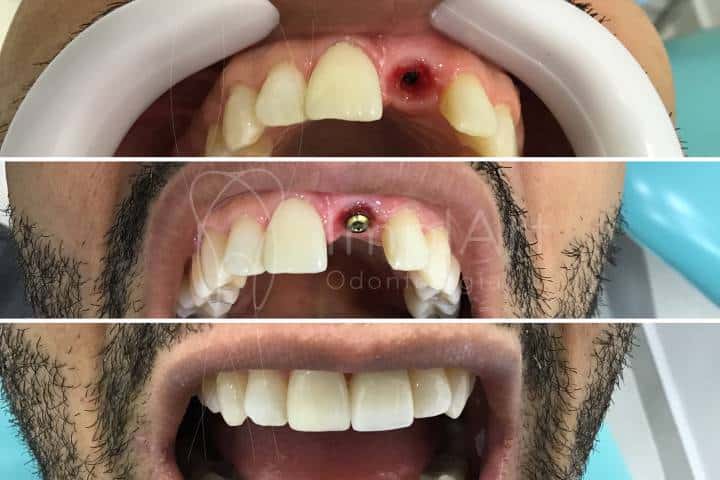
The first type of implant is the single tooth implant. This solution is ideal when the patient loses a single tooth and needs to replace it. The procedure consists of inserting an individual titanium or zirconia dental implant into the bone. It can be performed in either the maxillary or mandibular bone. After the implant has healed, a dental crown is made, which, if made of zirconia, will be very natural and similar to natural teeth.
Watch the video below about individual dental implants:
TOTAL IMPLANT WITH FULL ARCH FIXED PROSTHESIS
The second most important type is treatment with a total implant and a protocol prosthesis. This treatment is recommended for patients who have lost all the teeth in a complete arch. This treatment can be carried out on both the upper and lower arches. This type of treatment involves six to four implants on which the protocol prosthesis will be fixed. This treatment certainly makes the patient feel comfortable, both when smiling and when eating. See how the full implant and protocol prosthesis treatment works in the video below:
DENTAL IMPLANT TWO BY THREE (2 x 3)
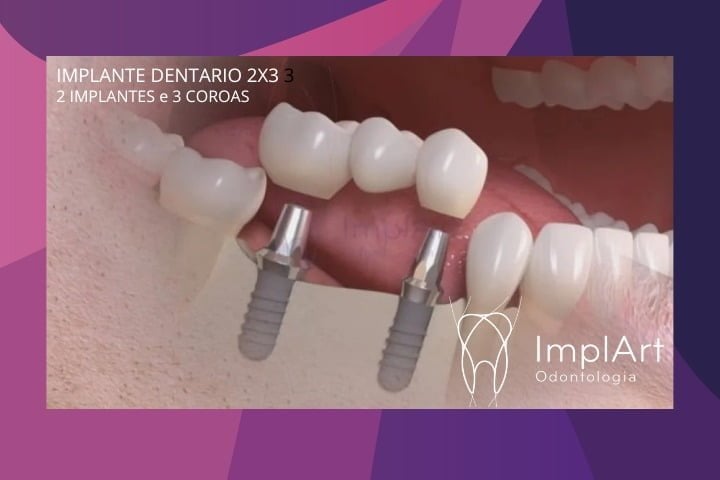
This treatment option can be used in cases where there are some bone limitations, or when patients need to reduce treatment costs. Therefore, instead of performing single tooth implants, 2 implants are performed which will support a prosthesis with 3 crowns. In this situation, the patient has a fixed bridge over the implants, rather than individual teeth. It is therefore not possible to floss between the teeth, for example, as is possible with the conventional single implant technique. Therefore, if the conditions are right, opt for a single implant if you are looking for a result similar to natural teeth.
In this case,02 dental implants support a prosthesis with 03 teeth
ZYGOMATIC IMPLANT
Treatment with zygomatic implants is used in some cases where there is extreme bone loss. They are anchored in the zygomatic bone (cheekbone) and are used to support fixed prostheses. The truth is that they are being used less and less these days, as there are less invasive treatment options. Certainly one of them is bone grafting in patients with bone loss, followed by dental implants.
IMMEDIATE LOADING IMPLANTS
Immediate loading dental implants is a technique in which the procedure of placing a dental implant and a fixed prosthesis is carried out more quickly. Immediate loading means placing a prosthesis – usually temporary – fixed to the implants immediately after surgery. Of course, the viability of immediate loading implants depends on a few prerequisites. These start with checking all the preoperative X-rays and CT scans. In addition, there are factors related to the surgery itself with conditions that can only be attested to at the time of implant insertion.
SHORT IMPLANTS
The new short dental implants are indicated for patients who, for whatever reason, have limited bone availability. They are therefore very versatile, increasing treatment predictability and the chances of acceptance in patients with compromised bone availability. Often, the need for bone grafting to increase the vertical dimension can be dispensed with, bringing greater peace of mind and speed to the treatment.
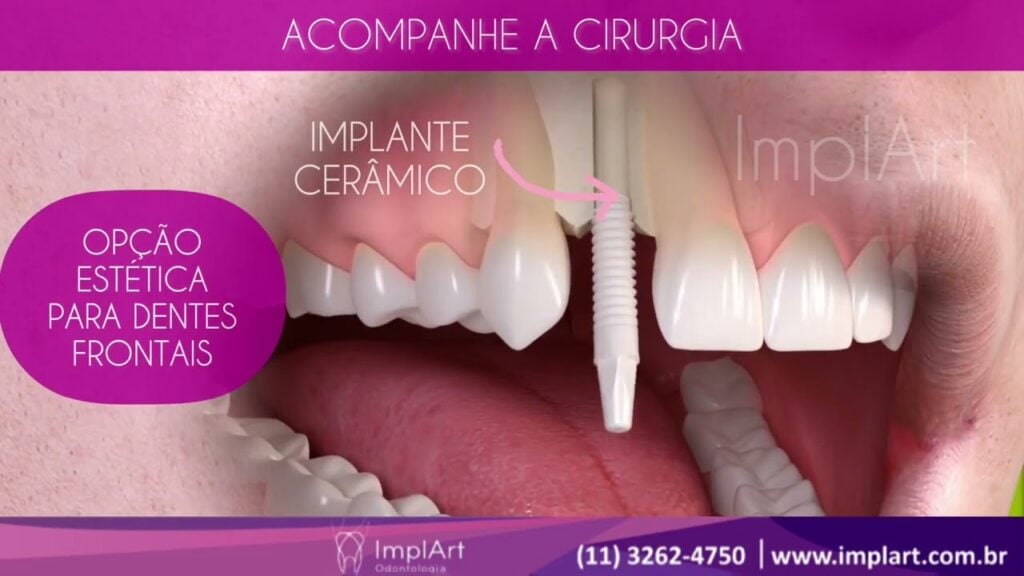
Zirconia implants are metal-free, made of highly resistant ceramic and therefore have an ivory hue. They are an excellent option for those patients who have very thin or atrophied gums. This is especially important for front teeth. They are also an excellent option, especially when these conditions occur in the anterior region (the most visible part of the arch). It is therefore an excellent option for those looking for a dental implant treatment with the best aesthetics available. Watch the video below showing the zirconia implant surgery:
NANOTECHNOLOGY IMPLANTS
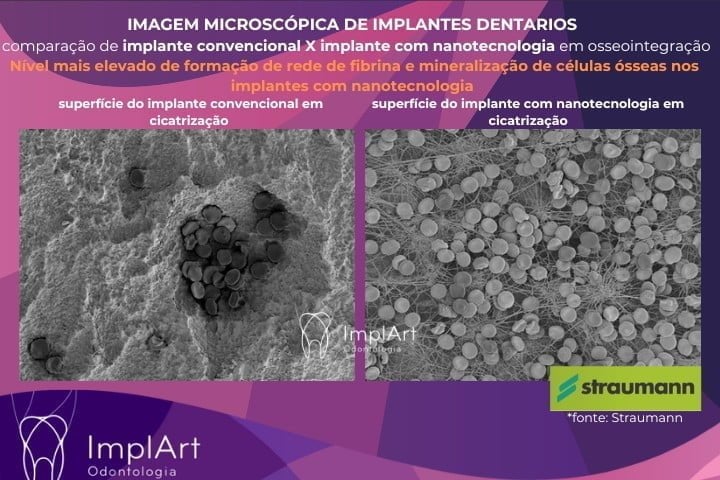
Modern nanotechnology implants present a revolution in dental implant production because they add nanometric particles to the surface of the implant. These particles are prepared to perform healing functions as soon as they come into contact with human tissue. In this way, these nanometric particles act as catalysts or coadjuvants to stimulate the process of osseointegration. Therefore, by using these implants we have a reduced healing time and a greater chance of success.
Comparative image shows the difference between the surface of a conventional implant and a nanotechnology implant during the healing process
Certainly the main advantages of dental implants are that they unite two important points in anyone’s smile: aesthetics and chewing function. In these respects, dental implants are unbeatable and are undoubtedly the best alternative for replacing one or more missing teeth. If the tooth loss is frontal, the front tooth implant can provide natural results, bringing comfort and security to the patient’s smile. Check out the video below showing the real results of a front tooth implant treatment:
Undeniably, the implant, by allowing the dental arch to be rebalanced, brings direct benefits to the patient through comfort when eating and confidence when smiling. All these factors provide a direct increase in the patient’squality of life and well-being
Advantages of dental implants: restores aesthetics and chewing function
Here are some of the main advantages of implants:
Quick replacement of a lost tooth
Restoring aesthetics: Dental implants are designed to look and function like natural teeth, making them the best way to replicate them. That’s why they allow you to regain the aesthetics of your smile.
Maintaining long-term results: Dental implants are effective structures, capable of lasting for many years and enabling long-term results.
Balanced chewing: The dental implant is a structure capable of withstanding the intense chewing efforts to which the teeth are subjected. Therefore, they allow the patient to eat with great comfort and stability, even more so when compared to old dentures.
Bone maintenance: The dental implant is able to stabilize the natural bone absorption that occurs in the area that has suffered tooth loss. In this way, the bone structure is maintained and there is no impact on neighboring teeth. See below for a video showing the consequences of missing teeth that are not replaced by implants.
How are dental implants performed?
Dental implant surgery can be carried out in the office or in hospital. The implant can be installed under local anesthesia or intravenous sedation. Implant installation surgery is usually quick and can last between 15 minutes and 1.5 hours, depending on the number of implants and the patient’s bone situation.
Dental implants are designed to adequately replace the root of a lost tooth and can be made of either titanium or zirconia. Below is a photo of the zirconia dental implant surgery.
Photo of zirconia dental implant surgery
In most cases, during the implant’s osseointegration period, the patient has a temporary crown installed. After the implant has healed, the definitive crown can be made. There are currently several types of dental crowns, including the modern CAD/CAM Pure Zirconia Crown and CAD/CAM Pure PorcelainCrown. These crowns are made using modern 3D scanning and printing systems, which allow the patient’s smile to be designed using computer graphics. In this way, the aesthetic results are enhanced and the crowns look even more like natural teeth.
CONFIRMS THE STEP BY STEP OF THE DENTAL IMPLANT:
INITIAL ASSESSMENT AND PLANNING FOR IMPLANTS
The purpose of the evaluation appointment is to assess the patient’s case, identifying the patient’s needs and expectations. It is at this stage that the implant dentist, Dr. Roberto Markarian, is able to assess the best treatment for the patient, as well as indicating the types of implants and dental prosthesis options recommended for the patient. Of course, each case is thoroughly assessed and each plan is personalized.
See in the video below how the initial consultation at the ImplArt Clinic works:
In addition to the clinical assessment, specific tests are requested to analyze the patient’s oral structure, anatomy and bone structure. These examinations are certainly a fundamental part of careful case planning.
In addition to the following procedures for treatment planning:
3D intraoral scanner
Dental Photography;
In general, dental implant surgery is very similar to tooth extraction surgery. It usually takes place in a dental office, under local anesthesia, or with the use of conscious sedation performed by an anesthesiologist from the Clinic’s team. The use of sedation is a treatment option for those patients who are afraid of dental procedures, or even for those who prefer the comfort of the procedure. See how sedation works for dental implants in the video below:
In the first surgical stage, the implant is installed in the bone. Using specific equipment, the implant dentist positions the implant in the area of tooth loss. In many cases it is possible to perform tooth extraction and implantation in the same surgery. Of course, the surgery is carefully planned beforehand, based on the patient’s examinations. In this way, the implant dentist is able to choose the implant size, defining the most appropriate height and width.
Immediately after the implant is placed, a kind of cover is put in place to protect the implant while it awaits osseointegration. This process is common to all types of implants.
Immediately after surgery, it is recommended that the patient rests for the rest of the day. The usual certificates for implants are for two or three days, which is the period of greatest care, with ice applied to the area. As the days go by, activities are slowly released, and after 7 days the patient can resume normal activities.
What’s more, in the vast majority of cases, the superficial healing of the gums is fairly rapid. Within a week to 10 days, the patient returns to the clinic for follow-up and removal of stitches, when the surgery is performed conventionally. In cases of surgery without cuts, with a surgical guide, there are no stitches to be removed.
In this phase of treatment, we basically wait for the implant to heal. Depending on the type of implant chosen, this period can take between one and six months, and certainly in the case of simultaneous bone grafts, this period can be increased.
It’s worth noting that this stage is extremely important for the success of the treatment, so following the recommendations is essential. Hygiene guidelines must be followed, as well as avoiding smoking, which can compromise implant healing. In fact, the lack of proper hygiene, as well as smoking, be it electronic cigarettes, conventional cigarettes or cannabis, are factors that impair implant healing.
DENTAL IMPLANT REOPENING
This is the second stage of surgery, when the dental implant specialist reopens the gums to remove the protective cap. After this, the implant healer is installed, which is a device that prepares the gum tissue to receive the prosthesis and serves to make it heal properly, leaving only the access to the implant exposed.
MAKING THE PROSTHESIS
The last stage of treatment is when the implant has healed and the prosthesis or dental crown is made in the chosen material: translucent zirconia, pure porcelain, zirconia + porcelain or metal-ceramic. If the patient opts for modern materials such as CAD/CAM Pure Zirconia and CAD/CAM Pure Porcelain, the crown will only be made using a 3D intraoral scanner, without the need for the old mass molding. Once this stage has been completed, the treatment is finished and the patient can enjoy all the benefits of their treatment.
Indications for Dental Implants: Who Can Get an Implant?
Every patient who is a candidate to receive a dental implant must have their health assessed through anamnesis and general health assessment, as well as clinical analysis. The result is that the vast majority of people meet the necessary conditions to undergo the procedure. However, there are some rare exceptions. Let’s take a look below:
patients with uncontrolled health problems: such as uncontrolled diabetes, for example. It is worth clarifying that even if you have diabetes, if it is controlled, you are a candidate to receive implants
pregnant patients
children and adolescents, as they are still growing;
How many dental implants are needed for the protocol prosthesis?
The number of dental implants required for treatment will certainly depend on the treatment objectives and the patient’s initial situation. If the treatment involves total implants and a protocol prosthesis, 4 to 6 implantswill be used. The number of implants will certainly be defined by the implant dentist based on an analysis of the patient’s bone condition and the type of prosthesis to be used
By analyzing panoramic X-rays and CT scans, the implant dentist is able to determine the number of implants needed to ensure better stability of the protocol prosthesis. In addition, if the patient opts for a resin protocol, 4 dental implants are usually used. If the treatment involves a total prosthesis in metal-ceramic or zirconia, up to 6 dental implants can be used.
When many teeth are lost, are the implants done individually, one by one?
In general, when patients have lost many teeth, they opt for a treatment called total implant and prosthesis protocol. This treatment guarantees stability in chewing and oral aesthetics. In some specific cases it is possible to perform individual implants one by one. However, the patient must meet a number of prerequisites, such as abundant bone structure.
Are there any contraindications to dental implants?
As we saw earlier, the benefits of dental implant treatment are numerous! However, it is important to know that there are situations that can jeopardize the success of the treatment. For example, poor hygiene and smoking can compromise the healing process of implants.
Bone Condition
Nowadays, with advances in bone grafting techniques, the vast majority of patients can have dental implants. In fact, it is very rare for a patient not to be able to do so. In cases of bone loss, bone grafting is essential for the success of the procedure. So nowadays, thin bone is no longer an impediment to implants.
Poor oral hygiene – lack of hygiene after implants
Some patients start implant treatment as a result of tooth loss aggravated by periodontal disease. It is important to note that prophylaxis is essential for monitoring and combating peridontal disease. It also makes it possible to identify tooth decay and eliminate tartar. Hygienization is certainly aimed at preserving the patient’s oral health, including that of their implants. Lack of cleaning can affect the health of dental implants and lead to peri-implantitis, an infection of the implant.
Dental surgeons are unanimous in their opinion that smoking is one of the most damaging habits for oral health and the health of your dental implants. This applies to almost all types of smoking: cigarettes, cigars, e-cigarettes, cannabis, straw cigarettes, pipes, among others. Smoking certainly poses risks to implant treatment, increasing the likelihood of failure. Therefore, to increase the chances of success with implants, this is the ideal time to create new healthy habits!
Being in good health is certainly one of the starting points for having a surgical procedure. Therefore, patients should not neglect their general health when considering dental implants. Today, medicine is preventive, and dentistry goes hand in hand.
That’s why an annual check-up is essential to identify any disorders that could jeopardize the success of your implant treatment. Heart disease, diabetes, coagulation problems and hormonal disorders are among the points that deserve attention for patients who are going to have dental implant surgery. In this case, the dental surgeon and the doctor responsible for the patient’s health exchange information to define the best alternatives for implant surgery.
Can implants be done at any age?
an adult in good health can have a dental implant at any age. The limiting factor is certainly not the patient’s age, but their general health. Implants are not recommended for children and adolescents because their bone structure is not yet fully formed. Therefore, in cases of missing teeth due to agenesis, for example, you should wait until the minimum age for dental implants.
Can dental implants be done during pregnancy?
Normally, when pregnant, the patient is told by her obstetrician to avoid surgical procedures at the dentist precisely because of the anesthesia she has to undergo. Of course, this can pose risks to the baby’s health.
Therefore, if the procedure is not an emergency, the patient will be advised to wait until the end of her pregnancy before having the implant. However, if the procedure is urgent, it should only be carried out with the obstetrician’s permission.
Alternatives to dental implants
Don’t want to get dental implants or can’t and are looking for an alternative? Oral rehabilitation with dental implants can restore your smile by giving you back one or more missing teeth. It is certainly a very safe procedure. However, this procedure may not be suitable for all cases. For these situations, the patient can have:
Fixed dental prosthesis on teeth
Adhesive resin dentures
Dental prosthesis with tooth suspended without support (cantilever)
Removable partial dentures
It should be noted that dental implants are the most comfortable and efficient solution for replacing a missing tooth, and that the patient should be aware of the pros and cons before deciding on a type of treatment. But don’t worry, your dental surgeon will be there to help you make this decision with all the information you need.
The duration of dental implant treatment will depend on the patient’s bone situation. Thus, if the patient needs bone grafting, the treatment period can be extended. In addition, the total treatment time will also be determined by the type of dental implant chosen. Nowadays, there are fast-healing implants that can heal in 1 month under ideal conditions. So if you want to complete your treatment more quickly, opt for implants with nanotechnology!
What are the possible risks and complications of dental implants?
Dental implants are certainly a very safe and effective dental procedure! However, as with any health procedure, there are always risks, however minimal. Find out what they are:
Excessive bleeding: In some situations, there may be more obvious bleeding in the implant surgery area. Normally, if this happens, the implant dentist acts to stop the bleeding. However, for patients who use anticoagulants, it is always advisable to stop taking them a few days beforehand.
Infection: In fections are very rare in the dental implant procedure, as the patient is given antibiotics to take before and after surgery
Poor osseointegration: In some cases, the implant may not heal as expected. In addition, smoking and poor hygiene compromise implant healing.
Incorrect implant positioning: If the implant dentist is inexperienced, there may be aesthetic or functional problems due to incorrect implant positioning. Is
It’s worth noting that the chances of a successful dental implant are very high. The procedure is therefore very safe and the chances of complications are minimal!
Care immediately after placing a dental implant
During the first two days, which are the immediate post-dental implant period, it is recommended to remain at rest. In addition, we can summarize the recommendations of:
Apply ice to the face to prevent swelling
Food / what to eat? Eat cold or icy foods. For example: ice cream, açaí, gelatine, juices, vitamins, soups. We can also recommend that these foods do not contain grains or particles. Also prefer soft or pasty foods. Above all, do not chew hard foods.
Do not eat foods with irritating potential (spicy, acidic, salty, fizzy or hot).
Avoid physical exertion
No mouthwashes (even for 7 days)
Sanitize the area with a cotton swab moistened with an antiseptic solution (Periogard, Listerine, Plax).
Normal brushing of other teeth
Wear prostheses or braces for as short a time as possible
Take medication as directed by the dentist
Avoid the sun and hot environments
In addition to this care, follow the specific instructions provided by your dental surgeon, as each case may have individual needs. As the osseointegration process takes between 1 and 6 months, it is essential that the patient follows the specific care instructions for each stage of the process. This will certainly enable them to obtain the best results and avoid any complications during treatment.
Post-operative implant care
The intensity and duration of recovery after dental implant surgery obviously depends on the extent of the procedure, the technique used and the type of implant used. In general, the post-operative period is fairly uneventful. The patient should follow the guidelines and take the recommended medication: antibiotics, anti-inflammatories and analgesics.
First of all, it’s important to bear in mind that when it comes to quality dental treatment, theprice of a dental implant can’ t always be the deciding factor, but rather the quality of the treatment. For this reason, it is essential that the patient assesses the technical knowledge of the professionals, their qualifications, as well as their years of practice and the type of treatment proposed.
There are certainly several options for materials and techniques that influence the composition of a budget. Already at the initial consultation, patients can find out how much their treatment will cost. If the patient is far away, in another state, city or abroad, it is possible to plan your dental implant surgery remotely, with an online consultation with Dr. Roberto Markarian, director of the ImplArt Clinic.
At theImplArt Dental Clinic, the patient will also be evaluated by Dr. Roberto Markarian, an implant dentist.
Dr. Roberto Markarian holds important academic degrees such as a Master’s, Doctorate and Specialist in Prosthodontics and Implantology. After the evaluation, with a definition of the type of implant and prosthesis chosen, it will be possible to draw up a complete budget for the treatment.
After all, do dental implants hurt? This is certainly the biggest fear of anyone who needs a dental implant. However, we’re going to show you that nowadays, modern resources make the surgery more pleasant, with a more relaxed post-operative period! In addition, we’ll talk a little about the types of prostheses and the myths that exist.
Find out if the implant causes any pain and learn some myths and truths about the procedure:
1. Do porcelain prostheses on both arches make noise?
Myth!Total implant treatment, called a protocol prosthesis, is characterized by the creation of dental implants that will receive a fixed prosthesis resting on them. There is a myth that porcelain prostheses on implants in both arches could generate noise when they collide during chewing or speaking. It’s worth clarifying that implant-supported prostheses, when properly adjusted, will definitely not make noise when they touch each other during speech or chewing.
One misconception that some people have about dental implant prostheses is that porcelain or ceramic prostheses can be heavy. Dental implants are designed to withstand the very high forces produced by chewing, so there’s nothing to worry about. The weight of the dental prosthesis will be irrelevant compared to the strength of the implant. The dental implant that will receive the fixedprosthesis will be ready to receive any type of dental prosthesis you choose.
Therefore, if you can, opt for modern Translucent Zirconia or Porcelain prostheses– the results are worth it. These materials certainly offer high durability, as well as superior aesthetic results compared to resin prostheses, which are made from plastic material.
3. I no longer need to clean after having implants
Myth: Even those with dental implants should not neglect their oral hygiene. Regular cleaning aims to prevent the dreaded peri-implantitis, which can lead to the loss of the dental implant. So keep up your brushing and flossing at home, and go to the dentist every 6 months for a prophylaxis!
4. I can chew normally after dental implant surgery
True. Although care must be taken during the first few days, within 7 days of the surgery, the gums have usually healed and the patient is able to eat normally again. Of course, it is expected that throughout the process of osseointegration of the implants, the patient will have to follow specific precautions. However, once the implants have healed and the final prosthesis has been made, the patient will be able to chew and eat normally!
5. The body may not accept the implant and reject it
Myth: Dental implants are made of inert materials, and this applies to both titanium and zirconia implants. In cases where osseointegration does not occur as expected, the reasons should be investigated. It is worth noting that one of the main reasons is smoking and lack of post-surgical care, such as proper hygiene. It should be noted that patients who smoke greatly increase the chances of implant failure.
Do dental implants hurt?
Do dental implants hurt? Many people stop improving their smile believing that dental implant surgery is painful. The reality is that advances in techniques mean that dental implant surgeries today are less and less invasive, avoiding excessive tissue damage, pain and discomfort.
Dental implant surgery has become increasingly simple, and surgical techniques and prior planning, such as computerized tomography, for example, make the implant procedure much more predictable.
In addition, the surgery is always performed under local anesthesia to make it painless. Electronic anesthesia can also be used, with a feature that makes even the sting of anesthesia painless. Of course, the ImplArt Dental Clinic uses various techniques to reduce discomfort during surgery and make the recovery period more peaceful.
So if you’ve been putting off your implant surgery because you think dental implants hurt, you don’t have to worry about that! We’ll show you that Clinica ImplArt uses all the modern resources available to make your implant surgery go much more smoothly!
Dental Implant Results: Before and After
Dental implant treatment is always transformative. When patients seek dental implant treatment at the ImplArt Clinic, there is always a lot of anticipation to see the results. Of course, this is natural, as many patients report that they have waited for years to be able to have their treatment and therefore want to improve their smile quickly.
Here at the ImplArt Clinic, it is always a pleasure to accompany patients through this very important moment of transformation and regaining the self-esteem to smile.
Check out the dental implant testimonial below from our patient Sandro, who came straight from the United States to have his treatment at Clinica ImplArt. Watch:
Where to get a dental implant?
The ImplArt Clinic is located in Sao Paulo and welcomes patients from all over the world. ImplArt has been operating for over 15 years and has installed thousands of implants and solved hundreds of cosmetic dentistry cases. It is known for its modern dental treatments, and relies on the expertise of Dr. Roberto Markarian, a reference in Brazil for implants and computerized prostheses.
With all this know-how, the ImplArt Dental Clinic is able to offer the most modern techniques for individual dentalimplants, total implants and protocol prostheses. It also offers modern computer-generated contact lenses and 3D Pure Zirconia prostheses.
The smiles created by ImplArt are spread around the world, as it receives patients from all over the world for Day Clinic treatments: Japan, the United States, Canada, Switzerland, Portugal, Spain, the United Kingdom, Italy, Australia, the Netherlands, Germany, Angola and others! The high quality of ImplArt’s treatments makes the clinic an international standard treatment center, in line with the high demands of world standards.
ImplArt has a team specialized in dental implants, made up of implant dentists, prosthodontists, endodontists, among other specialties! Schedule your appointment at the ImplArt Dental Clinicnow! If you’re looking for technology and the best results for your dental implant treatment, the ImpArt Clinic is the right place for you!
Dental implants: Learn all about dental implants in this guide
Dr. Roberto Markarian is a reference in dental implants and computerized dental prostheses in Brazil. As well as having more than 10,000 implants installed, he is a researcher and produces knowledge that is published worldwide in renowned scientific journals in the field of dentistry. He is responsible for promoting knowledge and high technology applied in all the treatments offered by the ImplArt Clinic.
Learn about the stages of treatment for full arch implant rehabilitation. A full dental implant is a treatment designed to rebuild a new smile when all the teeth in an arch or mouth have been lost. This type of treatment is also popularly referred to as a protocol prosthesis or All on four dental implants, the latter if it involves 4 implants.
The ImplArt Dental Clinic has extensive expertise in full-arch implant treatments, using the best materials to produce the fixed prosthesis for full arch implants in its own dental laboratory, using state-of-the-art computerized techniques. In this way, we offer our patients a choice of different types of dental implants, with different healing times. In addition, patients can choose between 5 different types of fixed prosthesis to be fitted over their implants.
The most modern prostheses today are made of zirconia and use a computerized system to create these highly resistant and aesthetically pleasing prostheses. In addition to zirconia prostheses, there is also the option of zirconia implants.
Most full arch implant cases follow the following treatment steps:
1 – An individual assessment of the case for full arch/full mouth implantation is carried out
Considering the patient’s general and oral health, the volume and quality of bone in the mandible/maxilla, aesthetics, gum shape, among other aspects. To assess bone volume, radiological examinations such as panoramic radiography and computed tomography will be requested.
This stage also verifies the need for bone grafting prior to implant surgery, as well as the need for medical supervision if the patient has pre-existing diseases that could interfere with the success of dental implant rehabilitation.
2 – Treatment proposal
Depending on the information collected and the patient’s expectations, we will present some alternatives for full arch implant treatment with different stages of treatment, techniques and possible materials. The recommended types of dental implant will be presented according to the patient’s case, and they will be able to choose according to their preference. Today there are very modern dental implants and healing times can take between 1 and 6 months, depending on the type. Implants from the Swiss brand Straumann are the ones with the shortest healing times.
For provisional prostheses for total implants. The ImplArt dental clinic takes digital impressions with intraoral scanners (without mass).
Full Arch implants: 11 stages of treatmentFull Arch implants: 11 stages of treatmentFull Arch implants: 11 stages of treatmentFull Arch implants: 11 stages of treatmentFull Arch implants: 11 stages of treatmentFull Arch implants: 11 stages of treatmentFull Arch implants: 11 stages of treatmentFull Arch implants: 11 stages of treatmentFull Arch implants: 11 stages of treatment
5 – Installation of full arch implants
Through simple and painless surgery, the implants that will support the fixed prosthesis are inserted. The surgery takes place in a doctor’s office and the patient can go home immediately afterwards. There are modalities with local anesthesia, or with intravenous sedation, if the patient prefers.
There is also the option of performing dental implant surgery using thecomputerized guided surgery technique.
This technique eliminates the need to make large cuts and sutures in the gums, making the post-operative period easier and the recovery quicker.
The surgical guide acts as a template with indications of where the incisions should be made to place the dental implants. The surgical guide is custom-made according to the patient’s CT scan images, using a 3D printing method.
On the same day or after a few days. This is one of the most important stages of treatment. The prosthesis can be fixed or removable, depending on the case. The preference is for a fixed temporary prosthesis, unless this is technically impossible.
This first provisional prosthesis for total implants does not always meet all the requirements of aesthetics and function because it is made under adverse conditions, such as pre-existing teeth that make molding difficult. If necessary, we will make new prostheses.
7 – Waiting period
It takes between one and six months for the implants to integrate into the bone (osseointegration) and for the gums to heal.
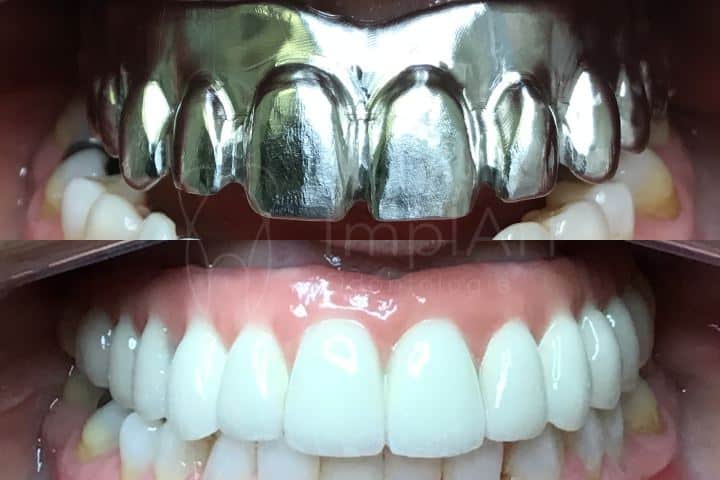
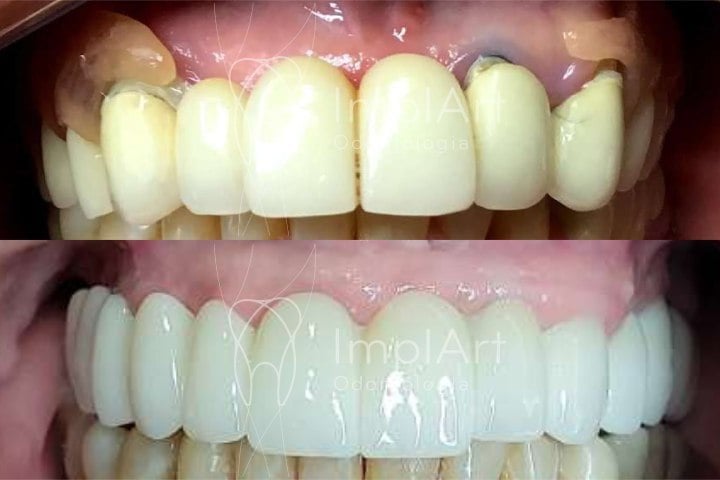
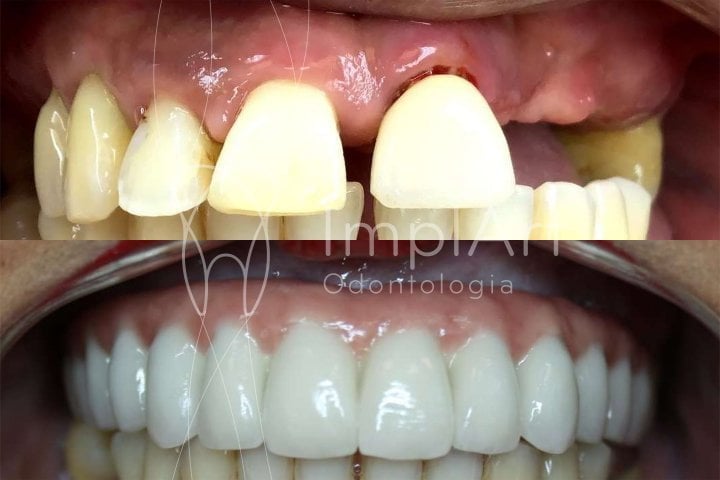
The first image shows the proof of the zirconia structure in the mouth, and the second shows the finished prosthesis with porcelainand a thin layer of artificial gum
8 – Start of the definitive prosthesis for total implants
If the implants are hidden under the gums, the first step is reopening surgery. This is a simple procedure that aims to expose the implants in the mouth. Then molds are made.
9 – Studies for the definitive prosthesis
For total implants, the aim is to find out which characteristics will be important in order to obtain the best aesthetics and functionality. When the characteristics of the final prosthesis are discussed, the color of the teeth, the shape of the teeth, the volume of the prosthesis and whether or not artificial gums are needed will be defined. The patient takes part in this process and will be able to see the stages of the treatment beforehand, as well as the final aesthetics. The dental implant prosthesis can be made of Zirconia, Porcelain or Resin, each with different characteristics, and the patient’s choice is made right at the start of treatment, so that planning is already carried out in anticipation of the definitive prosthesis.
10 – Delivery of the total implant prosthesis
With the approval of the patient and the dentist, the protocol prosthesis is then given as completed and all stages of the proposed treatment have been fulfilled.
11 – Total implant control and maintenance
Once all the treatment stages have been completed and the protocol prosthesis has been delivered, the patient should return every six months for a check-up and cleaning. Every twelve months we will request a panoramic radiograph to monitor the case internally. Even though the patient has had implants and, in many cases, has had all their natural teeth removed, they should still visit the dentist regularly every 6 months.
Dr. Roberto Markarian is a reference in dental implants and computerized dental prostheses in Brazil. As well as having more than 10,000 implants installed, he is a researcher who produces knowledge that is published worldwide in renowned scientific journals in the field of dentistry. He is responsible for promoting knowledge and high technology applied in all the treatments offered by the ImplArt Clinic.
Based in Basel, Switzerland, Straumann Implants is a world leader in implant dentistry and oral tissue regeneration. It offers innovative, fast-healing implant options, such as Slactive, which heals in 1 month. Or even ceramic implants, the only ones without metal in their composition.
Therefore, as well as offering safe dental implants, there are also some Straumann implant models with special purposes, such as those that avoid bone grafts, because they are narrower or shorter. Or those made of special materials that prevent allergies, such as zirconia implants.
It is this range of solutions, combined with extensive clinical and laboratory testing prior to launch, that makes Straumann implants the best option for patients who want to receive the best!
Find out why Straumann Implants is the world’s best reference
Straumann Swiss implants are considered the best dental implants in the world
In collaboration with leading clinics, research institutes and universities around the world, Straumann has been researching and developing dental implants, surgical instruments, prosthetic components and biomaterials for oral tissue regeneration since 1974.
Straumann’s products and services are available in more than 70 countries. This standard of excellence certainly allows dentists to offer their patients less traumatic, less invasive treatments with predictable long-term results, not only aesthetic but also functional.
Straumann implants are manufactured with three basic requirements: reliability, simplicity and versatility. The brand has an extensive range of implants with different sizes, diameters, angulation, material composition and surface technologies.
This considerably increases the chances of rehabilitation in various situations.
PURE Ceramic – white all-ceramic implants, especially suitable for the anterior region of the arch. It favors the aesthetic result of the treatment.
SLa and SLActive implants – implants with surface technology that favors and accelerates the osseointegration process. They can be used in immediate loading techniques.
Roxolid – implants made from Titanium + Zirconia. They have small dimensions and high strength, and are particularly suitable for patients who have little bone volume (they can be an alternative to bone grafting).
Morse ConeConnection – a locking system that promotes better stability of the tooth and prevents it from coming loose in the future.
The decision on which implant is best for your case will be made between you and your ImplArt dentist. The advantages and disadvantages of each implant system will be presented.
After analyzing the available options, the dentist will recommend the most suitable dental implant for your specific case. In addition, during the initial consultation, the details of the procedure will be discussed, including recovery time and the necessary post-operative care.
It is important to note that choosing the right dental implant is essential to guarantee a satisfactory long-term result. Each patient has unique characteristics, such as the amount of bone available and general oral health, which will be taken into account to determine the best implant option.
Straumann Implants are faster to heal
After the implant has been placed, it will be necessary to wait for a period of healing and integration with the bone before proceeding with the placement of the crown. This waiting time can vary according to individual circumstances and is usually around three to six months.
However, in some cases, it is possible to carry out the dental implant and crown placement procedure in a shorter period of time, such as one month. This accelerated method is known as immediate loading and allows the patient to obtain a complete smile in a reduced time.
Therefore, when considering a dental implant and crown, it is essential to seek out a specialized and experienced dentist who can advise on the best options available and provide a customized treatment to meet your individual needs.
If you have any questions, please contact us! The ImplArt dental clinic relies on all this technology to provide treatment for its patients. We are one of Straumann Implants’ largest clients in Brazil and have been accredited to use Straumann implants since 2002.
Dr. Roberto Markarian, implant dentist and scientific coordinator of ImplArt Clinic in Brazil, is also a member of the ITI – International Team for Implantology, an entity linked to Straumann Implants that brings together the world’s best specialists for the development of new products and techniques related to dental implants.
If you have any questions, please contact us or make an appointment.
Metal-ceramic prostheses, also known as porcelain-fused-to-metal (PFM) prostheses, offer a reliable and durable solution for patients seeking tooth replacement with both aesthetic appeal and structural strength. These prostheses consist of a metal framework covered with layers of porcelain, ensuring a natural look while providing long-lasting stability. Widely used in dental rehabilitation, PFM prostheses are ideal for patients who need durable solutions, particularly in areas of the mouth where the force of chewing is greater.
At Clínica ImplArt, the application of metal-porcelain prostheses combines advanced dental technology with expert craftsmanship, ensuring optimal results for each patient. The clinic’s dental specialists are well-versed in modern techniques that improve both the functionality and the aesthetics of these prostheses, delivering a solution that blends seamlessly with natural teeth while maintaining high resistance to wear and tear over time.
The metal-ceramic prosthesis is a traditional material for making crowns on implants
How do the prostheses work with this building materials?
Metal acts as a structural reinforcement, while porcelain offers aesthetics. Therefore, the positive points of this material are: resistance, great durability and aesthetics, characteristics that are very similar to natural teeth.
Metal-ceramic prosthesis for implantsMetal-ceramic prosthesis for implantsMetal-ceramic prosthesis for implants1 – Metal-ceramicprosthesisfor single implants 2 – Metal-ceramic prosthesis for individual implants 3 – Metal-ceramic prosthesis for implants – several teeth.
Among the indications for metal-ceramic crowns on implants are also crowns, bridges and complete fixed prostheses. One of the great difficulties in working with metal ceramics is the need to completely hide the metal.
Metal-ceramic prosthesis for implantsMetal-ceramic prosthesis for implantsMetal-ceramic prosthesis for implantsMetal-ceramic prosthesis for implantsMetal-ceramic prosthesis for implantsMetal-ceramic prosthesis for implants
Example of metal-ceramic prostheses made at the ImplArt Clinic
We can do your metal-ceramic bridge in Brazil
How are the aesthetics of metal-ceramic dental crowns? Does the metal not show?
This model of crown can change over the years. Sometimes the gums can recede over time and expose a metal line, compromising the aesthetics of the smile.
Especially in areas where aesthetics are essential, we recommend zirconia crowns. These are prostheses with an internal structure made of zirconia, a white ceramic material with a shade and translucency very similar to human dentin.
In addition, the application of porcelain in metal-ceramic prostheses is completely handmade and the final aesthetic depends a lot on the skill of the ceramist (technician who works with ceramics).
If you have any questions about techniques, prices or treatments, please contact us or make an appointment. We’ll be happy to welcome you!
It is possible to replace a tooth by installing a dental implant with a CAD/CAM-designed crown within 1 month, in selected cases. This is possible because the ImplArt Dental Clinic works with Straumann Slactive implants.They have surface technology that favors and accelerates healing and the biological interaction between implants and bone (osseointegration).
A case of root fracture, for example, would require a dental implant as soon as possible, along with extraction. Successful osseointegration is what guarantees the stability of the implant to support the prosthesis and the masticatory load over the years. With normal implants, osseointegration usually occurs between 6 and 8 months.With Straumann Slactive implants, this time can be reduced to 3 to 4 weeks.
During this healing period, the patient wears a temporary prosthesis so as not to be left without a tooth.In the meantime, our prosthetics laboratory carries out the digital CAD/CAM design and manufacture of the definitive prosthesis using 3D printers. The design begins with a digital mold that is taken using an intraoral scanner, an intraoral camera that captures precise images of the patient’s mouth.
From these three-dimensional images, it is possible to design a prosthesis with the perfect fit and shape for tooth replacement. The prosthesis is made using a 3D printer. It can be made of porcelain, a very resistant, aesthetic material comparable to natural human teeth, and with a metal or zirconia internal structure.
Some people prefer to come twice to our clinic in a stage protocol for Implants instead of coming only once. This happens because if you stay for the full length of the treatment, you need to stay at least one month in Brazil but instead, if you choose a stage treatment you can come normally for one week and go back home. Then, after a few months, when you have availability, you can come again for another week and finish your work.
It is worth noting that the possibility of tooth replacement with implant installation, gum grafting or bone grafting, with the definitive prosthesis in just 1 month, is only possible in selected cases.
An assessment by our specialized team will determine this possibility taking into account certain characteristics, such as bone volume and general state of health (in general, as well as of the teeth and gums).
Alternatives to dental implants for tooth replacement
As an alternative to implants, we can use dental prostheses in some cases. Adhesive dentures are a way of replacing a missing tooth. The main feature of this prosthesis is that it is attached to neighboring teeth using metal fins and dental adhesive.
If you have any questions about tooth replacement with dental implants, treatments for bruxism or average prices, please make an appointment or contact us. We’ll be happy to help you.
Tooth replacement in 1 month with rapid implants and DayClinic
Dr. Roberto Markarian is a reference in dental implants and computerized dental prostheses in Brazil. As well as having more than 10,000 implants installed, he is a researcher who produces knowledge that is published worldwide in renowned scientific journals in the field of dentistry. He is responsible for promoting knowledge and high technology applied in all the treatments offered by the ImplArt Clinic.
A dental implant is a titanium or all-ceramic pin that has a similar function to a tooth root, i.e. to provide support for the teeth. Over the years, dental implants have been developed with different shapes and compositions, in order to always seek better initial stabilization and durability throughout life. Currently, the fastest implant option is the Slactivedental implant version with rapid healing of 1 month. This means that one month after implant surgery, the final crown can be fitted.
Straumann technology
We certainly can’t fail to mention the modern ceramic dental implant which, combined with the pure 3D zirconia crown, is the complete combination for metal-free oral rehabilitation. This treatment is especially suitable for people who are looking for excellence in aesthetic results, both when choosing dental implants and prostheses. In addition, it can be used for those patients who want to avoid the use of metals due to an allergic condition.
This option is gaining more and more ground as many patients want to eliminate the use of metal in their arches, either out of preference or even medical restrictions. There are currently several types of implant, each with its own characteristics, making it easier to choose according to the patient’s wishes. Let’s find out more about this very modern white implant option, which has allowed one version of the implant to be made of titanium.
Some high-tech implant models
The ImplArt Dental Clinic in Brazil only works with high-tech implants, including Straumann Swiss implants (which are widely considered to be the best in the world). Straumann offers a wide range of implants in a variety of shapes, diameters and lengths to meet a wide range of needs in implant dentistry.
Implants of reduced length and diameter, they are suitable for people with bone defects who do not want or cannot undergo bone grafting procedures. They are composed of a high-performance alloy, specifically designed above all to provide greater strength than pure titanium. They have excellent bone integration capacity.
Ivory-colored all-ceramic implants, so they resemble the shade of the tooth roots. They can be a treatment option for more apparent areas of the arch or patients with very thin gums. They can also be an option for treating patients who are sensitive to metals such as nickel.
They have an internal prosthetic abutment connection, thus reducing manipulation of the gingival tissues. For this reason, they can be a treatment option for more apparent areas of the arches, as they provide a more aesthetic result.
They have a rough surface technology that provides an ideal structure for the adhesion of cells that stimulate and therefore accelerate the osseointegration process (bone formation and stabilization around the implant).
They have surface technology that stimulates and accelerates the osseointegration process (bone formation and stabilization around the implant).They have a hydrophilic surface for the formation of blood clots in the implant.
The hydrophilic and chemically active properties of the SLActive surface provide a larger accessible surface area for greater absorption of blood proteins and formation of the fibrin network.
These are ideal conditions for blood clots to form and for the healing process to begin. All Straumann implants are made from safe materials that are certainly biocompatible with the human body.
Swiss implant manufacturer Straumann offers a complete range with various clinical applications.
Improve your quality of life with high-tech dental implants!
High-tech dental implants – Advantages?
Tooth loss can lead to aesthetic, functional and bone problems, so a quick replacement is essential. More advantages:
Dental implants – Contraindications (each case is assessed individually)
In patients with general health problems
When there is not enough bone to place the implant (can be solved with bone grafting techniques)
Dental implants: how are they done?
The titanium implants are installed into the bone through a small operation in the dental office, under local anesthesia. Once the dental implant is in place, it takes an average of 1 to 4 months to adhere to the bone (osseointegration), depending on the type of implant chosen.
In some high-tech Straumann implant models, osseointegration can occur in less time. Therefore, after this period, the molds for the installation of the fixed prosthesis on the implants can begin.
In some selected cases, the prosthesis can be placed on the same day as the surgery with immediate loading. If you have any questions, please contact us or make an appointment. We at ImplArt Implants Clinic will be happy to help you!


 Agende sua consulta agora por WhatsApp