Neodent is a Brazilian company that manufactures and develops products and solutions for dentistry, such as titanium dental implants and related components. It has just launched the modern Zi white ceramic implant, an option for those looking for metal-free treatment.
Know the different types of Neodent Implants
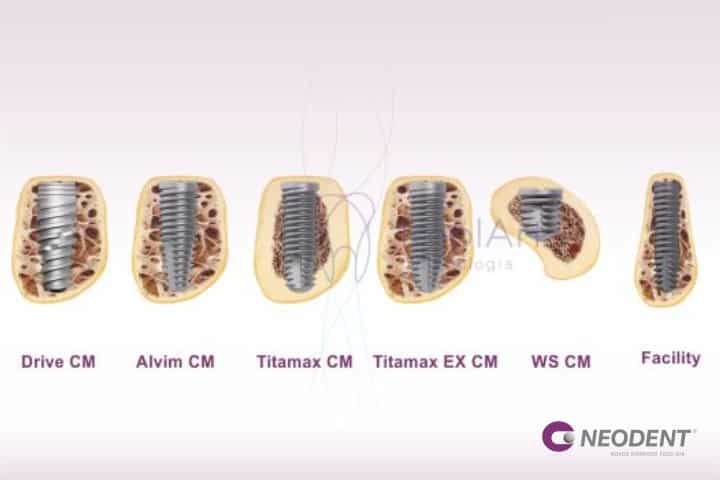
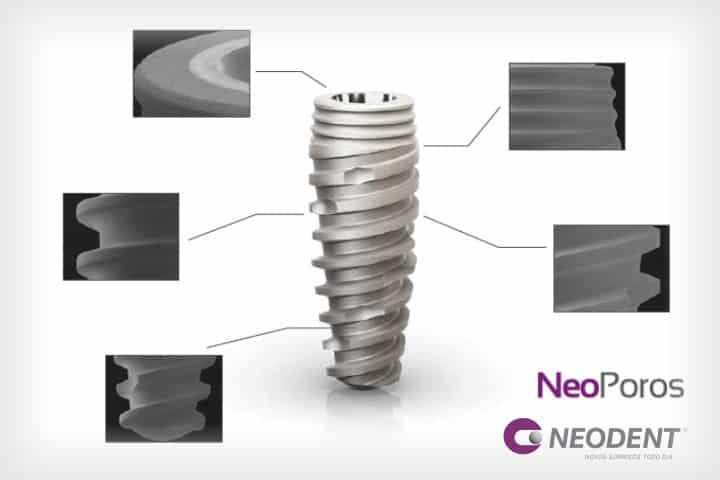
Headquartered in Curitiba and with 23 branches throughout Brazil, it has been in the market for over 28 years and is part of the Swiss Straumann Group, which consequently guarantees the quality, origin and high technology of its products.It has an extensive range of dental implants, designed to offer primary stability and thus meet different needs and bone densities, with the possibility of screwed or cemented prostheses. Implant lines:
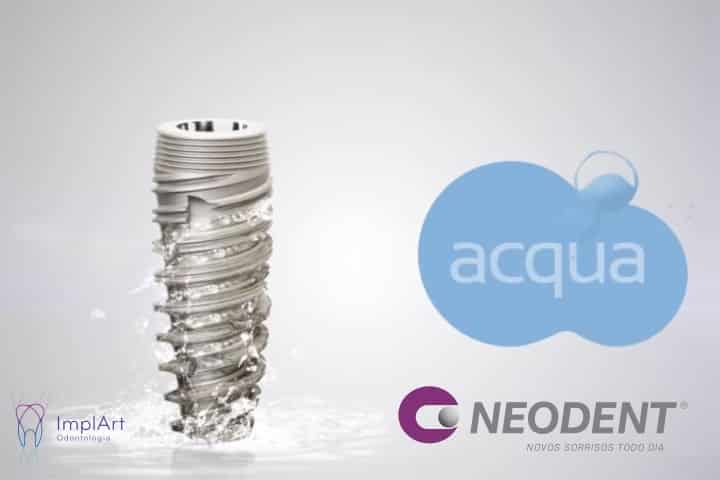
Hydrophilic surfacetechnology that allows the implant to wick better. This phenomenon is primarily important for promoting the integration of the implant with the body. The decision on which implant is best for your case will be made between you and your ImplArt dentist. The advantages and disadvantages of each system will be presented, taking into account the needs of each patient. It’s important to know that there are different types of implants, each with its own characteristics and healing time. If you have any questions, please contact us!
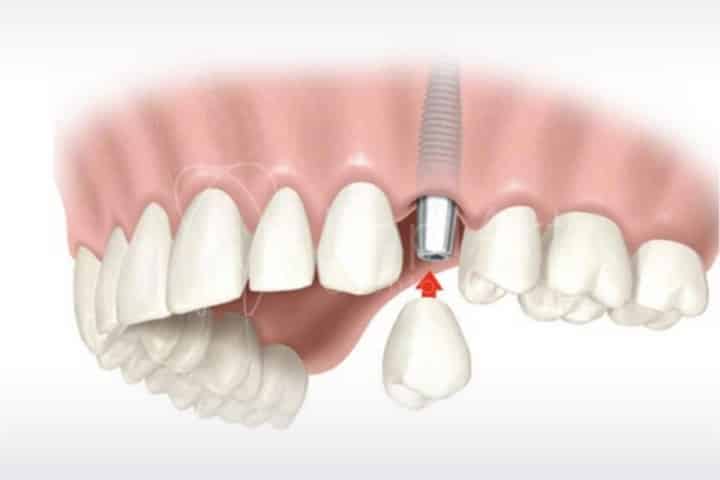
The Pure Ceramic zirconia implant from the Swiss company Straumann is a highly resistant and aesthetic option for replacing a natural tooth. The dental implant is made of metal-free ceramic material and has a white color, which is more similar to the roots of natural teeth. With this implant, it is possible to achieve an aesthetic and functional result that is far superior to metal implants. In addition, zirconia is a biocompatible and anti-allergic material, which minimizes the risk of rejection or complications. Therefore, the Pure Ceramic zirconia implant is a great choice for anyone looking for a beautiful, healthy smile.
Why should you do your zirconia implant in Brazil
The dental zirconia implant combined with the use of a pure 3D zirconia crown is the complete combination for metal-free oral rehabilitation. This treatment is especially suitable for people seeking excellence in aesthetic results, both when choosing dental implants and prostheses. In addition, it can be used for those patients who want to avoid the use of metals due to an allergic condition.
This option is gaining more and more ground as many patients want to eliminate the use of metal in their arches, either out of preference or even medical restrictions. There are currently several types of implant, each with its own characteristics, making it easier to choose according to the patient’s wishes. Let’s find out more about this very modern white implant option, which has allowed one version of the implant to be made of titanium.
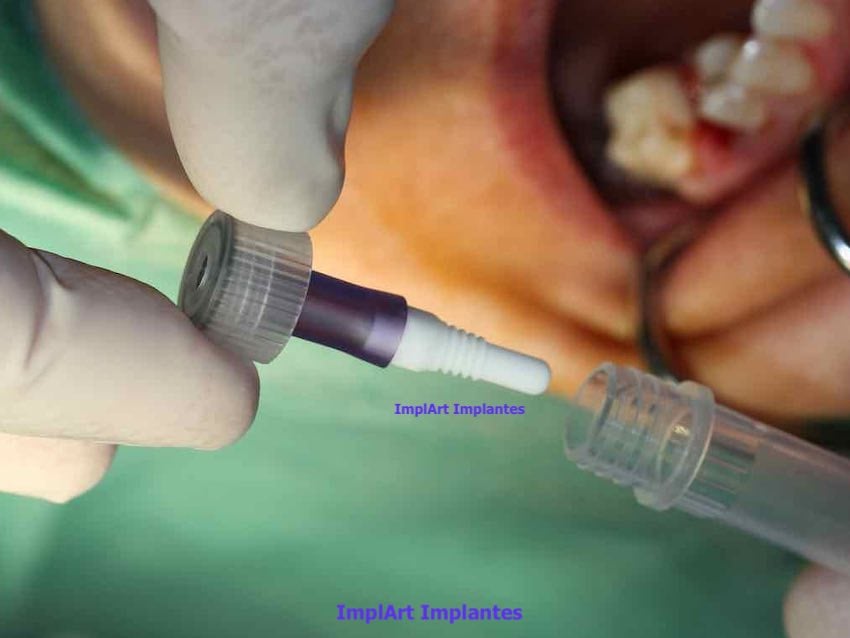
Image of a Zirconia Implant freshly removed from its sterile packaging during surgery
Using a zirconia implant is an option in cases of allergies or major aesthetic needs
In addition to their natural color, Straumann Pure Ceramic implants have a surface developed with ZLA technology, similar to SLA, which favors and accelerates the osseointegration process, important for the success and stabilization of the implant.
The implant has the color of a natural tooth, because it has no sparkling reflections, and is very useful in cases of thin or atrophied gums. This makes it possible to obtain a natural-looking and aesthetically pleasing end result, especially for application in the anterior region (the most visible part of the arch).
Zirconia implant surgery images – photos
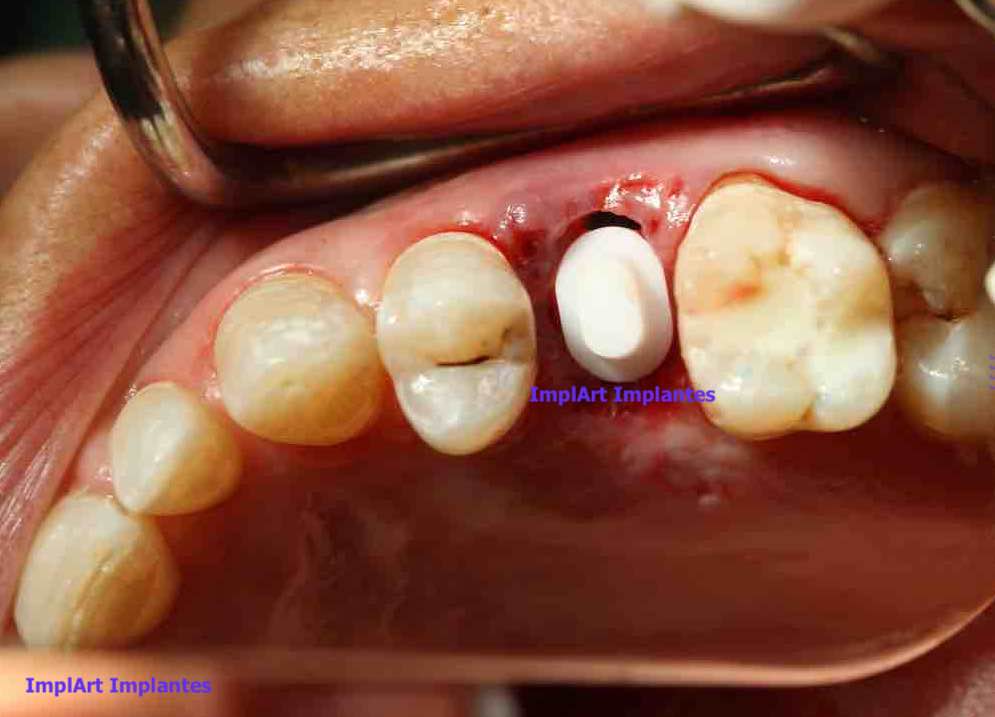
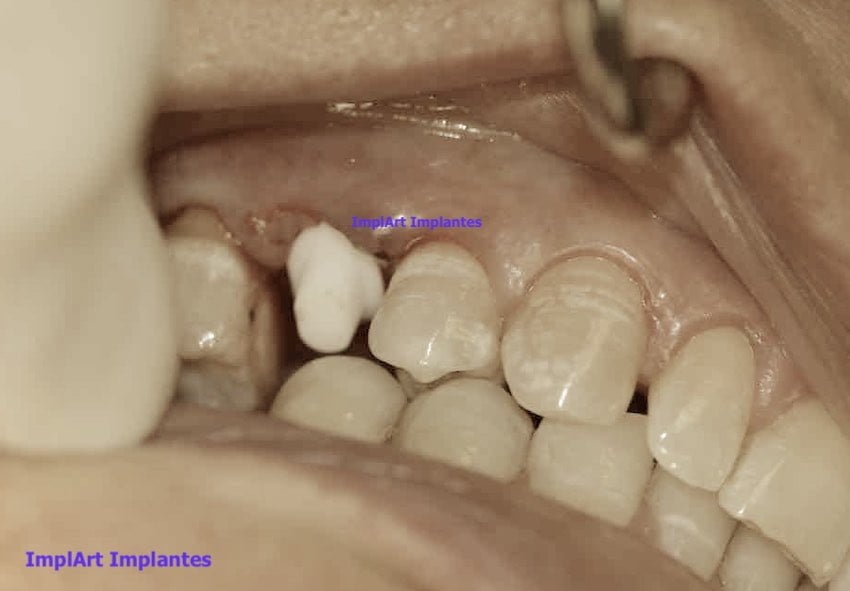
Image of a newly installed zirconia dental implant in the upper jaw.Image showing the immediate post-surgical appearance after the placement of a zirconia implant for the premolar tooth.
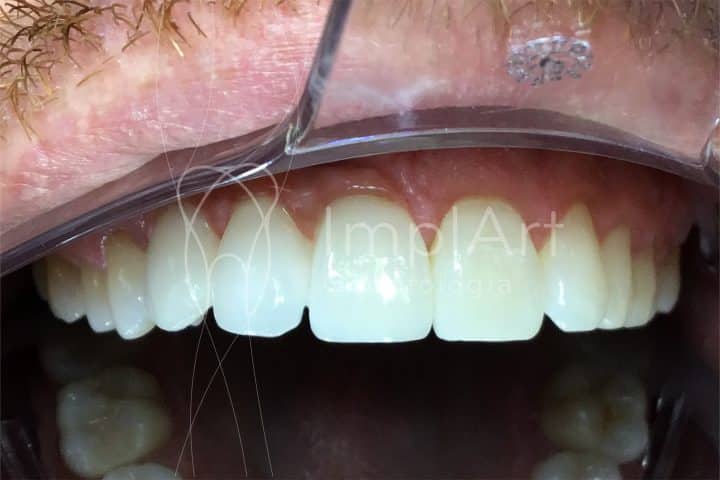
In these images of a surgery carried out in our clinic with a zirconium dental implant, the aesthetic nature of the material can be seen. After initial gum healing, bone healing begins, which takes an average of 2 months. After this time, the porcelain crown can be fitted over the implant.
The zirconia implant: Straumann Pure ceramic has been extensively tested and proven
The Straumann Pure ceramic implant was subjected to rigorous scientific research before being introduced to the market. Each implant is mechanically tested before being delivered to the dentist. This quality can only be guaranteed by a world leader in scientific research and the development of solutions for implant dentistry.
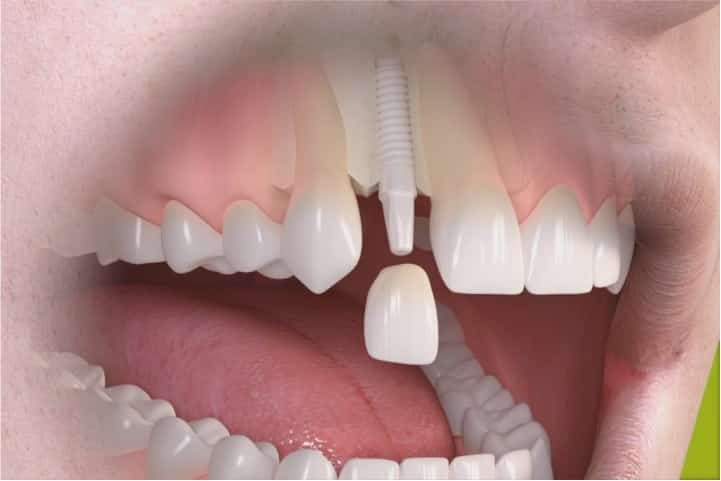
Pure Ceramic implant applied in the anterior region
Straumann has been researching and developing dental implants, surgical instruments, prosthetic components and biomaterials for oral tissue regeneration since 1974. Straumann’s products and services are available in more than 70 countries.
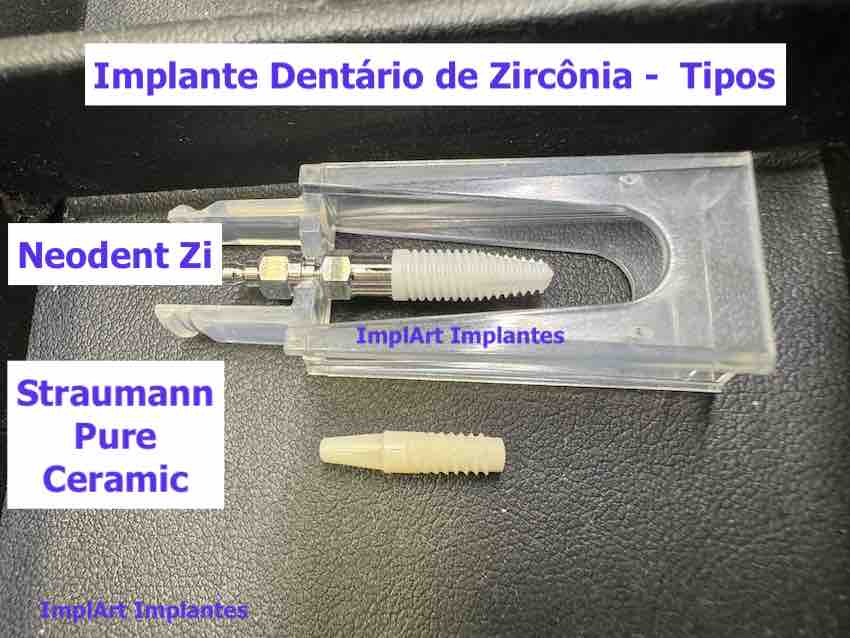
Image of the types of zirconia implants currently available in Brazil. We have the Straumann Pure Ceramic zirconia implant and the Neodent Zi implant available.
What is the healing time for zirconia dental implants?
The recovery period for the Straumann Pure zirconia implant can vary, depending on several factors, including the patient’s oral health and the type of procedure performed.
After implant surgery, the gums around the implant site need time to recover. This usually takes two to four weeks, but can vary according to the patient’s individual response.
In addition, the process of osseointegration, which is when the bone fuses to the implant, is a crucial part of recovery. Specifically for the Straumann Zirconia implant, osseointegration can occur between 2 and 6 months, while in the case of the ZI implant (Neodent) it can take 3 to 6 months to fully integrate.
Remember, each case is unique and recovery time can vary. It is always important for us to examine the patient in order to offer personalized advice.
Conclusion
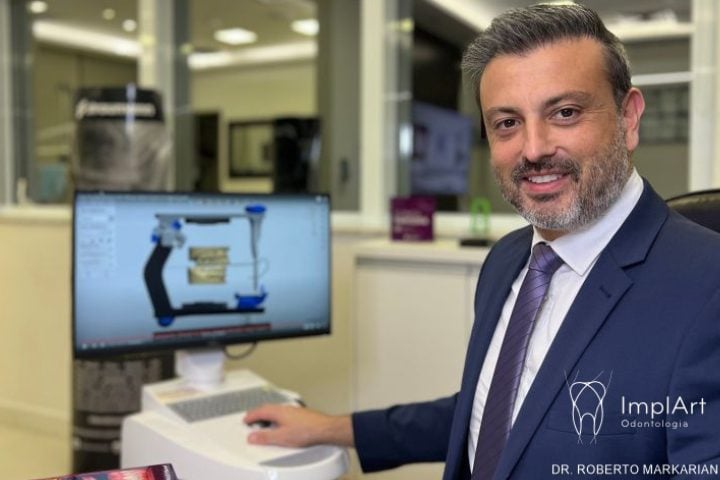
Implant dentist Dr. Roberto Markarian, director of the ImplArt dental clinic, is a member of the ITI – International Team for Implantology, an entity linked to Straumann that brings together the world’s best specialists for the development of new products and techniques.
We are among the clinics that use the most Zirconia Dental Implants in Brazil today, so we are used to carrying out such treatments.
If you have any questions, please make an appointment or contact us. We’ll be happy to help you.
I’m sure many of you have heard of the Full Arch Dental Implants treatment. But do you know how the treatment works? Fixed Implant-Supported Prosthesis treatment involves two stages, one surgical, with the insertion of dental implants, and the other prosthetic, with the realization of the fixed prosthesis on the implants. It can be carried out on both the upper and lower arches. This treatment is also known as All-on-4, All-on-6 or even All-on-X.
Through simple and painless surgery, implants are inserted that will support a fixed prosthesis. Normally 4 to 6 implants are inserted in each arch. The surgery is carried out in an office and the patient can go home immediately afterwards. There are modalities with local anesthesia, or with intravenous sedation, if the patient prefers.
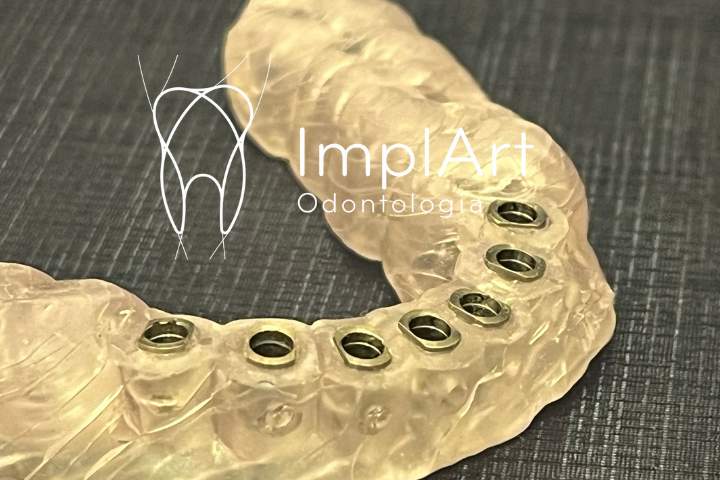
Here at ImplArt Dental Clinic, located in São Paulo, Brazil, there is also the option of performing dental implant surgery using the computerized guided surgery technique. This technique eliminates the need to make large cuts and sutures in the gums, making the post-operative period for implants easier and therefore faster to recover from. The surgical guide acts as a template with indications of where the incisions should be made to place the dental implants. The surgical guide is custom-made according to the patient’s computerized tomography images, using a 3D printing method.
See images of the Full Arch Dental Implants below
See below for this treatment with an upper Fixed Implant-Supported Prosthesis and a lower Fixed Implant-Supported Prosthesis. Firstly, implant surgery was carried out and a temporary fixed prosthesis installed on the day of surgery. Secondly, after the dental implants had healed, we made the Zirconia Prosthesis a fixed over the implants.
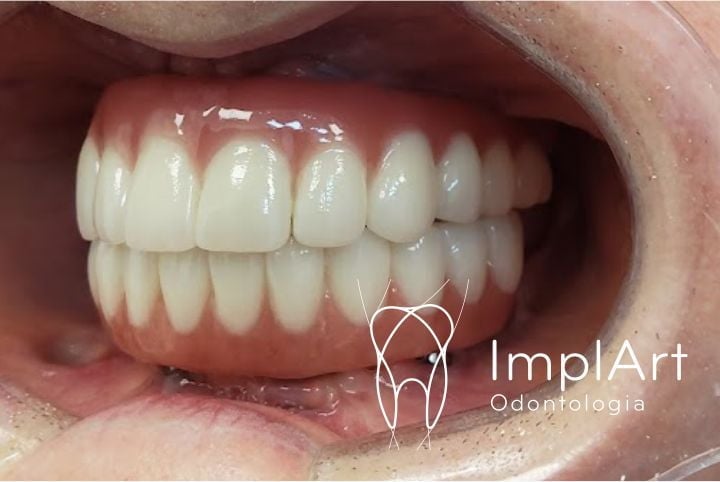
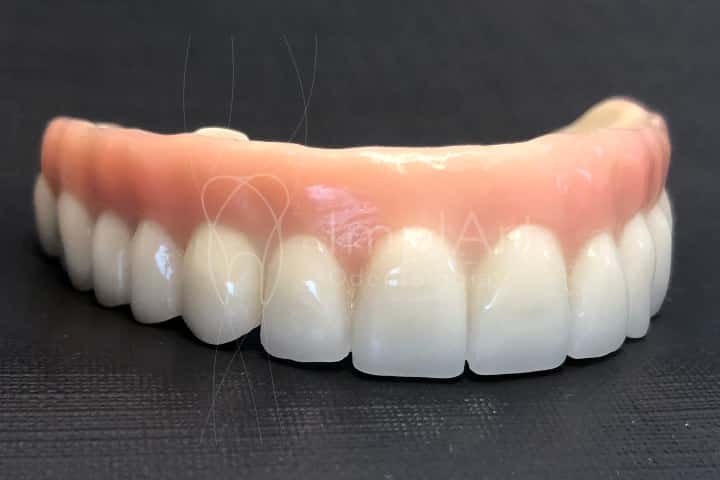
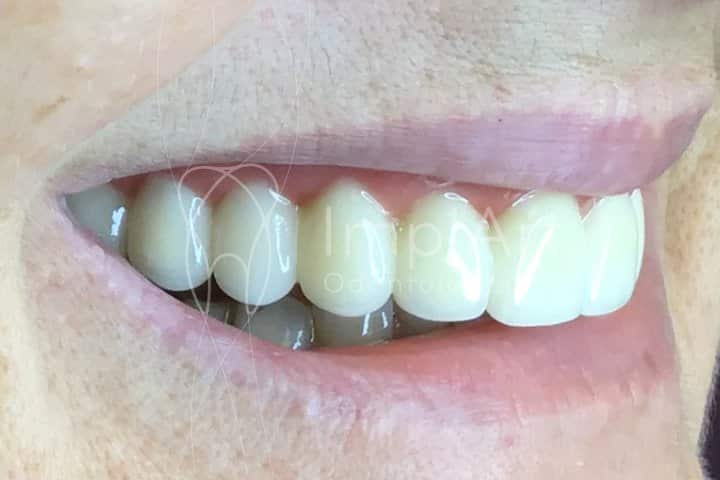
Image of Translucent Zirconia full arch prosthesis over implants – side view of the installed Zirconia prosthesis – Full Arch Dental Implants
Implant-Supported Fixed Full-Arch Prosthesis, what is it?
The Implant-Supported Fixed Full-Arch Prosthesis is a type of total fixed dental prosthesis that is indicated for people who have lost all their teeth in the same arch. It consists of 12 to 14 teeth attached to a single structure screwed onto 4 to 6 strategically placed dental implants.
It will also be necessary to carry out a radiographic examination, which is a computerized tomography scan, to visualize the volume of bone and its quality. This is essential for planning the number of implants that will be placed in the bone, both in the upper and lower arches.
When is Fixed Implant-Supported Prosthesis recommended?
Firstly, fixed Implant-Supported Prosthesis is recommended for patients who wear dentures, and for those who suffer from periodontitis or severe periodontal disease.
It is important that, even if the patient suffers from periodontitis, the disease is controlled by eliminating any sources of infection (plaque, tartar, calculus) and controlling gingivitis.
Thus, if the disease is well controlled and the bone is healthy, there is the possibility of replacing the extracted teeth with dental implants.
It is common for a patient, on receiving a poor prognosis for a tooth, to want to save it at all costs. Although in some cases it is possible to save a tooth with compromised periodontal structures, in most cases an experienced professional will be correct in recommending extraction and placement of a dental implant.
How do you change from dentures to a Fixed Implant-Supported Prosthesis? Full Arch Dental Implants Prothesis
People who have been wearing dentures for many years can experience a lot of bone loss in the jawbone, and this is a common concern for people who would like to have implants placed in order to wear a fixed prosthesis. Alternatively, we perform various bone grafting techniques, or use short implants designed for those with bone resorption.
Undeniably, it is always a great relief for patients to change their dentures for Fixed Implant-Supported Prosthesis. We, who specialize in this type of full-arch-dental implants treatment, follow the changes in the daily lives of patients every day, who are able to increase their quality of life with this treatment. Therefore, replacing dentures with implants only has benefits!
The difference between a Fixed Implant-Supported Prosthesis and a removable denture
The Fixed Implant-Supported Prosthesis provides stability when chewing and total confidence for the patient, since there is no need to remove it for daily hygiene. Patients report at the end of their treatment that they eat much better and have much more confidence in smiling, which brings great social gains to the patient’s life. It is therefore an important step for patients towards improving their quality of life.
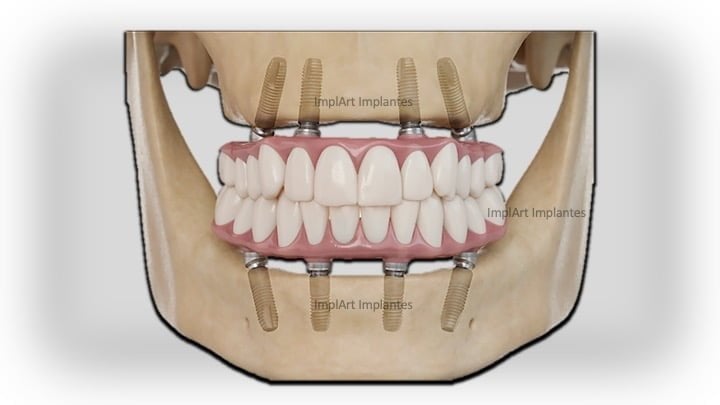
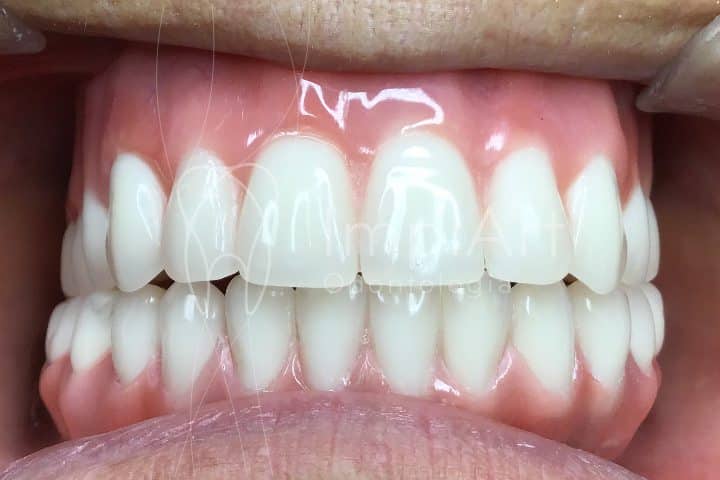
Upper and lower arch Fixed Implant-Supported Prosthesis installed on 04 implants in each arch
Who can have All-on-X or Full Arch Dental Implants treatment?
Anyone can have a Full Arch Dental Implants treatment. First of all, the patient must have a panoramic X-ray and a computerized tomography scan to assess the bone in the area that will receive the dental implant. Even patients with diabetes, in most cases, can receive implants as long as their diabetes is under control. So don’t be alarmed if you have diabetes, implants could be a solution for you too. Of course, this is after a careful assessment of your health condition.
Fixed Implant-Supported Prosthesis treatment covers a wide range of patients of different ages. Elderly people can also have the procedure. Each case must be evaluated in detail so that the procedure is always safe and promotes the patient’s well-being.
In your initial consultation with our clinical director, Dr. Roberto Markarian, you will receive all the guidelines for your All-on-X treatment.
What are the advantages of the Full Arch Dental Implants?
When the use of a mobile prosthesis causes discomfort, be it functional, aesthetic or sensory, there is the opportunity to replace it with a fixed version. See the advantages of protocol treatment on implants:
Does not move and does not require adhesives for fixing
Does not fall, avoiding embarrassing experiences
The prosthesis materials are more beautiful and resistant, especially metal-free zirconia prostheses.
Does not hurt gums and mucous membranes
Safer chewing, smiling and kissing
Improves diction
No acrylic roof of the mouth, improving speech and food tasting
Increases lip support, improving the appearance of a thin lip.
Which material is the Fixed Implant-Supported Prosthesis made of?
Here at Clinica Dentaria Implart you will find a wide range of materials for your prosthesis. From the simplest in Resin, through Metal-Ceramic (Porcelain), to the most modern prosthesis in Zirconia.
Do you know Zirconia, this innovative material for full arch prosthesis? Full Arch Dental implant Prosthesis in Zirconia are possible with this innovative computerized material. It is therefore an excellent choice for those looking for an aesthetically pleasing and durable material. What’s more, its computerized design system offers more precision, as well as greater comfort through the use of the 3D scanner.
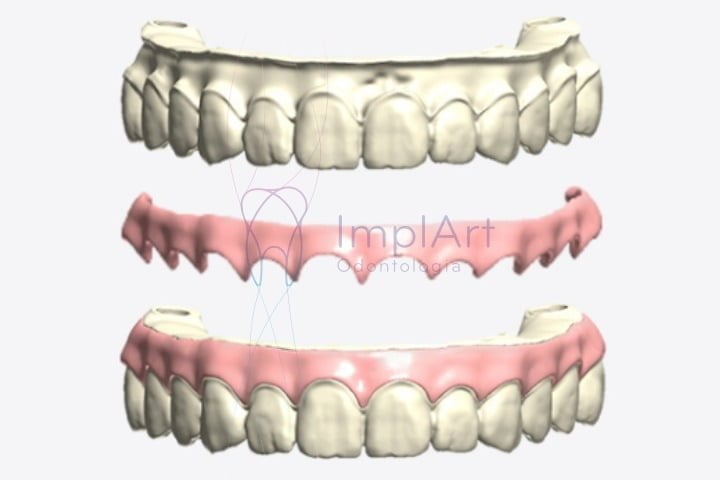
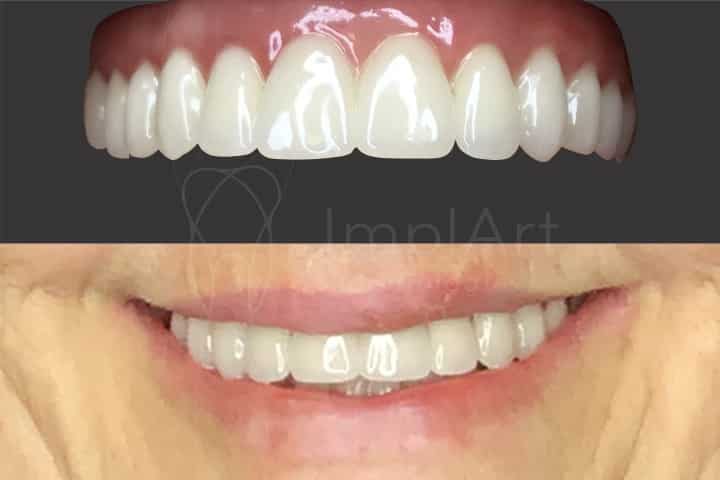
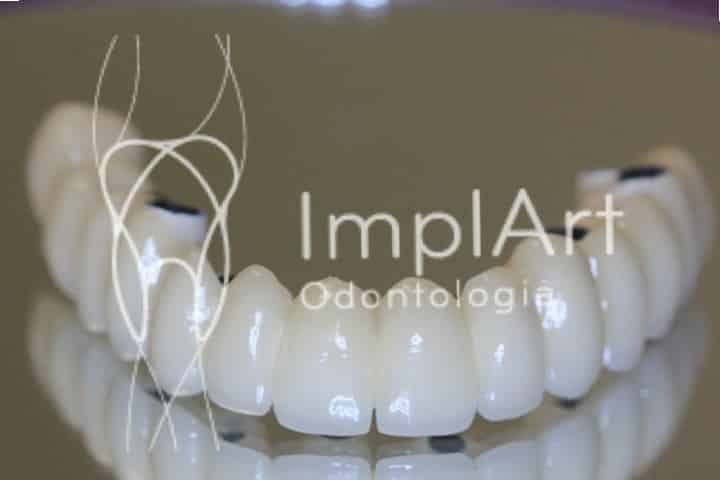
Translucent zirconia is an implant-supported prosthetic option made using an extremely advanced production method. Based on digital intraoral molding, the zirconia prosthesis is computer-designed and manufactured on 3D printers. In other words, the zirconia disc placed in the 3D printer is milled into the shape of the computerized design. This is certainly the most modern and resistant option, as well as the most beautiful and realistic.
It is an opaque white ceramic structure called zirconia, covered with dental porcelain. In this way, the aesthetics are sculpted in porcelain with the shape of the teeth. It is also a new and technologically innovative material, as the structure of the prosthesis is completely planned on a computer and executed with the help of electronic scanners and 3D printers.
This is a prosthesis with an internal metal structure (titanium, Ni-Cr or Cr-Co) and an aesthetic porcelain finish that is hand-sculpted to the shape of the teeth. Metal-ceramic prostheses therefore have the advantage of porcelain strength and aesthetics. As a result, the final result is aesthetically and beautifully similar to natural teeth.
Resin Full Arch Prosthesis (acrylic resin + metal)
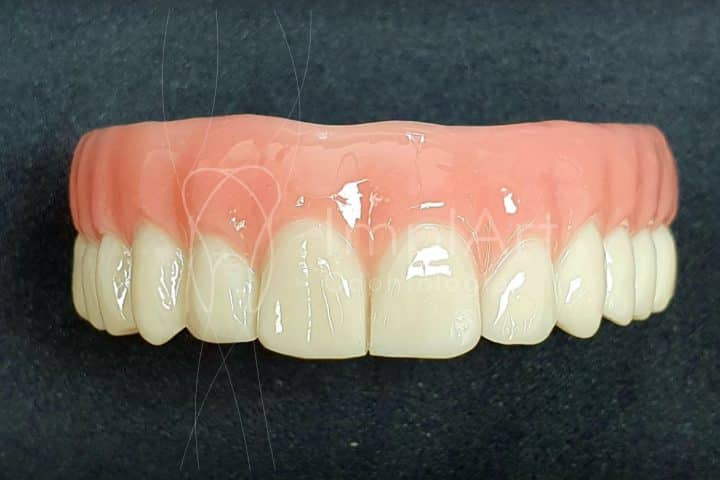
Also known as the Bränemark prosthesis, this is another option available for implant-supported prosthesis. This model of prosthesis has an internal metal structure and an aesthetic resin finish. The teeth are made of resin and you can choose the color, shape and size of the teeth.
However, this material has a disadvantage compared to the previous ones, which is the possibility of color change (yellowing) over time.
What care should be taken after full arch dental implant surgery?
After dental implant surgery, the total recovery period may vary at the discretion of the implant specialist, with a view to the success of the procedure. Therefore, the implant dentist, Dr. Roberto Markarian, will guide you according to the criteria of the type and extent of the surgery.
Light activities (7 to 10 days): Rest is recommended for light activities during the first week, which can be extended to 10 days.
Gradual return to normal activities (up to 3 weeks): The patient is instructed to gradually return to normal activities, which may take up to 3 weeks.
Will I lose my prosthesis after implant surgery?
Rest assured, the main concern of the entire team here at the ImplArt Dental Clinic is to make the whole process as comfortable as possible for the patient. In this way, the psychological aspect and the patient’s well-being are paramount. Therefore, in the vast majority of cases, we plan a temporary prosthesis that is installed immediately after surgery. The patient is therefore able to carry out their activities normally while we wait for the implants to osseointegrate.
New techniques – Zirconia total implants
Zirconia Total Implant: Natural and resistant Implant Supported Prosthesis
Dental implants with zirconia prosthesis are recommended for various clinical cases, such as bruxism, because zirconia’s resistance is superior to any other material. The material is a star in dental practices due to its versatility and the possibility of bringing a better appearance to the mouth, especially after the tooth has been darkened by root canal treatments or dental trauma, with a great loss of dental function and aesthetics. So, if possible, opt for Zirconia!
To clean the fixed implant supported prosthesis at home, the patient can use the interdental brush, in addition to the traditional toothbrush, which is effective and sufficient in the external regions. However, for the areas inside the prosthesis, around the implants or on the mucosa, interdental brushes and oral irrigators (pressurized water jets) are the most suitable. Certainly the best known of these devices is the Waterpik. These devices are certainly not easily found in Brazil, but in the United States they are sold in any pharmacy.
This way, with regular visits to the dentist every 6 months and proper hygiene of the fixed prosthesis at home, you’ll have a long-lasting and healthy treatment!
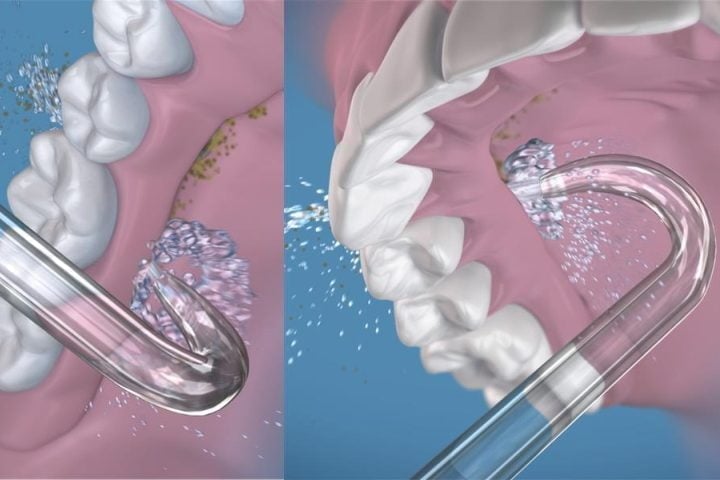
Sanitize the fixed implant supported prosthesis daily with waterpik
How to sanitize the fixed prosthesis / cleaning?
Care with the hygiene of the implant supported prosthesis is mainly to remove any food residue that may remain between the implant pins and the prosthesis (as in the image above), and to avoid the formation and accumulation of bacterial plaque on the surface of the prosthesis.
What is the best Full Arch Dental Implant Prosthesis?
It is also called Monolithic Zirconia, because it is made from a solid block of Zirconia that takes the shape of a dental prosthesis using a modern computerized system. The Translucent Zirconia prosthesis is made using 3D printers, a highly technological system. First of all, it’s worth clarifying that zirconia is a type of porcelain that replaces metal in dental treatments, as it offers a more natural and translucent appearance, without the presence of shadows, as happens in prostheses that use metal
In the ImplArt Clinic’s digital prosthesis laboratory, impressive robotic arms, which are present in modern milling equipment, are responsible for sculpting the prosthesis design previously drawn up on the computer. The design is certainly impressive as it uses only computerized systems for both its design and printing
It’s certainly a very modern system, which makes it possible to achieve aesthetically superior results in a more agile, fast and precise way. What’s more, zirconia is biocompatible with the human body, which means that the patient runs no risk of allergies or rejection.
What is the difference between a All-on-X prosthesis and an overdenture?
While in the implant supported prosthesis is fixed on 4 to 6 implants, in the overdenture the prosthesis is fixed on only 2 implants. As a result, the overdenture does not have the same stability as the All-on-X prosthesis. Therefore, the best alternative is the Full Arch Dental Implant Prosthesis.
How much does an upper Full Arch Dental Implant Prothesis cost? How much does a lower Full Arch Dental Implant prosthesis cost?
First of all, it’s important to bear in mind that when it comes to quality dental treatments, the price of the dental implant prosthesis can’t always be the deciding factor in the choice, but rather the quality of the service being offered. It is therefore essential that patients make their choice based on the trust and credibility of the clinic or professional providing the service, as well as the technical knowledge of the professionals, their years of practice and the technique to be used.
Undeniably, not all prosthesis and dental implant treatments are the same, firstly because of the differences in each case, and secondly because each professional has their own practice, technique and theoretical background. That’s why it’s very difficult to choose a professional based on price alone. If it’s too cheap, be wary! High-quality materials and qualified professionals who are in line with modern trends in implant dentistry have their value.
Remember that the effort put into qualification that the professional has put in throughout their career makes a direct difference to the outcome of your treatment! In addition, there are different types of materials, as mentioned above, from implants to different types of prostheses. Just to give you an example, here are the types of materials for implant supported prosthesis – Translucent Zirconia, Zirconia, Metal-Ceramic and Resin. The choice of prosthesis material, as well as the type of implant, will certainly influence the price of the Full Arch Dental Implants prosthesis. In this sense, we have various types of implants, from national implants to imported Straumann implants, a world reference in the field of implants.
Where can I have the Full Arch Dental Implants treatment?
The ImplArt Clinic has been ranked as the best dental implant clinic in Brazil, taking first place in the GCR (Global Clinic Rating) world ranking. The ranking was secured above all by its expertise in Digital Dentistry, Modern Structure and Patient Satisfaction. Our clinical director, implant dentist Dr. Roberto Markarian, is a reference in the field of implants and computerized prosthesis. So, if you want to have your Full Arch prosthesis treatment on implants, with knowledge and high technology, the ImplArt Dental Clinic is the right place for you!
We are located in the Avenida Paulista area of São Paulo, Brazil, in the heart of the metropolis.
If you are far away, in other states or abroad, please contact us to find out more about the online consultation. That way, we’ll be able to plan your Day Clinic treatment and your implant surgery remotely with Dr. Roberto Markarian. Also, if you already have dental implant exams such as CT scans and panoramic X-rays, they can be sent to you before your appointment to make your consultation even more productive!
Guide of Full Arch Dental Implants treatment
⭐The ImplArt Clinic is located in São Paulo and welcomes patients from all over the world. If you would like to know more about our treatments, dental implants, ask questions or schedule an appointment 📲WhatsApp (11) 99598-1866.
Full arch implant with zirconia and porcelain prosthesis
This technique eliminates the need to make large cuts and sutures in the gums, making the post-operative period easier and the recovery faster.
The surgical guide acts as a template with indications of where the incisions should be made to place the dental implants. The surgical guide is custom-made according to the patient’s CT scan images, using a 3D printing method.
CT makes it possible to analyze the bone volume of all regions of the maxilla and mandible in order to select the best distribution of implants. In this way, it is also possible to choose the most suitable implants, taking length and diameter into account.
Another advantage of computer-guided implant surgery is that it helps to avoid surgical accidents, such as hitting delicate structures like nerve pathways.
Photo of a surgical guide for guided implant surgery
The patient can leave the office with temporary teeth or with the mobile prosthesis they were already wearing over the implants until the definitive prosthesis is finished (in 3 to 6 months), or with an immediate load in up to 72 hours.
Immediate loading ranges from the guided implant surgery for placing the implants to the fixing of the fixed dental prosthesis, usually of the dental protocol type. The patient can quickly speak, smile and eat safely (the masticatory effort should progress little by little, according to the surgeon’s instructions).
Indications for a computer-guided implant surgery:
Any completely edentulous patient, whether recent or having worndentures for years, who has good bone availability is likely to be a good candidate for this technique.
Diabetic and/or hypertensive patients who generally have no indication for surgery or when it should be performed with caution due to bleeding. Computer-guided total implant placement surgery is, in principle, an excellent option for this patient, as bleeding is less with this technique.
– Very advanced bone atrophy makes it impossible, in principle, to place neodent dental implants. In some cases, this problem can be solved with another technique, bone grafting.
The entire procedure is carried out with great peace of mind and safety. Computer-guided implant surgery represents a major advance in dental surgery and our team at the ImplArt dental clinic, led by Dr. Roberto Markarian – a doctor in dental implants and a specialist in prosthetics – has full command of the techniques.
To find out if you could benefit from this technique, our team needs to carry out a thorough assessment of your case. Contact us and make an appointment at the ImplArt dental clinic to see other cases and photographs. We will be happy to try to solve your problem.
Dr. Roberto Markarian, PhD CRO-SP 73583 (Technical Manager)
Knowledge, updating, experience, seriousness and transparency
Practice at Clinica Dentaria ImplArt
Meet Dr Roberto Markarian, implant dentist, creator and director of the ImplArt Dental Clinic. The ImplArt Dental Clinic is certainly one of the main centers of technology in aesthetic oral rehabilitation and implantology in Brazil. As a result of its know-how and high technology, the ImplArt dental clinic receives patients from all over the world who are looking for high technology and knowledge to carry out their dental implant treatment.
Clinical History
Our clinical director holds a doctorate in implant dentistry, a master’s degree in prosthodontics, and two specializations in dental implants and prosthodontics. In addition, he has completed several training courses in the field of dentistry, not only in Brazil, but also abroad.
He also actively participates in the sector’s main congresses and fairs, both national and international. He is a member of important institutions in dentistry and related fields, such as the ITI – International Team for Implantology, the ADA – American Dental Association, and the EAO – European Association for Osseointegration.
Dr. Roberto Markarian is always striving to keep the ImplArt Clinic up to date and in line with the latest developments in world dentistry. He believes above all in teamwork and is particularly concerned about the quality of treatments, especially patient satisfaction.
In the case of patients who have already had a dental implant and wish to have a new prosthesis, in the vast majority of cases we are able to identify the type of implant by evaluating the panoramic radiograph. This is due to the expertise of our clinical director, implant dentist Dr. Roberto Markarian.
Scientific History Dr. Roberto Markarian
Dr. Roberto Markarian graduated as a dental surgeon in 2001 from the USP School of Dentistry in São Paulo. While still a student, he carried out research into improving dental materials, particularly in the areas of dentistry, prosthodontics and implantology. As aresult of this work, he received 5 awards in Brazil. He described his results in more than 30 scientific articles, which were later published in international journals.
In the meantime, he has taken postgraduate courses in prosthetics and dental implants and has become a researcher and assistant to the fixed prosthetics team at USP (São Paulo)and at the São Leopoldo Mandic College (Campinas), as well as teaching college students and dentists.
In the area of academic research, Dr. Roberto Markarian has been conducting courses and research in the area of implant dentistry since 1998, and in the area of digital dentistry since 2004. He also gives lectures and training courses on modern digital dentistry tools.
Clinical coordination and planning – Summary of academic titles
Acting as a Judicial Technical Expert in the areas of Dentistry as well asAssistant Implantology
More than 30 scientific articles published innational and international journals
Technical consultant for the EsteticArt CAD/CAM computerized prosthetics laboratory in São Paulo
Ambassador of the company S.I.N. Implant System – Research and development of solutions in Digital Implant Dentistry (guideddental implants and computerized prostheses)
Dr. Roberto Markarian – Director ImplArt Dental Clinic
Dr. Markarian’s Postdoctoral Research in Implant Dentistry
Title: Dental implant-abutment fracture resistance and wear induced by single-unit screw-retained CAD components after mechanical cycling, fabricated by four CAM methods, Univ SL Mandic – 2020.
Supervisor: Prof. Dr. Fabiana Mantovani Gomes França. There was an international scientific publication resulting from this work in JPD (Journal of Prosthetic Dentistry) 2021 (USA).
Dr. Roberto Markarian’s Doctoral Thesis in Implant Dentistry (PhD)
Title: SEM analysis of the adaptation of screw-retained unitary abutments fabricated by four CAD/CAM methods after mechanical cycling, Univ SL Mandic – 2017.
Advisor: Prof. Dr. Fabiana Mantovani Gomes França. There was an international scientific publication resulting from this work at IJOMI 2017 (USA).
Master’s Thesis in Prosthodontics (MSc)
Title: Biomechanics of force transmission to single implants as a function of prosthetic crown stiffness: photoelastic and dynamic analysis – USP School of Dentistry – 2005.
Advisor: Prof. Dr. Claudio Luiz Sendyk (FOUSP)
Dental Implants Specialization Monograph
Title: Evaluation of the All-on-4 (All-on-Four) technique for the installation of fixed prostheses on four implants with immediate loading – graftless technique for atrophied maxillae, USP School of Dentistry – 2008
Advisor: Prof. Dr. Francisco Fernando Todescan (FOUSP)
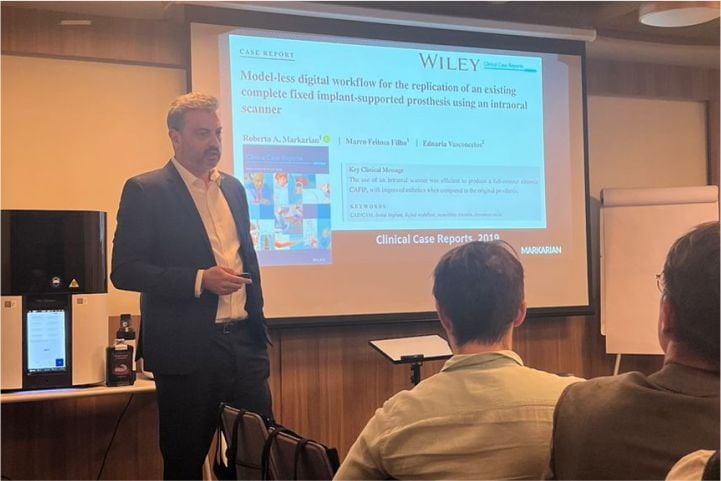
Dr. Markarian giving a lecture on Digital Dentistry
Congress Awards and Scholarships
1st Place in Group C5 of Panels at the 22nd Annual Meeting of the SBPqO-Pc179, Brazilian Society of Dental Research (2005).
1st Place in Scientific Panel, XXVI CUBO – Brazilian University Congress of Dentistry (2001).
2nd Place – Oral Presentation, XXVI CUBO – Brazilian University Congress of Dentistry (2001).
Scholarship – Removable Prosthesis, FOUSP (2001).
4th Place – Oral Presentation – Honorable Mention, XXIV CUBO – Brazilian University Congress of Dentistry (2000).
2nd Place – XXV de Janeiro Award for Encouraging Scientific Initiation, Academic Center XXV de Janeiro (2000).
Scholarship – Restorative Dentistry II, FOUSP (2000).
Published articles and some scientific work by Dr. Roberto Markarian
MARKARIAN RA, GALLES DP, FRANÇA FBG. Dental implant-abutment fracture resistance and wear induced by single-unit screw-retained CAD components after mechanical cycling, fabricated by four CAM methods. Journal of Prosthetic Dentistry, 2021.
MARKARIAN RA, GALLES DP, FRANÇA FBG. SEM analysis of the adaptation of single-unit screw-retained CAD/CAM abutments after mechanical cycling. International Journal of Oral & Maxillofacial Implants 2018.
Evaluation of the marginal adaptation of single zirconia abutments customized by the CAD/CAM system: laboratory study. R MARKARIAN, EMF and Silva, R Manfro. Implant News 10 (3), 363-367, 2013.
MARKARIAN, Roberto Adrian . New materials for implant dentistry and the choice of rehabilitation material. Implant News Perio News magazine, internet, Feb. 24, 2012.
MARKARIAN R.A., UEDA C., LAGANÁ D.C., SOUSA R.M., SENDYK C.L. Stress distribution after installation of fixed frameworks with marginal gaps over angled and parallel implants. Journal of Prosthodontics, v. 16, n. 2, p.117-122, 2007.
LOPES F.M., SENDYK C.L., DUARTE C.P., MARKARIAN R.A., ARANA-CHAVEZ V.E. Swine teeth as potential substitutes for in vitro studies in tooth adhesion: A SEM observation. Archives of Oral Biology, v. 51, p.548-551, 2006.
ADDED, N. ; RIZZUTTO, M. A. ; CURADO J ; FRANCCI CE ; MARKARIAN, RA ; MORI, M. . Trace elementary concentration in enamel after dental bleaching using HI-ERDA. Nuclear Instruments and Methods in Physics Research (Print) (Ceased 1983. Disbanded in 2: ISSN 0168-9002 Nuclear iInstruments & Methods in Physic, v. 249, p. 684-687, 2006.
FALLA-SOTELO FO, RIZZUTTO MA, TABACKNICKS MH, ADDED N, BARBOSA MDL,MARKARIAN RA, QUINELATO A, MORI M, YOUSSEF M. Analysis and discussion of trace elements in teeth of different animal species. Brazilian Journal of Physics, v. 35, n. 3B, p.761-762, 2005.
BARCELOS DP, MARKARIAN RA, PINTO EG, CHELLOTTI A, HADDAD AE. Evaluation of the applicability of Carrea analysis in deciduous dentition Rev Ib-Am Odontopediatr Odontol Bebê, v. 8, n. 41, p.62-66, 2005.
MARKARIAN RA, LIMA RG, SOUSA RM, SENDYK CLTitle: The influence of the prosthetic materials on load transfer to dental implants. Technology Meets Surgery 2005, CD-ROM
UEDA C, MARKARIAN RA, SENDYK CL, LAGANÁ DC. Photoelastic analysis of stress distribution on parallel and angled implants after installation of fixed prostheses Brazilian Oral Research, v. 18, n. 1, p.45-52, 2004.
RIZUTTO MA, ADDED N, TABACKNIKS MH, LIGUORI NETO R, ACQUADRO JC, MACHADO LP, VILELA MM, OLIVEIRA TRCF, MARKARIAN RA, MORI M. External PIGE_PIXE measurements at the São Paulo 8UD tandem accelerator. Nuclear Instruments and Methods in Physics Research B, v. 190, p. 186-189, 2002.
BALLESTER RY, MARKARIAN RA, LOGUERCIO AD Dimensional alteration of amalgam and gallium-based alloy Pesquisa Odontológica Brasileira, v. 15, n. 4, p.341-347, October to December 2001.
Dental Bleaching: Trace element concentration in enamel using particle accelerator. FRANCCI C, MARKARIAN RA, SPADA AE, NAKAMA R, MORI M, ADDED N, RIZZUTTO MA. International Academy of Dental Research, Honolulu, Hawaii – CD-ROM OF Abstracts, 2004.
Trace elements in human, bovine and swine dentin by PIXE. QUINELATO A, YOUSSEF F,MARKARIAN RA, YOUSSEF M, MORI M, RIZZUTTO MA, TABACNICKS MH, ADDED N, FALLA-SOTELO F. International Academy of Dental Research, Honolulu, Hawaii – CD-ROM OF Abstracts, 2004.
Analysis of trace element concentration in enamel after dental bleaching using particle accelerator. FRANCCI C, MARKARIAN RA, SPADA AE, NAKAMA R, MORI M, ADDED N, RIZZUTTO MA. J Appl Oral Sci, 12(sp. Issue):p.46, 2004.
Biomechanics of stress transmission to implants as a function of prosthetic crown stiffness – photoelastic analysis. MARKARIAN RA, SENDYK CL, LIMA RG, SOUZA RM. Brazilian Oral Research, 18(suppl):198 (pb333), 2004.
Evaluation of the elastic recovery of addition silicones in contact with astringent solutions. SILVA, MG, MARKARIAN RA, LISBOA MV, RODRIGUES-FILHO LE, MUENCH A. Pesq Odontol Bras, 17(2):199 (pb321), 2003.
Dissipation of stresses generated in the installation of suprastructures with marginal mismatches on parallel and angled implants. UEDA C, MARKARIAN RA, SENDYK CL. Pesq Odontol Bras, 17(2):255 (pc368), 2003.
Dissipation of stresses generated during installation and after loading of fixed prostheses on parallel and angled implants. MARKARIAN RA, SENDYK CL, UEDA C, LAGANA DC. Pesq Odontol Bras, 16(suppl):60 (Ia222), 2002.
Comparison of the elemental composition of human and bovine tooth enamel using nuclear techniques. MARKARIAN RA, OLIVEIRA TRCF, M, MORI M, ADDED N, VILELA, MM, CAMPOS TN, RIZZUTTO MA, TABACNICKS MH, MACHADO LP, LIGUORI-NETO R. Revista da Pós Graduação da FOUSP, 8(3):p.276 (IC04), 2001.
Comparison between the elemental composition of human and porcine dental enamel using nuclear techniques. OLIVEIRA TRCF, MARKARIAN RA, M, MORI M, ADDED N, VILELA, MM, CAMPOS TN, RIZZUTTO MA, TABACNICKS MH, MACHADO LP, LIGUORI-NETO R. Revista da Pós Graduação da FOUSP, 8(3):p.276 (IC05), 2001.
Comparison between chemical elements of human and bovine tooth enamel.MARKARIAN RA, OLIVEIRA TRCF, M, MORI M, ADDED N, VILELA, MM, RIZZUTTO MA. Pesq Odontol Bras, 15(suppl):29 (I060), 2001.
Copper and strontium in healthy human, bovine and porcine enamel. OLIVEIRA TRCF,MARKARIAN RA, M, MORI M, ADDED N, VILELA, MM, RIZZUTTO MA. Pesq Odontol Bras, 15(suppl):29 (I062), 2003.
Hybrid layer: effects of dentin treatment with glutaraldehyde and/or sodium hypochlorite on microleakage of composite resin restorations in bovine teeth.MARKARIAN RA, BALLESTER RY, LOGUERCIO AD. Revista da Pós Graduação da FOUSP, 7(suppl):p.18 (47), 2000.
Microleakage in healthy teeth. MARKARIAN RA, BALLESTER RY. Revista da Pós Graduação da FOUSP, 6(3):p.303, 1999.
Study on Mycroleakage in salutary teeth. MARKARIAN RA, BALLESTER RY. Academy of Dental Materials Annual Meeting Abstracts, Banff, Canada, 1998.
MARKARIAN RA, SENDYK CL, LIMA RG, SOUZA RM. Biomechanics of stress transmission to implants as a function of prosthetic crown stiffness – photoelastic analysis. PANEL. 21st Meeting of the Brazilian Society for Dental Research, Águas de Lindóia, 2004.
MARKARIAN RA, UEDA C, SENDYK CL. Dissipation of stresses generated by the installation and application of fixed prostheses on implants with marginal misalignments. PANEL. 21st International Dental Congress of São Paulo, São Paulo, 2003.
MARKARIAN RA, UEDA C, SENDYK CL, LAGANÁ DC. Dissipation of stresses generated during installation and after loading of fixed prostheses on parallel and angled implants PANEL. 21st Meeting of the Brazilian Society for Dental Research, Águas de Lindóia, 2002.
MARKARIAN RA, UEDA C, SENDYK CL. Dissipation of stresses generated during installation and after loading of fixed prostheses on parallel and angled implants PANEL. 20th International Dental Congress of São Paulo, São Paulo, 2002.
MARKARIAN RA, SENDYK CL, UEDA C. Dissipation of stresses generated during installation and after loading of fixed prostheses on parallel and angled implants PANEL. 3rd APCD International Congress on Osseointegration, São Paulo, 2002.
MARKARIAN RA, OLIVEIRA TRCF, MORI M, ADDED N, VILELA MM, CAMPOS TN, RIZZUTTO MA, TABACKNIKS MH, MACHADO LP, NETO RL. Comparison of the chemical composition of human and bovine tooth enamel using nuclear techniques. PANEL. 26th Brazilian University Congress of Dentistry, São Paulo, 2002.
OLIVEIRA TRCF, MARKARIAN RA, MORI M, ADDED N, VILELA MM, CAMPOS TN, RIZZUTTO MA, TABACKNIKS MH, MACHADO LP, NETO RL. Comparison of the chemical composition of human, bovine and porcine tooth enamel using nuclear physics. ORAL PRESENTATION. 26th Brazilian University Congress of Dentistry, São Paulo, 2002.
MARKARIAN RA, OLIVEIRA TRCF, MORI M, ADDED N, VILELA MM, CAMPOS TN, RIZZUTTO MA, TABACKNIKS MH, MACHADO LP, NETO RL. Comparison of the chemical composition of human and bovine tooth enamel using nuclear techniques. PANEL. 9th FOUSP Research Meeting, São Paulo, 2001.
MARKARIAN RA, OLIVEIRA TRCF, MORI M, ADDED N, VILELA MM, CAMPOS TN, RIZZUTTO MA, TABACKNIKS MH, MACHADO LP, NETO RL. Comparison between the chemical composition of human and bovine tooth enamel using nuclear physics. PANEL. 53rd Annual Meeting of the SBPC, Salvador, 2001.
MARKARIAN RA, LOGUERCIO AD, BALLESTER RY. Hybrid Layer: Effects of dentin treatment with glutaraldehyde and/or sodium hypochlorite on microleakage of composite resin restorations in bovine teeth. PANEL. 8th FOUSP Research Meeting, São Paulo, 2000.
MARKARIAN RA, BALLESTER RY. Microleakage in healthy teeth. PANEL. 19th International Dental Congress of São Paulo, São Paulo, 2000.
MARKARIAN RA, LOGUERCIO AD, BALLESTER RY. Hybrid Layer: Effects of dentin treatment with glutaraldehyde and/or sodium hypochlorite on microleakage of composite resin restorations in bovine teeth. PANEL. 8th USP International Symposium on Scientific Initiation, Ribeirão Preto, 2000.
MARKARIAN RA, BALLESTER RY. Microleakage in healthy teeth. PANEL. 7th FOUSP Research Meeting, São Paulo, 1999.
MARKARIAN RA, BALLESTER RY. Microleakage in healthy teeth. PANEL. Academy of Dental Materials annual meeting, Banff, Alberta, Canada, 1998.
Bone grafts are techniques to supplement the bone lost in the patient’s jaw. They can be performed simultaneously with the insertion of the dental implant, or require a healing period. Each indication will depend on an analysis of the patient’s case. But rest assured, today’s bone grafting techniques are very modern and painless for the patient. The results are certainly worth it because dental implants are the best solution for restoring missing teeth!
Know everything about dental bone grafts
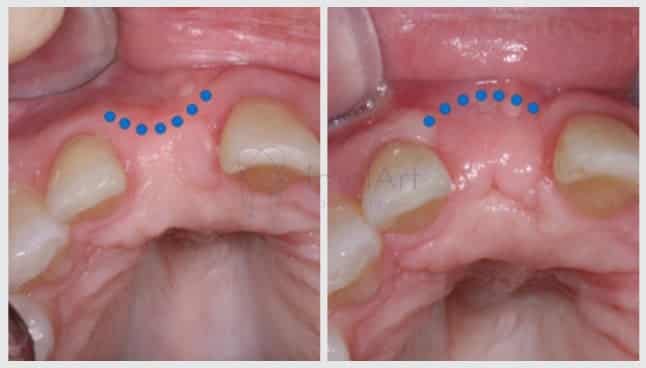
Bone grafts are used to reconstruct the area that has lost height or thickness
In some cases, it is not possible to place dental implants without first doing bone grafts. People who have lost one or more teeth due to accidents or extractions always think about reconstructing their dental arch in order to smile without embarrassment and for this, dental implant placement is certainly an excellent option.
When people lose their teeth and don’t replace them immediately, they experience bone resorption. As a result, the bone in the area becomes thinner and taller, or has defects in its shape. In the upper jaw, the size of the maxillary sinus can increase, which in principle prevents implants from being placed. In addition, with tooth loss, expressions become limited, the mouth shrivels, chewing becomes difficult and speech can also be altered.
In this way , bone grafting serves to rebuild enough structure to allow the implant to be made, restoring the lost volume to the atrophied bone. For this technique, the dentist can use the patient’s own bone material, taken from the mouth (for small reconstructions) or taken from other sites, such as the hip bone (iliac) and skull cap (for large extensions).
There are different bone grafting techniques, each with its own particularities
In the case of smaller, more common grafts, the bone grafting procedure can be done in the office using local anesthesia. For larger areas, the surgical intervention is performed in a hospital by a larger, multidisciplinary team under general anesthesia. The patient does not lose teeth while the bone graft heals.
It is also possible to use a xenogenous bone graft crystal, when the bone comes from animals (freeze-dried bovine bone – Genox or Bioss), human bone from bone banks (bone transplant) or synthetic vitreous materials (synthetic hydroxyapatite). However, the most easily regenerated material is bone graft taken from the person themselves (autogenous bone).
Types of bone graft materials
The procedure can be carried out in fragments or as a block. Many people are afraid of undergoing a bone graft, but in fact the procedure can be very simple. All the materials are biosecure and undergo strict controls to prevent contamination.
Smaller bone grafts are non-invasive and can be used to supplement the bone around a newly placed implant. However, in people who have lost their teeth many years ago, larger bone grafts may be necessary. ImplArt’s philosophy is to avoid bone grafts and has mastered alternative techniques such as:
Bone loss can occur for a number of reasons, but the most common is tooth loss or extraction without immediate replacement. When a person loses their teeth, the body resorbs the bone in the maxilla or mandible because it understands that the bone no longer has a function (which was to provide support for the teeth). This loss is progressive and over the years the person has little bone volume in terms of height and width, which at first makes it difficult to place dental implants.
What are bone grafts?
Maxillary sinus lift or sinus lift
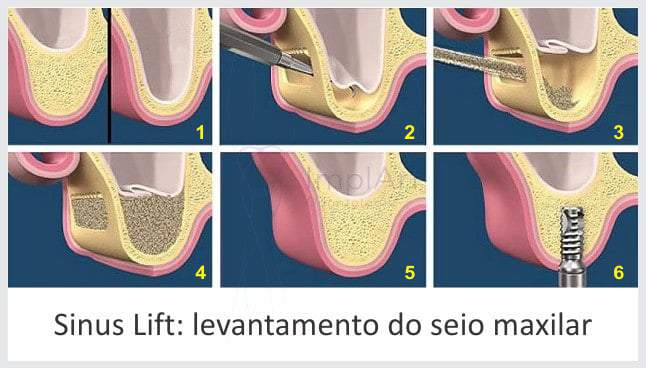
A sinus lift is a surgical procedure for bone grafting in the posterior region of the upper jaw. The aim is to increase the amount of bone in height so that a longer dental implant can be placed.
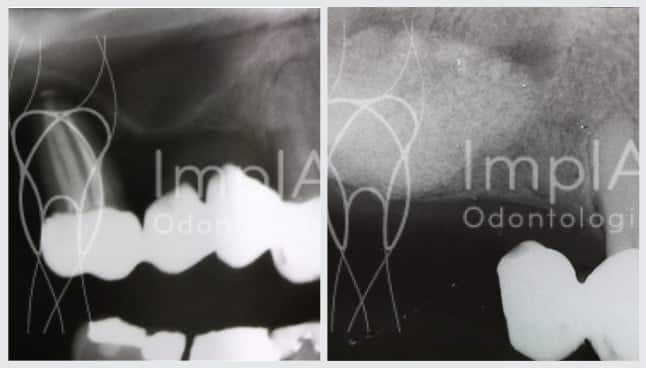
When a person loses one or more teeth in the upper arch, there is a loss of bone in height and the maxillary sinus shrinks (fig.1). The procedure is carried out in this way: First, a small opening is made in the gum in the lateral region of the bone defect (fig.2).
A variable amount of bone regeneration precursor material is then placed inside this opening (figs.3,4). The surgery is quick and usually takes no more than 30 minutes with an experienced surgeon. Bone regeneration takes between 4 and 9 months (fig.5), and then the implants are placed (fig.6), but radiographic examinations are carried out beforehand to check the progress of bone regeneration.
Materials used in bone grafts
Nowadays we have a variety of materials that can be used for bone grafts in the maxillary sinus:
Studies show that all materials are favorable for this type of graft, depending only on the surgeon’s preference.
Bone Graft Before and afterBone Graft Before and after – X rays
The ImplArt Clinic has experience in various grafting techniques
Dr. Roberto Markarian, coordinator of Clinica Dentaria ImplArt, is an experienced dental implant specialist with thousands of implants installed. Due to his extensive clinical and surgical experience, he has been able to carry out countless cases of rehabilitation without the need for bone grafting and which had been indicated for grafting by other specialists.
Each case is assessed individually during a consultation. If you have any questions about the price of treatment, values or planning, please contact us or schedule a consultation 📲WhatsApp(11) 99598-1866. Bone grafts are different from gum grafts in terms of techniques and objectives.
Zirconia is the most modern material for dental prostheses today, even for full arch implant prostheses. Zirconia is an advanced ceramic material, considered super realistic, which has become increasingly well-known in dentistry in recent years, especially for prostheses on dental implants.
It is also called Monolithic Zirconia, as it is made from a solid block of Zirconia that is shaped into a dental prosthesis using a modern computerized system. In the ImplArt Clinic’s digital prosthesis laboratory, impressive robotic arms, present in modern milling equipment, are responsible for sculpting the prosthesis design previously drawn up on the computer.
It’s certainly a very modern system that allows you to achieve aesthetically superior results in a more agile, fast and precise way.
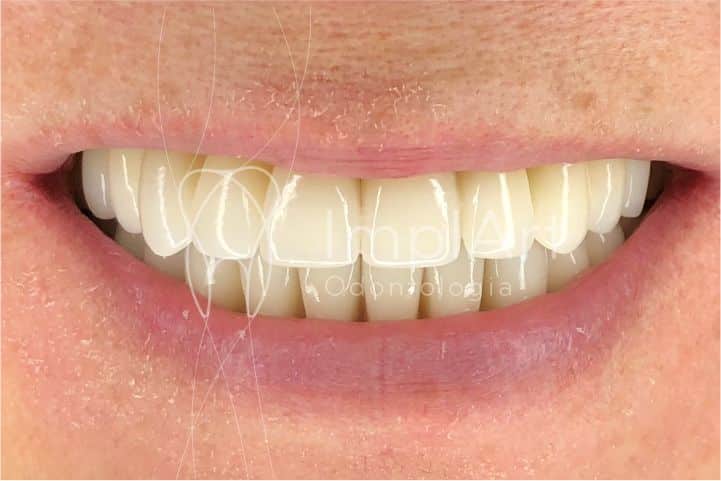
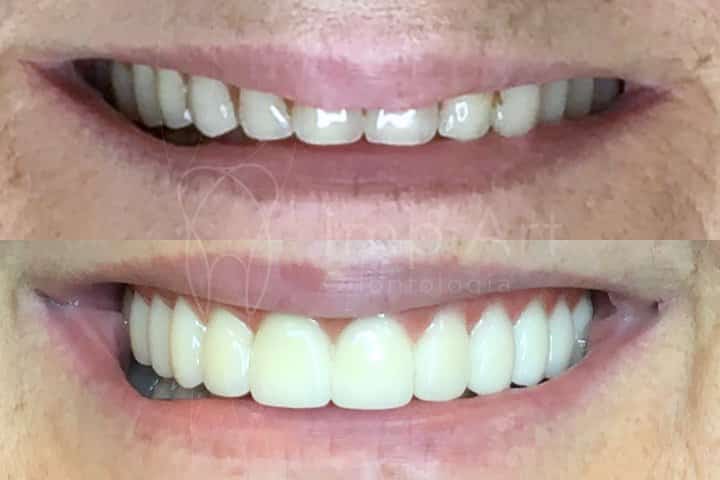
Below is the result of a treatment with a Zirconia full arch prosthesis for a patient who came all the way from the United States to undergo treatment at the ImplArt Clinic.
What are the characteristics of the Zirconia prosthesis?
There are several reasons why zirconia is the most modern material for making dental prostheses:
Aesthetics: Zirconia prostheses are highly aesthetic and can be customized to mimic the natural appearance of teeth, with a translucency similar to that of tooth enamel. In addition, Zirconia does not fade or discolor over time, which guarantees a long-lasting aesthetic result.
Biocompatibility: Zirconia is a biocompatible material, which means that it doesn’t cause allergic reactions or inflammation in the patient’s soft tissue or bone. This is especially important for prostheses on dental implants, where the integration of the implant with the bone is crucial to the success of the treatment.
Resistance: Zirconia combines beauty and resistance, which guarantees its long-term durability. It has a high resistance to fracture and wear, which is important for dental prostheses that need to withstand chewing and the forces of the mouth.
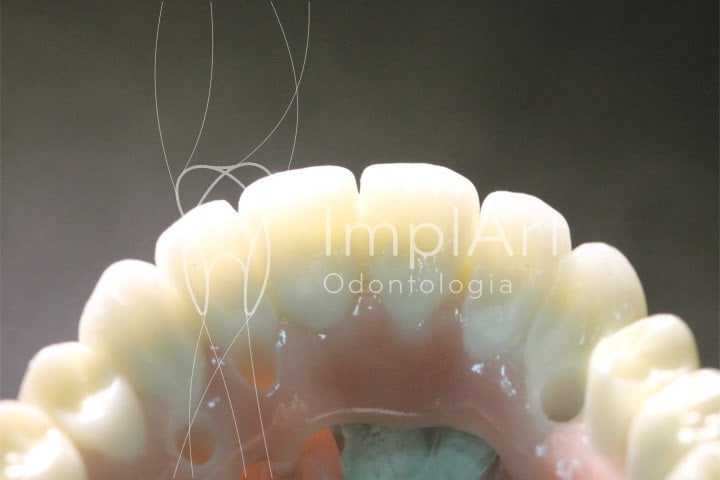
The full arch implant prosthesis is a fixed prosthesis on dental implants that can be used to replace all the teeth in an arch. The prosthesis is fixed to the implants with screws or cemented into position, and can only be removed by the dentist for maintenance. The fixed implant prosthesis is a great option for patients looking for an aesthetic and functional restoration, as it is comfortable, durable and offers a natural appearance.
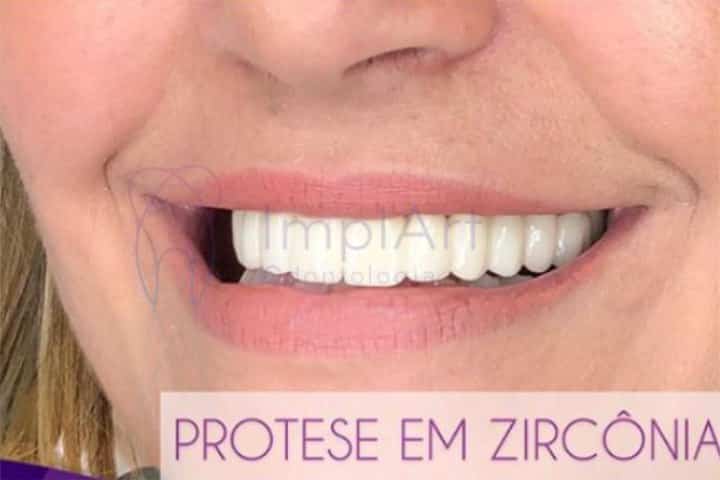
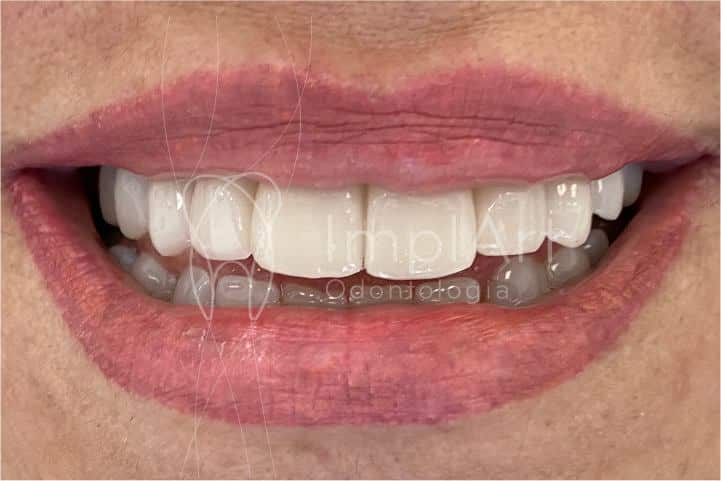
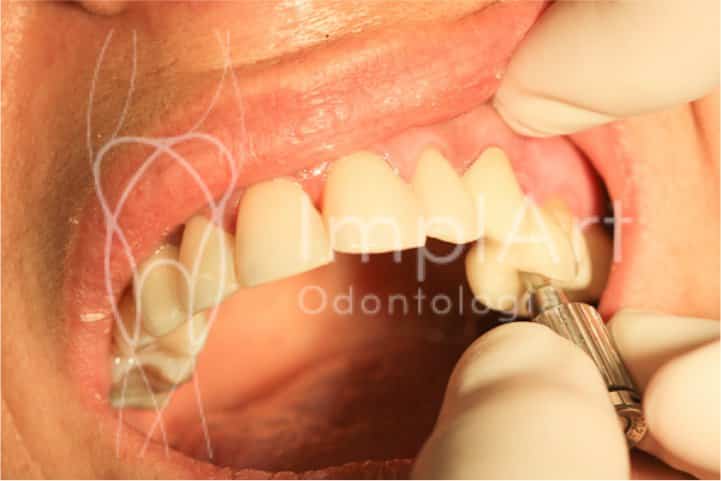
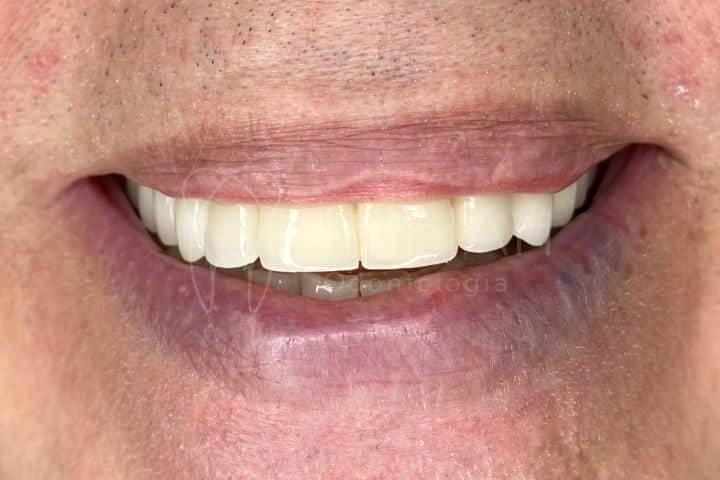
Detail of a Zirconia fixed prosthesis on a dental implant, considered the most modern material.
Zirconia is the most modern material for Full Mouth Reconstruction with dental implants
Zirconia is a material widely used in dental implant protocol prostheses due to its aesthetic properties, resistance and biocompatibility. Zirconia complete arch prostheses are a more advanced option compared to other materials such as acrylic, as they offer a more natural appearance and greater durability. In addition, Zirconia is highly resistant to stains and abrasion, which means that the prosthesis can maintain its color and shape over time.
The Zirconia full arch prosthesis also allows for a more precise fit and a more comfortable adaptation, thanks to CAD/CAM (Computer-Aided Design/Computer-Aided Manufacturing) technology, which allows for more precise and personalized manufacturing of the prosthesis. This means that the Zirconia protocol prosthesis can be perfectly adjusted to the dental implants and the space available in the patient’s mouth, providing an ideal aesthetic and functional restoration.
In addition, we should mention that the use of these 3D resources allows the entire treatment to be carried out without the old putty molds, which were so uncomfortable and became obsolete with the arrival of Zirconia. In this way, the entire treatment is carried out using a 3D digital scanner, which is the starting point for designing the new smile.
In summary, the Zirconia All-on-X prosthesis is an excellent option for patients who need a complete restoration of the dental arch, offering a natural appearance, durability and comfort, as well as precision of fit and ideal adaptation. Undeniably, all these characteristics make Zirconia the most modern material for protocol prostheses, dental crowns or fixed prostheses.
Zircônia é elaborada mediante moderno sistema de projeto computadorizado
Zirconia Bridges at ImplArt Dental Clinic
The ImplArt Dental Clinic specializes in implant dentistry and dental prostheses, and offers advanced and personalized treatments for its patients. The Zirconia full arch prosthesis is one of the treatments offered by the clinic, using high quality materials and advanced technology. We always strive to offer modern, metal-free dental treatments.
At the ImplArt Dental Clinic, the Zirconia protocol prosthesis is made by a team of experienced and qualified professionals who use modern techniques and state-of-the-art equipment to guarantee the precision and quality of the treatment. The Clinic has a multidisciplinary team led by PHD Dr. Roberto Markarian, an implant dentist. It is made up of specialist prosthodontists, trained to provide complete and humanized care.
Treatment begins with a careful assessment of the patient’s oral condition and the choice of the best type of implant for each case. This is followed by implant surgery, where the implants are placed in the patient’s mouth. After a period of osseointegration, in which the implants integrate with the bone, the Zirconia protocol prosthesis is installed.
The prosthesis is manufactured using CAD/CAM technology, which allows for a precise fit and ideal adaptation. The zirconia used in the prosthesis is of high quality, resistance and aesthetics, guaranteeing a long-lasting and natural result. The prosthesis is fixed to the implants with screws or cemented in position, providing optimum stability and security.
ImplArt Dental Clinic offers complete treatment follow-up, with regular maintenance appointments and oral hygiene care. The clinic’s team of professionals is always on hand to answer questions and provide personalized, high-quality care.
ImplArt Dental Clinic is certainly an excellent option for those looking for advanced and personalized treatment in Zirconia protocol prostheses. The clinic has an experienced multidisciplinary team, advanced technology and high-quality materials. In addition, the Clinic offers a complete and excellent treatment for its patients, such as ceramic implants or zirconia protocol prostheses and dental contact lenses.
Zirconia is the Most Modern Material for Fixed Full-Arch Prosthesis with Dental Implants
Dr. Roberto Markarian is a reference in dental implants and computerized dental prostheses in Brazil. As well as having more than 10,000 implants installed, he is a researcher who produces knowledge that is published worldwide in renowned scientific journals in the field of dentistry. He is responsible for promoting knowledge and high technology applied in all the treatments offered by the ImplArt Clinic.
Improve your quality of life and self-esteem with dental implants
Dental implants must be planned by a specialist in order to achieve the desired success. Initially, when studying dental implants, examinations are carried out in order to:
Intraoral examinations to determine current dental conditions. The examinations mainly involve casts to analyze the arch, X-rays and CT scans.
Digital panoramic radiography and computed tomography make it possible to observe general oral conditions and a detailed analysis of the bone and adjacent structures such as nerves, maxillary sinuses and teeth. These examinations can be carried out at ImplArt Odontologia (at a separate cost).
What resources can dentists use to plan implants?
It is important to explain that the dentist uses photos, examinations and clinical assessment in an integrated manner for precise dental implant planning.
Radiographic examinations: Panoramic radiographs and CT scans also offer a three-dimensional view, allowing bone quality to be assessed, anatomical structures to be identified and pathologies to be detected.
Clinical Evaluation: Detailed intraoral examinations reveal more in-depth periodontal conditions, the presence of infections and specific characteristics of the oral tissue, providing crucial information for implant success.
Precise measurements: Using specific measurement software, the professional assesses the thickness and height of the available bone, thus ensuring the proper selection of the implant.
Virtual Planning: Specialized software allows for virtual simulations, making it easier to choose the ideal position for the implants, considering aesthetics and function.
The combination of these elements also allows the dentist to carry out personalized planning, increasing the predictability and success of the dental implant procedure.
Planning is important for successful dental implant treatment
Dental implants are performed in the dentist’s office under local anesthesia, with care and attention from the implant dentist. Even those who are afraid of the dentist can have bone implants without any problem.Titanium implants are placed inside the bone and you have to wait three to six months for osseointeraction (calcification of the implant in the bone).
Once healing has taken place, the patient can wear a temporary prosthesis which allows them to better maintain their daily activities and also prevents the process of bone resorption (when the area is left without teeth for a long time, it can lose bone volume). Also during this period, the dentist makes the molds for the fixed dental prosthesis that will be placed after the implants have osseointegrated.
Temporary prosthesis for dental implants – planning
Despite the initial discomfort due to the implants and also the temporary prosthesis, the patient should wear it most of the time to facilitate adaptation. At first, the patient may feel nauseous, produce more saliva than usual and their pronunciation may also be strange. Of course, any discomfort in the meantime is temporary and must be overcome in order to achieve the best possible result.
However, in some cases, the dentist may opt to carry out the immediate loading procedure, in which the temporary prosthesis is fixed immediately after the implants are placed. This takes a maximum of 72 hours and, like all treatments, must be planned in advance to avoid problems in the future.
Fixed zirconia crownsPlanning for dental implants - how is it done by the dentistMetal-ceramic fixed prosthesisPlanning for dental implants - how is it done by the dentistPlanning for dental implants - how is it done by the dentistPlanning for dental implants - how is it done by the dentistPlanning for dental implants - how is it done by the dentistFixed zirconia prosthesisPlanning for dental implants - how is it done by the dentistPlanning for dental implants - how is it done by the dentistPlanning for dental implants - how is it done by the dentistPlanning for dental implants - how is it done by the dentistPlanning for dental implants - how is it done by the dentistPlanning for dental implants - how is it done by the dentistPlanning for dental implants - how is it done by the dentist
Permanent fixed prosthesis for implants
Finally, a permanent prosthesis will be fixed a few months after the implants have healed and the person will experience a significant improvement in chewing, quality of life and the aesthetics of their smile. The materials for the permanent prosthesis can also be chosen by the patient together with the dentist.
There are several options for implant materials, especially in the case of full arches, the so-called protocol prosthesis. Contact our clinic or make an appointment if you have any questions about the treatment, average price or techniques. We’ll be happy to help you!
The topic of implantswith immediate loading has always been very present when it comes to dental implants. The term is related to pressure, i.e. loading on the newly installed implant, therefore immediately after surgery. It is important to note that the decision on whether or not to perform immediate loading on the implant should be made by the implant dentist. Assuming that this is the main desire of all patients, it is the implant dentist who must certainly assess the conditions conducive to the use of this technique.
Currently, implant surgery is studied beforehand by the implant dentist (dental implant specialist) through the patient’s panoramic X-ray and CT scan. It is therefore possible to assess whether the patient has favorable bone conditions for the use of this technique. However, it is at the time of implant surgery, by locking the implant, that it is possible to guarantee that the immediate loading technique can be carried out. In this way, the professional can also change the technique used to make the prosthesis if the necessary implants are not locked during surgery. Although the bone structure is studied beforehand through examinations, it is only during surgery that the real bone situation can be gauged.
How is immediate loading surgery with dental implants performed?
Surgery is performed to install dental implants in the jawbone. The surgery should take place like a conventional dental implant surgery. Prior to the surgery, plans are made for an immediate temporary prosthesis, so that the patient will never be without teeth. There are prerequisites for using the installed implant:
Immediate loading means that the implant will be loaded with the crown as soon as it is inserted. In practice, loading occurs with the placement of the tooth, which will transmit the force of chewing through the implant to the bone.
This means that not all cases are good for immediate loading. Sometimes, only during implant installation will we be able to tell if the implant has met the requirements for immediate loading. Therefore, in some cases immediate loading can be aborted to allow the implant to heal in a conventional way (between 3 and 6 months).
If the surgery goes well, you can then start on the provisional or even definitive prosthesis, which requires molds and measurements of the arch. Immediate loading is usually carried out with a temporary prosthesis and, after the implants and gums have healed (between 3 and 6 months), the definitive prosthesis is made. Watch the video below where we show the total implant surgery and the installation of the protocol prosthesis.
Although it is possible to carry out the treatment with the definitive material initially, we consider it better to make a temporary prosthesis, as the gums must swell and the bone changes shape during the initial three months of healing after surgery.
Best material for fixed prostheses
Currently, the most modern material for fixed prostheses is zirconia. Zirconia is a biocompatible material in line with the biological dentistry trend, which seeks to avoid the use of metals in dental treatments. It is also highly resistant and can be designed using computer graphics, which gives a much more natural aesthetic result compared to other types of dental prosthesis materials.
If you have any questions, please contact our team.
schedule your appointment at the implart clinic by phone or whatsapp
The Branemark prosthesis is a technique developed in 1969 by the Swedish doctor Bränemark with the aim of oral rehabilitation (Dental Implants for Dentures) with dental implants for people who have lost their teeth. It is currently indicated for people who lost their teeth many years ago and therefore have little bone volume (advanced bone resorption).
In these people, mobile prostheses, dentures (normal, partial and dentures) often become loose and cause discomfort and insecurity. In this way, a fixed prosthesis on implants certainly brings much more peace of mind and comfort to the wearer. Treatment with the Bränemark protocol consists of two stages: surgery with implants and prosthetics at intervals of four to six months for the mandible and maxilla. This interval is necessary for the correct healing of the dental implants.
Topic related to Dental Implants for Dentures in Brazil
Why should I have Dental Implants for Dentures?
The Dental Implants for Dentures is a modern option for patients who have lost all their teeth. It is anchored by screws to several implants, providing greater stability and chewing efficiency. In addition, treatment brings with it a number of benefits. Here are several of them, which you can consider if you’re thinking of having a protocol prosthesis:
Chewing efficiency: Because it is screwed onto several implants, the Dental Implants for Dentures prosthesis offers greater stability and chewing efficiency than other solutions such as removable prostheses. The prosthesis does not fall out and can only be removed by the implant dentist in the clinic.
Easy adaptation: The Dental Implants for Dentures prosthesis is known for its easy adaptation and general use.
Durability: The resin acrylic prosthesis is durable and will restore your bite for several years. However, it may be necessary to replace the prosthesis in the future if the materials wear out.
Less pain and frequent bruising of the gums: Protocol-type dentures can reduce the occurrence of frequent pain and cuts in the gums. This is because the prosthesis does not rest against the gums and is not mobile, so it does not cause sores.
Ease of cleaning: Full arch acrylic implants are easy to clean. There are appropriate instruments for cleaning your fixed teeth. The full resin implant prosthesis has a smoother texture and accumulates less plaque than ordinary removable prostheses and dentures.
Cost: Resin bridges usually require a lower investment than the second option, porcelain, or even zirconia. In addition, maintenance, when necessary, is not expensive.
What’s the difference with plain ceramic (metal) or zirconia metal-ceramic prostheses?
Metal-ceramic prostheses, known as porcelain, differ from metal-plastic prostheses, known as resin or acrylicprostheses, in terms of their resistance and aesthetic results. Porcelain surpasses resin because it offers long-term patient comfort, since it is much more resistant to wear and tear and remains the same over the years as the day it was installed, in terms of color and tooth shape. Translucent Zirconia, on the other hand, allows computerized methodologies to be used to plan and execute full-arch prostheses. In addition, its resistance and aesthetic results are superior to any other, making it the most modern material option available in dentistry today.
Metal-ceramic prostheses: the internal structure is made of titanium alloy while the aesthetic coating is made of dental porcelain. Despite what it may seem, these materials are very light and resistant.
Zirconia is the most modern technology for making fixed prostheses on implants. For full-arch dental implants we have Translucent Zirconia and Zirconia with porcelain applied.
Dental Implants for Dentures images – photos of real cases
See below for examples of our Branemark Acrylic Prosthesis clinical cases. We have our own in-house dental laboratory capable of carrying out the treatment more quickly, safely and with the highest quality.
At the ImplArt clinic we have already carried out thousands of treatments with full-arch dental implants. Come and see our work!
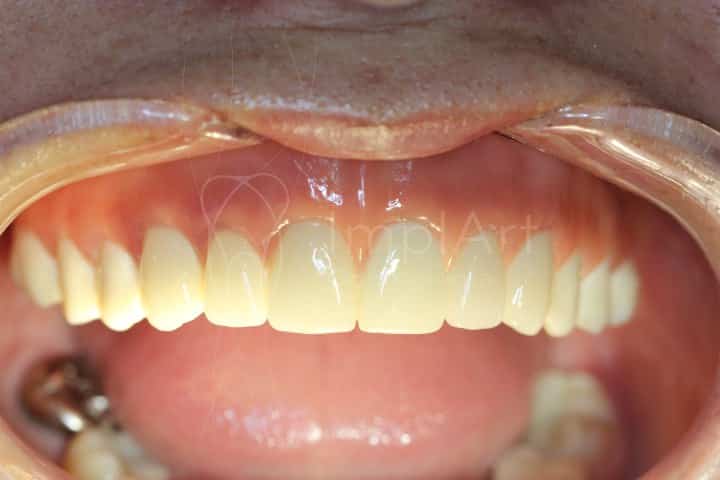
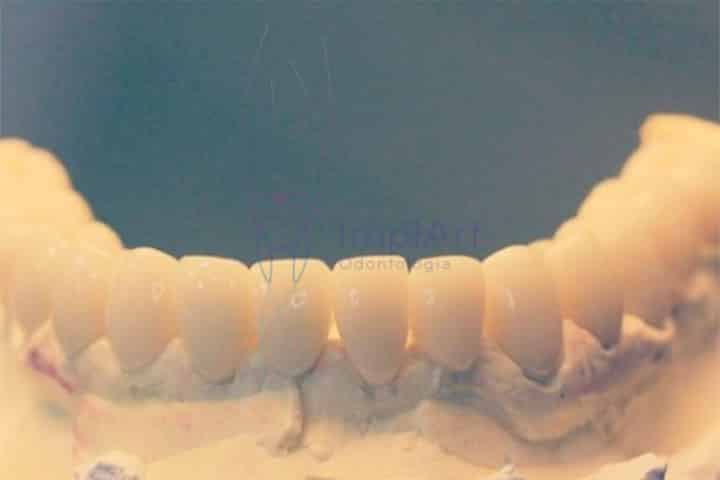
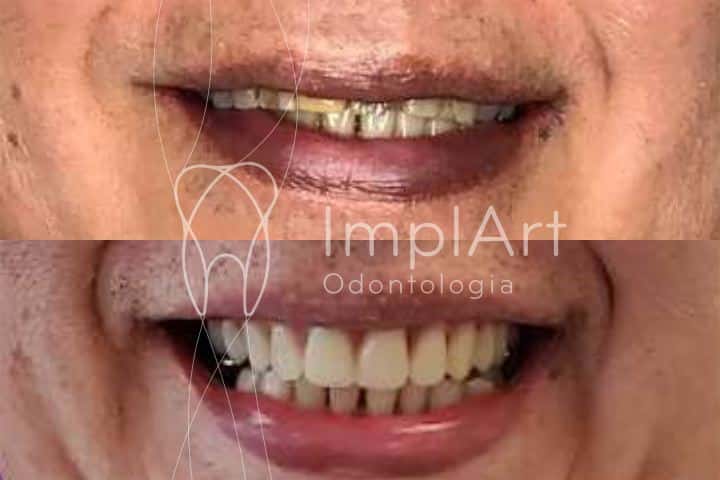
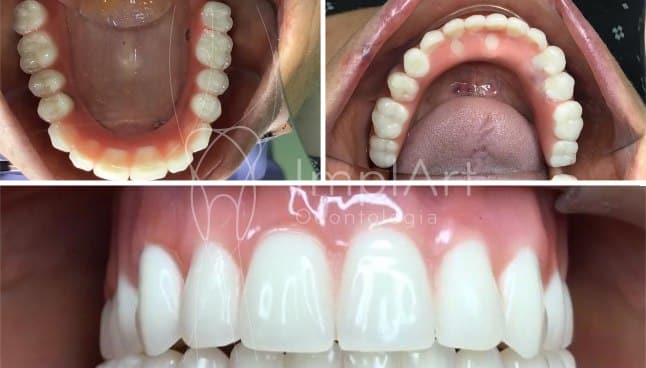
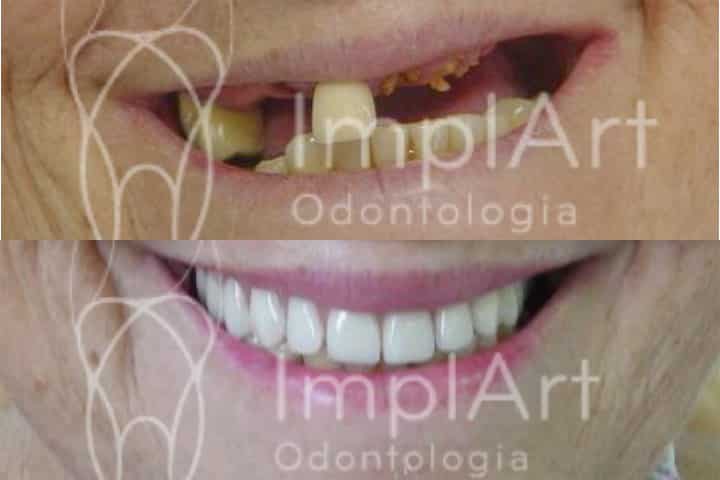
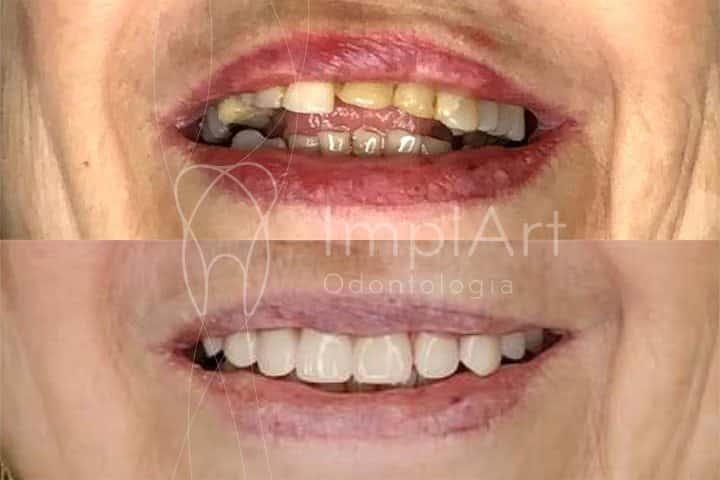
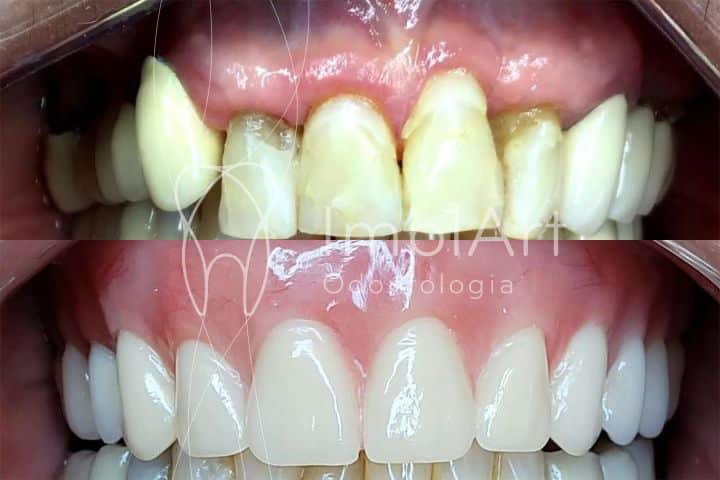
Porcelain dental prosthesis after removal of all teeth before and afterDental acrylic prosthesis intraoral aspect and free palateDental Implants for Dentures with immediate loading before and afterProsthetic dental bridge before and afterResin dental bridge before and after
Dental Implants for Dentures prosthesis and total implant with immediate loading
Nowadays, with the advances made in dentistry, in some cases it is possible to implant in 72 hours using immediate loading. First, four, five or six implants are installed, distributed over the entire arch. They are then left to rest (heal) for four months. After this period, the acrylic prosthesis is fixed onto the implants. For this treatment with immediate loading, there is a need for clinical indication, so that the success of the treatment is not compromised.
Do Dental Implants for Dentures last forever?
The longevity of a fixed bridges for dental implant can be influenced by several factors, including the patient’s oral hygiene and the type of prosthesis used.
The implant pin/screw, which is made of titanium and acts as the root of the tooth, has the potential to last a lifetime. This is due to its ability to integrate with the jaw bone, a process known as osseointegration.
However, the dental prosthesis, which is the artificial tooth placed over the implant, may need to be replaced over time, as they wear down with use and chewing, in the same way as natural teeth. Dental prostheses are generally made of acrylic, zirconia or porcelain, and their durability can vary. For example, a resin prosthesis can last up to 10 years, while a porcelain or zirconia fixed prosthesis (all on 4) can last up to 20 years.
It is important to note that the longevity of the dental implant can also be affected by the patient’s general oral health. Good oral hygiene and regular visits to the dentist for check-ups and maintenance are essential to maintain the health of the implant and prosthesis.
Conclusion
The Dental Implants for Dentures is made from a metal bar to which the resin teeth are fixed. With the Bränemark protocol, patients who have previously been ashamed of their smile due to dental problems and whose self-esteem has been affected can smile normally again, since their phonetic ability, chewing and swallowing improve and provide a better quality of life. If you have any questions, please contact us or book an appointment with our team.


 Agende sua consulta agora por WhatsApp