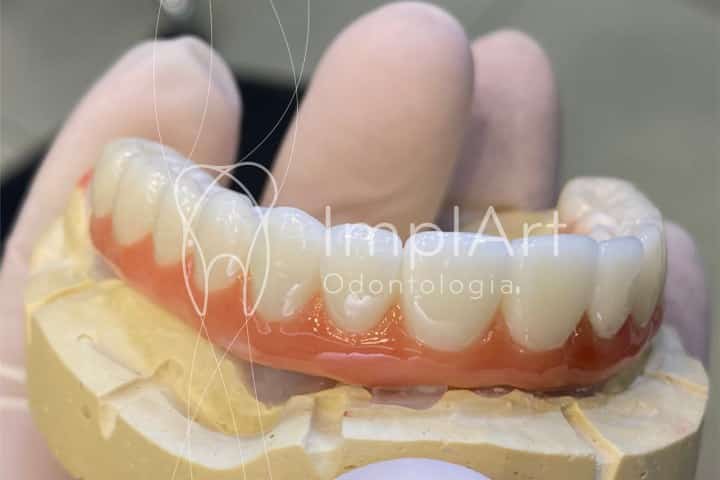
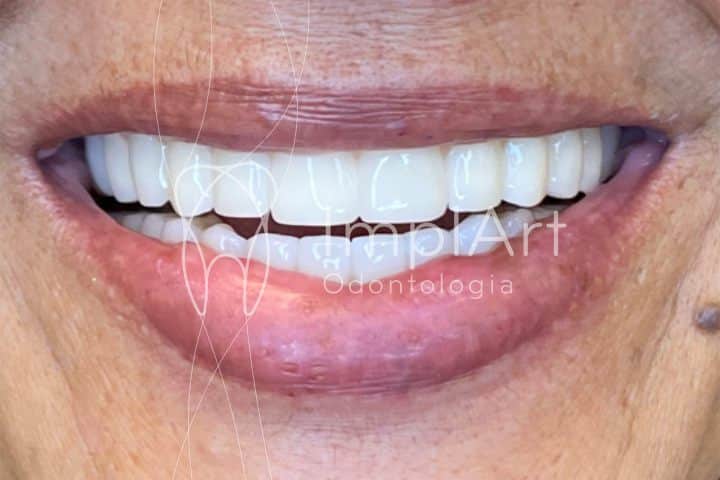
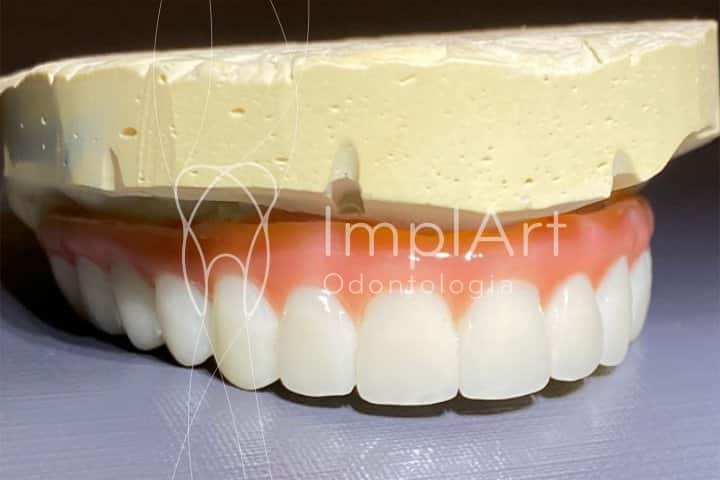
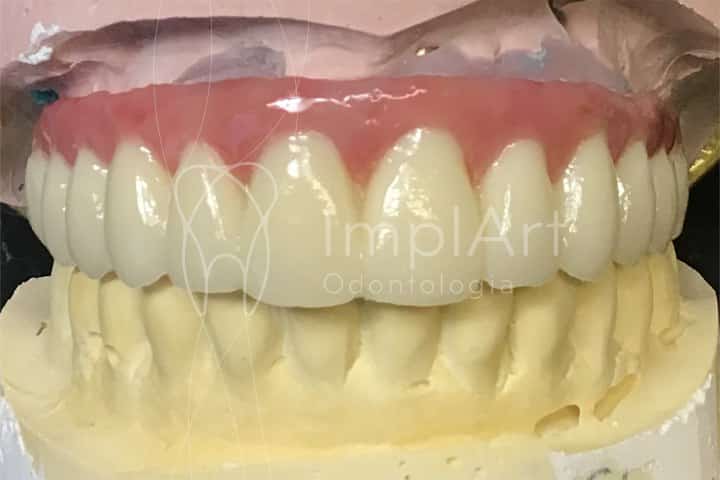
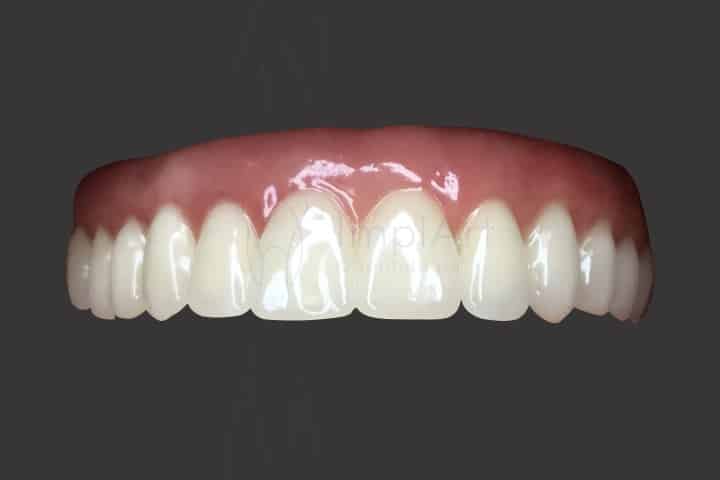
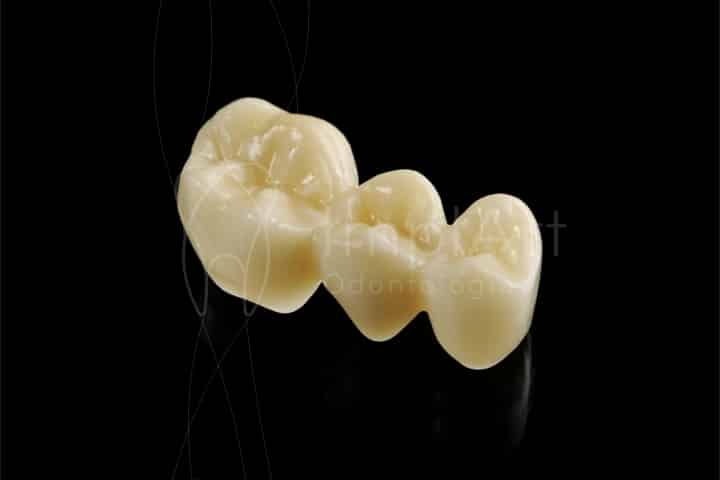
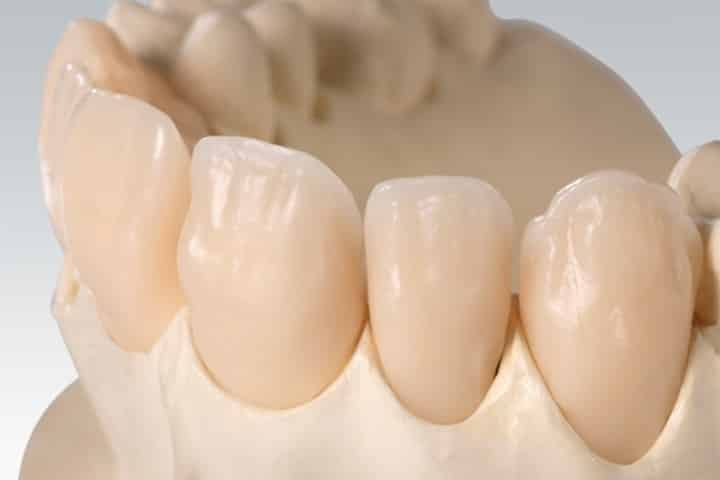
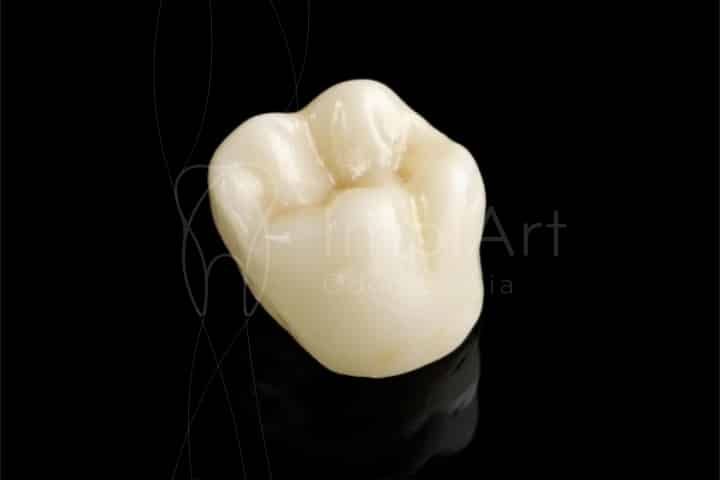
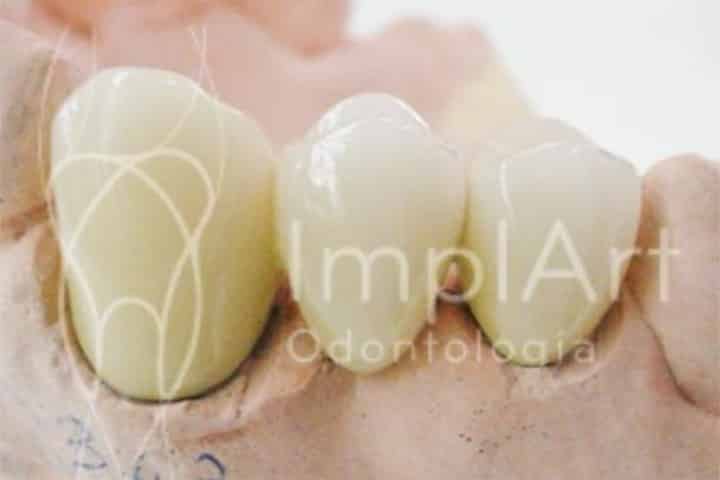
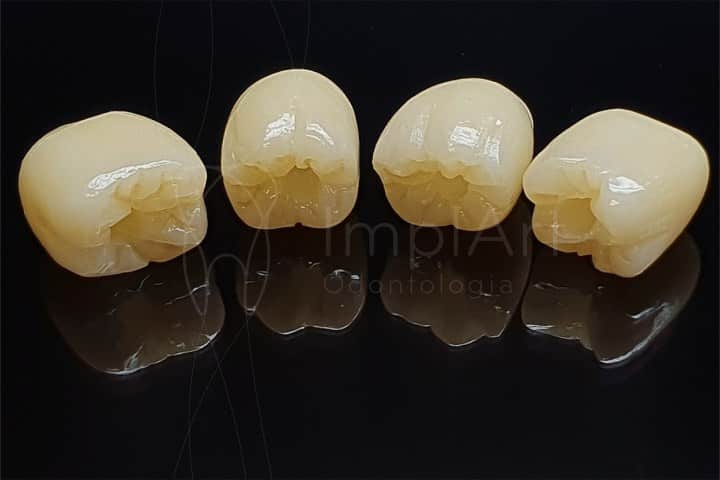
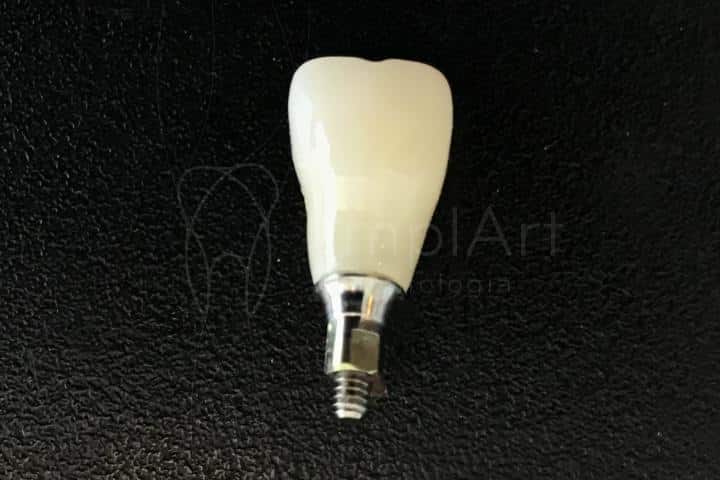
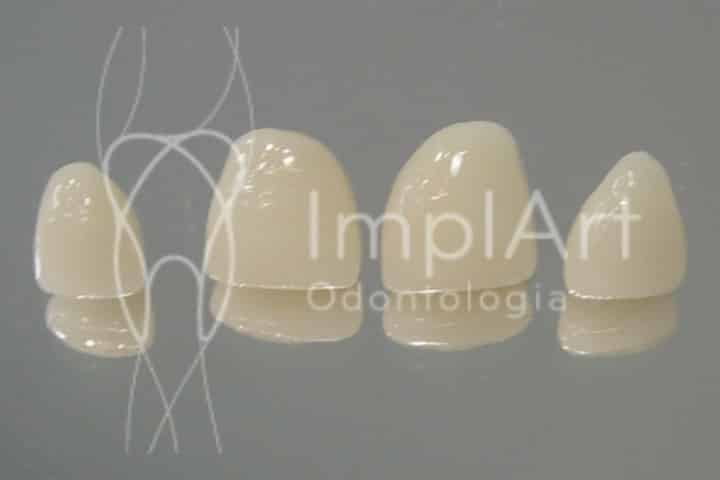
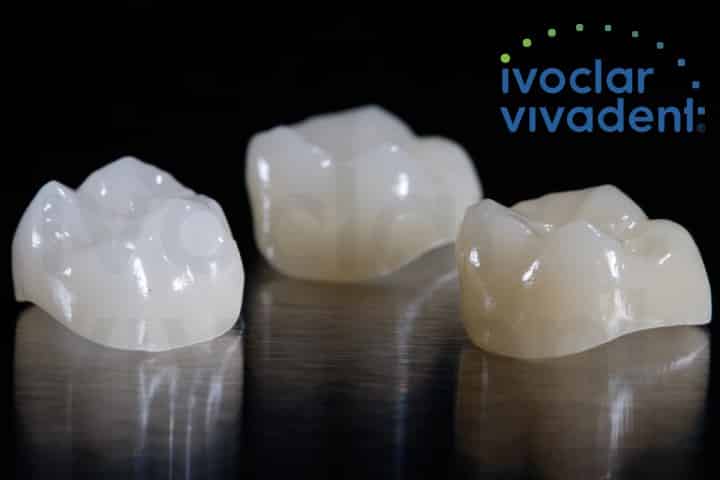
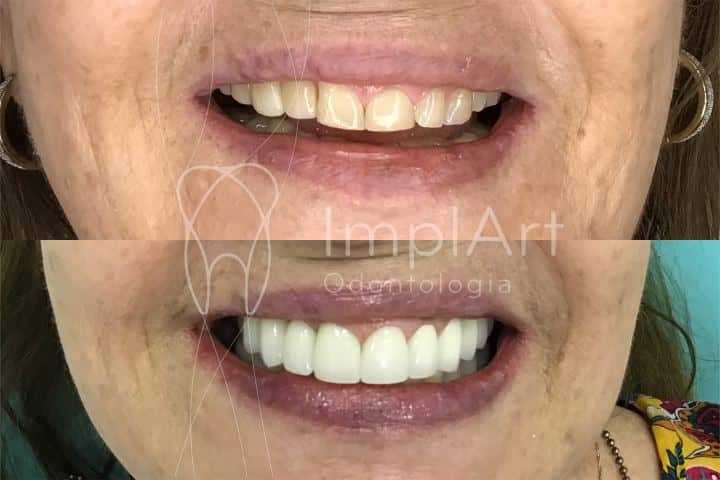
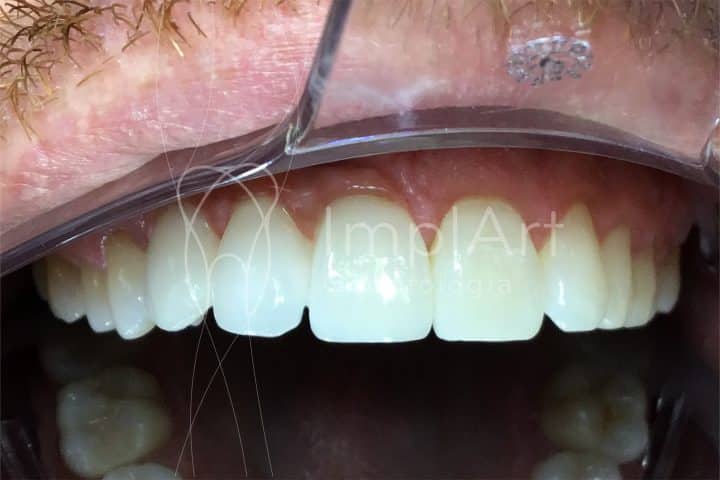
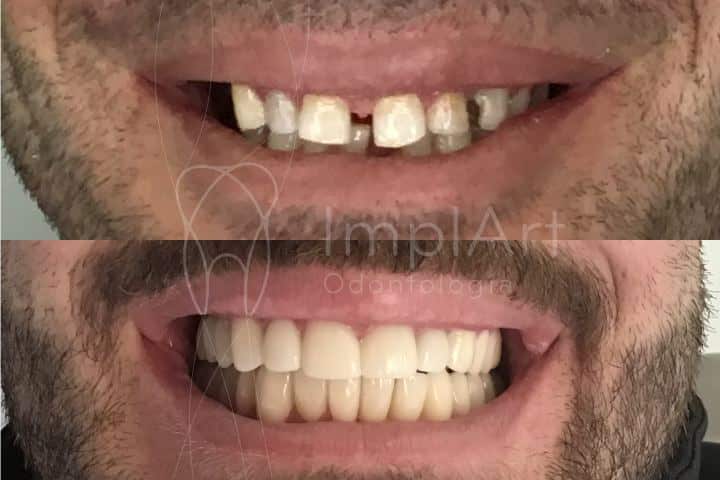
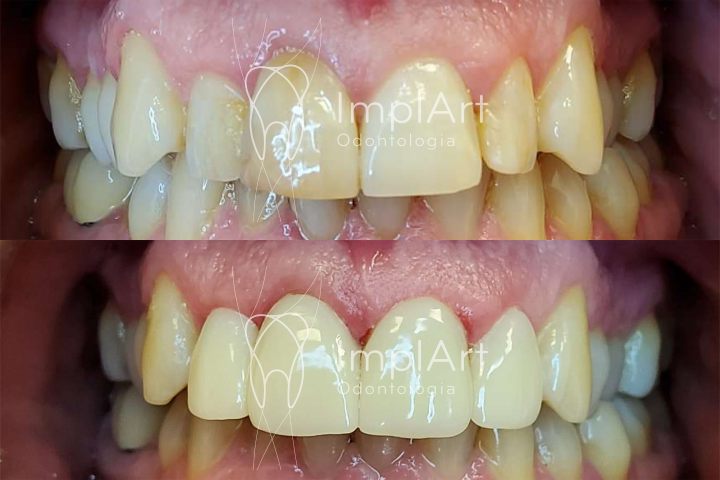
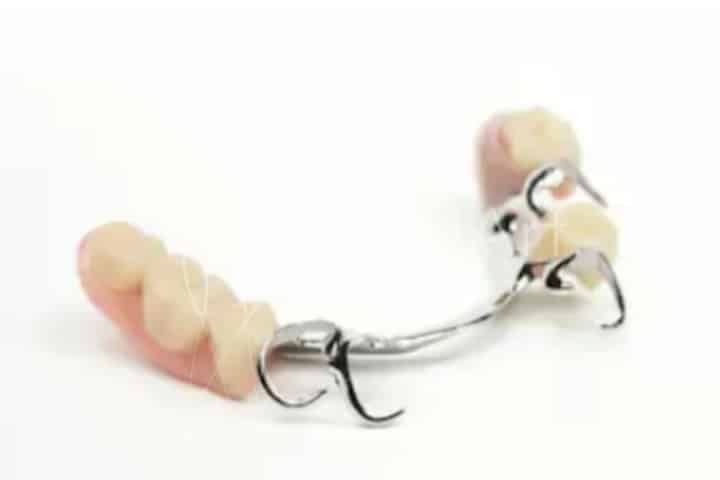
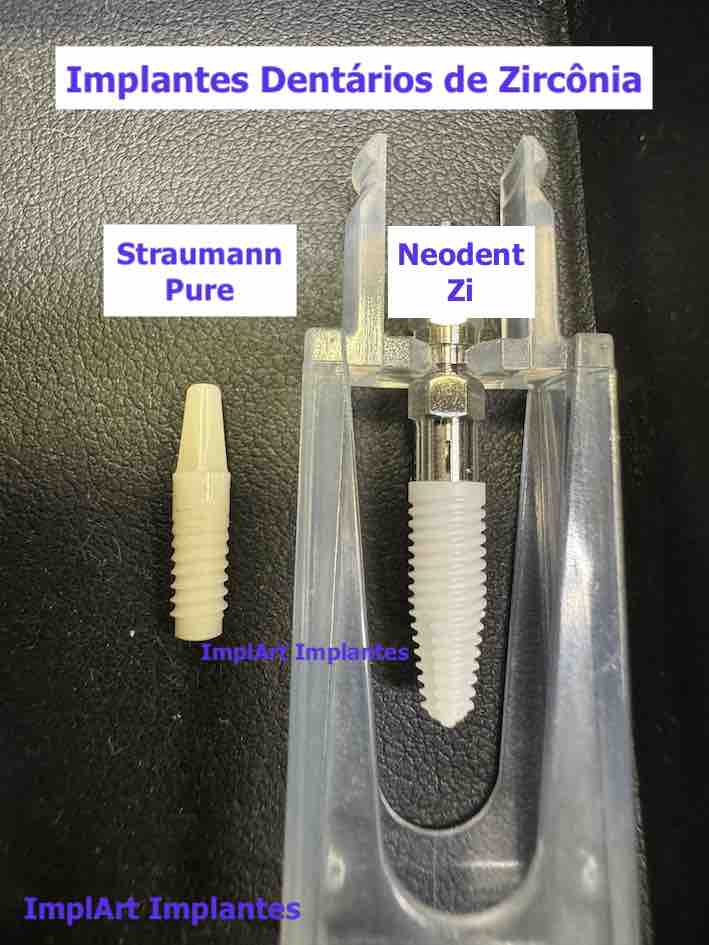
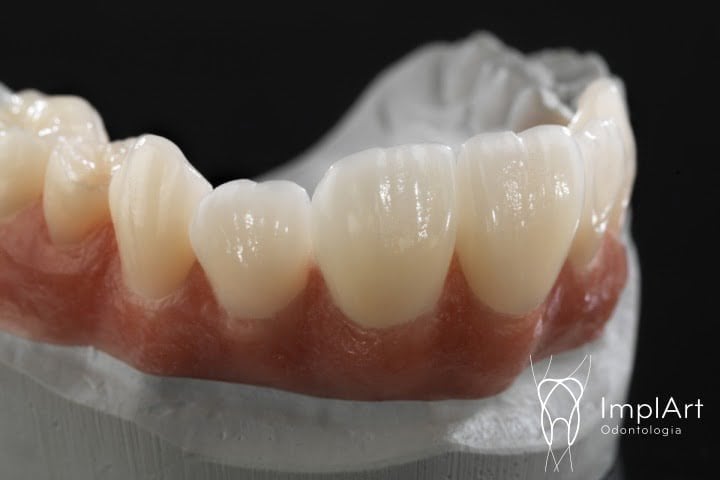
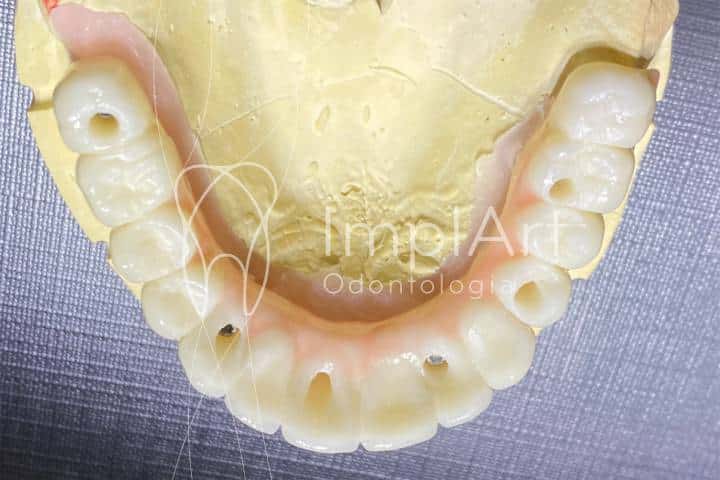
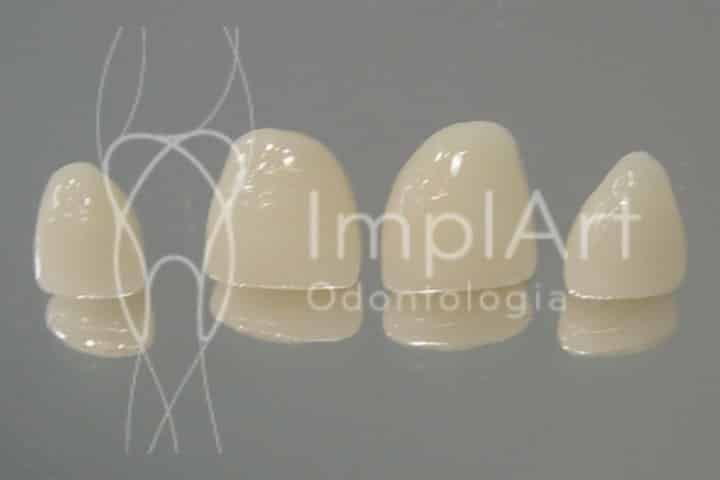
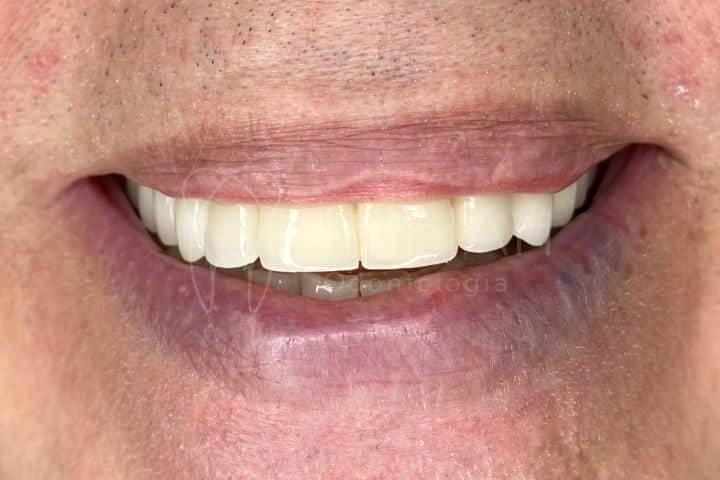
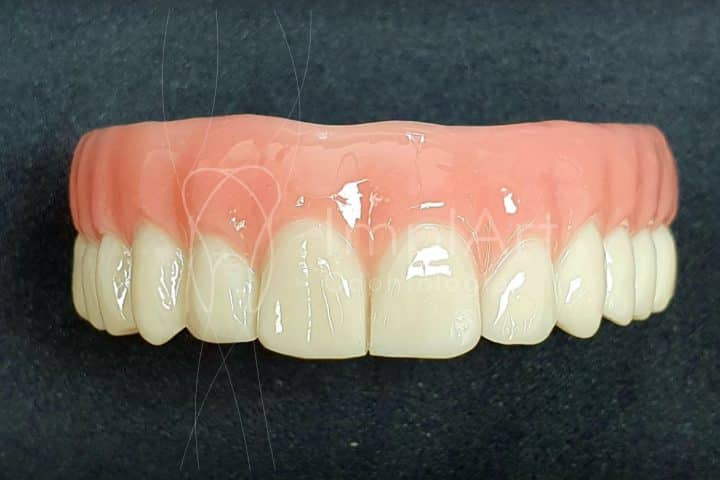
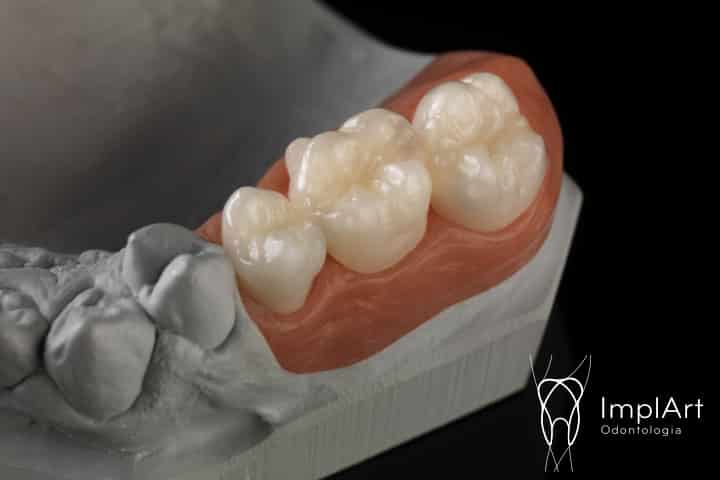
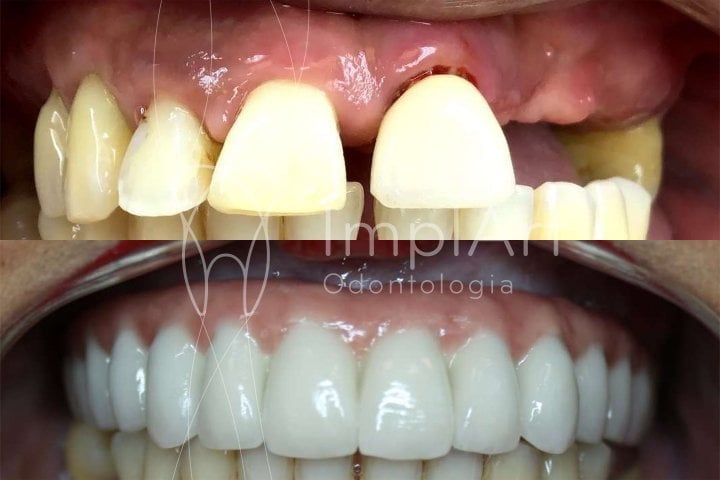
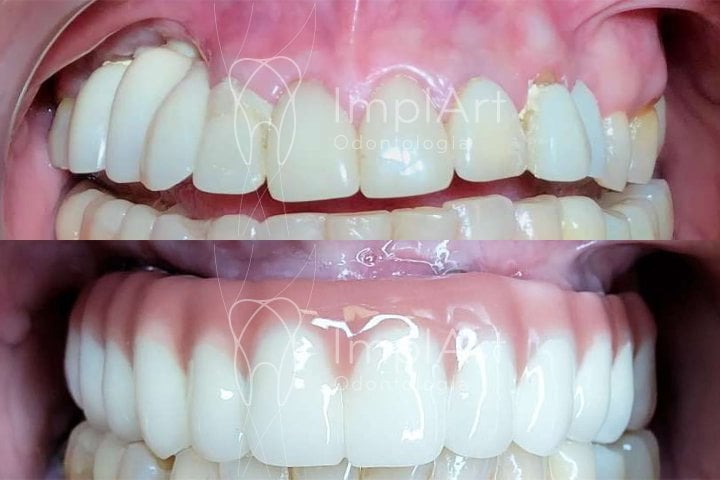
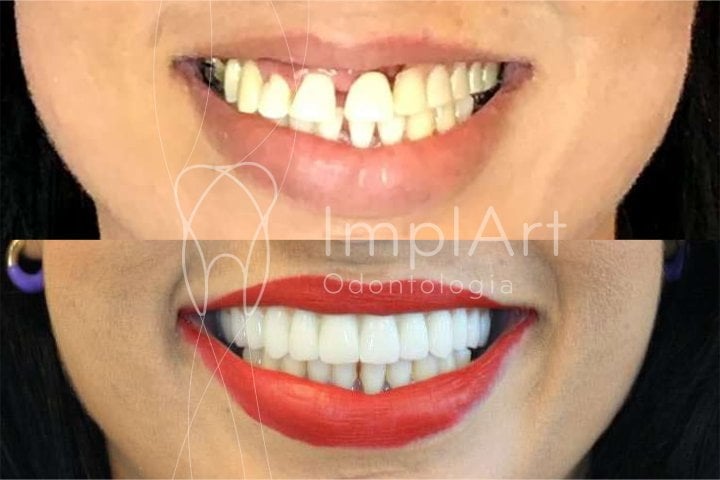
There are different materials that can be used to build a dental prosthesis, the main ones being: resin with a metal internal structure (metalloplastics/Branemark protocol), ceramic with a metal internal structure (metalloceramics) and the most aesthetic option which is ceramic with a metal-free dental zirconia internal structure (metal free).
Therefore, among the possible materials for dental prostheses, we have:
resin with an internal metal structure – this is known as metalloplastic or Branemark protocol,
ceramic with an internal metal structure – this is called metal-ceramic,
The most aesthetic option is ceramic with a metal-free dental zirconia structure, also known as metal free.
We can perform your zirconia bridge in Brazil
The evolution of aesthetic dentures
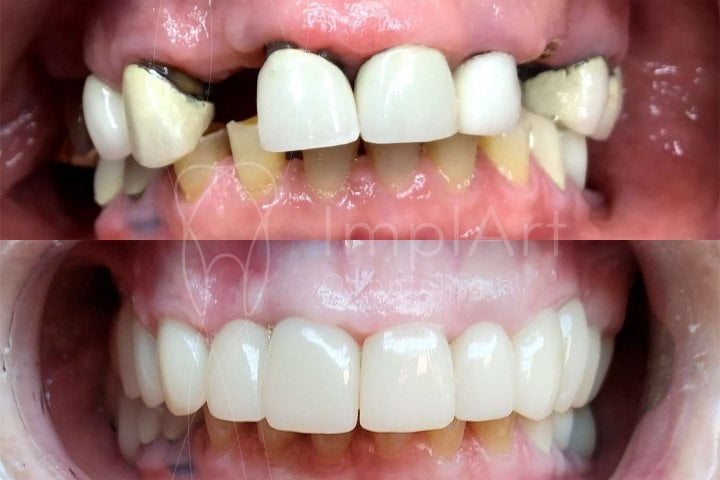
Most total or partial infrastructures are made with metal alloys that play the role of mechanical and functional support. However, their dark color can compromise the final aesthetics, especially in areas that are more apparent and important to patients.
As a result, metal-free ceramic structures are gaining ground, mainly because they achieve a more aesthetic result and because of their biocompatibility, resistance and stability.
Dental ceramics and zirconia are considered the most advanced materials because they do not contain metals in their composition, which provides an aesthetic dental prosthesis that is much more similar to natural teeth.
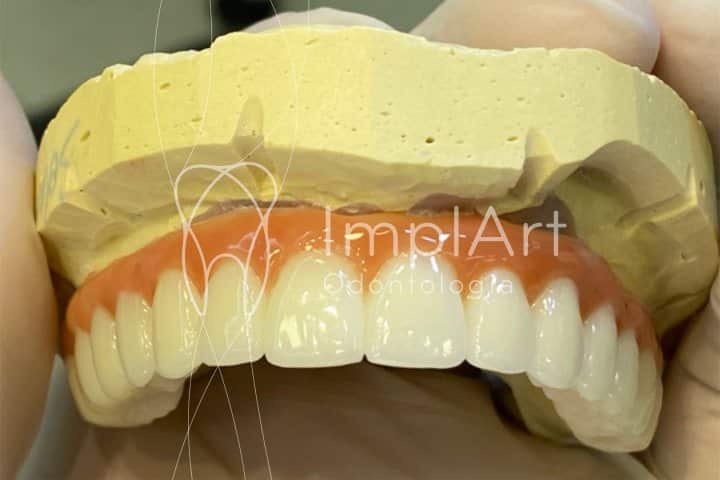
Zirconia teeth can be single, bridged or full-arch, installed on teeth or on dental implants.
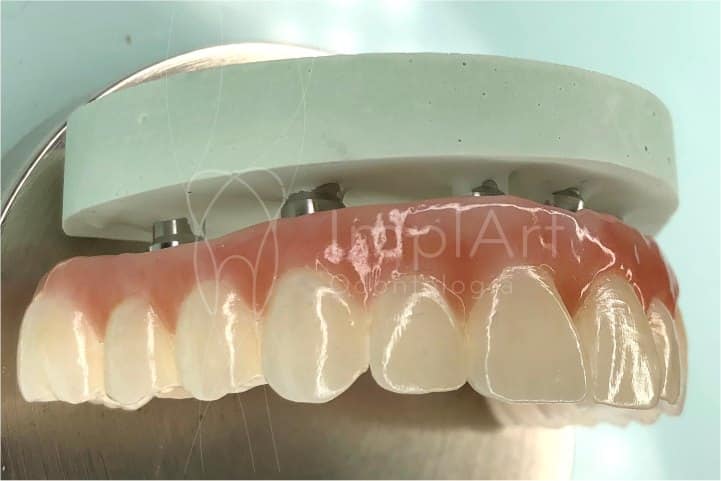
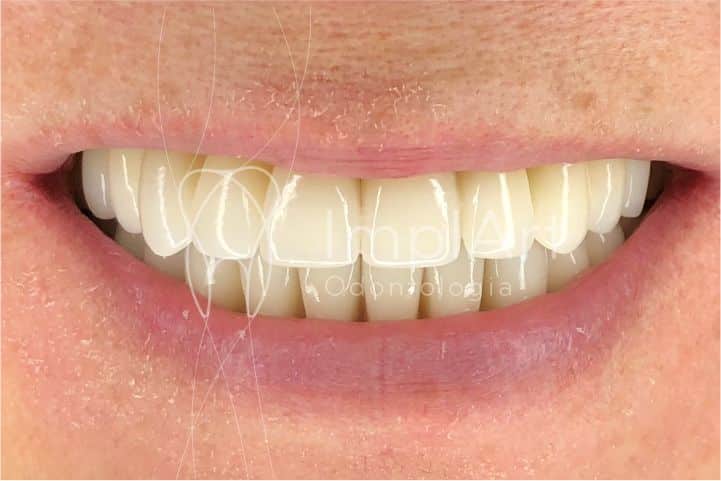
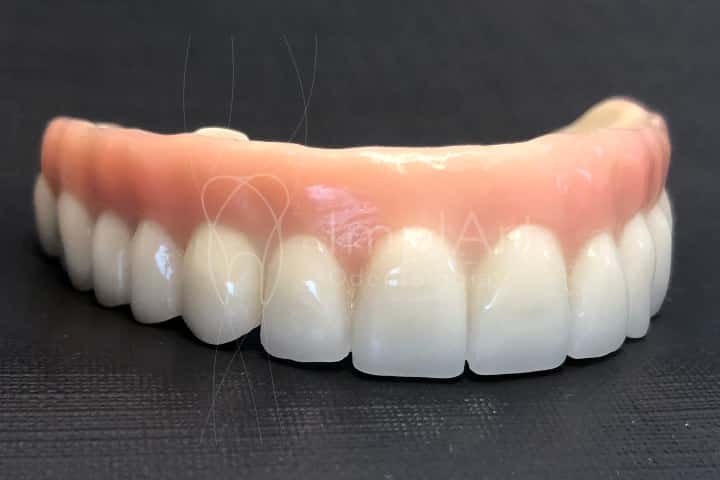
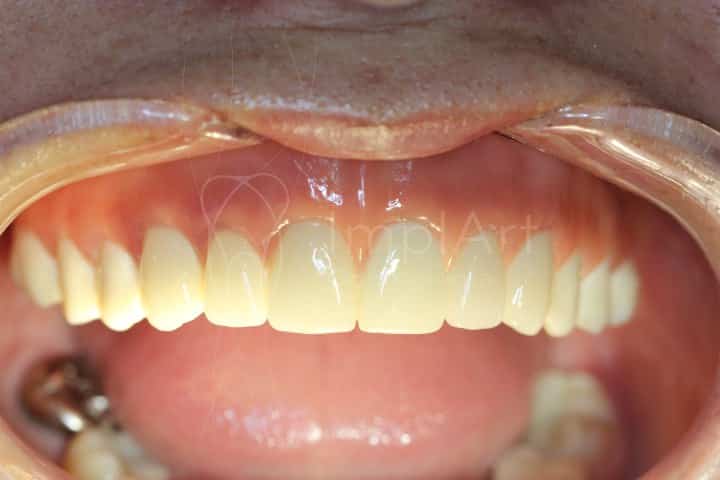
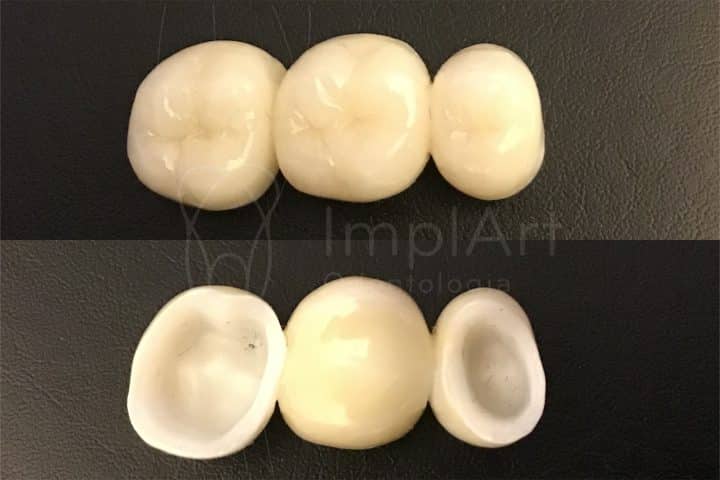
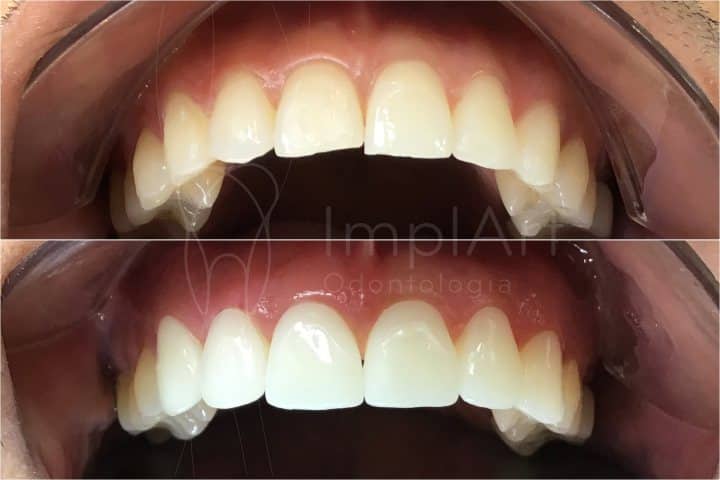
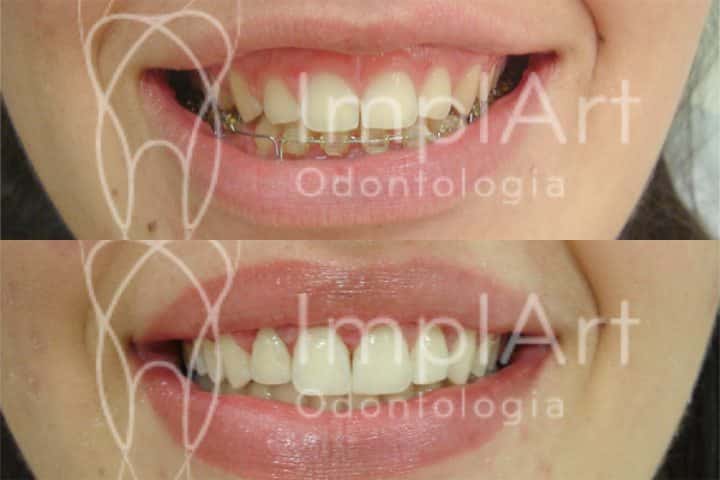
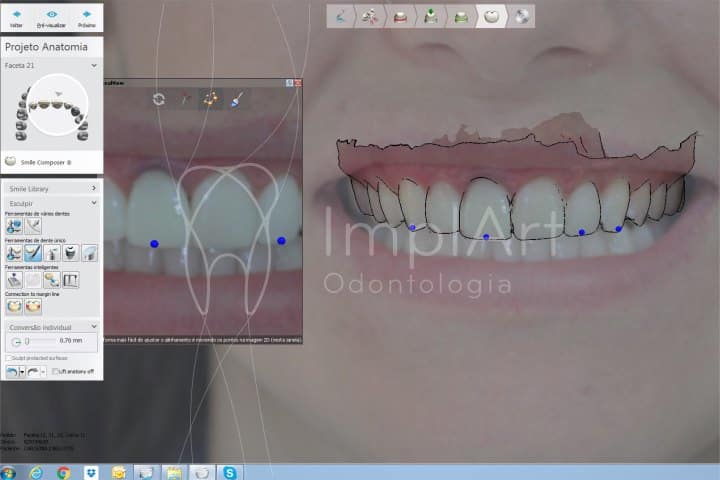
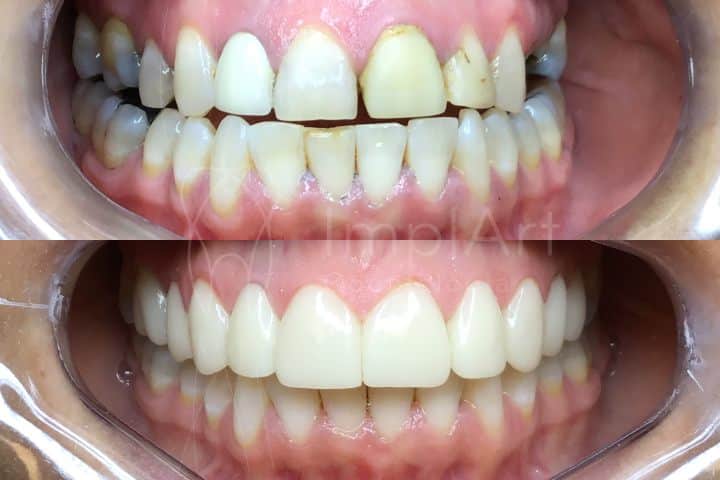
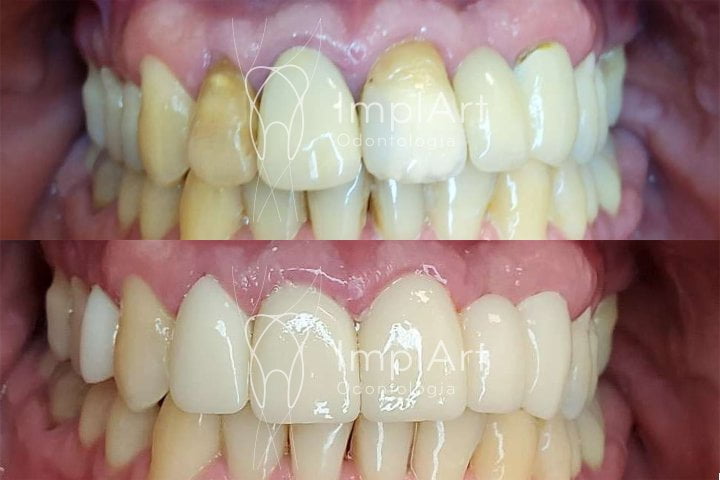
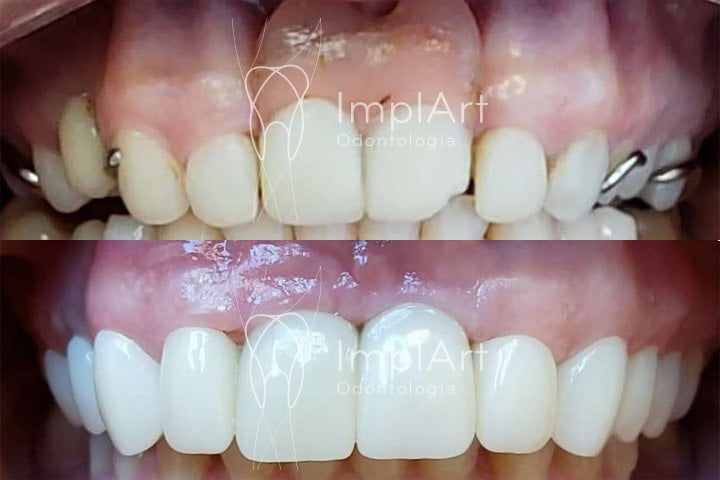
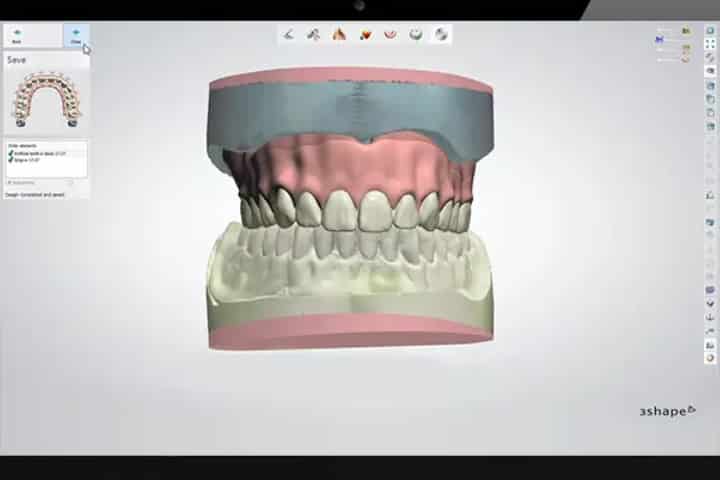
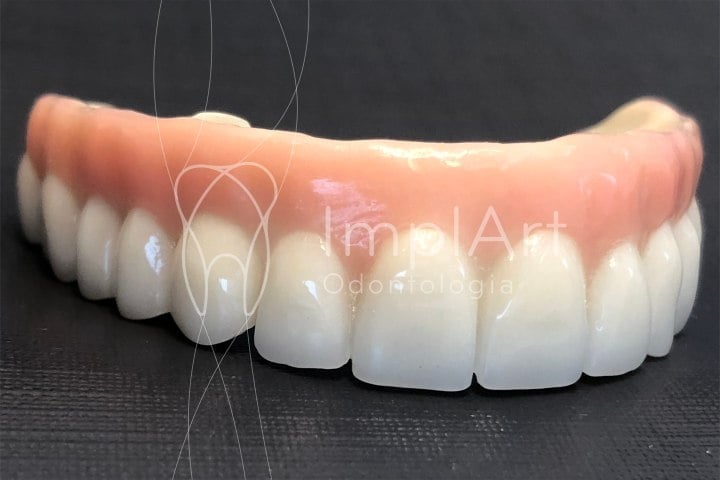
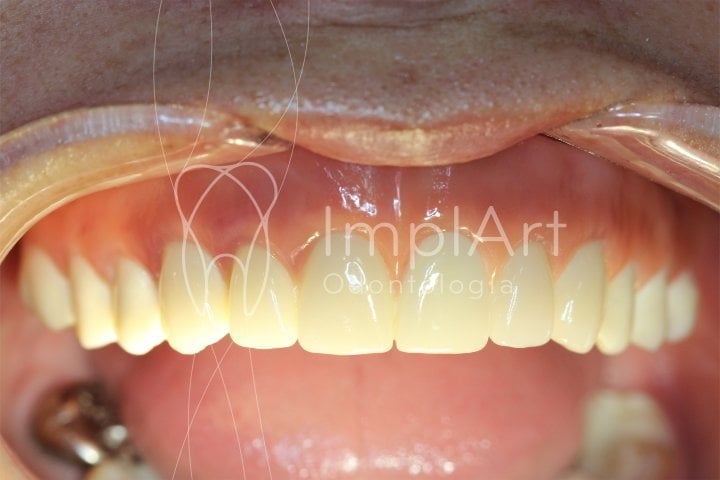
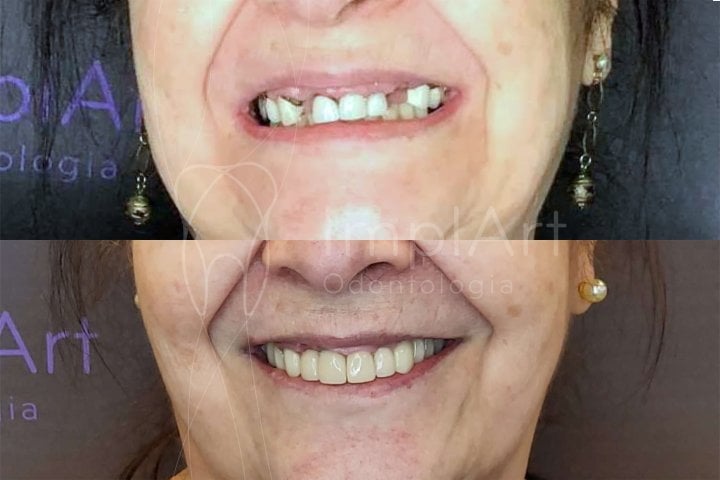
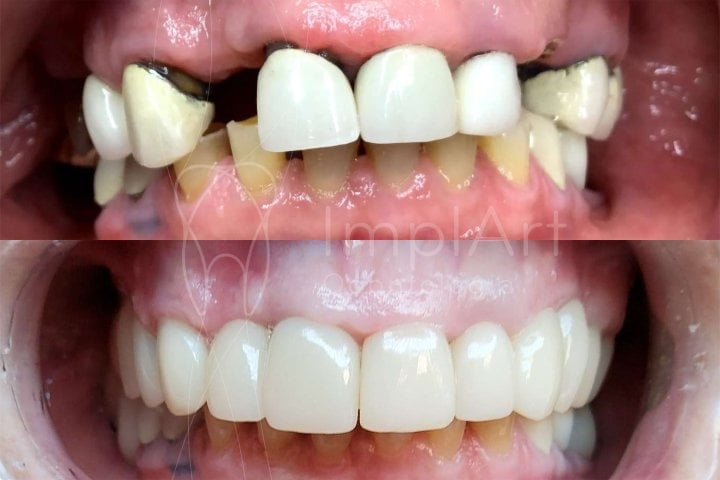
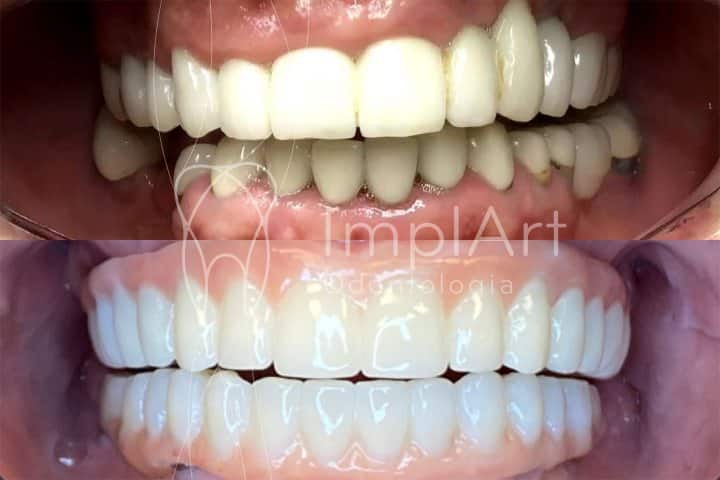
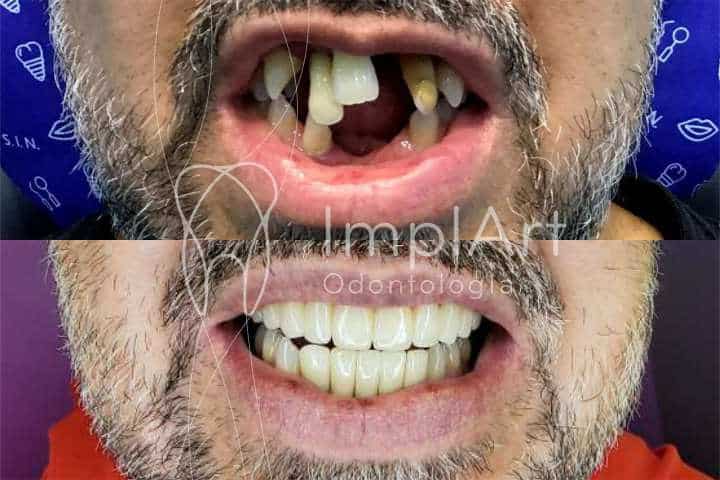
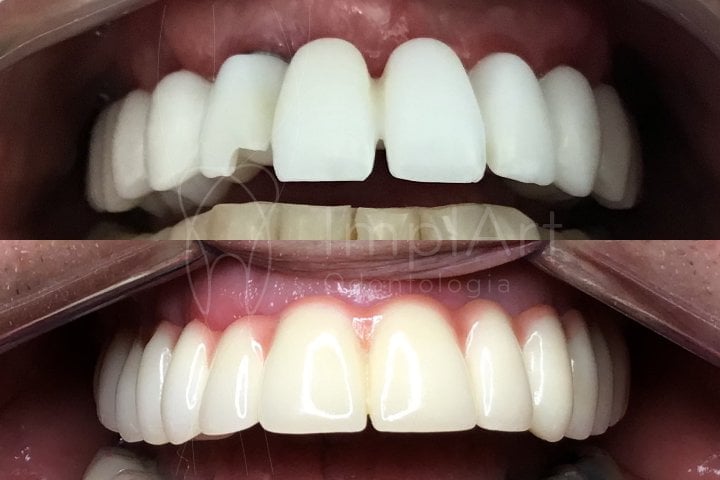
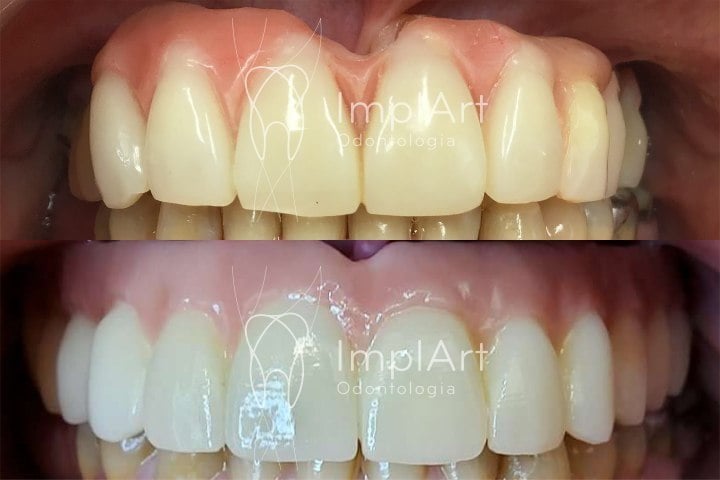
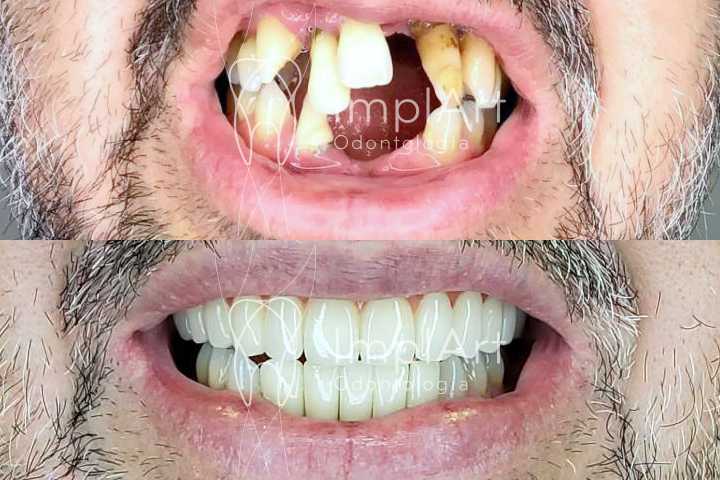
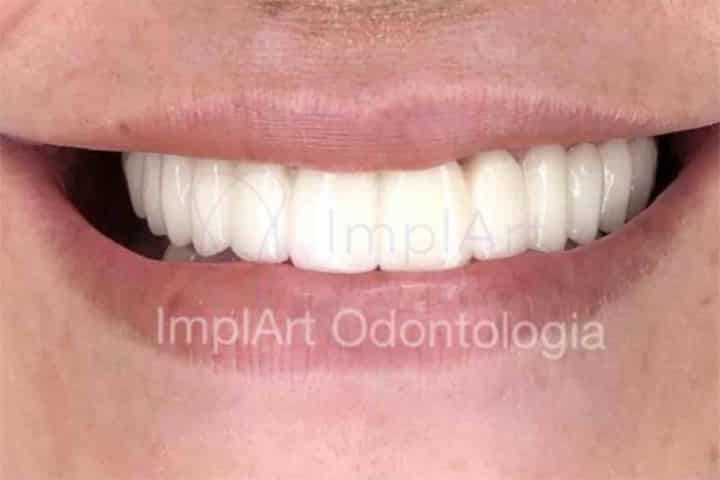
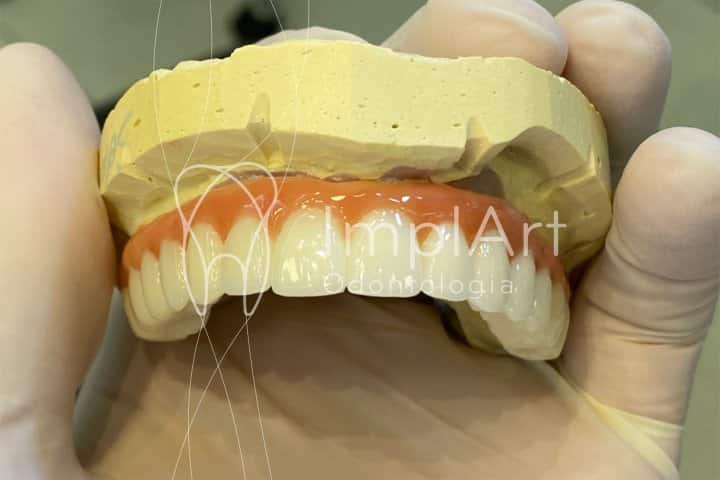
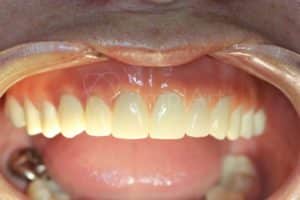
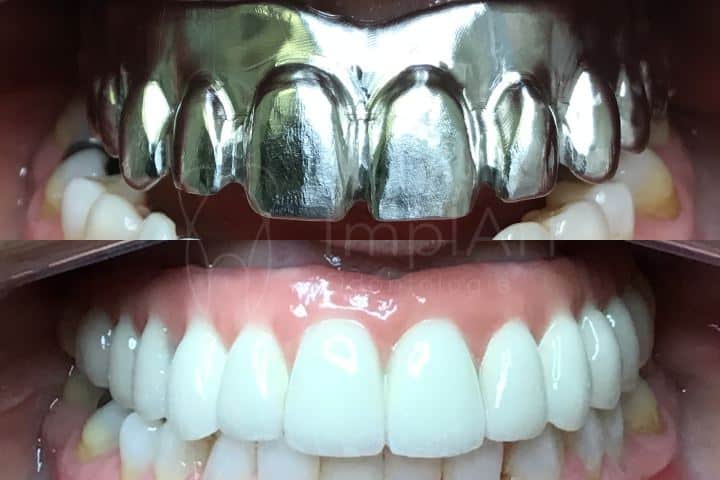
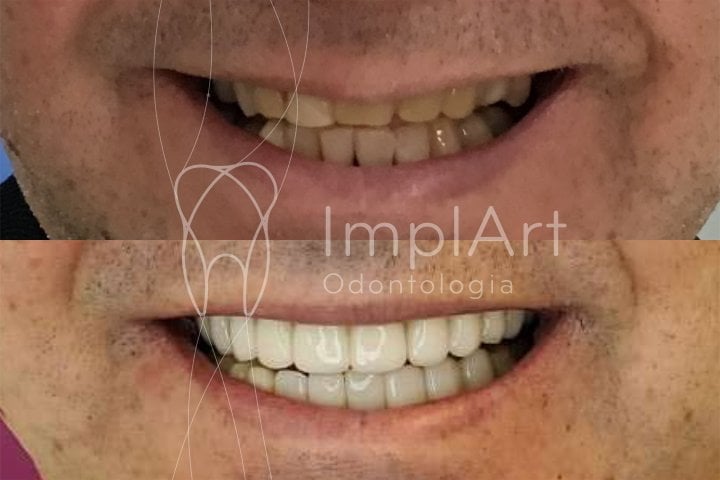
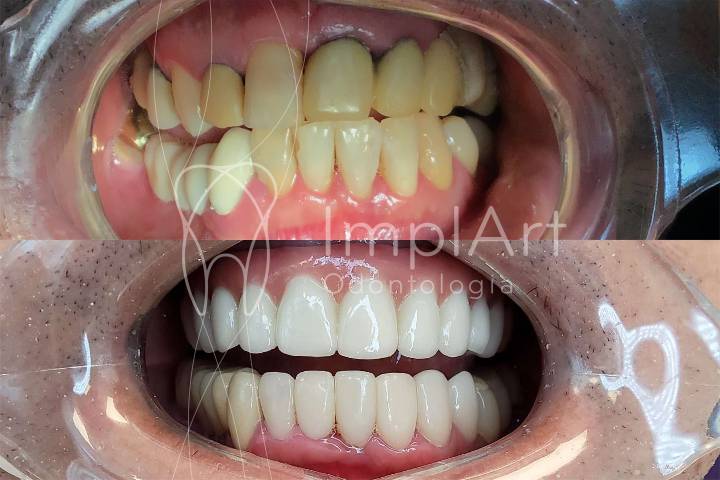
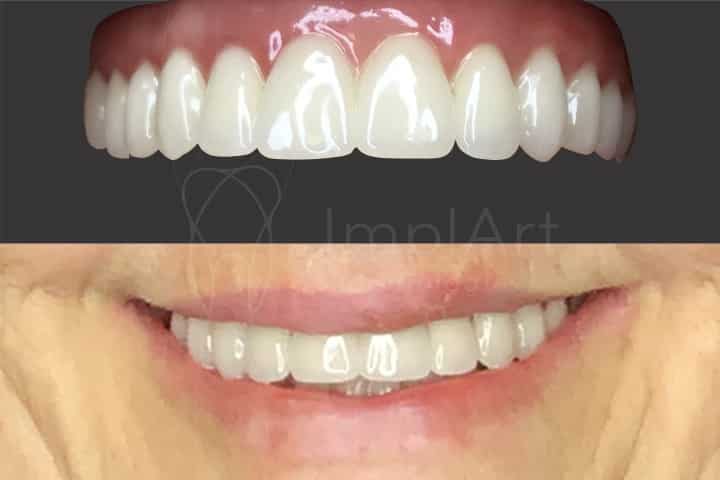
A zirconia dental prosthesis is made to perfectly mimic dental and gum tissues. Above, the zirconia prosthesis designed, and below, the prosthesis installed. Both the color and the shape were designed individually and jointly between the patient and the implant dentist.
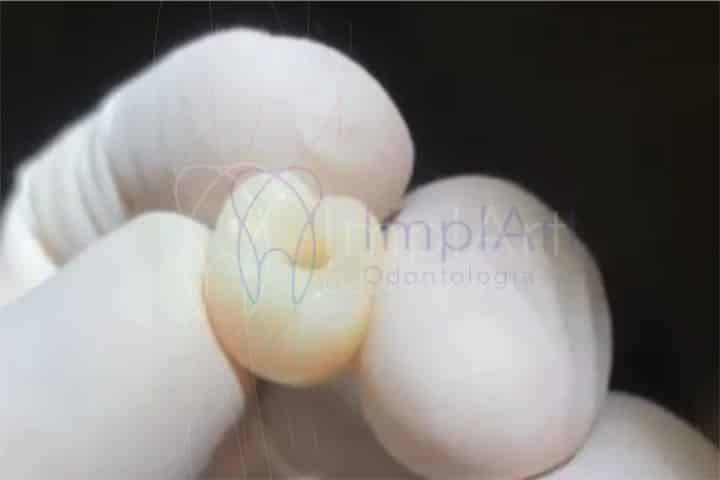
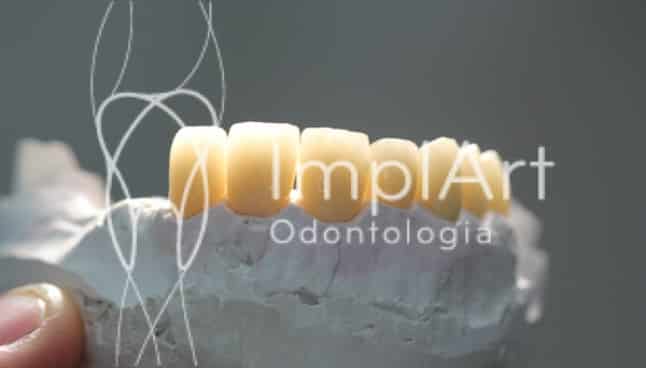
Dental zirconia is a white, resistant ceramic material used to build the structure of the prosthesis. A layer of porcelain is applied to this structure, which makes the prosthesis similar to natural teeth in terms of translucency, texture and shade.
As zirconia is white, the prosthesis has a similar shade and translucency to natural teeth, even when exposed to light.
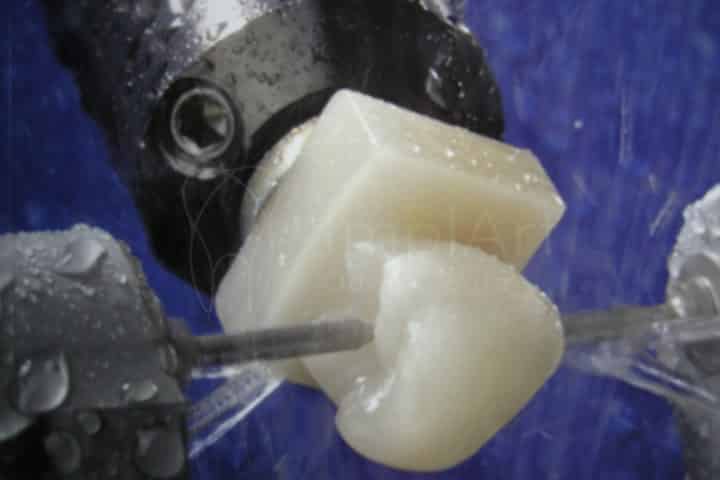
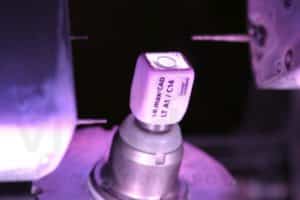
New types of more translucent dental zirconia allow for the complete fabrication of dental prostheses by computer, without the need to apply porcelain manually.
The shade of zirconia is comparable to natural human dentin. In contrast, the same result cannot be achieved with a prosthesis containing a metal framework.
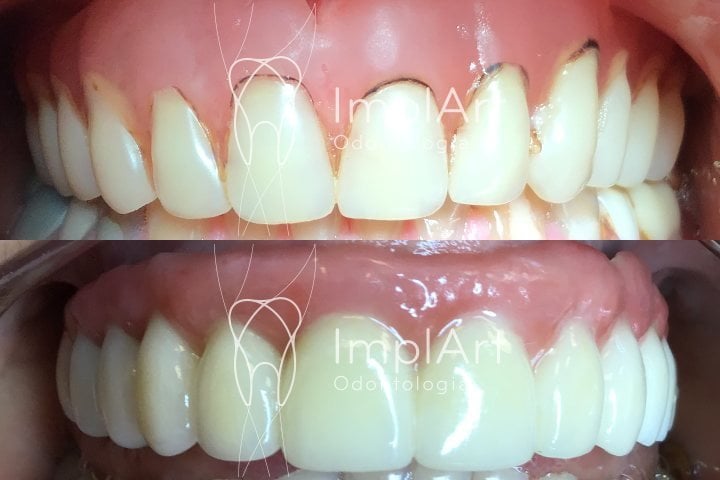
This is because bone and gum changes naturally occur over the years, and this remodeling can expose a small portion of the metal of the prosthesis and thus cause aesthetic damage to the smile.
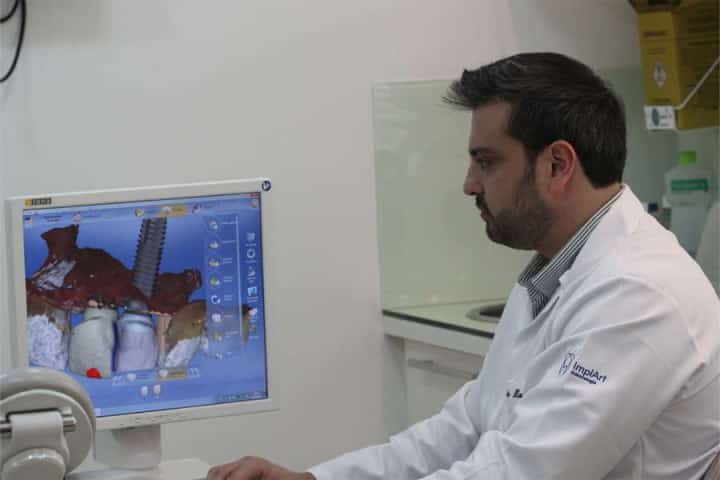
Another advantage of zirconia is that prostheses made from this material are completely computer-engineered and executed on 3D printers using Cad/Cam systems. This allows prostheses to be made more quickly and accurately.
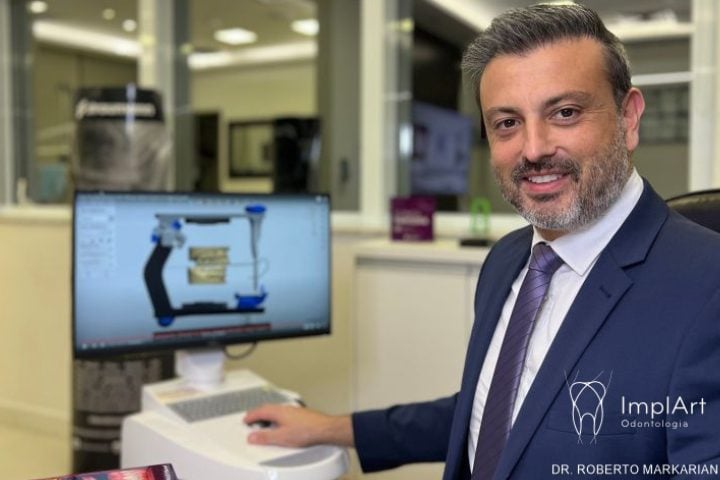
For your convenience, ImplArt Odontologia has its own digital prost hesis laboratory that develops dental zirconia prostheses. Make an appointment and find out if this technique is right for you. We would be delighted to hear from you!
See below for photos of implant treatments and fixed porcelain and zirconia dental prostheses:
Dental zirconia: better aesthetics for dental prosthesesDental zirconia: better aesthetics for dental prosthesesDental zirconia: better aesthetics for dental prosthesesDental zirconia: better aesthetics for dental prosthesesDental zirconia: better aesthetics for dental prosthesesDental zirconia: better aesthetics for dental prosthesesDental zirconia: better aesthetics for dental prosthesesDental zirconia: better aesthetics for dental prosthesesDental zirconia: better aesthetics for dental prostheses
The Implart clinic offers dental implant services and porcelain crowns for them. Implants are performed to replace lost teeth or teeth that cannot be maintained. Porcelain crowns are prostheses that we recommend to restore damaged teeth, such as advanced caries or teeth broken due to accidents. They are also indicated in cases of tooth mobility caused by periodontal disease, when extraction is necessary.
Content of this article
Porcelain crowns - Day ClinicPorcelain crowns - Day ClinicPorcelain crowns - Day ClinicPorcelain crowns - Day ClinicPorcelain crowns - Day ClinicPorcelain crowns - Day ClinicPorcelain crowns - Day ClinicPorcelain crowns - Day ClinicPorcelain crowns - Day Clinic
The application of the crown on tooth in short is recommended when the root of the tooth can still be maintained and the application of the crown on implant is when the tooth is completely lost, i.e. the tooth root is also extracted must be replaced by a titanium dental implant pin.
The porcelain crown is currently the material with the closest visual and physical characteristics to a natural tooth. ImplArt only works with high-performance porcelain so that the prosthetic crown looks almost indistinguishable from the neighboring teeth.
The porcelain crown can be made with internal metal reinforcement (usually recommended for posterior teeth) or with metal-free white zirconia reinforcement (recommended for anterior teeth due to the aesthetic needs of the smile).
What is the difference between a porcelain crown and a dental contact lens?
Reconstruction and protection of teeth that have undergone root canal treatment
Because they are made from state-of-the-art porcelain, the crowns are highly aesthetic, resistant and durable.
How is the Day Clinic procedure done?
ImplArt Odontologia has a structure that allows several dental procedures to be carried out intensively at the Day Clinic, including the placement of porcelain crowns. The structure is made up of computerized systems that speed up the design and manufacture of prostheses, a dental laboratory within the clinic, as well as a multi-specialized team to carry out a complete treatment, from diagnosis to completion.
Porcelain crowns are a procedure carried out by ImplArt Odontologia. Porcelain crowns are fixed prostheses used to replace lost or damaged teeth. These crowns can be placed over natural teeth or dental implants. ImplArt offers the service of placing porcelain crowns at the Day Clinic – Dental Spa, with convenience and agility. These porcelain crowns provide patients with aesthetics and functionality.
The computerized design of the porcelain dental crown is made according to a digital molding of the teeth obtained through a scan of the teeth. This makes it possible to design pieces that are completely customized to each patient’s needs. The crown is made by 3D tooth printers.
Dentistry or aesthetic dentistry is the area of dentistry that works to restore dental aesthetics. In short, the resources available to improve the aesthetics of the smile include tooth whitening, dental crowns, resin or porcelain restorations, gum surgery (gingivectomy), and the application of modern dental contact lenses.
Contents
A more beautiful, white and harmonious smile is possible thanks to dental contact lenses and other aesthetic resources
Or even after wearing braces, when you want to improve some aspects of your smile, because during treatment you can’t change the aesthetics of your teeth.Modern dental contact lenses are ultra-thin porcelain veneers, suitable for correcting aesthetic problems with the teeth, for example:
Dental contact lenses are bonded to the surface of one or more defective teeth in a safe and non-invasive way. Because the lenses are ultra-thin, installation requires little or no wear on the teeth before they can be bonded.
The lenses are made from porcelain, the best bio-safe material used to make dental prostheses, which is similar to natural teeth in terms of its texture and shade, as well as its translucency.
This way, if the dental contact lens is applied to just one defective tooth, it won’t contrast with the neighboring natural teeth. It is certainly an aesthetic procedure that has come to completely change your smile for the better.At ImplArt, the lenses are designed and made by better computerized systems and 3D printers.
In conclusion, the last stage of the procedure is the preparation of the tooth, the application of dental cement and the bonding of the dental contact lens. Dental contact lenses are very durable, as long as the patient takes care not to bite down on hard objects and makes regular visits to the dental practice. Alternatively, veneers can be made from resin with a lower finish.
Dental contact lenses can improve the aesthetics of front teeth
Porcelain dental crowns for aesthetic purposes
Dental crowns and porcelain blocks can be made in cases of tooth damage such as broken teeth. It is very common for patients with bruxism to need cosmetic treatments as they can lose part of their enamel or even entire teeth due to the force applied to their teeth.
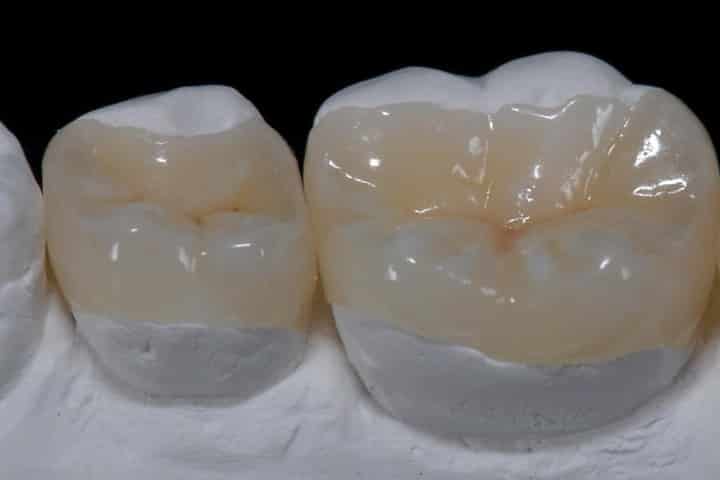
An aesthetic composite resin restoration is a dental aesthetic procedure in which a resin composite material is used to repair or rebuild the structure of an aesthetically compromised tooth.
This technique is often used to correct cavities, fractures or discolorations in order to restore the shape, function and natural appearance of teeth.
During the process, the dentist removes the damaged part of the tooth, prepares the affected area and applies layers of composite resin, carefully shaping them to ensure a perfect fit with the dental anatomy.
The resin is then hardened with special ultraviolet light.
The advantage of composite resin lies in its ability to mimic the color and texture of adjacent teeth, providing an aesthetic and long-lasting end result while preserving the structural integrity of the restored tooth.
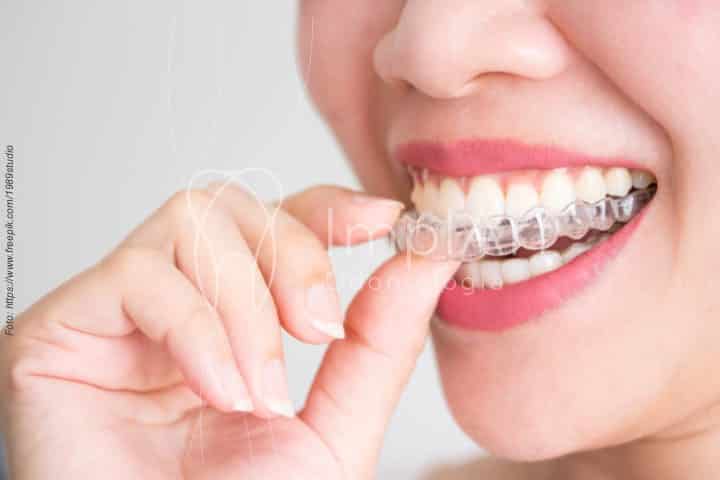
Discover more discreet and transparent orthodontic braces to move your teeth without having pieces glued to your teeth.
Dental aesthetics and smile harmony
ImplArt Odontologia has a team specialized in carrying out aesthetic dental treatments, especially the application of dental contact lenses, including model treatments. What’s more, thanks to its own prosthetic laboratory, the best design and manufacture of dental contact lenses can be carried out very quickly, without intermediaries.
The three-dimensional design of the lenses is personalized for each patient, so that the patient can better participate in the process of choosing the shape and shade together with our team.
If you have any questions about the prices of cosmetic dental and gum treatments, as well as planning, please contact our team or come and visit us. We’ll be happy to help you!
The metal-free porcelain crown provides aesthetics combined with strength and durability
What is a porcelain crown?
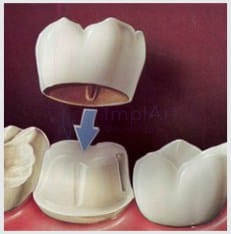
A porcelain crown is an artificial tooth – a dental prosthesis – that resembles in form and function a natural tooth that has been damaged. Porcelain crowns can also be grouped together to make fixed bridges or fixed porcelain prostheses. Here at the ImplArt Dental Clinic in Brazil, we make metal-free crowns using completely computerized systems. We therefore offer our patients the most modern systems and the most advanced results.
What is dental porcelain?
Porcelain is a material that resembles glass and is used to reconstruct teeth. It has a natural color and high resistance. It is also called dental ceramic.
Types and materials of porcelain crowns
In short, there are different types of materials used to make porcelain crowns: the older materials use metal and the more modern ones are metal-free. Porcelain crowns with metal internal structures are called metal-ceramic and crowns with a white structure such as zirconia are called metal-free.
There are also crowns that do not use internal structures and are made using computerized methods. In addition, covering a destroyed natural tooth with a ceramic crown is essential for oral health, as it will restore the patient’s chewing ability and even allow them to eat hard foods.
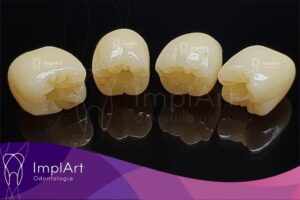
The advantage of the metal-free porcelain crown is that it is more aesthetic, since pure porcelain is a white material. As a result, the structure is not visible inside the crown even in brightly lit environments. The new generations of porcelain crowns are made using cad/cam methods according to computerized designs and don’t even require layers of internal reinforcement like metal and zirconia. They are made from a single (monolithic) material. These are digital, metal-free porcelain crowns whose main advantages are aesthetics and speed of production.
Another innovative material for making a new porcelain crown is translucent zirconia, a material that is up to 10 x stronger than ordinary porcelain crowns. For this reason, they are highly recommended for the oral rehabilitation of back teeth and in patients with bruxism. Oral rehabilitation with crowns can be carried out on implants, on roots with root canal treatment and on natural teeth without root canal treatment.
Fitting dental crowns requires preparation (tooth wear) so that the crown fits correctly. The main digital technique we use is Cerec 3D, an intraoral molding system with scanners and robotic tooth production.
Before a permanent prosthesis is made, we will make a temporary prosthesis so that you don’t lose your tooth. After the rehabilitation treatment, you will be able to lead a normal life, eat hard food and clean your teeth every day with a toothbrush and dental floss. The ImplArt Clinic specializes in dental prostheses and can offer you a porcelain crown with state-of-the-art technology.
Porcelain crown: advantages and indications
Porcelain crowns are fixed dental prostheses that mimic the shape and appearance of natural teeth. When a tooth is badly damaged, it may be necessary to have root canal treatment and a porcelain crown. By Dr. Roberto Markarian, graduated dentist and specialist in dental prostheses and dental implants in São Paulo, Brazil.
What is dental porcelain?
Choosing the ideal dental prosthesis can lead to confusion when faced with a number of options. Fixed dental prostheses must meet both functional and aesthetic needs. These are the main objectives that determine the choice of the ideal material. Before choosing the material, it is first necessary to understand the differences between the types of porcelain dental crowns. The main one is the reinforcement technique, which is the part required for masticatory efforts. Understand the differences better:
Metal-ceramic crown
The porcelain dental crown is built on a metal structure. It is durable and aesthetic, and can be used on both anterior and posterior teeth. However, in some cases, it may not achieve the best aesthetic result on anterior teeth, because the dark metal inside the prosthesis can leave the crown looking darkened when subjected to intense lighting.
Porcelain crown with metal-free zirconia
This is a porcelain crown mounted on a white zirconia structure, which is therefore metal-free. It is highly durable and has excellent aesthetic results, as the white zirconia of the internal structure leaves the crown with a natural appearance very similar to the natural tooth. The porcelain crown with zirconia can also be fixed on dental implants and is completely computer-engineered and made on a 3D tooth printer. It is also an indication for people with metal allergies.
Pure porcelain crown
It has excellent aesthetic results and great resistance. The material used is lithium disilicate or feldspathic ceramic. Because this ceramic is very translucent, it is not normally suitable for use on darkened teeth or on metal posts.
Porcelain crown for natural teeth with excellent anatomy and aesthetics
How much does a porcelain crown cost?
Treatment prices can only be given after a face-to-face dental consultation. This is because the patient needs to be thoroughly assessed so that our team can understand their functional and aesthetic needs. Only then can we recommend the most appropriate treatment. In many cases, our team will offer a number of treatment options and respective outcome expectations, and the patient is free to choose.
Porcelain crowns can be made quickly in our clinic using our Day Clinic method for porcelain crowns. At the end of the porcelain crown treatment, it is important to maintain good oral hygiene by flossing daily and brushing regularly.
If you are far away, it is possible to have an online consultation, also known as a teleconsultation. This preliminary consultation takes place with our clinical director, Dr. Roberto Markarian, who will be able to make a preliminary assessment of your case and make recommendations for your treatment. This also applies to those who need dental implants, as we can plan your dental implant surgery remotely.
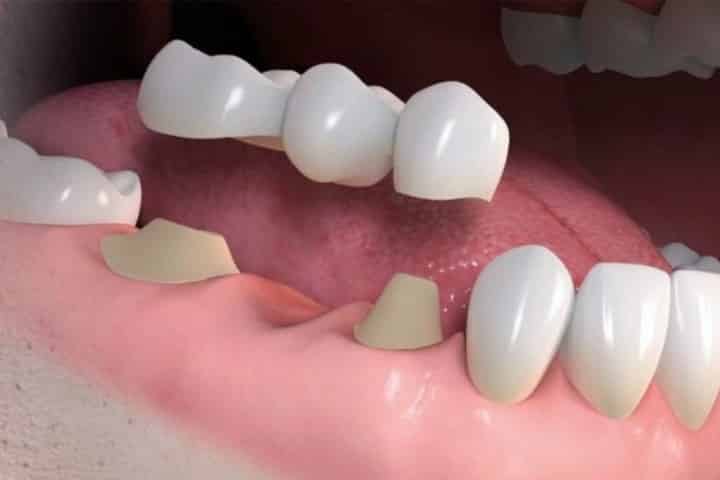
Fixed dental prostheses on teeth are a solution for providing function and aesthetics to the smile of a person who has lost or fractured teeth. This type of prosthesis is also known as a bridge.
Fixed prosthesis on teeth to replace missing teeth
Sometimes it is installed glued over remaining neighboring teeth or attached by staples. Although this is a great solution for filling gaps, it can cause some inconvenience over time.
One of them is that this type of prosthesis is unable to stop bone resorption at the site, especially under the suspended element.
This is because the body progressively absorbs bone volume at the site of a tooth extraction without immediate replacement. In this respect, rapid dental implantation would be more appropriate.
The prosthesis doesn’t follow this movement and the tendency is for an unsightly gap to appear between it and the receding bone tissue.
This can leave the prosthesis out of place over time and the wearer may experience discomfort when chewing. Staples, on the other hand, can hurt the oral mucosa and damage the aesthetics of the smile if the metal is visible.
Bonded bridge over teeth
Bridge secured by metal clips
Another drawback of fixed prostheses on teeth is that they require wear and tear on the supporting teeth, which can make them more fragile and susceptible to diseases such as tooth decay and infiltration of canals or gum inflammation.
Replacing bridges over teeth with bridges over implants or single crowns therefore has many benefits, the main one being that it stops bone resorption. When the implant pins are installed in the bone, they function as tooth roots and the body understands that this bone is still useful.
Dental implants have other advantages:
Preserves the integrity of neighboring teeth (which do not need to be worn down);
Protects bone and gum tissue against periodontal disease and infiltration;
It is more resistant and durable;
It restores masticatory function and gives you the confidence to speak and smile;
Extremely aesthetic result. The prosthetic crown mimics the color, texture and shape of neighboring teeth. There is the aesthetic advantage of having no metal points from the staples.
When crowns are individualized, they make it possible to floss (note that the fixed prosthesis on teeth is one piece and it is not possible to floss between the teeth).
Dental implants offer several other advantages in addition to stopping bone resorption. They provide stability and security when chewing and speaking, as well as helping to preserve facial bone structure. In addition, single crowns or bridges on implants offer a more natural aesthetic, promoting a more harmonious smile.
If you have been wearing a fixed prosthesis on your teeth for many years and would like to replace it with a dental implant, you will need to undergo a professional assessment that will identify whether there is advanced bone loss or bruxism.
In some cases, bone grafting can be a solution for reconstructing lost volume. Find out more about bone grafting.
Ideally, people should try to have this replaced as soon as possible to avoid bone loss, but in cases where the gums are not healthy, the procedure may be contraindicated.
Prior periodontal treatment would then be necessary. It is important to remember that, once treatment has been completed, you should visit the dentist every 6 months for prophylaxis and to monitor the results of the treatment.
If you have any further questions about this technique, photos of dentures or prices, please contact us. We’ll be happy to help you.
In the contemporary landscape of dental care, the demand for experiences that extend beyond traditional treatments and offer an environment of comfort and well-being has gained significant traction. In São Paulo, the ImplArt Dental Spastands as a true pioneer in this innovative concept, redefining the standard of dental treatment and patient care.
By seamlessly integrating highly complex procedures with a relaxing and welcoming atmosphere, ImplArt not only ensures clinical results of the highest caliber but also provides a uniquely personalized patient journey. This groundbreaking approach has firmly established ImplArt Dental Spa-Sao Paulo as a benchmark in the city, demonstrating that it’s indeed possible to unite cutting-edge dental technology with a deeply humanized approach to health and wellness.
ImplArt is a pioneer in Day Clinics in Brazil and we can offer you the most advanced services in dentistry today. With the best dental technology, we plan and execute your Day Clinic with the highest quality at the ImplArt Dental Spa.
Dental Spa and Dental Day Clinic at ImplArt Day Clinic Dental Spa: faster dental treatments
The ImplArt Dental Spa Day Clinic is especially suitable for executives, for people who live in other cities/states/countries.
Most dental treatments can be carried out at the Dental Day Clinic, including procedures such as implants, crowns and aesthetic restorations, prostheses, veneers or dental aesthetic techniques, subject to prior planning by the dental spa.
We have all the infrastructure to hold your Day Clinic in complete comfort.
Our in-housedental laboratory facilitates not only computerized treatment planning, but also the rapid completion of dental spa work, maintaining high quality materials and avoiding errors and problems.
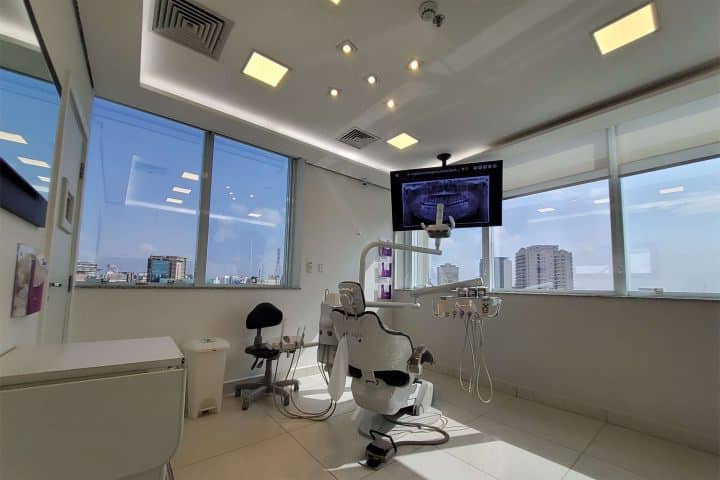
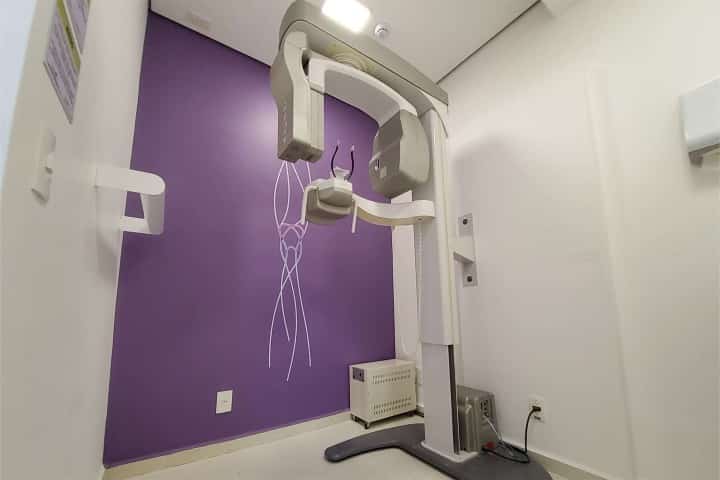
We also have a digital radiology center within the clinic, which speeds up diagnosis and the start of treatment.
Contact us to find out if the treatment you need can be carried out in a Day Clinic. With the ImplArt Dental Spa, improving the aesthetics of your smile can be faster than you think!
ImplArt Dental Spa: Pioneering Excellence in São PauloImplArt Dental Spa: Pioneering Excellence in São PauloImplArt Dental Spa: Pioneering Excellence in São PauloImplArt Dental Spa: Pioneering Excellence in São PauloImplArt Dental Spa: Pioneering Excellence in São PauloImplArt Dental Spa: Pioneering Excellence in São Paulo
Day Clinic testimonials:
“I was recently in São Paulo because I travel frequently for work. Due to the sudden need for emergency treatment, I came across ImplArt, who promptly solved my problem. My time in the city, about a week, was enough for a definitive treatment to be completed.I was very pleased with the speed of treatment and the quality of the ImplArt dental spa. I recommend it!” – C.A.S. Manaus
“As I have known ImplArt for some time, I told them in advance that I was coming to São Paulo, as I visit my family periodically. I was asked to send tests in advance, which I promptly did by email. I was impressed by how useful technology can be even for a dental spa treatment.I loved the treatment I received, as the dentists here in England are very cold and the prices are much higher” – R.A. England
“Dr. Roberto performed my surgery with great skill and mastery. I felt NO PAIN or discomfort. My recovery was excellent and now I’m going to start the final stage of my treatment.I chose the zirconia crown by scanner, because it’s quick, since I have to finish my treatment soon for a trip.” – A.C.
“I found Implart through a Google search. I was looking for a clinic in São Paulo that would serve me with quality and speed, as I live in Miami. I wanted zirconia treatment, as is done here, and I found what I wanted at Implart. A committed team, a director with credibility and knowledge.I was very happy with my choice and came back very happy.” – R.N. – Miami
Nowadays, it’s common to find influencers on social media promoting the consumption of lemon and apple cider vinegar as miracle remedies for a variety of health problems, including weight loss, detoxifying the body, improving digestion and even preventing chronic diseases. These products are often extolled as natural solutions that are supposed to bring significant benefits to general health and even oral health. But is this true?
There is no robust scientific evidence to prove the effectiveness of lemon and apple cider vinegar for these specific purposes. In addition, the dissemination of this information, often without due scientific rigor, can lead the public into practices that, instead of improving health, can cause significant damage to teeth.
In this article, we’ll look at the damage caused to your oral health by the apple cider vinegar diet and the lemon diet. To illustrate these points, Dr. Roberto Markarian, a reference in dental implants and oral health, will help us understand the impact of this type of diet on your teeth.
Apple cider vinegar diet
The apple cider vinegar diet involves the daily consumption of apple cider vinegar, which can be added to water or to meals, such as salads, for example. According to internet gurus, apple cider vinegar could help reduce body fat, as well as reducing appetite, decreasing insulin spikes and having an antioxidant effect. However, science has no proof of the effectiveness of this diet and frequent consumption of apple cider vinegar can cause oral health problems, as we’ll discuss below.
Apple cider vinegar diet has no scientific proof of efficacy
Lemon diet
The “lemon diet” is another practice that has also gained popularity mainly on social media, being promoted as a method for detoxifying the body, losing weight and improving general health. The diet generally involves drinking lemon juice diluted with water several times a day, often on an empty stomach or before meals.
Some variations include combining lemon juice with other ingredients such as honey, ginger or apple cider vinegar. Also, in some versions, it is recommended to increase the amount of lemon and the frequency of consumption over several days, until you reach a high and repeated consumption.
Although lemon is a fruit rich in vitamin C, which contributes to the body’s immunity, this diet, like the apple cider vinegar diet, is not scientifically proven to be effective either, and the damage to oral health is concrete!
Lemon diet spreads on social media without scientific basis
Dental erosion: the risks of acidic foods for dental health
According to Dr. Roberto Markarian, if the patient has a diet rich in acidic foods, the impacts can be observed when assessing them clinically. In addition to vinegar and lemon juice, these foods include orange juice and even pickles. It’s worth noting that occasional consumption doesn’t carry any risks, but rather the systemic use of foods that have corrosive potential.
Regular consumption of lemon and apple cider vinegar, especially in their concentrated form, poses a substantial risk to dental health. These products are extremely acidic –lemon contains citric acid, and apple cider vinegar is rich in acetic acid –which can lead to erosion of tooth enamel, the protective layer that coats the teeth. Erosion of the enamel can result in cavities, increased sensitivity and, in more serious cases, complex treatments such as fillings or even dental implants. These impacts can also be seen on the teeth of patients suffering from Bulimia, due to the contact of stomach acids on the mucosa and teeth.
For those patients who have dental crowns, there are also risks because the acidic environment can damage the remaining tooth structure, with infiltrations that can lead to tooth loss and the need for implants.
According to Dr. Roberto Markarian, implant dentist and director of Clinica Dentaria ImplArt, foods with a high acid content significantly accelerate the erosion of tooth enamel. Constant acidity erodes this protective layer, exposing the dentin and increasing tooth sensitivity and the risk of cavities. According to Dr. Roberto Markarian, “The first stage is that the tooth gets white spots from acid burn, which can be stabilized if the diet is regularized. In the second stage, the damage to the tooth structure can no longer be recovered, so it is essential that patients adopt preventive measures to minimize these harmful effects.” – Dr. Roberto Markarian, Director of the ImplArt Clinic
The risk of influencers and the importance of scientific information
Digital influencers often have no scientific training and yet they spread practices that can be harmful to oral and general health. Promoting the consumption of lemon and apple cider vinegar as a solution to health problems is a classic example of how information can be misinterpreted and passed on to the public without due consideration of the risks involved.
It is therefore crucial that readers exercise caution when following health advice found on social media and seek information from reliable sources, such as health professionals and rigorous scientific studies. Educating the public about the risks associated with consuming these products can prevent damage to health and promote safer and more effective practices.
And if in doubt, always consult your doctor and dentist – only they will be able to give you informed advice based on proven techniques. So always be wary of miracle solutions and invest in knowledge!
Do apple cider vinegar and lemon diets work?
Discover the treatments at Clinica ImplArt
Located in the heart of São Paulo, ImplArt Dental Clinic is recognized as the best dental implant clinic in São Paulo, attracting patients from all over the world. Under the direction of Dr. Roberto Markarian, a renowned implant dentist specializing in dental implants and digital prostheses, ImplArt stands out as a reference center for modern dental treatments.
The clinic offers a unique combination of specialized knowledge and high technology, with an emphasis on dental implants and computerized prostheses. If you are looking for state-of-the-art dental treatment in São Paulo, ImplArt is the ideal choice to ensure a healthy and beautiful smile.
The apple cider vinegar or lemon diet and its impact on oral health
Dr. Roberto Markarian is a reference in dental implants and computerized dental prostheses in Brazil. As well as having more than 10,000 implants installed, he is a researcher who produces knowledge that is published worldwide in renowned scientific journals in the field of dentistry. He is responsible for promoting knowledge and high technology applied in all the treatments offered by the ImplArt Clinic.
schedule your appointment at the implart clinic by phone or whatsapp
Clínica ImplArt is considered the best dental implant clinic in São Paulo. If you want to know how much a dental implant costs, or how to avoid tooth loss and implants, get in touch! We’re here to help you!
The zirconia prosthesis is a white ceramic used to make the internal structure of a dental implant prosthesis. It is currently considered the most aesthetic material for this purpose, as its shade is very similar to natural dentin and it also allows more light to pass through (translucency).
Conteúdo deste Artigo sobre Prótese em zircônia para implante dentário
Zirconia provides a metal-free crown with high strength and aesthetics
A crown with a zirconia structure is an aesthetic alternative to a metal structure (metal-free crown). Although very resistant, the metal structure can leave the crown looking darkened when exposed to light.
In addition, if the patient has remodeling of the gums over time, a grayish line can appear at the gingival level and cause aesthetic compromise in the smile. For this reason, metal frameworks are often recommended for posterior crowns (which require a lot of strength, but not much aesthetics).
When you lose a tooth, you can have a zirconia implant placed, which is a piece of white ceramic that sits in place of the tooth root. After healing, you can place a zirconia prosthesis, which is a ceramic cap that sits on top of the implant and looks like a real tooth. This combination has some benefits, such as
Beauty: zirconia is as white as teeth and doesn’t turn the gums gray like metal. What’s more, zirconia is transparent and shines like teeth, making your smile look more beautiful and natural.
Health: zirconia is a material that adapts well to bone and gums without causing allergies or inflammation. This helps with the healing and firmness of the implant.
Resistance: zirconia is a very strong material that can withstand the forces of chewing and does not wear out easily. This makes the implant and prosthesis last longer.
Therefore, the zirconia implant together with the zirconia prosthesis is a good option to recover the function and beauty of lost teeth, with a safe, comfortable and durable material.
Initially, the teeth are scanned using intraoral scanners to generate a 3D digital mold. The design of the crown is made on a computer and executed on 3D tooth printers.
Finally, the crown receives a layer of porcelain that makes it look very similar to a natural tooth and can be fixed onto the dental implant. Among the indications for zirconia crowns on implants are single crowns, bridges and complete fixed prostheses.
Zirconia prosthesis for dental implantsZirconia prosthesis for dental implantsZirconia prosthesis for dental implantsZirconia prosthesis for dental implantsZirconia prosthesis for dental implantsZirconia prosthesis for dental implantsZirconia prosthesis for dental implantsZirconia prosthesis for dental implantsZirconia prosthesis for dental implantsZirconia prosthesis for dental implantsZirconia prosthesis for dental implantsZirconia prosthesis for dental implantsZirconia prosthesis for dental implantsimage of a fixed zirconia prosthesisZirconia prosthesis for dental implantsimage of a zirconia prosthesis – protocolZirconia prosthesis for dental implantsZirconia prosthesis for dental implants
Zirconia implant prosthesis with porcelain applied. Above: bare zirconia framework ready for application. Below: porcelain applied to achieve proper form, color and function.
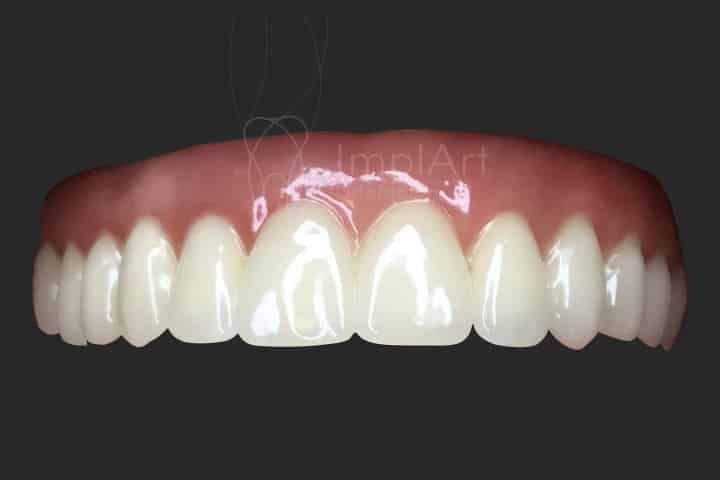
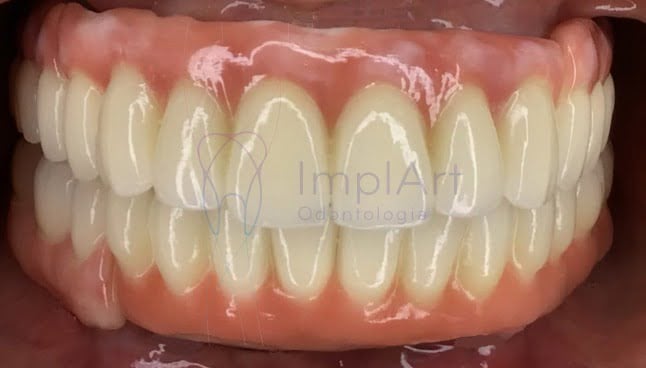
Thezirconiaprotocol prosthesis for the complete upper jaw is a fixed aesthetic prosthesis on a titanium dental implant for oral rehabilitation. It involves computerized design methods, and has become the most requested option among patients looking to combine the strength of the material with its superior aesthetic result in a total dental implant and protocol prosthesis treatment.
Designed using computerized technology and a 3D scanner, zirconia protocol prostheses with full dental implants are the most modern option for replacing completely lost teeth. Combined with fast-healing implant types, such as the Straumann implant, they allow for complete rehabilitation in a short space of time.
Why is the zirconia protocol the best material today?
Zirconia protocol prosthesis treatment is fully computerized. In addition, it allows for faster results, much more predictability in treatment, as it relies on computer graphics. It also allows for an aesthetically impeccable result and a lot of resistance. In addition, the treatment is carried out using only 3D scanners, without the need for the old conventional molds.
The absence of teeth certainly compromises aesthetics and the patient’s quality of life, which is why the placement of implants with prostheses is able to give the person peace of mind when chewing, speaking and smiling.
The zirconia protocol has many advantages over the conventional resin protocol with a metal structure. Its main qualities are aesthetics and high resistance.
Dental zirconia (pre-sintered zirconium oxide) is a translucent, light-colored material that allows light to pass through, just like natural teeth, and therefore offers an aesthetic result. In this sense, the structure of the Zirconia protocol prosthesis looks discreet inside the prosthesis, even if exposed in brightly lit environments. Certainly the most modern materials are the Zirconia protocol and the porcelain protocol on a total implant.
Zirconia is made using a computerized 3D method and is not a manual job
The structure of the zirconia prosthesis is a single piece, obtained by milling a rough block on a machine that works like a 3D printer. In other words, the treatment is planned on a computer using CAD/CAM technology. The milling machine then wears away the zirconia block until it reaches the shape of the structure of the prosthesis designed to be installed on a dental implant.
Finally, the zirconia structure is characterized with porcelain and the shade is obtained by brushing on specific coloring liquids for this purpose. It is possible to reproduce various shades that make up the same tooth, leaving the prosthesis looking very natural.
Protocol zirconia prosthesis for complete upper jaw full dental implantimage of a complete oral rehabilitation in zirconiaProtocol zirconia prosthesis for complete upper jaw full dental implantProtocol zirconia prosthesis for complete upper jaw full dental implantProtocol zirconia prosthesis for complete upper jaw full dental implantProtocol zirconia prosthesis for complete upper jaw full dental implantProtocol zirconia prosthesis for complete upper jaw full dental implantProtocol zirconia prosthesis for complete upper jaw full dental implantProtocol zirconia prosthesis for complete upper jaw full dental implantProtocol zirconia prosthesis for complete upper jaw full dental implantProtocol zirconia prosthesis for complete upper jaw full dental implantProtocol zirconia prosthesis for complete upper jaw full dental implant
The zirconia prosthesis is then screwed onto the dental implants, which are strategically placed in the jaw. The fixed zirconia protocol on implants can bring great relief, especially for patients who wear dentures. What’s more, this model of prosthesis leaves the roof of the mouth free and the patient feels more comfortable chewing and speaking.
Another great advantage of the zirconia protocol prosthesis over the resin protocol is its resistance to staining. In principle, resin is a material that can stain or yellow over time and with pigmented foods.
Materials that are biocompatible with the human body
Indications for fixed zirconia dental prostheses – Zirconia Protocol
In principle, the patient needs to go for a consultation with an implant dentist at the ImplArt Dental Clinic, so that clinical criteria such as bone volume and general oral conditions can be assessed.
Maxillary rehabilitation with a zirconia protocol can be indicated for people with total upper edentulism, even those who have been wearing removable prostheses for a long time.
If you have any questions, please contact our team through one of the channels below. We, at the ImplArt dental clinic, are a reference in the field of modern dentistry, and we have a team ready to serve you with high technology and knowledge. We’ll be happy to help you!
Metal-ceramic prostheses, also known as porcelain-fused-to-metal (PFM) prostheses, offer a reliable and durable solution for patients seeking tooth replacement with both aesthetic appeal and structural strength. These prostheses consist of a metal framework covered with layers of porcelain, ensuring a natural look while providing long-lasting stability. Widely used in dental rehabilitation, PFM prostheses are ideal for patients who need durable solutions, particularly in areas of the mouth where the force of chewing is greater.
At Clínica ImplArt, the application of metal-porcelain prostheses combines advanced dental technology with expert craftsmanship, ensuring optimal results for each patient. The clinic’s dental specialists are well-versed in modern techniques that improve both the functionality and the aesthetics of these prostheses, delivering a solution that blends seamlessly with natural teeth while maintaining high resistance to wear and tear over time.
The metal-ceramic prosthesis is a traditional material for making crowns on implants
How do the prostheses work with this building materials?
Metal acts as a structural reinforcement, while porcelain offers aesthetics. Therefore, the positive points of this material are: resistance, great durability and aesthetics, characteristics that are very similar to natural teeth.
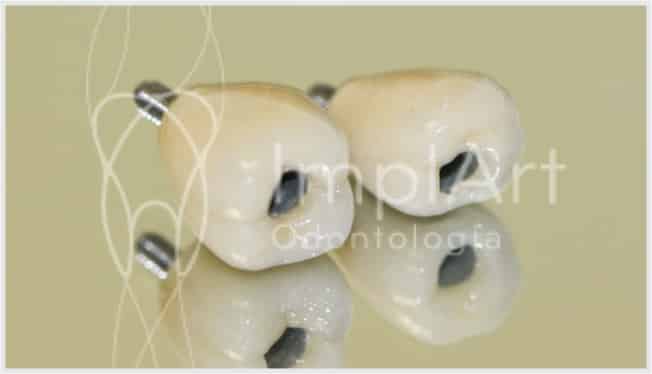
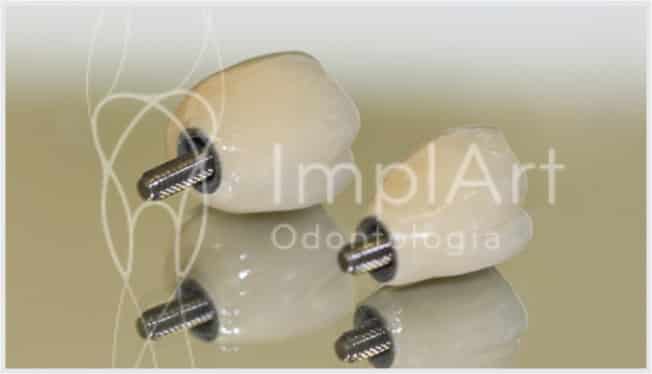
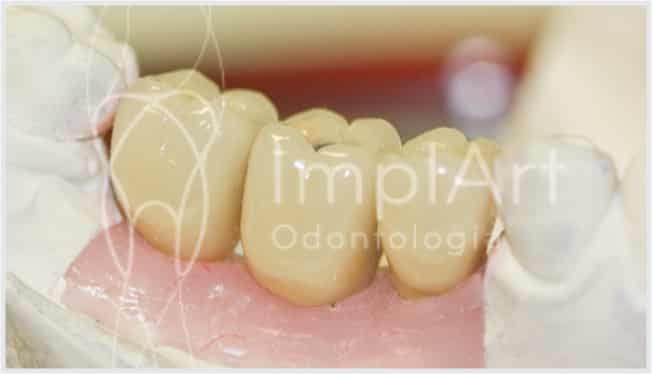
Metal-ceramic prosthesis for implantsMetal-ceramic prosthesis for implantsMetal-ceramic prosthesis for implants1 – Metal-ceramicprosthesisfor single implants 2 – Metal-ceramic prosthesis for individual implants 3 – Metal-ceramic prosthesis for implants – several teeth.
Among the indications for metal-ceramic crowns on implants are also crowns, bridges and complete fixed prostheses. One of the great difficulties in working with metal ceramics is the need to completely hide the metal.
Metal-ceramic prosthesis for implantsMetal-ceramic prosthesis for implantsMetal-ceramic prosthesis for implantsMetal-ceramic prosthesis for implantsMetal-ceramic prosthesis for implantsMetal-ceramic prosthesis for implants
Example of metal-ceramic prostheses made at the ImplArt Clinic
We can do your metal-ceramic bridge in Brazil
How are the aesthetics of metal-ceramic dental crowns? Does the metal not show?
This model of crown can change over the years. Sometimes the gums can recede over time and expose a metal line, compromising the aesthetics of the smile.
Especially in areas where aesthetics are essential, we recommend zirconia crowns. These are prostheses with an internal structure made of zirconia, a white ceramic material with a shade and translucency very similar to human dentin.
In addition, the application of porcelain in metal-ceramic prostheses is completely handmade and the final aesthetic depends a lot on the skill of the ceramist (technician who works with ceramics).
If you have any questions about techniques, prices or treatments, please contact us or make an appointment. We’ll be happy to welcome you!


 Agende sua consulta agora por WhatsApp