Dental contact lenses are a type of ultra-thin porcelain veneer (0.2 mm) used to correct certain aesthetic problems with the teeth.
Dental contact lenses to transform the appearance of your teeth
Aesthetic treatment for stained, misaligned, asymmetrical or broken teeth
Dental lenses work like “covers” that are glued onto one or more teeth to cover stains, small fractures and other defects, or to change the shape and size of teeth. Dental contact lens treatment is the smile of the famous.
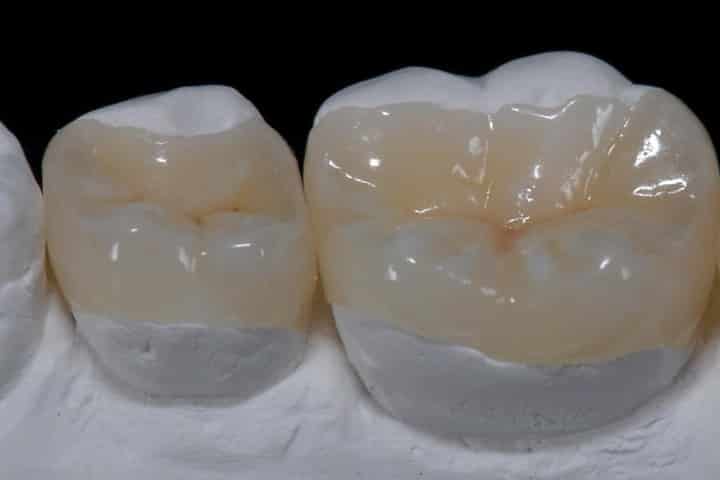
Dental contact lenses are completely computer-designed and then made from dental porcelain using milling machines (3D printers). Dental porcelain is a vitreous ceramic material (lithium disilicate) that is very resistant and mimics the texture and shade of natural teeth.
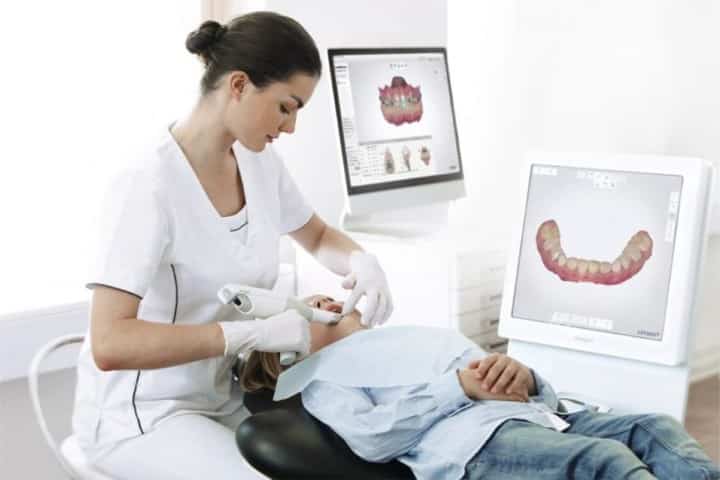
It is also a safe material and therefore totally biocompatible with the human body. The computerized design is based on images taken by an intraoral scanner – a high-precision camera.
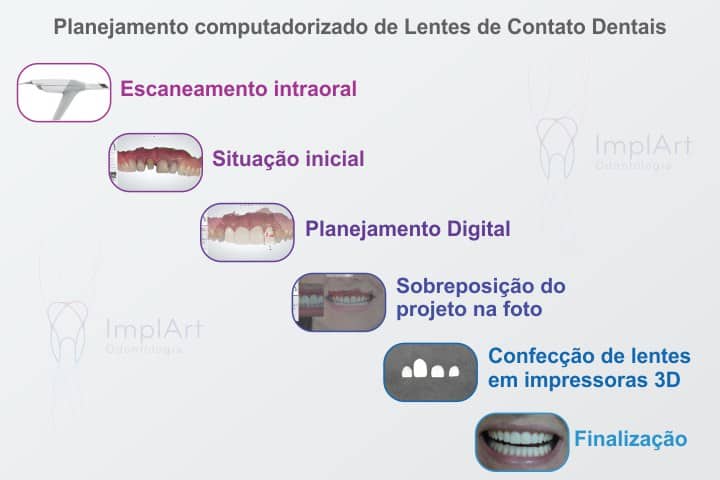
Dental contact lenses step by step (in case of dental asymmetry)
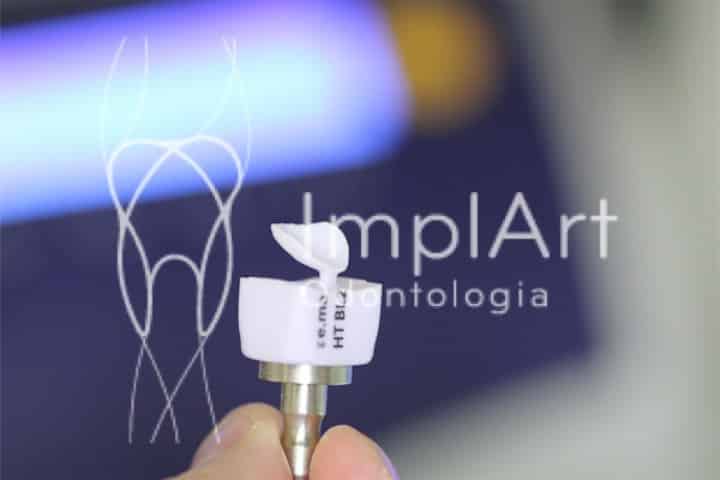
At the end of the milling process, the dental contact lenses have a shape, color and texture comparable to natural teeth, even imitating the characteristics of neighboring teeth. Because they are ultra-thin, installation requires little or no wear on the natural teeth.
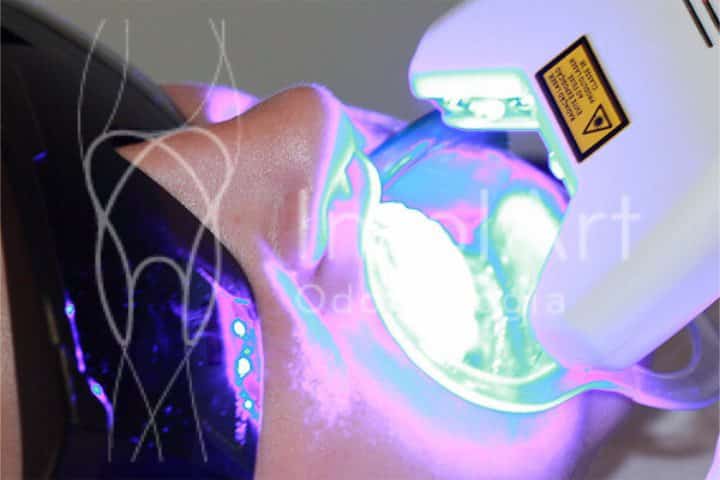
The lenses are then bonded with dental cement activated with a light-curing device. ImplArt uses one of the best contact lens light-curing devices on the market, making treatment more efficient and safer. Find out more.
Indications for dental contact lenses:
Covering stains
Change in the shape of the teeth
Change in tooth color
Enlargement of small teeth
Aligning crowded teeth
Covering small fractures
Uniformization of uneven and asymmetrical teeth
Advantages of lenses:
High resistance and long durability of the dental contact lens
Very aesthetic look, comparable to natural teeth
Minimally invasive restorations
Completely painless procedure
They don’t require much tooth grinding to be installed
Preserves the structure of the teeth
No discomfort in chewing function
Porcelain doesn’t change color over the years
Incredibly natural and harmonious result
It can be designed and executed in a short time, in some cases even in a Day Clinic.
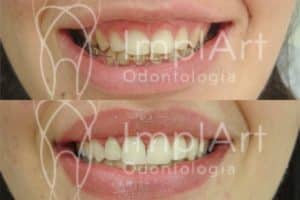
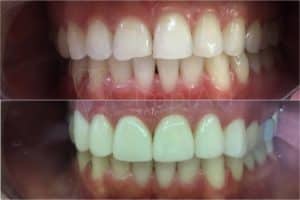
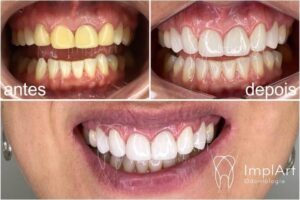
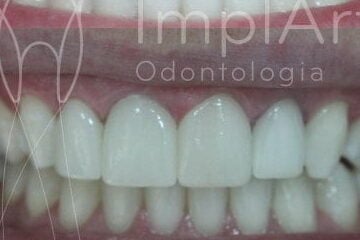
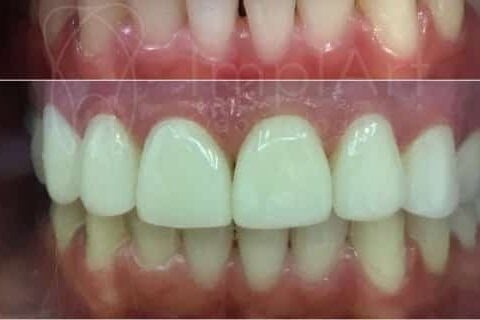
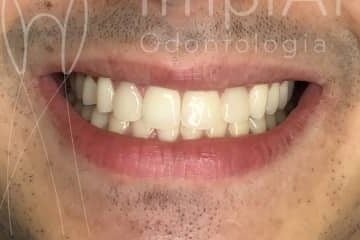
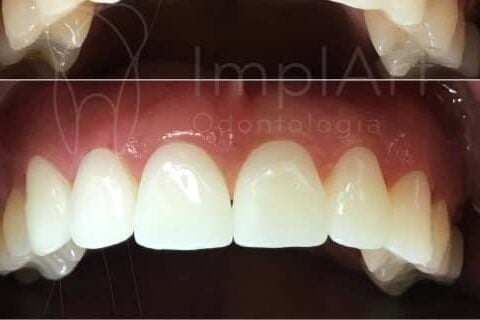
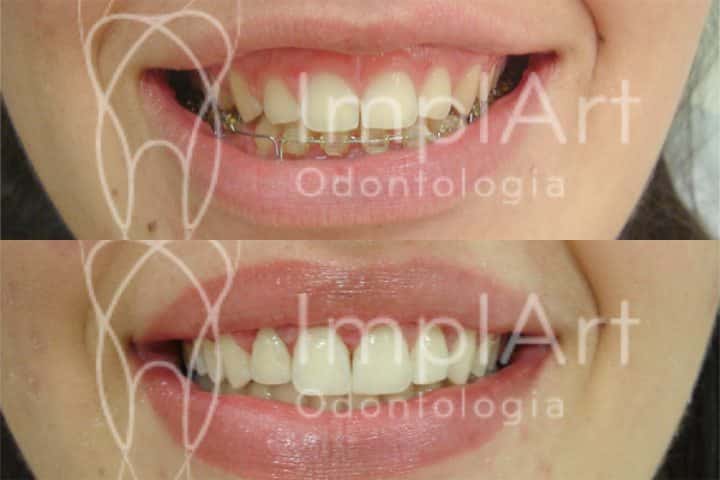
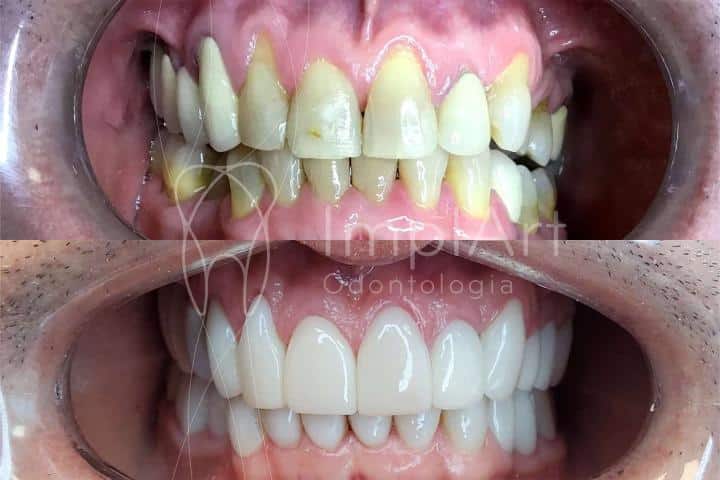
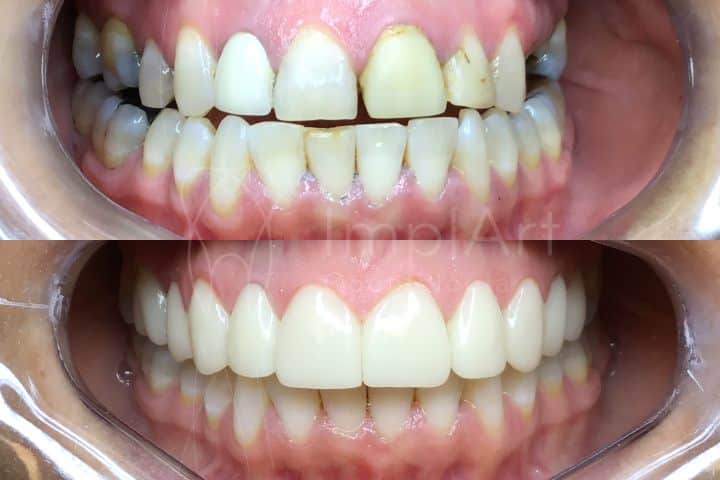
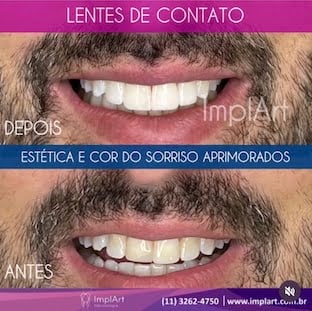
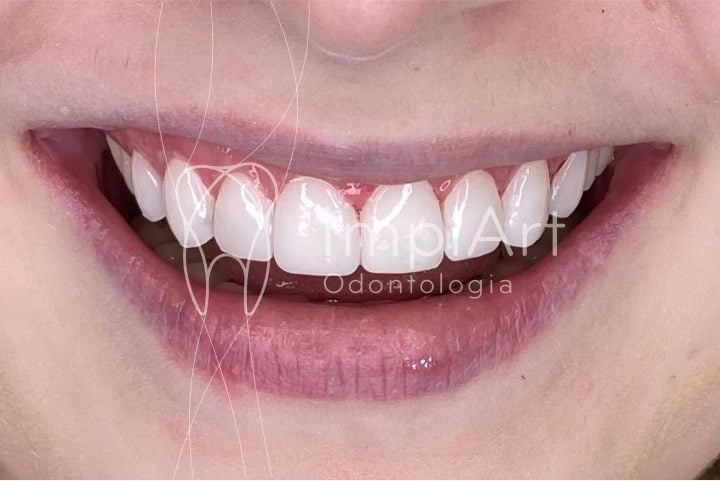
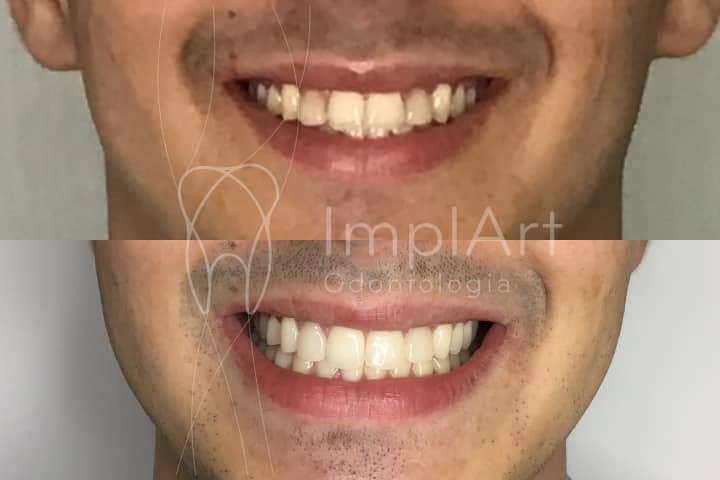
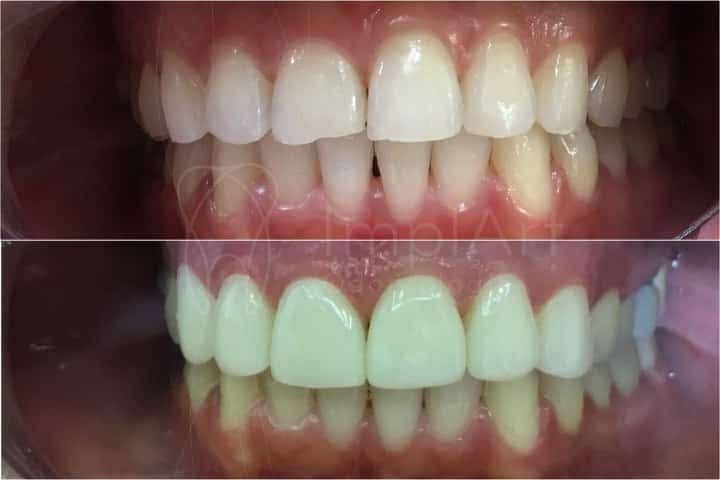
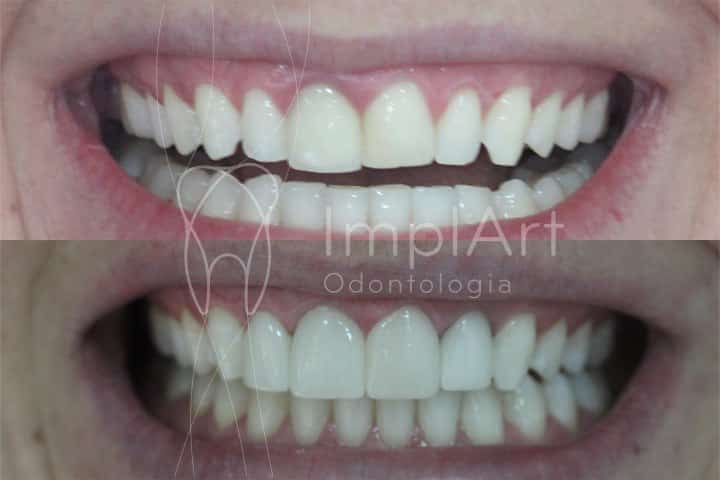
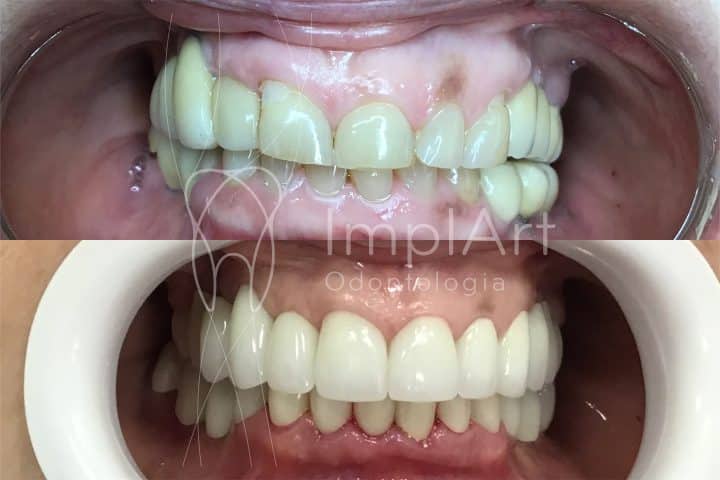
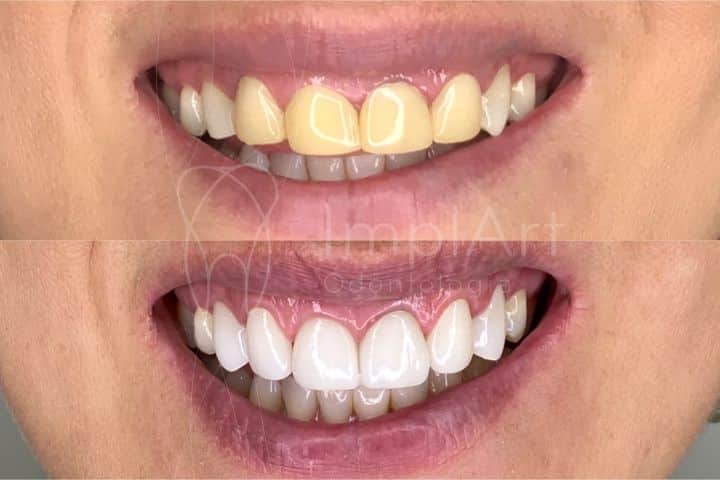
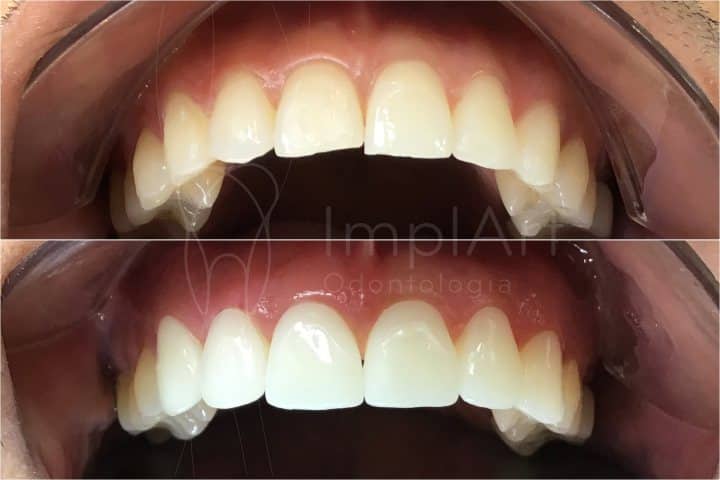
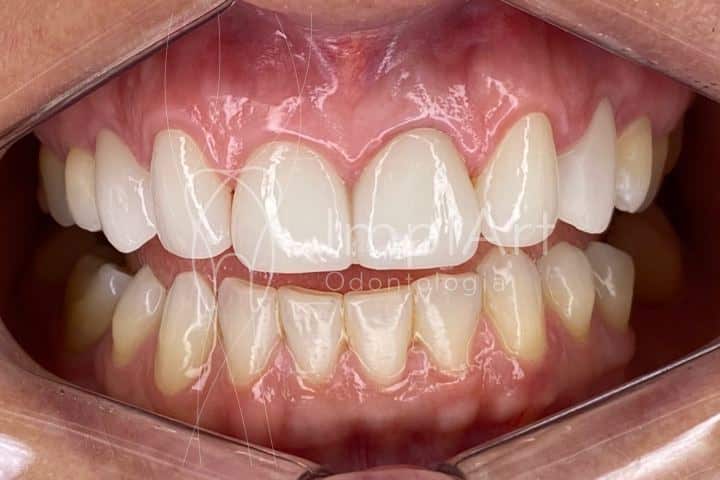
Before and after contact lenses: find out about some of the treatments performed at ImplArt:
At ImplArt Odontologia, all this work is certainly done in a precise and personalized way for each patient. This is only possible because we have CAD/CAM-based technologies on our premises, which not only carry out the computerized design of the treatment, but also the execution of the dental contact lenses. If you have any questions, please contact us.
Contact lenses are bonded to the front of the teeth individually and are used to correct certain aesthetic problems, such as misaligned teeth, stained teeth, pigmented teeth, cracked teeth, improperly shaped teeth, unwanted pain, irregular tooth size and correcting the position of the teeth.
They are bonded to the front of the teeth, individually, in order to correct certain aesthetic problems.These are cases of misaligned teeth, stained teeth, pigmented teeth, cracked teeth, improper shape, unwanted color, irregular tooth size, correction of tooth position.
Lenses are not recommended for unhealthy teeth, such as decayed teeth or teeth with periodontal disease. Contact lenses for teeth are capable of revolutionizing the aesthetics of smiles. Today we see many celebrities who have undergone the treatment and have undoubtedly had their smiles transformed.
Do I need dental contact lenses?
Contact lens treatment involves the use of advanced dental technology. It starts with taking a mold of the teeth. The digital impression is taken using an intraoral scanner that captures images of the teeth and gums and creates a three-dimensional model on the computer screen.
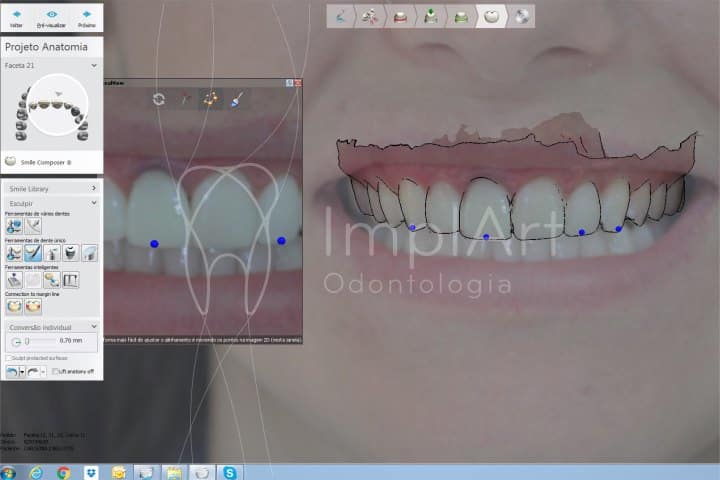
Based on these images, the dentist uses software that designs the dental contact lenses with customized shapes and shades for each patient.
Planning
The design can be for a single tooth or more. The approved computerized design is then sent to the digital prosthetics laboratory to make the dental lenses. A block of porcelain is placed in the 3D printer and the milling process begins until the block acquires the shape of the designed dental lenses.
Dental contact lenses are approximately 0.2mm thick. This ultra-thin thickness does not require any or little wear to the tooth surface in order for the lenses to be applied. They therefore differ from porcelain veneers.
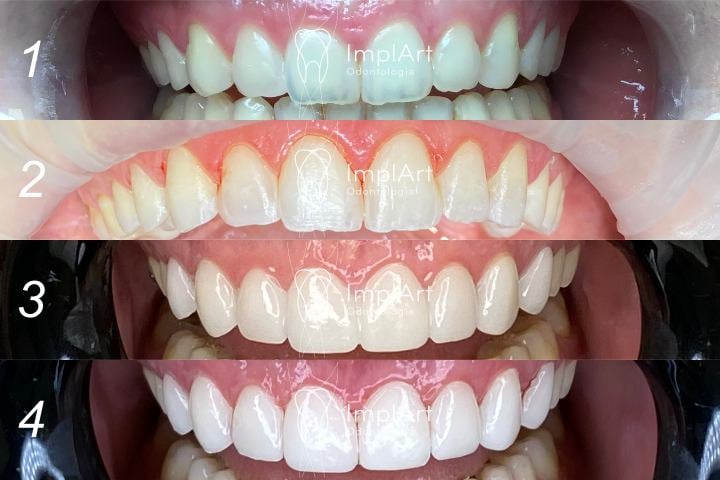
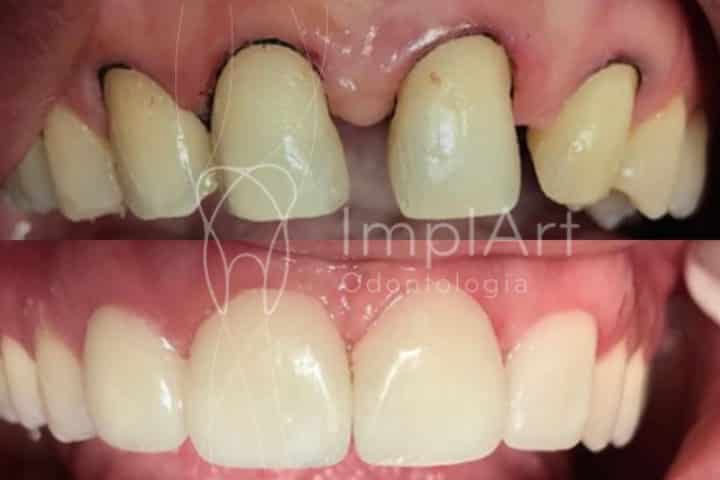
Example of a treatment with dental lenses: 1 – Initial situation, 2 – Tooth preparation (wear) and gingivectomy (removal of excess gum), 3 – Temporary lenses, 4 – Installation of definitive porcelain lenses.
Bonding dental contact lenses
Bonding is carried out after the tooth has been prepared, which involves professional cleaning to remove possible plaque and tartar buildup. The lenses are then bonded with cement specifically for dental use, without pain or the need to apply an anesthetic.
It’s a quick treatment and can even be carried out in a Day Clinic. The durability of dental contact lenses is undetermined. Porcelain is a very resistant material and has very similar characteristics to natural teeth.
Its surface is stain-resistant and does not require the patient to be cautious with highly pigmented foods and drinks, such as beet, carrots, wine, coffee, teas, etc.
Porcelain veneers for front teeth
This ultra-thin thickness does not require the tooth surface to be worn down in order for the lenses to be applied, so they differ from porcelain veneers. They are applied after the tooth has been prepared, which involves professional cleaning to remove possible plaque and tartar buildup.
The lenses are bonded with cement specifically for dental use, without pain or the need to apply an anesthetic. It’s a quick treatment which, in some cases, can be carried out in a Day Clinic. The durability of dentalcontact lenses is undetermined.
Porcelain is a very resistant material and, above all, has very similar characteristics to natural teeth. Its surface is resistant to stains and does not require the patient to be cautious with highly pigmented foods and drinks, such as beet, carrots, wine, coffee, teas, for example.
The average price of dental contact lenses can only be given in a dental consultation, as it depends on a face-to-face clinical examination, and the Federal Council of Dentistry prohibits non-face-to-face consultations. If you have any questions, please contact us through one of our service channels.
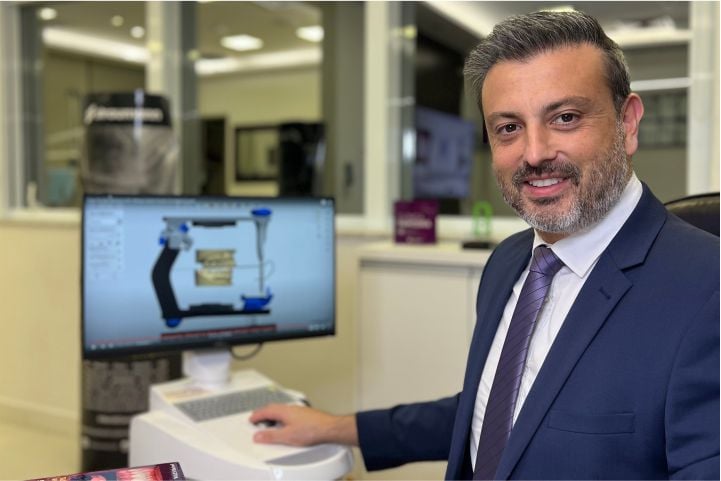
Dr. Roberto Markarian is a reference in dental implants and computerized dental prostheses in Brazil. As well as having more than 10,000 implants installed, he is a researcher and produces knowledge that is published worldwide in renowned scientific journals in the field of dentistry. He is responsible for promoting knowledge and high technology applied in all the treatments offered by the ImplArt Clinic.
Dentistry or aesthetic dentistry is the area of dentistry that works to restore dental aesthetics. In short, the resources available to improve the aesthetics of the smile include tooth whitening, dental crowns, resin or porcelain restorations, gum surgery (gingivectomy), and the application of modern dental contact lenses.
Contents
A more beautiful, white and harmonious smile is possible thanks to dental contact lenses and other aesthetic resources
Or even after wearing braces, when you want to improve some aspects of your smile, because during treatment you can’t change the aesthetics of your teeth.Modern dental contact lenses are ultra-thin porcelain veneers, suitable for correcting aesthetic problems with the teeth, for example:
Dental contact lenses are bonded to the surface of one or more defective teeth in a safe and non-invasive way. Because the lenses are ultra-thin, installation requires little or no wear on the teeth before they can be bonded.
The lenses are made from porcelain, the best bio-safe material used to make dental prostheses, which is similar to natural teeth in terms of its texture and shade, as well as its translucency.
This way, if the dental contact lens is applied to just one defective tooth, it won’t contrast with the neighboring natural teeth. It is certainly an aesthetic procedure that has come to completely change your smile for the better.At ImplArt, the lenses are designed and made by better computerized systems and 3D printers.
In conclusion, the last stage of the procedure is the preparation of the tooth, the application of dental cement and the bonding of the dental contact lens. Dental contact lenses are very durable, as long as the patient takes care not to bite down on hard objects and makes regular visits to the dental practice. Alternatively, veneers can be made from resin with a lower finish.
Dental contact lenses can improve the aesthetics of front teeth
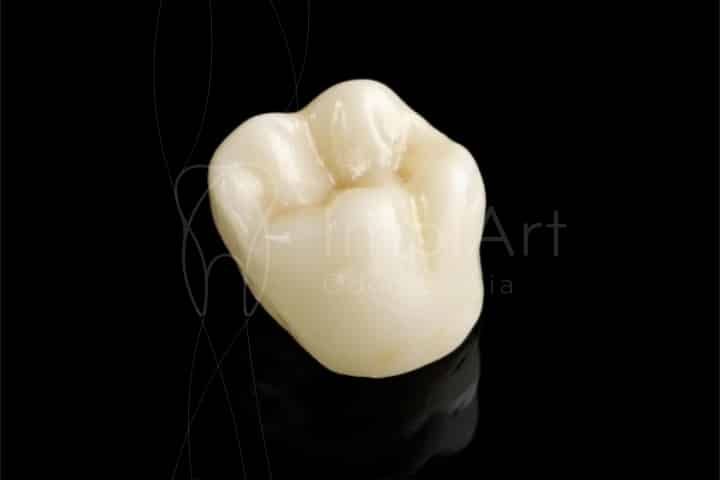
Porcelain dental crowns for aesthetic purposes
Dental crowns and porcelain blocks can be made in cases of tooth damage such as broken teeth. It is very common for patients with bruxism to need cosmetic treatments as they can lose part of their enamel or even entire teeth due to the force applied to their teeth.
An aesthetic composite resin restoration is a dental aesthetic procedure in which a resin composite material is used to repair or rebuild the structure of an aesthetically compromised tooth.
This technique is often used to correct cavities, fractures or discolorations in order to restore the shape, function and natural appearance of teeth.
During the process, the dentist removes the damaged part of the tooth, prepares the affected area and applies layers of composite resin, carefully shaping them to ensure a perfect fit with the dental anatomy.
The resin is then hardened with special ultraviolet light.
The advantage of composite resin lies in its ability to mimic the color and texture of adjacent teeth, providing an aesthetic and long-lasting end result while preserving the structural integrity of the restored tooth.
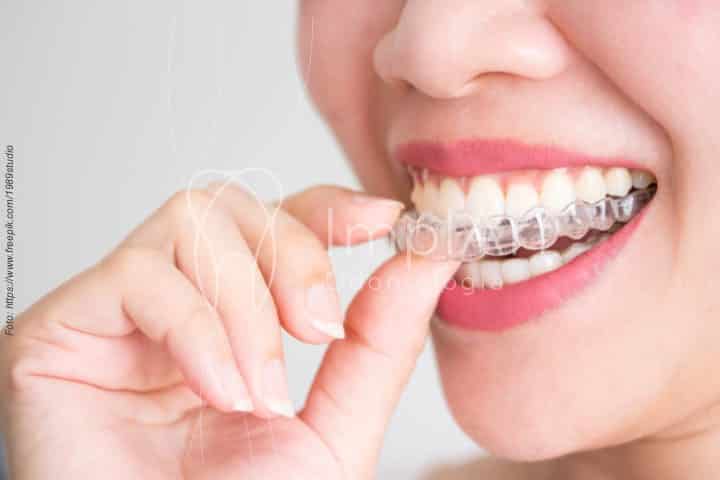
Discover more discreet and transparent orthodontic braces to move your teeth without having pieces glued to your teeth.
Dental aesthetics and smile harmony
ImplArt Odontologia has a team specialized in carrying out aesthetic dental treatments, especially the application of dental contact lenses, including model treatments. What’s more, thanks to its own prosthetic laboratory, the best design and manufacture of dental contact lenses can be carried out very quickly, without intermediaries.
The three-dimensional design of the lenses is personalized for each patient, so that the patient can better participate in the process of choosing the shape and shade together with our team.
If you have any questions about the prices of cosmetic dental and gum treatments, as well as planning, please contact our team or come and visit us. We’ll be happy to help you!
To improve the appearance of the teeth and correct any damage they have suffered, patients have at their disposal porcelain veneers or dental contact lenses, which are thin porcelain Veneers, customized for the patient and bonded to the front of the front teeth. They are able to change the aesthetics of the smile.
With this procedure, your smile can look more beautiful and your self-esteem can also benefit. Porcelain veneers can solve a variety of aesthetic problems in the teeth, such as stains and discoloration, chips, enamel wear, small fractures, closing gaps between teeth (diastheme), enlarging small teeth, changing the shape of teeth, among others.
Contents
What is the difference between a contact lens and a veneer?
Basically, the differences between dental lenses and veneers are their thickness, the material used and the preparation technique.
Dental veneers
Porcelain veneers
In the porcelain veneer technique, the dentist needs to:
Wear away a LARGER amount of the tooth enamel (approximately 1mm).
SILICONE molds and impression trays are made. While the permanent veneers are being prepared, the patient wears the temporary veneers.
The material used is generally common feldspathic porcelain, made using a handmade technique (more fragile).
The purpose of wearing down the teeth is to make room for the porcelain veneer and increase its thickness. Without wear, the teeth would be overcontoured, or have too much volume. In addition, the porcelain veneer might not fit so perfectly on the tooth.
Dental lenses
Dental contact lenses
In the contact lens technique, the dentist needs to:
Wear away a LESSER amount of the tooth enamel (approximately 0.3mm).
Molds are made with an INTRA ORAL SCANNER. While the permanent veneers are being prepared, the patient wears temporary lenses or a mockup. Sometimes it is not necessary to use temporary lenses because the wear does not affect the aesthetics.
The material used is generally porcelain MADE ON A COMPUTERIZED MILL (more resistant and precise).
Like any restoration, porcelain veneers need to be properly cared for and periodically reassessed. Patients should also maintain the hygiene of the tooth surfaces. We now also make ultra-thin porcelain veneers, which are dental contact lenses. The application of dental lenses requires little or no wear to the tooth structure. Find out more by clicking here.
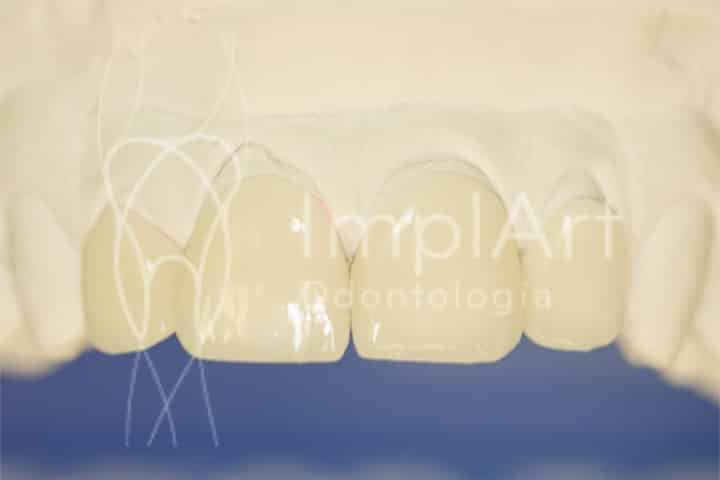
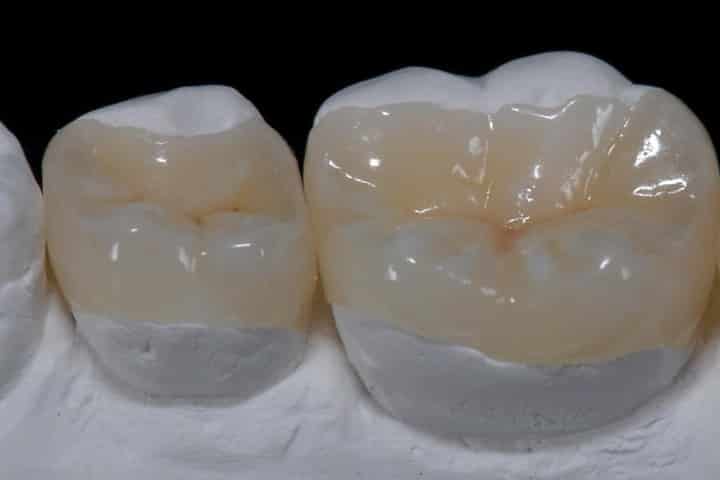
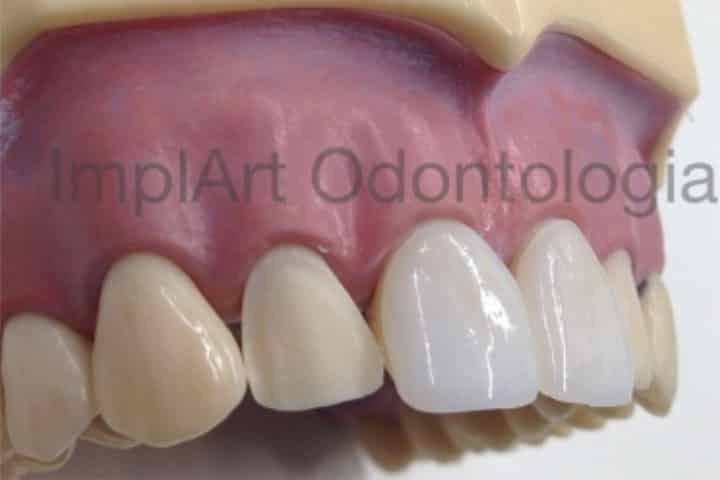
Note that in this model the lateral incisor tooth has been worn down, i.e. prepared for the installation of the lens
Dental contact lenses are ultra-thin porcelain veneers (0.2 mm), used mainly to correct some aesthetic dental problems. They work similarly to “caps” that are bonded to one or more teeth to cover stains, small dental fractures and other defects, or to change the shape and size of teeth.
How to transform the aesthetics of your smile with dental contact lenses?
Dental contact lens treatment is certainly the smile of the famous.Dental contact lenses are completely computer-designed and made from dental porcelain by milling machines (3D printers).
Dental porcelain is a vitreous ceramic material (lithium disilicate) that is very resistant and, above all, imitates the texture and shade of natural teeth. It is also a safe material that is totally biocompatible with the human body.
The project is carried out according to images obtained by an intraoral scanner – a high-precision camera.
Stages of a dental contact lens treatment in our clinic that works with CAD CAM computerized techniques
Immediately after milling, dental contact lenses have a shape, color and texture comparable to natural teeth, even imitating the characteristics of neighboring teeth. Because they are ultra-thin, installation requires little or no wear on the natural teeth. Indications for dental contact lenses:
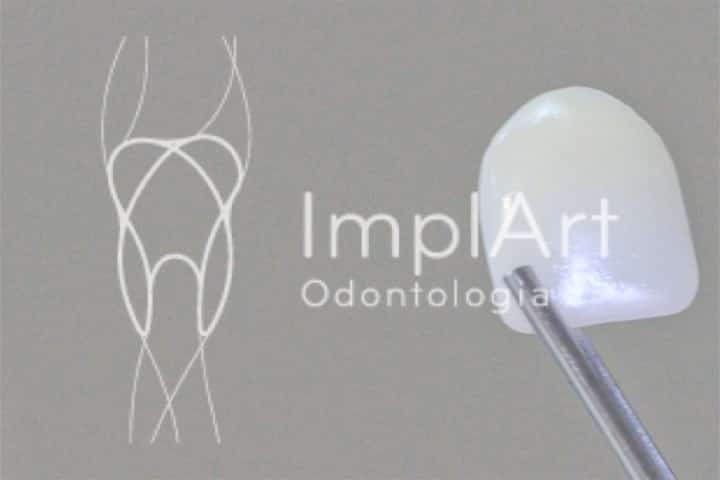
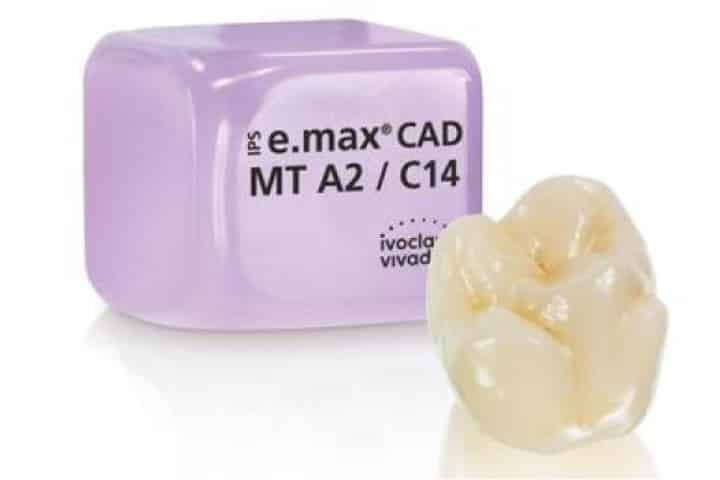
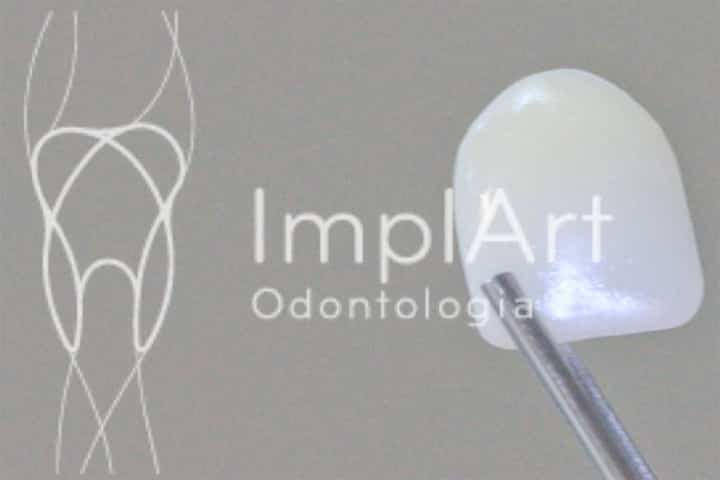
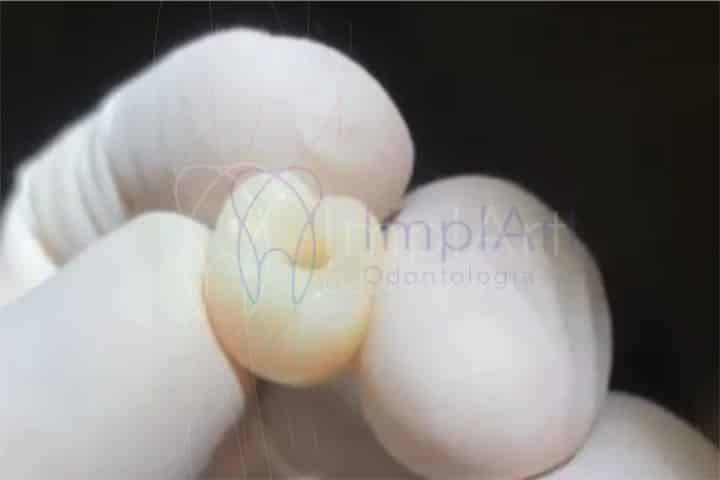
This porcelain lens was made using a computerized technique. Note that the machine sculpts the block until the dental contact lens is extracted from it
They don’t require much tooth grinding to be installed
Preserves the structure of the teeth
No discomfort in chewing function
Porcelain doesn’t change color over the years
Incredibly natural and harmonious result
It can be designed and executed in a short time, in some cases even in a Day Clinic.
Porcelain lenses made using digital techniques
At the ImplArt dental clinic, all this work is primarily done in a precise and personalized way for each patient. This is only possible because we have CAD/CAM-based technologies on our premises, which not only carry out the computerized design of the treatment, but also the execution of the dental contact lenses.
Contact lenses price and duration or dental contact lenses value are common doubts among people who would like to improve their smile. Find out all about this aesthetic treatment that can transform smiles:
The price and duration of dental contact lenses can vary according to the technique and material used. It is important to consult our specialists for precise information on the cost of treatment. Contact lenses are a modern aesthetic option for improving your smile, as they are made from high-quality porcelain.
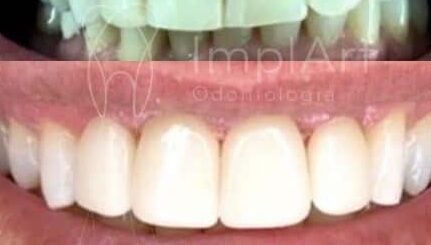
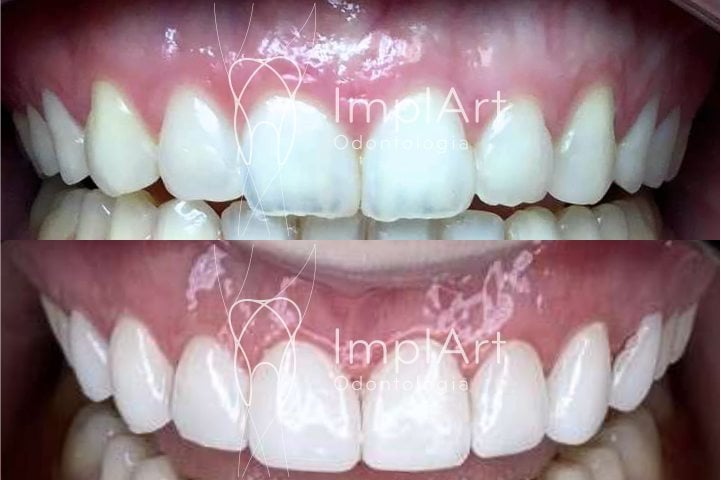
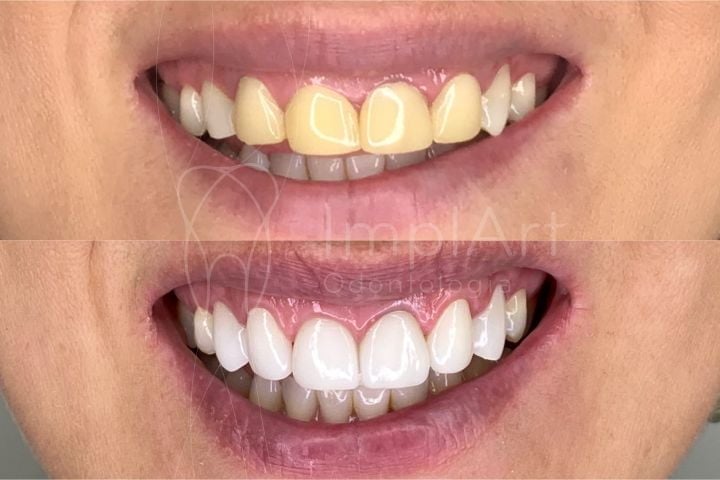
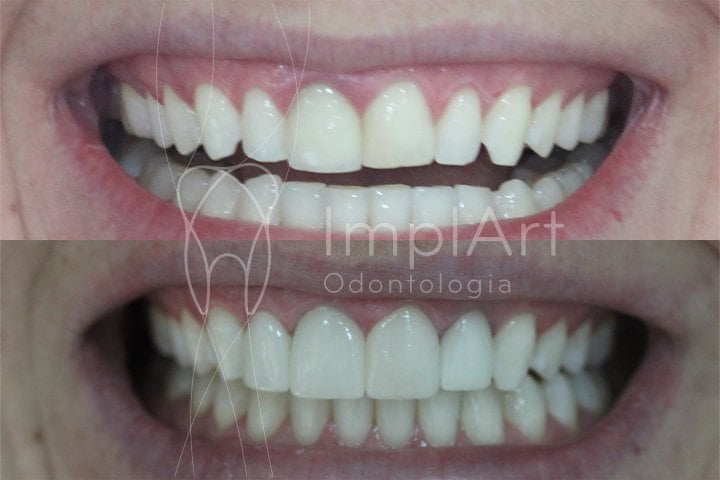
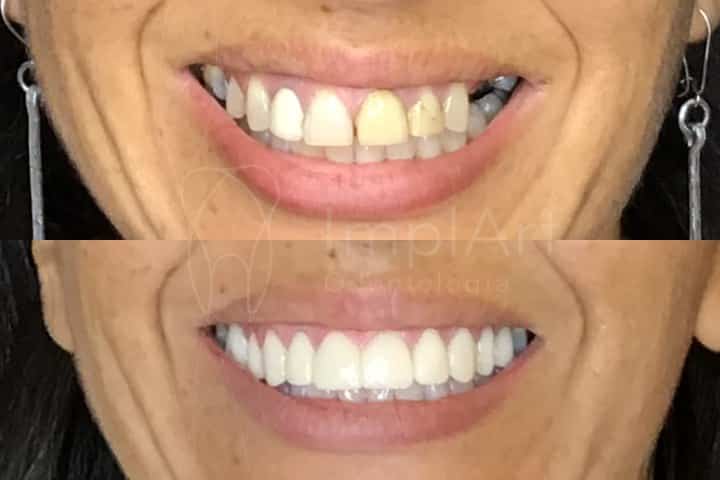
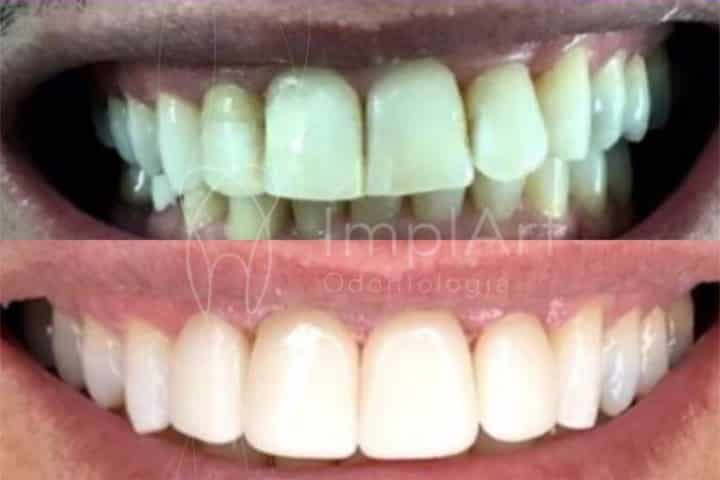
The manufacturing process involves the use of advanced technology, such as milling on modern equipment, guaranteeing an ideal aesthetic result. The digital laboratory plays an important role in the creation of contact lenses, allowing detailed and personalized planning for each patient. Below is a photo of a case with BEFORE and AFTER PORCELAIN CONTACT LENS:
Dental contact lenses can radically change the appearance of a smile!
Topics in this article about dental contact lenses
What are dental contact lenses?
Dental lenses are a modern technique that can certainly transform the aesthetics of your smile quickly.They are ultra-thin porcelain veneers (0.2 mm) that are bonded to the outside of the teeth in order to correct certain defects in the teeth.
This is the case, for example, with stains, small fractures, asymmetries, diastemas (exaggerated space between teeth), very short teeth, among others. Dental contact lens treatment is undoubtedly the secret to the smiles of the famous.
What is the best material for dental contact lenses?
They are made from dental porcelain. This is a glassy ceramic material (lithium disilicate) that is very resistant and imitates the texture and shades of natural teeth. It is certainly a safe material and totally biocompatible with the human body.
Step-by-step instructions for dental contact lenses
What is the difference between dental contact lenses and resin veneers?
Dental contact lenses are now associated with an aesthetically natural smile and their development involves modern computer graphics techniques and 3D printers.
Nowadays, however, we see that the old resin veneers are becoming more popular. Of course, it’s important to note that resin is a far inferior material to porcelain. Therefore, it is likely that the option of resin veneers has gained ground mainly due to their price and low treatment costs. Although resin veneers are a more economical option, they have a tendency to yellow over time and, in most cases, promote extra tooth volume. Resin veneers therefore offer no advantages over dental contact lenses. See below for a video showing the differences between Porcelain Contact Lenses and Resin Veneers:
How are dental contact lenses made?
In a consultation, the patient is first examined and listened to by the dentist so that all their expectations are understood. Our team will then check whether this treatment is the right one for you.
At the ImplArt Clinic, not only the design but also the execution of the contact lenses is done using computerized systems. The computerized design is based on images obtained by an intraoral scanner.
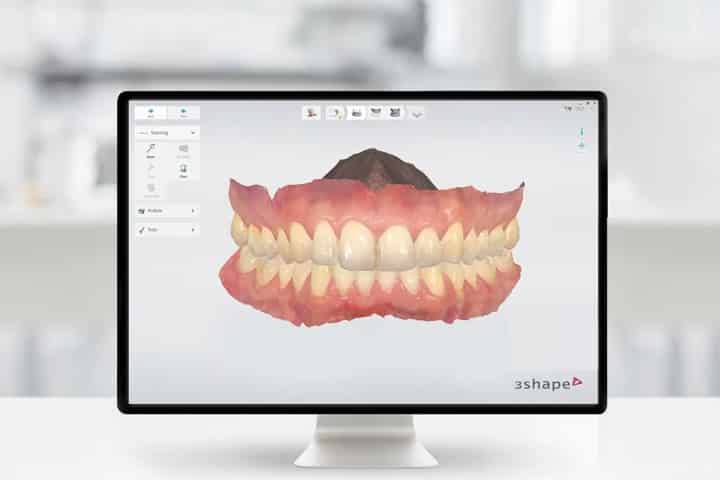
A high-precision camera with Danish technology is passed over the teeth and a digital mold is created on the computer screen. The digital impression reproduces every detail, such as shape, color and texture.The images of the digital mold are used to plan the lenses, the choice of shade and the shape.
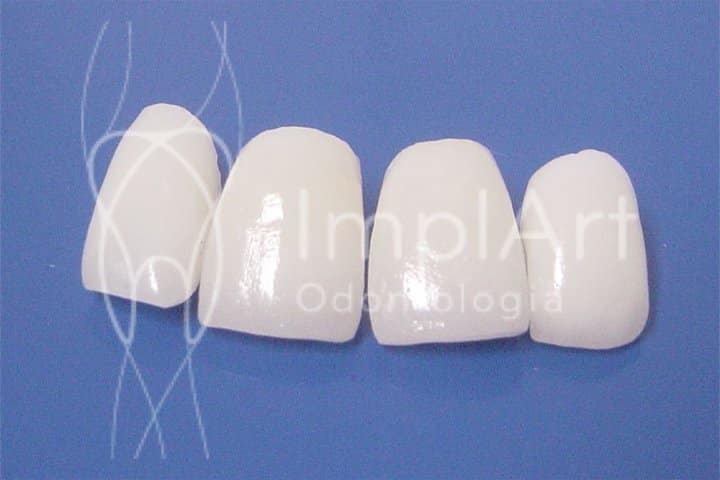
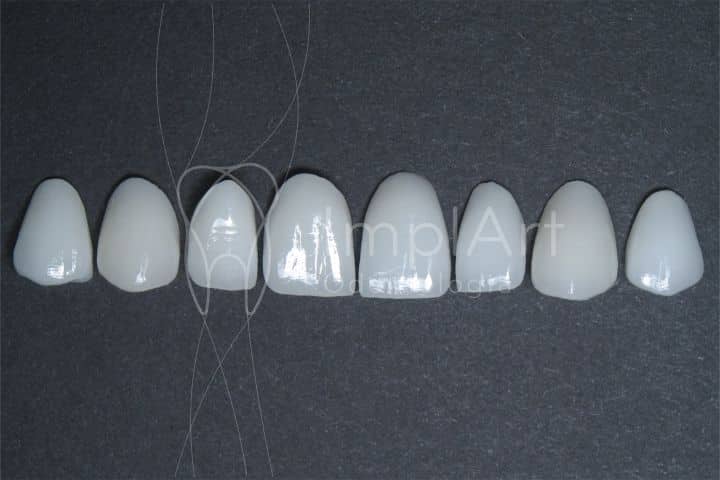
Ready-made dental contact lenses for the front teeth (8 teeth) made on a 3D printer.
The aesthetic design takes into account that the lenses match the neighboring teeth, as well as each person’s face and personality.One of the great advantages of the computerized design of the lenses is that the treatment can be fully simulated and the patient can see what their teeth will look like.Once the design has been approved, the lenses are then made in 3D printers.
Preparing teeth for lenses: is there wear on the teeth?
Because dental contact lenses are ultra-thin, they have the great advantage of requiring little or no wear on the teeth in order to be bonded.The lenses are then bonded onto the prepared teeth with a type of dental adhesive.
It’s worth noting that dental contact lenses are firmer when bonded to the front teeth than to the back teeth.The work is almost always done without anesthesia in the area where the contact lenses will be placed, but when the preparation requires some wear that reaches the dentin, anesthesia is applied to avoid discomfort. Watch the video below to see how the tooth is prepared to receive the Dental Contact Lens:
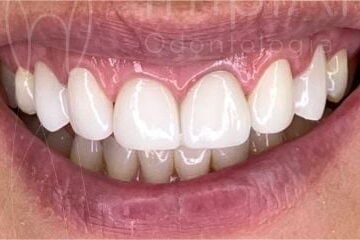
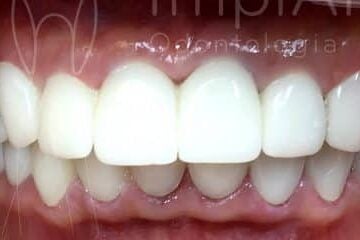
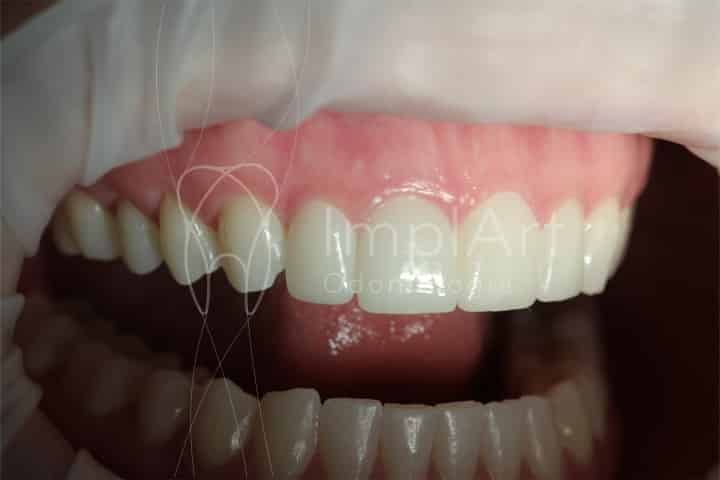
Aspect of a case with newly fitted contact lenses on the top teeth
Do dental contact lenses always have to be very white?
Many patients want to get contact lenses and are afraid that their smile will look too white and artificial. Certainly the choice of the color of the prostheses, including the lenses, generates expectation in the patient, as they are, after all, a fundamental part of the treatment. Dental contact lenses can produce very natural and harmonious results. First of all, it’s important to note that there is a very wide range of colors for computerized contact lenses. Of course, here at the ImplArt Clinic you will be guided to choose a shade that is in harmony with you, through visagism techniques and with professional guidance.
Color of contact lenses should be natural
Contact Lens treatment can be combined with crowns and implants
Yes, contact lens treatment can certainly be combined with other patient needs. Therefore, if the patient needs dental implants, dental crowns or contact lenses on other teeth, the treatment is planned together.
According to Dr. Markarian, our clinical director, the contact lenses are designed in computer graphics along with the dental crowns on implants. They are then printed on the modern 3D milling machines in our digital laboratory. In this way, the smile presents natural and long-lasting final results. Both the teeth that have been fitted with Contact Lenses and those with dental implant crowns will have harmonious shades and shapes.
Some indications for dental contact lenses
Covering stains on teeth (in the case of very dark stains, another treatment may be indicated)
Tooth augmentation – suitable for people with very short teeth
As the treatment is definitive, it is not possible to remove the lens and leave it without a replacement, as the tooth has been prepared for the placement of the lens (enamel wear). This is why the treatment must be well planned between dentist and patient to avoid regrets.
Contact lenses on the front teeth. The side tooth shows the amount of wear needed to place the aesthetic dental lens.
How long do dental contact lenses last?
The duration of dental contact lenses depends on certain precautions, such as:
Good treatment planning and execution, important to promote the best adaptation of the lenses to the teeth and gums
Good quality materials (porcelain and dental cement)
Proper oral hygiene
Regular visits to the dentist
Use a brush with soft bristles and brush gently to avoid receding gums.
Food (beware of acidic foods that can aggressively damage porcelain)
Avoid biting your nails or chewing on hard objects
However, dental contact lenses have a limited lifespan and may need to be replaced after a few years (5 to 10 years).
Images of Dental Contact Lens and Implant treatments together.
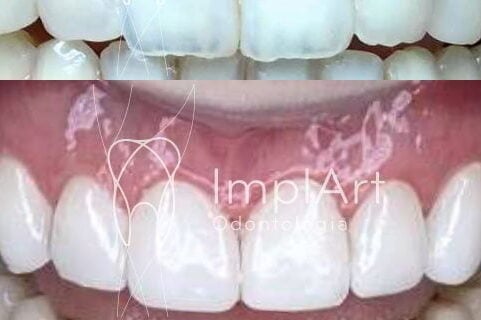
Contact lenses before and afterContact lenses before and afterContact lenses before and afterContact lenses priceDental contact lensesContact lenses before and aftercontact lenses before and afterDental contact lensesContact lenses before and after
Contact lenses price
Prices and values of dental treatments and dental contact lenses can only be given after a dental consultation. There are three main reasons for this:
The Code of Ethics of the Federal Council of Dentistry prohibits dentists from carrying out consultations without evaluating the patient.
Dental treatments can only be indicated after a careful assessment of the patient. There are numerous factors that influence the planning and price of a treatment, such as materials, techniques used, extent of the problem, etc.
The third is the importance of being assessed by a professional dentist who makes dental lenses, who is attentive to all the details of oral health, not just aesthetics.
It is certainly important to emphasize that a dental treatment cannot be compared by its price. The value of a treatment involves several factors and choosing by price alone cannot be a determining factor. Choose the quality and seriousness of the professional, not just the price!
We at Clinica Dentaria ImplArt are on hand to answer any questions you may have about this important and renewing treatment! Contact us to schedule your evaluation appointment with Dr. Roberto Markarian, our clinical director. If you are far away, abroad or in another state, there is always the possibility of scheduling your appointment online.
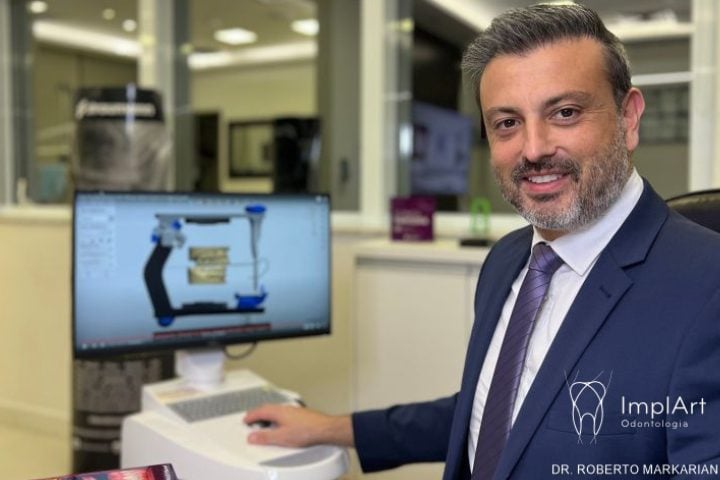
Dr. Roberto Markarian, specialist in prosthodontics.
Dr. Roberto Markarian is a reference in dental implants and computerized dental prostheses in Brazil. As well as having more than 10,000 implants installed, he is a researcher who produces knowledge that is published worldwide in renowned scientific journals in the field of dentistry. He is responsible for promoting knowledge and high technology applied in all the treatments offered by the ImplArt Clinic.
The state-of-the-art Cerec 3D system means that, in some cases, prostheses and dental restorations can be designed and made in just one day. This speed is only possible because of the Cerec 3D system with German technology.
Technology at the service of dentistry to make prostheses and restorations quickly
It has a machining unit (its own prosthetic laboratory) that sculpts the shape of the prosthesis in a ceramic block, according to the digital design previously made on a computer using CAD/CAM technology.
The prostheses designed and sculpted by the Cerec 3D System fit perfectly and are in harmony with each patient’s needs. The prostheses that can be made in one day at Cerec 3D:
Prosthetics and restorations in one day with CerecProsthetics and restorations in one day with CerecProsthetics and restorations in one day with CerecProsthetics and restorations in one day with CerecProsthetics and restorations in one day with CerecProsthetics and restorations in one day with Cerec
New at ImplArt: Cerec Primemill milling machine
The Cerec Primemill milling machine is the most up-to-date version of the Cerec Sirona system for producing crowns, bridges, dental lenses and aesthetic restorations. This advanced German technology allows us to carry out diverse prosthetic work in porcelain with even greater precision and richness of detail.
This new version has functions for faster and more accurate production, allowing us to increasingly deal with various cases in Day Clinic – intensive treatment.
Although we have the Cerec 3D system in our clinic, prostheses and restorations can only be made in one day in the most urgent cases, because they always need to be designed on a computer.
To find out if your case could benefit from this technique, please contact us. We’ll be happy to help you! Get to know ImplArt and its complete structure.
The lack of a tooth, usually lost as a result of an accident or damaged by decay, can be easily replaced by implanting a tooth (which works like a tooth root) and fixing a dental crown (which imitates the color and shape of the natural tooth) onto this dental implant. This treatment is called single tooth implant.
Most of the time, the surgery is very simple and quick and, depending on the type of implant chosen, the patient can be rehabilitated with the final definitive prosthesis in just a few months. This applies to both single and total implants.
The loss of one tooth leads to problems with the other teeth
Dental implants are certainly an effective solution for restoring the aesthetics and functionality of the smile. The absence of a tooth can compromise the aesthetics of the smile, but also its functionality. Missing teeth trigger bone resorption at the site, which can be prevented by implanting a single tooth. Bone loss varies from person to person, but in advanced cases it can unbalance dental occlusion.
In this way, neighboring and opposing teeth can move. For example, a person loses a back tooth in the lower arch and doesn’t replace it. The opposing upper tooth, which until then made contact with the lower tooth, loses its support and tends to move downwards over time. Dental malocclusion facilitates the development of problems such as plaque build-up, tooth decay and TMJ dysfunction. Therefore, the single loss of a tooth can lead to imbalances in neighboring teeth, and needs to be addressed with a dental implant.
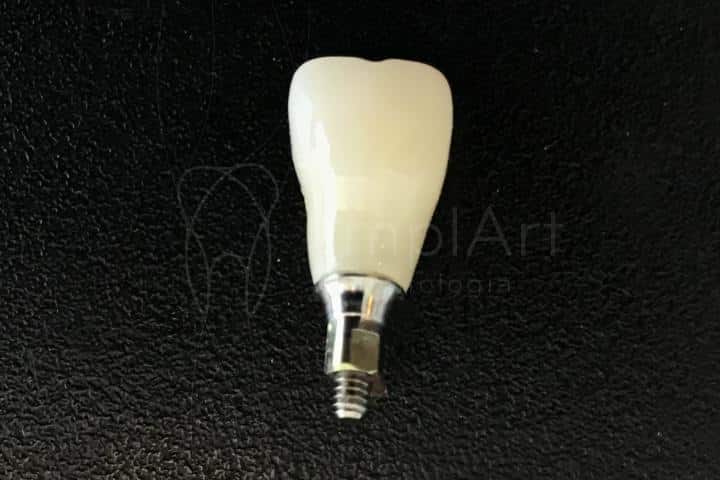
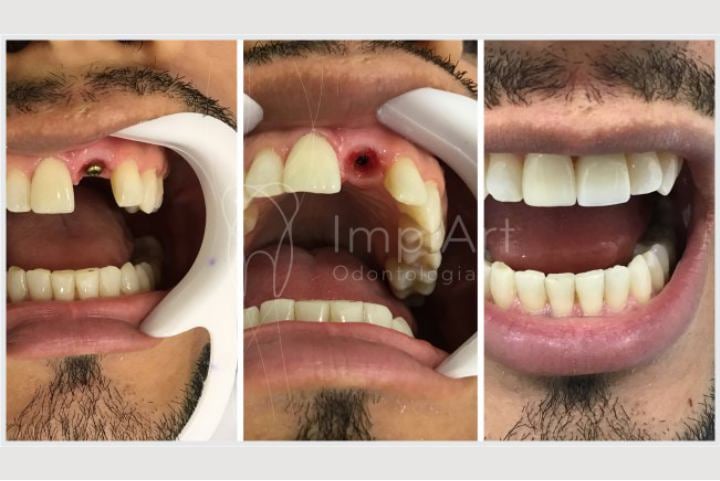
Aspect of the dental implant of the front tooth (central incisor) with the healed cap and the positioning of the provisional tooth.Single individual implant or single tooth implant.
Benefits of single tooth implants
Therefore, a single-tooth dental implant has many benefits over other treatment alternatives, the main ones being:
Neighboring teeth remain intact
The new crown is attached directly to the implant, which makes it possible to floss like a natural tooth
Excellent aesthetic and functional results
Ease of treatment, as the prosthetic components are prefabricated (approximately four sessions)
Unaffected by caries and infiltration
It is possible to place a temporary crown immediately after implant placement(immediate loading)
The installation of the implant prevents or stops bone resorption.
Please note: we are only available by appointment, but if you have accidentally lost a tooth or would like to have implant rehabilitation treatment , pleasecontact us so that we can arrange a time to see you as soon as possible.
Dr. Roberto Markarian is a reference in dental implants and computerized dental prostheses in Brazil. As well as having more than 10,000 implants installed, he is a researcher who produces knowledge that is published worldwide in renowned scientific journals in the field of dentistry. He is responsible for promoting knowledge and high technology applied in all the treatments offered by the ImplArt Dental Clinic.
Dental contact lenses in São Paulo to improve the aesthetics of your smile
Contact lenses for teeth are ultra-thin porcelain veneers (0.3 to 0.7 mm) used to correct certain aesthetic problems in the teeth. They work like “covers” or ceramic fragments, which are bonded to one or more teeth to better cover stains, small fractures and other defects, as well as to change the shape and size of teeth. Dental contact lens treatment is often used to beautify the smiles of famous people.
At the ImplArt Clinic, dental contact lenses are completely designed on computer and then better executed in dental porcelain by milling machines (3D printers) in our digital laboratory. This method is far superior to the traditional manual method of working with dental porcelain. Dental porcelain is a vitreous ceramic material (lithium disilicate) that is very resistant and mainly imitates the texture and shades of natural teeth.
It is therefore an aesthetic material, safe and totally biocompatible with the human body. The computerized design is based on images obtained by an intraoral scanner – a high-precision camera available at ImplArt Odontologia.
Dental contact lenses step by step (in case of dental asymmetry)
Dental contact lenses before and after: See some of the work carried out at ImplArt Odontologia
Contact lenses for teethContact lenses for teethContact lenses for teethContact lenses for teethContact lenses for teethContact lenses for teethContact lenses for teethContact lenses for teethContact lenses for teethContact lenses for teethContact lenses for teethContact lenses for teeth
They don’t require much tooth grinding to be installed
Preserves the structure of the teeth
No discomfort in chewing function
Porcelain doesn’t change color over the years
Incredibly natural and harmonious result
It can be designed and executed in a short time, in some cases even in a Day Clinic.
At ImplArt Odontologia, a specialized clinic, we make dental contact lenses with work that is precise and personalized for each patient. This is only possible because we have a prosthetic laboratory on our premises, and the best CAD/CAM-based technologies, from the computerized design of the treatment to the execution of the dental contact lenses.
In most cases it can be done quickly by Dayclinic. Ask about fast dental lenses at Dayclinic. If you have any questions about the price of lenses, forms of payment, planning, and a better approximate value or treatment time, then please contact us.
The ImplArt Dental Clinic is constantly investing in modern technologies that are sure to make dental treatments faster, more precise and more comfortable. So, for those patients who can’t take a cast at the dentist, there are alternatives! The good news is that new digital molding treatments allow pure zirconia prostheses or pure porcelain crowns to be made using computerized molding.
The ImplArt dental clinic was one of the first dental clinics in Brazil to acquire the new intraoral scanner for taking color and computerized digital impressions, the Trios Scanner from the Danish company 3Shape. Our Trios scanner uses CAD/CAM technology to:
Advantages of the intraoral scanner for digital molding compared to conventional putty molding:
Comfort – the use of the intraoral scanner allows for faster and more comfortable molding for the patient, especially for those who report distress when using molding materials in the oral cavity.
Predictability of results – reading the different shades of the patient’s teeth allows restorations to be made that reproduce these same shades, leaving them looking natural as a whole smile. A recent joint study found that the Trios shade measurement is more reliable than that of the human eye.
Integration – the 3Shape system enables integrated communication between the dentist (requester) and the dental laboratory (executor).
If you have any questions, please contact us or make an appointment. We’ll be happy to help you.


 Agende sua consulta agora por WhatsApp