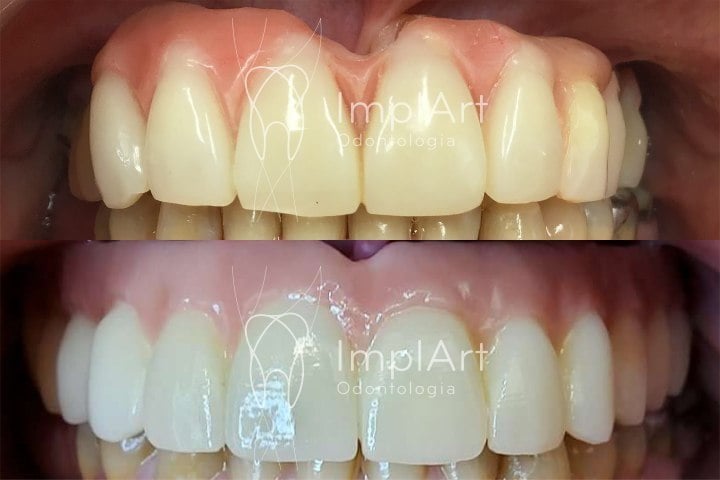
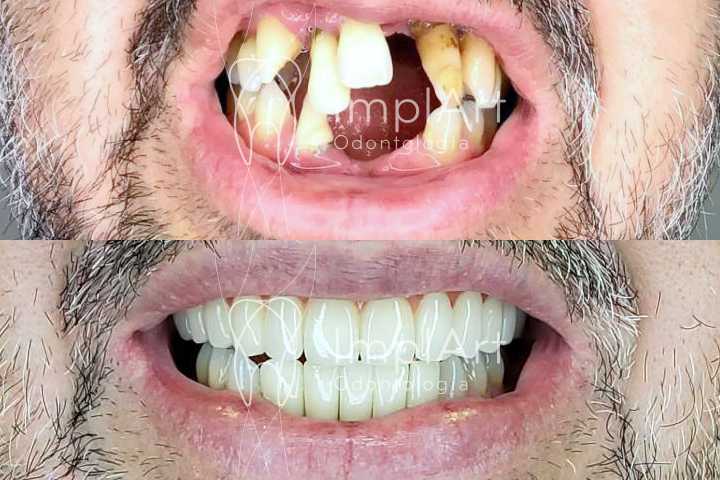
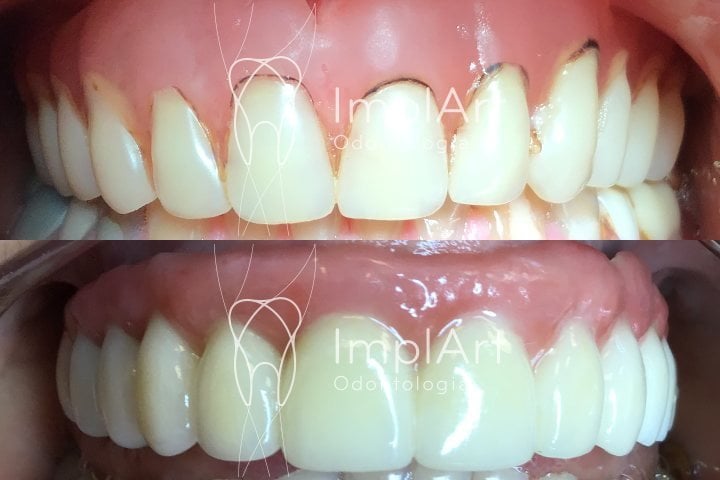
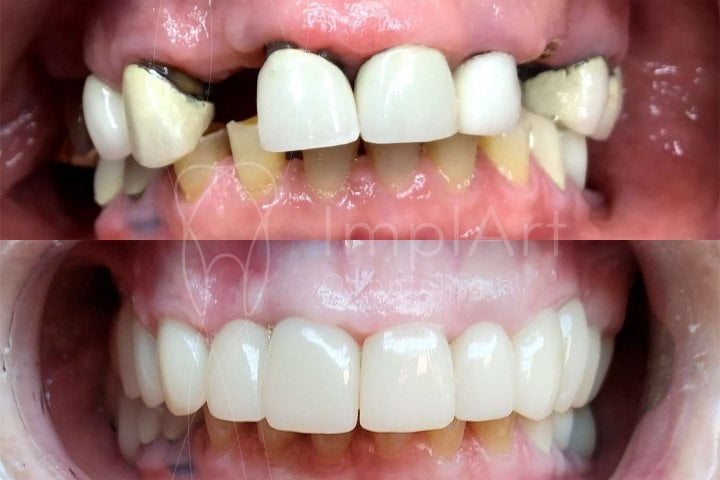
Translucent cubic zirconia is an evolution of conventional dental zirconia. Dental zirconia is increasingly being used as a material for making a dental crown or even for a fixed prosthesis on dental implants. As our dental Clinic is integrated with a dental Lab in Sao Paulo-Brazil, we can easily delivery zirconia crowns in a new days. Translucent Zirconia has certainly come to revolutionize the way dental prostheses are made, since it uses modern computer graphics resources to design the prostheses, and modern 3D milling machines to sculpt them.This makes treatment faster and more comfortable for the patient.
More about Translucent Zirconia crowns
In addition, Zirconia is the most resistant material compared to other types of crownsand allows for results with a high degree of naturalness, being the most similar to the appearance of natural teeth.
First and foremost, one of the greatest advantages of the Pure Zirconia dental crown is its strength and durability.In addition, its modern execution method, which doesn’t require the old mass moldings and only uses a 3D scanner, makes the treatment much more comfortable for the patient.It is therefore an excellent option for those who want metal-free treatment, a situation that is highly valued today with biological dentistry.
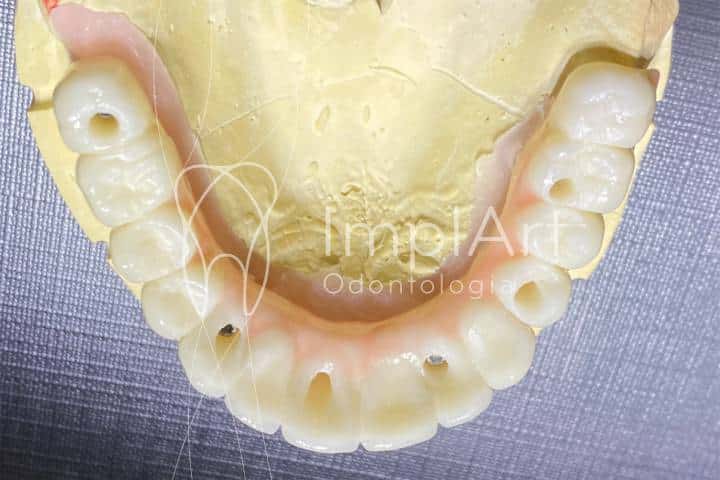
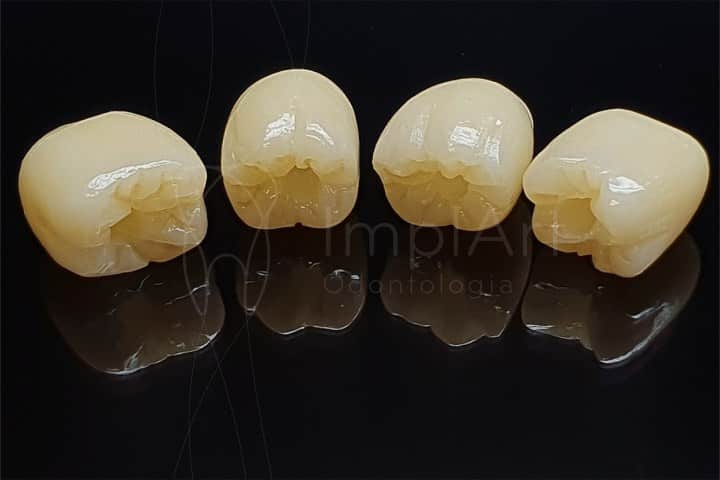
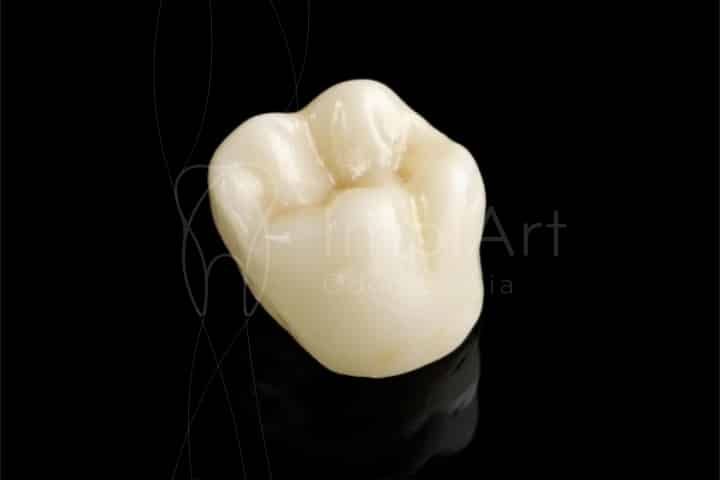
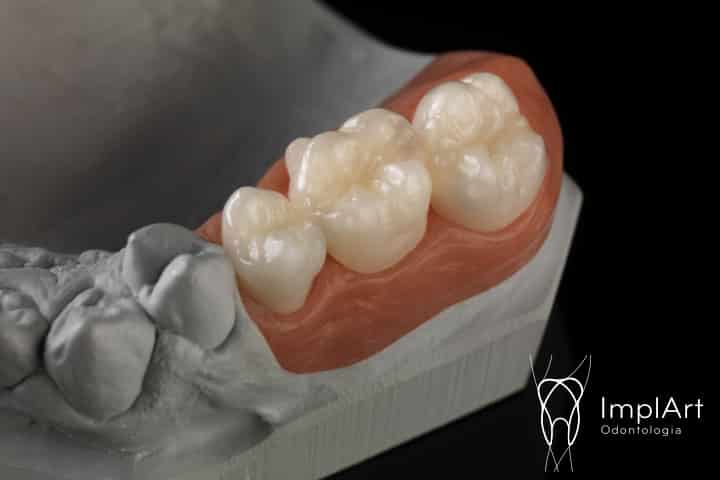
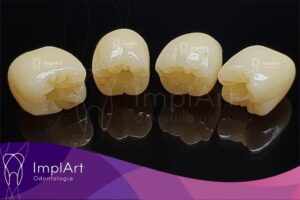
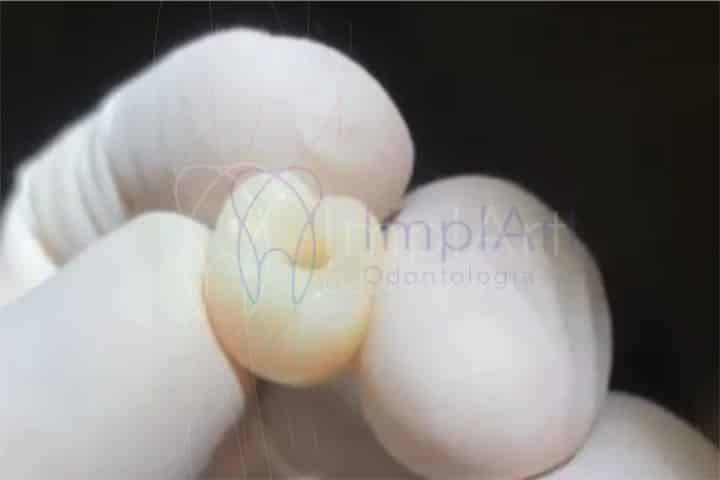
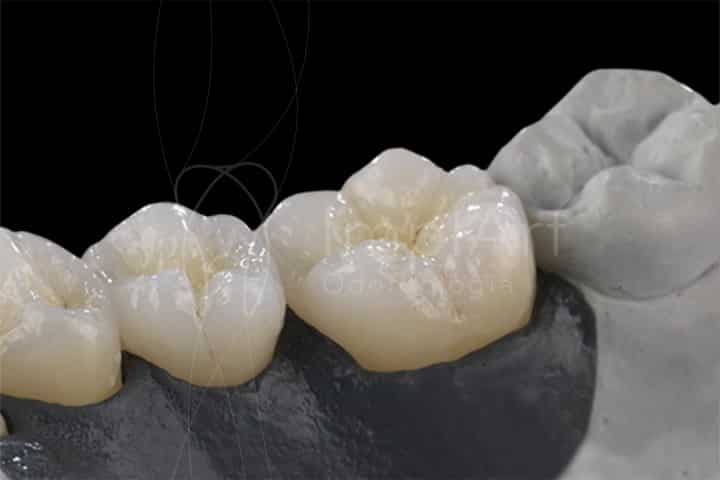
Translucent cubic zirconia crown for molar tooth (bottom), with hole for screwing into dental implant
These zirconia structures can be used both for implant prostheses, types of crowns on implants and for crowns on natural teeth.One of the pioneering companies in the development of durable and aesthetic zirconia dental prostheses is the Austrian company AmannGirrbach.Now it is introducing a new type of dental ceramic: Zolid FX translucent cubic zirconia.
It is a fully biocompatible material used to make first-rate prosthetic crowns, not only single-unit, but also bridges of up to 3 units. The main characteristics of Zolid FX are its super-high translucency, high strength and long-term stability.
It is therefore a strong alternative to the already established lithium disilicate (glass ceramic), and can therefore be especially suitable for cases that require high porcelain crown strength. Cubic zirconia crowns can be installed both anteriorly with excellent aesthetics and posteriorly. They can also be used in dental implant treatment.
What is the manufacturing process like?
The Zolid FX cubic zirconia crown is made using computerized CAD/CAM equipment.It starts with milling the rough block on a 3D printer to the shape of the tooth.The zirconia crown is finished with the manual addition of colors and shading so that the crown has natural visual characteristics, like the neighboring teeth.The pure zirconia crown is super aesthetic and is up to 10 times stronger than ordinary (feldspatica) porcelain.
Translucent cubic zirconia crowns are suitable for bruxism patients due to their resistance
Bruxism is an oral functional disorder characterized by involuntary grinding or clenching of the teeth. The excessive force generated by bruxism can cause not only muscle and joint pain in simpler cases, but also the destruction of part of the tissues (bone and gum), enamel or the structure of the dental crown in more advanced cases.
It is important to remember that before your permanent porcelain crown is made, you will receive a temporary crown. This is used to check the aesthetics and chewability of the permanent crown.
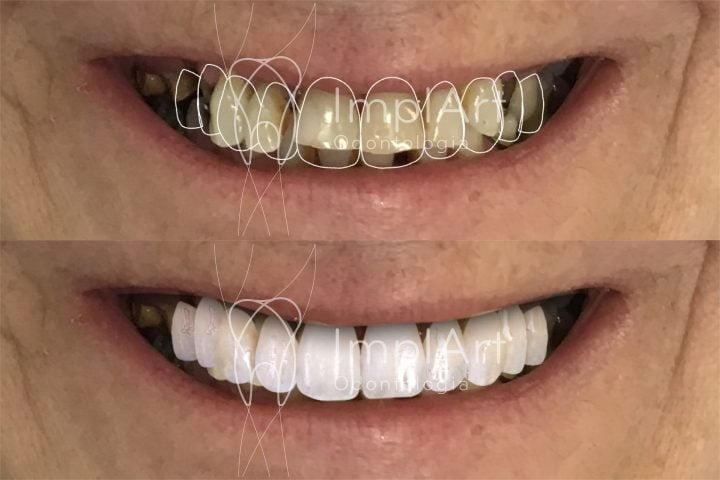
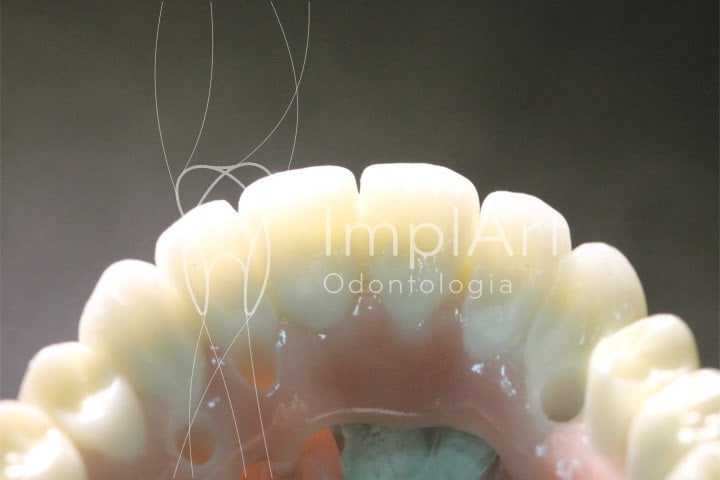
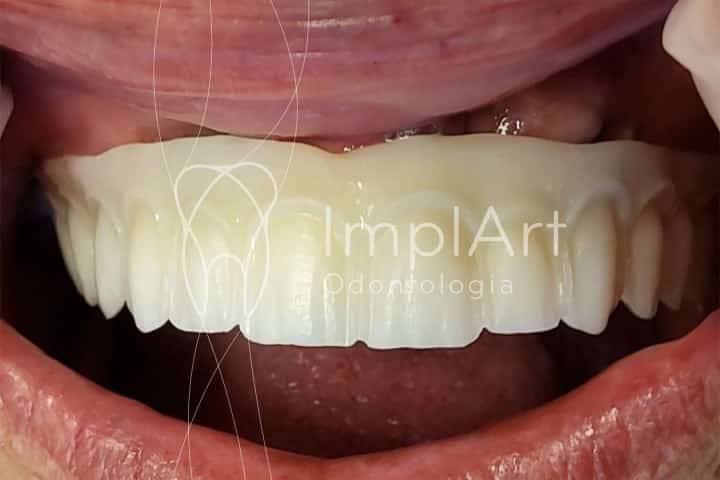
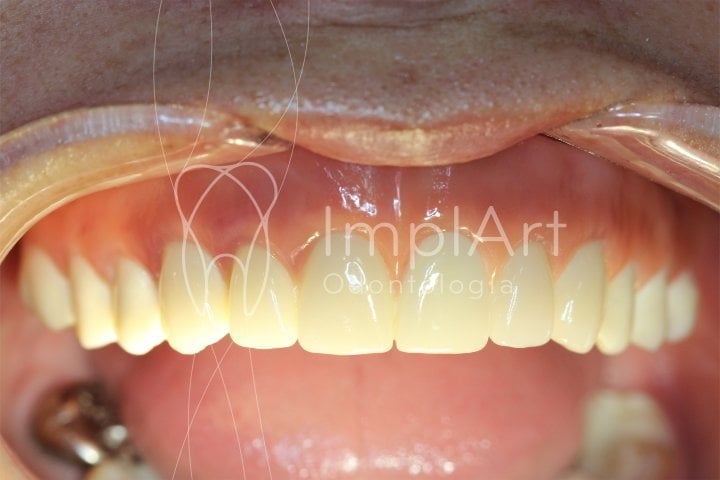
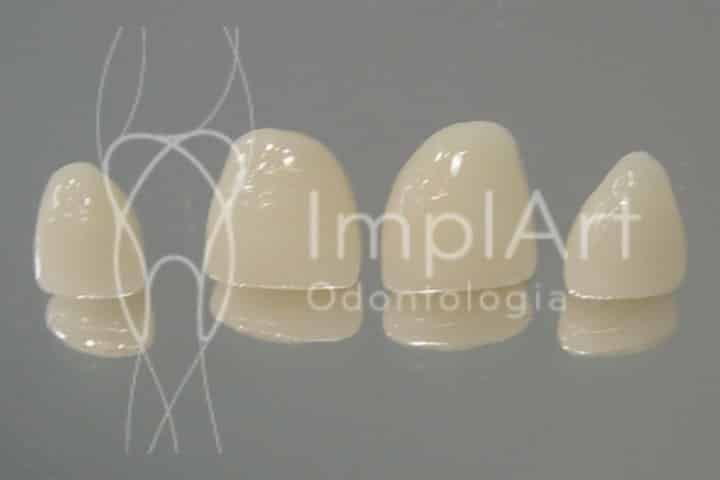
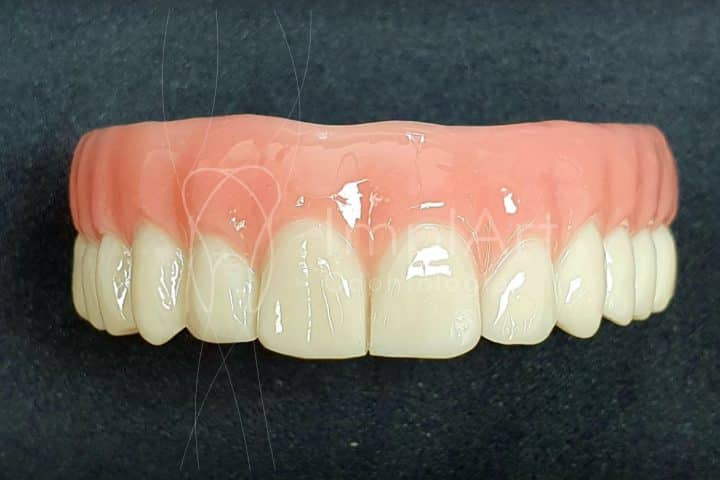
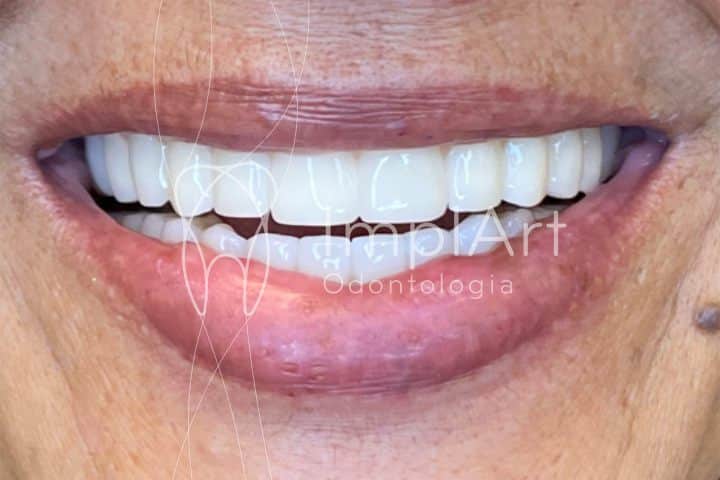
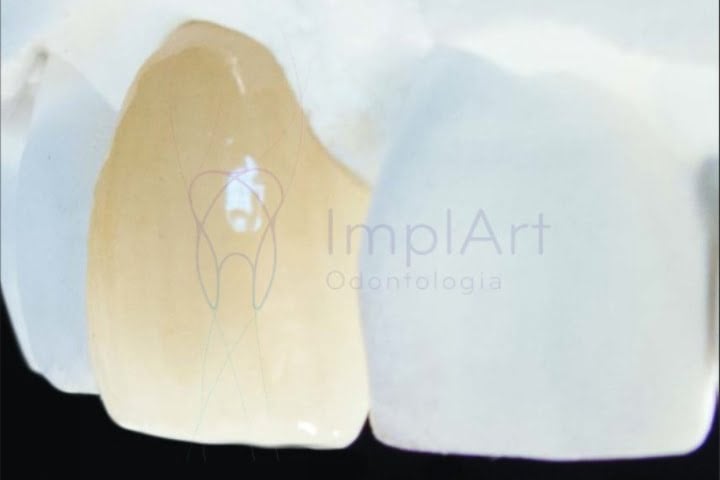
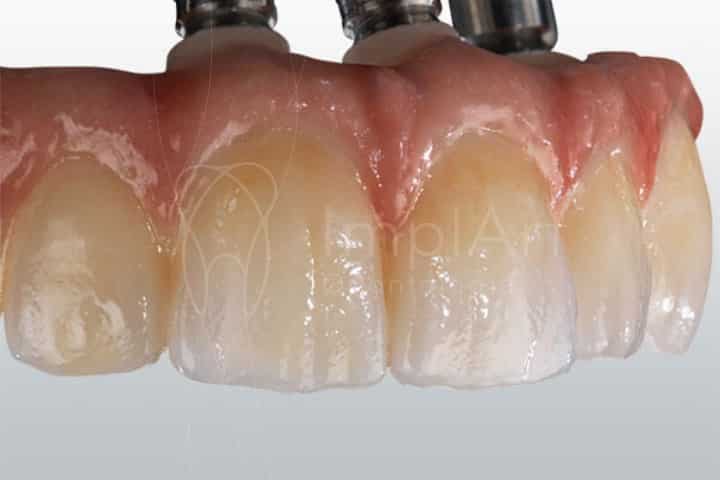
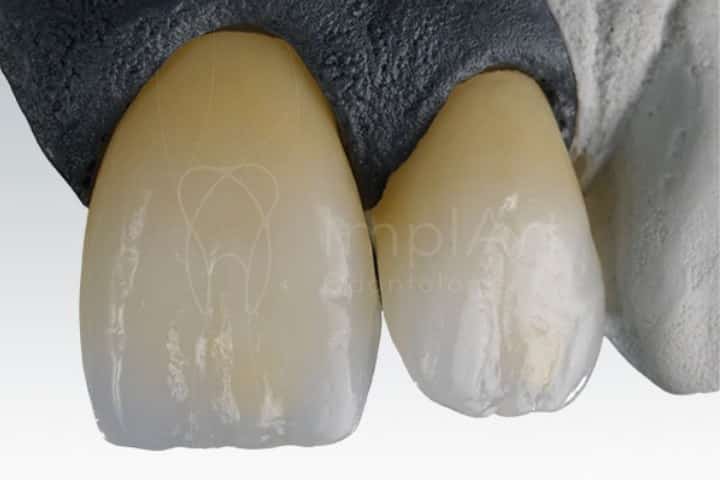
More translucent and resistant cubic zirconia crownsMore translucent and resistant cubic zirconia crownsMore translucent and resistant cubic zirconia crownsTranslucent zirconia crown for the front teeth. The two central incisor teeth (the largest) were made from pure dental zirconia
However, bruxism can be just as damaging to the structures of prosthetic crowns made from certain materials. For this reason, there has always been a need to develop prostheses with increasingly resistant and stable materials, and at the same time aesthetic (without metals in the structure).
The translucency and strength characteristics of Zolid FX are fundamental to making the prosthetic crown very comparable to natural teeth. The result is extremely aesthetic crowns and restorations with high strength and long-term stability.
ImplArt Dental Clinic only works with materials of the highest quality, developed by serious companies. For example, AmannGirrbach, which only introduces materials and equipment to the market after carrying out numerous tests and research.
Pure zirconia is also known as cubic zirconia, translucent zirconia, monolithic zirconia and black zirconia. It is currently considered the most modern and resistant material for making dental crowns.
Dental prostheses made from this material are fixed onto dental implants previously placed in the upper or lower jaw.
In order to offer patients the most modern treatments, the ImplArt dental clinic has once again innovated by pioneering the best European technology (Austria) to manufacture 3D zirconia dental prostheses in its own laboratory.
Its modern manufacturing allows treatment to be carried out using 100% computerized techniques, with complete digital planning of the case. This means more comfortable treatment for the patient, much more predictable, and above all, faster.
The translucent zirconia protocol prosthesis is completely white and contains no metal inside. As a result, the colors and shapes are more beautiful and natural.
Planning 3D zirconia implant/prosthesis treatment
For a complete treatment with dental implants, there must first be an extensive conversation between the dental surgeon and the patient. The definition of the total treatment takes place in 3 stages:
1- Firstly: Planning the surgical and prosthetic aspects of the all-tooth or partial implant case. First of all, the patient’s needs are studied, with a clinical assessment and radiological examinations, so that the case can be planned precisely before it is carried out.
3- Thirdly: Preparation of the final dental prosthesis. Once the implants have healed, the long-awaited making of the complete prosthesis begins, according to the material chosen by the patient at the start of their treatment.
Zirconia dental prosthesis without gums. In some cases it is possible to make a zirconia dental prosthesis without the pink gum layer. In an acrylic dental protocol this would not be possible.
Not all protocol prostheses are the same and made of acrylic!
The choice of implant prosthesis material
Nowadays, you can choose from a variety of materials for fixed prostheses on implants (dental protocols). In the past, there were only metal-ceramics (metal structure and porcelain exterior) and acrylic (resin), made by hand.
Today, ImplArt is able to offer patients options with extreme resistance and superior aesthetics, such as computer-engineered translucent zirconia. In this sense, each type of prosthetic material can have an impact on the patient’s treatment in terms of price, preparation time and the final aesthetics of the total implant.
Therefore, in this article, we will explain the most modern model of fixed prosthesis on implants: the computerized translucent zirconia prosthesis, as well as its advantages and characteristics.
What is 3D dental zirconia? Zirconia is a white material that has the strength of a metal
Zirconia dental prosthesis being designed on a computer, with a photo of the face superimposed. This gives us additional information about the lips, skin and gum colors, the shape of the teeth and the final appearance of the smile.
Types of zirconia prosthesis for dental protocols
Today there are three types of dental zirconia to better perform protocol prostheses on implants (fixed dental prostheses), namely :
1. milky whitezirconia structure (lower volume), together with applied porcelain overlay (higher volume)
2. 3Dtranslucent zirconia prosthesis (larger volume), i.e. with a small application of porcelain on the outside of the teeth (smaller volume)
3.3D monolithic pure zirconia prosthesis (full volume) with make-up, so no additional porcelain applied
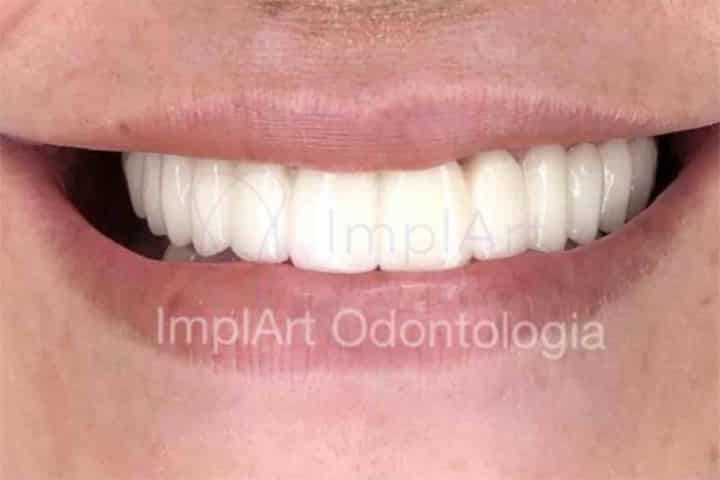
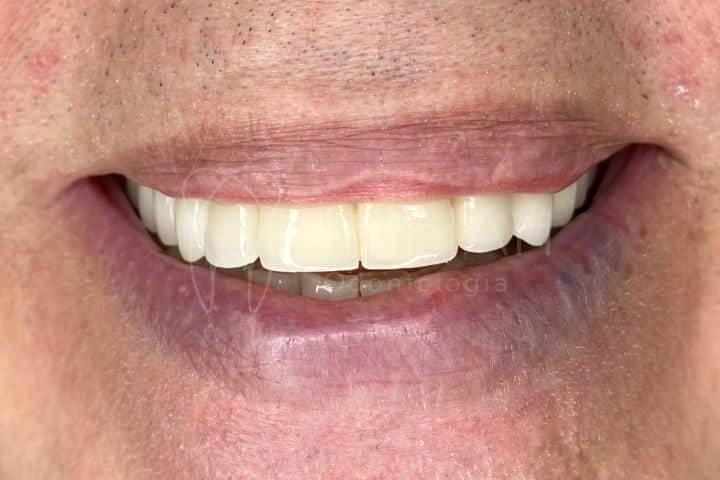
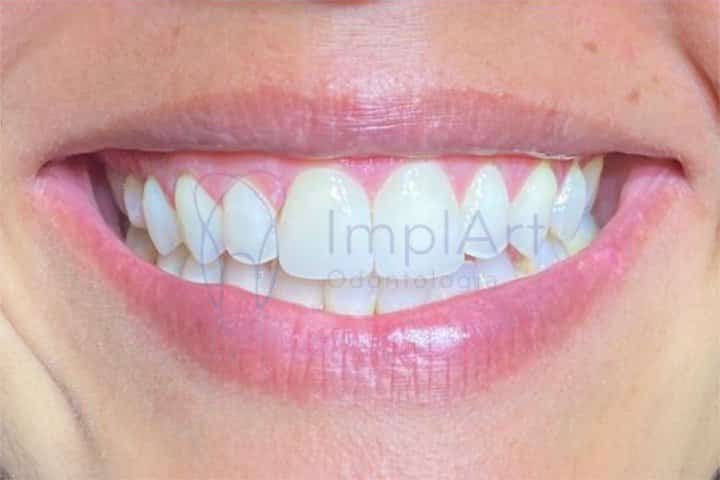
The aesthetics of aesthetic zirconia fixed prostheses are unbeatable. Notice how translucent the material is and how beautiful and natural it looks.
What does the 3D translucent pure zirconia implant prosthesis look like?
In this type of zirconia prosthesis, there is only a small porcelain overlay on the structural part of the prosthesis. In short, the entire final process of making the monolithic zirconia prosthesis is done by computer programs and robotic machines( Digital Dentistry).
Therefore, we are sure that the fittings will be perfect, the anatomy will be that of natural teeth, and the colors will be realistic.
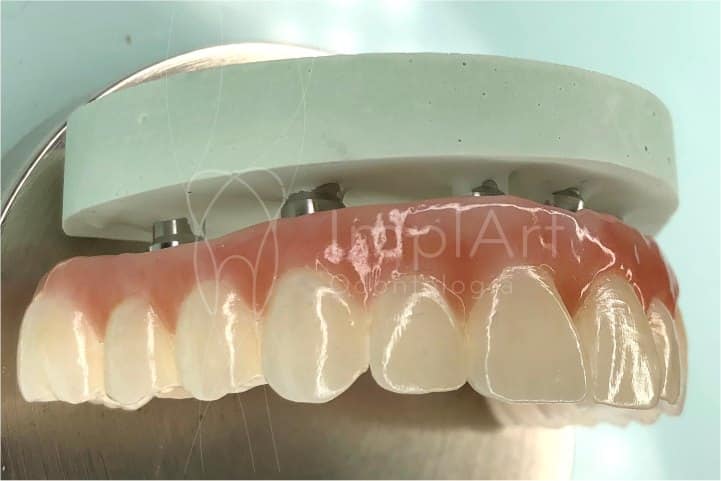
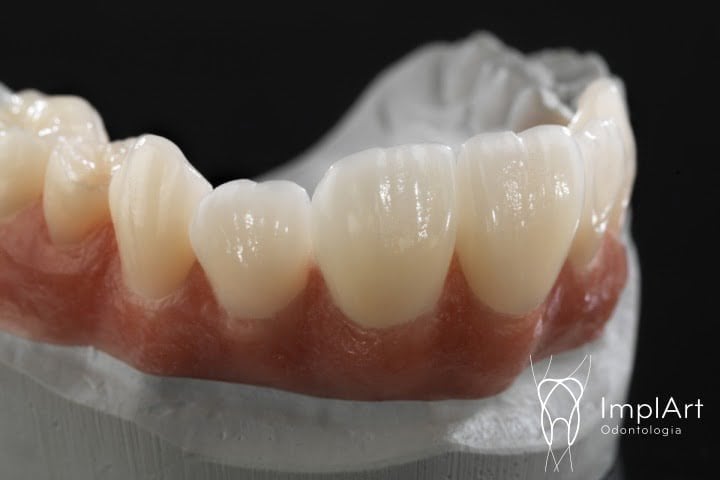
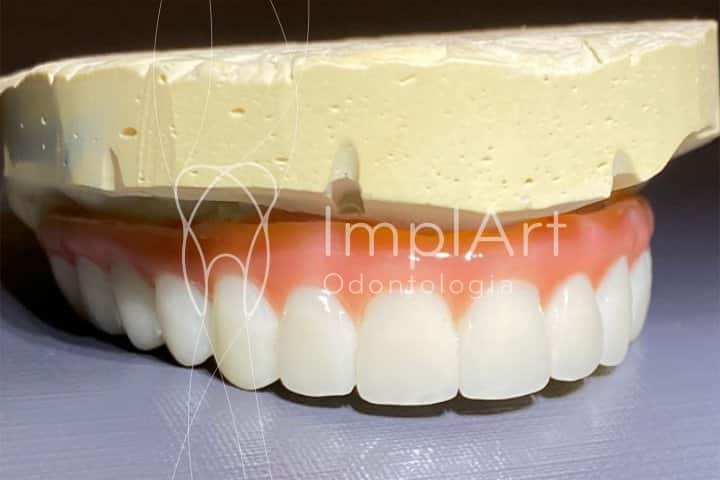
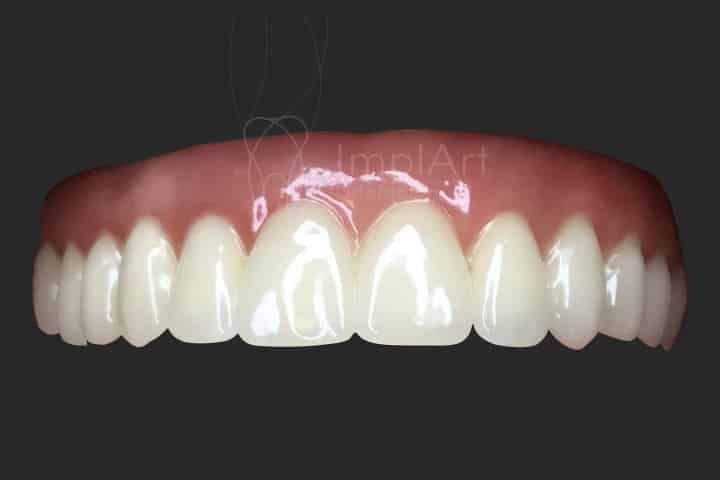
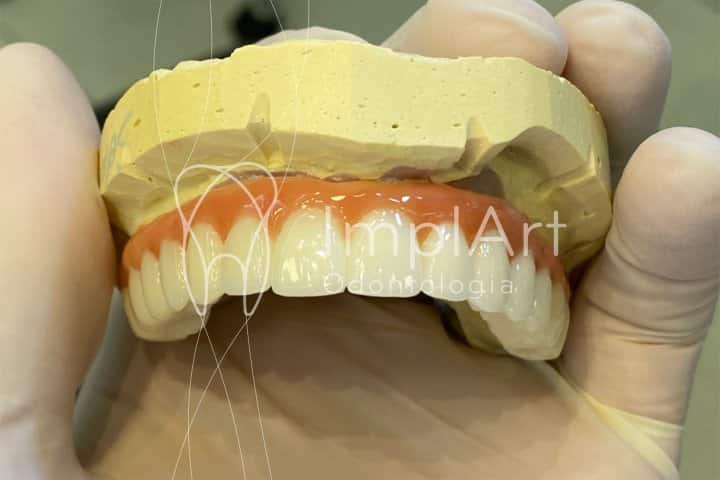
Dental zirconia protocol. Note that there is a small layer of translucent porcelain on the outside of the tooth to give it more shine, better color and more translucency. The rest of the prosthesis is solid and made of pure zirconia that has been tinted to match the natural color of the tooth and gums. The holes will be closed after the fixed prosthesis has been installed.
Advantages of the 3D zirconia protocol prosthesis
In contrast to metal as a structure, the main advantages of translucent zirconia are its biocompatibility, excellent aesthetics and extreme resistance. Zirconia, with the white structural part of the dental prosthesis, undeniably enhances the natural cosmetic characteristics of porcelain.
In fact, dental zirconia is exceptionally strong and durable as a base. So much so that the use of small portions of porcelain over this translucent zirconia structure provides complementary aesthetics for the complete implant.
The structure of the zirconia dental prosthesis is white and, at this stage, not yet colored or shiny. In the next phase of the prosthetic work in our dental laboratory, the piece will come to life with the pigmentation of teeth and gums. The final colors depend on the consensus between the person’s taste and the dentist’s opinion. However, you can virtually choose any color from the available range. The most commonly used shades for porcelain zirconia teeth are B1, A1, BL4, A2, B2. For the gums, we try to follow the color of the patient’s natural gums, with the most common colors being STG4, STG5 and STG8.
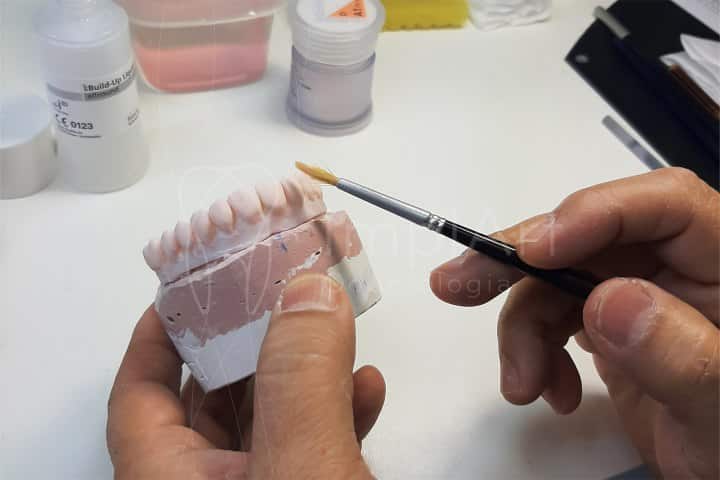
Work on applying layers of ceramic. In the end, all the natural aspects of the teeth and gums will be reproduced, imitating their tones, textures and translucency.
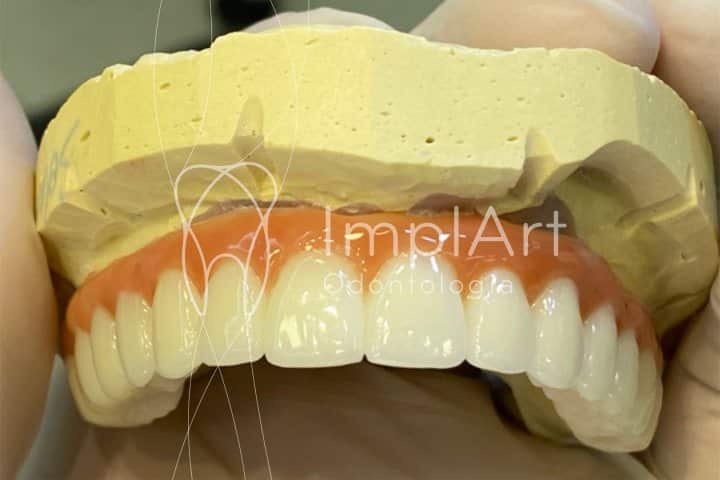
Zirconia prosthesis with aesthetic ceramic application, ready to be installed on the implants
Superior aesthetics of 3DZirconia
Dental zirconia can be custom-made in such a way that it resembles the enamel and gum tissues, thus optimizing the aesthetic result.
Translucent dental zirconia is undeniably the best material for fixed prostheses on implants, as it offers translucency, naturalness and strength as a result.
First of all, it should be noted that the zirconia protocol prosthesis makes no noise when chewed, is not heavy, nor does it damage dental implants, and certainly not opposing teeth.
Translucent dental zirconia is a material that above all does not change color, does not stain and therefore does not wear out with use.
Observe the natural anatomical details of the finished porcelain and zirconia fixed dental prosthesis. This work is done in our in-house digital dental laboratory.
How are 3D translucent zirconia dentures made?
The ImplArt Clinic has all the infrastructure to make your zirconia fixed prosthesis in its own laboratory. Here’s how it works: a zirconia dental prosthesis is manufactured using computerized processes, starting with the milling of a solid block of zirconia.
Above all, because it is a CAD-CAM (computerized) job, your dental project is stored in our laboratory, so the original project can be printed again quickly, should the need arise.
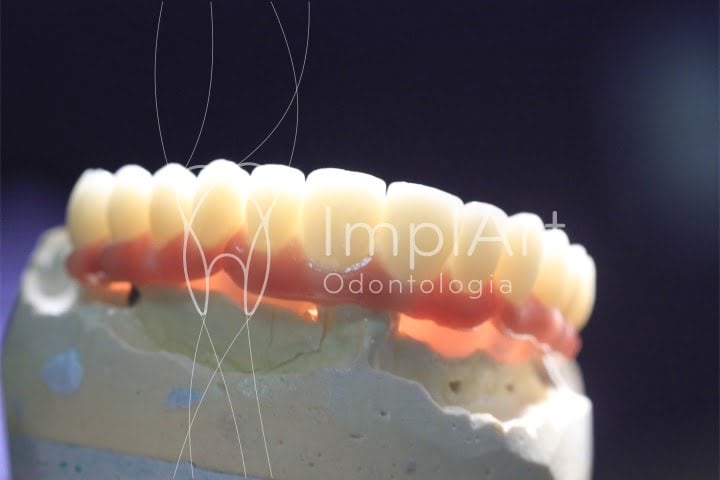
Dental prostheses: versions with or without artificial gum are possible (but it depends on an examination to check feasibility).1-Without gum layer; 2-Light gum layer; 3-With gum layer.
Maintenance of fixed 3D translucent zirconia dental implants
First and foremost, zirconia is extremely resistant and is certainly the strongest material for dental use. As such, its resistance is superior to porcelain and, of course, resin.
Maintenance for a zirconia prosthesis involves a visit to the dentist every 6 months for prophylaxis, in order to monitor oral health in the same way as recommended for all other patients.
The risk of the prosthesis fracturing is, above all, very rare, due to a characteristic of the material.
With regard to the color and shape of the teeth, these remain unchanged over time, making the material an excellent choice for its durability and, above all, long-term aesthetics.
It is always important to remember that, once treatment is complete, you should visit your dentist every 6 months for prophylaxis and to monitor the results of your treatment.
The zirconia prosthesis is a white ceramic used to make the internal structure of a dental implant prosthesis. It is currently considered the most aesthetic material for this purpose, as its shade is very similar to natural dentin and it also allows more light to pass through (translucency).
Conteúdo deste Artigo sobre Prótese em zircônia para implante dentário
Zirconia provides a metal-free crown with high strength and aesthetics
A crown with a zirconia structure is an aesthetic alternative to a metal structure (metal-free crown). Although very resistant, the metal structure can leave the crown looking darkened when exposed to light.
In addition, if the patient has remodeling of the gums over time, a grayish line can appear at the gingival level and cause aesthetic compromise in the smile. For this reason, metal frameworks are often recommended for posterior crowns (which require a lot of strength, but not much aesthetics).
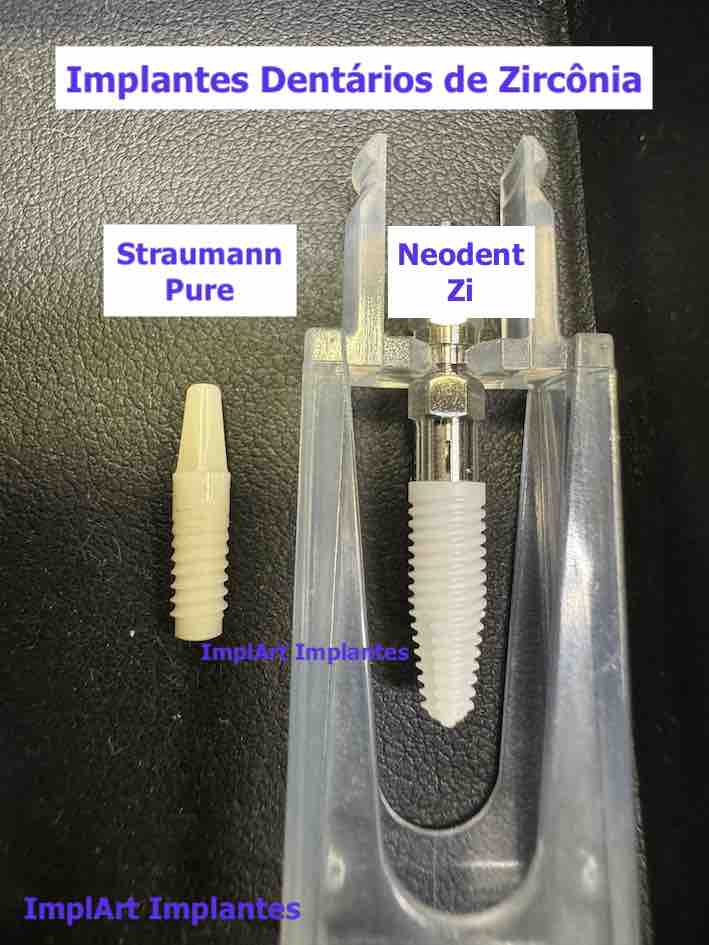
When you lose a tooth, you can have a zirconia implant placed, which is a piece of white ceramic that sits in place of the tooth root. After healing, you can place a zirconia prosthesis, which is a ceramic cap that sits on top of the implant and looks like a real tooth. This combination has some benefits, such as
Beauty: zirconia is as white as teeth and doesn’t turn the gums gray like metal. What’s more, zirconia is transparent and shines like teeth, making your smile look more beautiful and natural.
Health: zirconia is a material that adapts well to bone and gums without causing allergies or inflammation. This helps with the healing and firmness of the implant.
Resistance: zirconia is a very strong material that can withstand the forces of chewing and does not wear out easily. This makes the implant and prosthesis last longer.
Therefore, the zirconia implant together with the zirconia prosthesis is a good option to recover the function and beauty of lost teeth, with a safe, comfortable and durable material.
Initially, the teeth are scanned using intraoral scanners to generate a 3D digital mold. The design of the crown is made on a computer and executed on 3D tooth printers.
Finally, the crown receives a layer of porcelain that makes it look very similar to a natural tooth and can be fixed onto the dental implant. Among the indications for zirconia crowns on implants are single crowns, bridges and complete fixed prostheses.
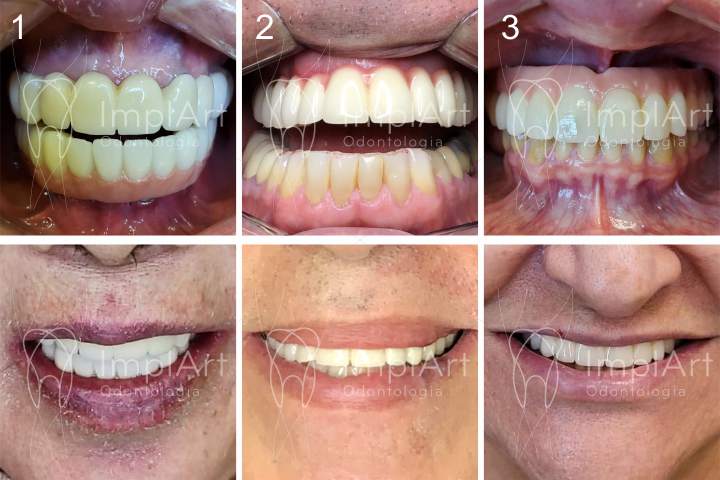
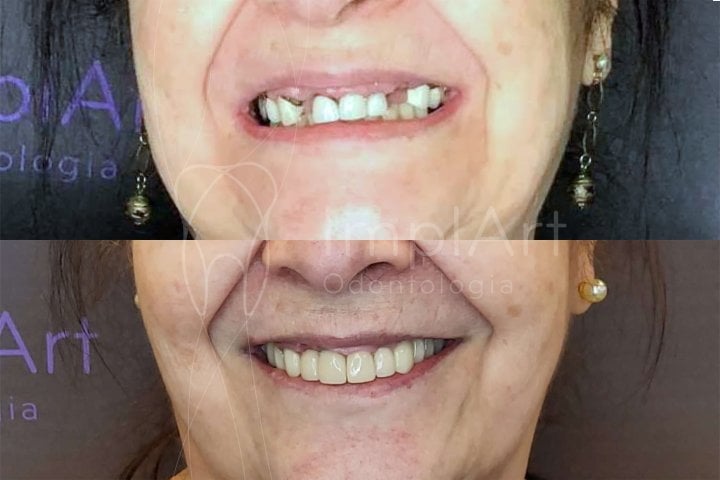
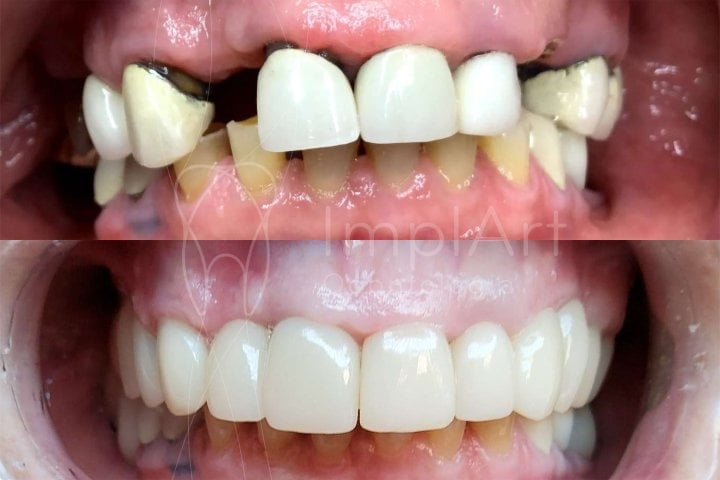
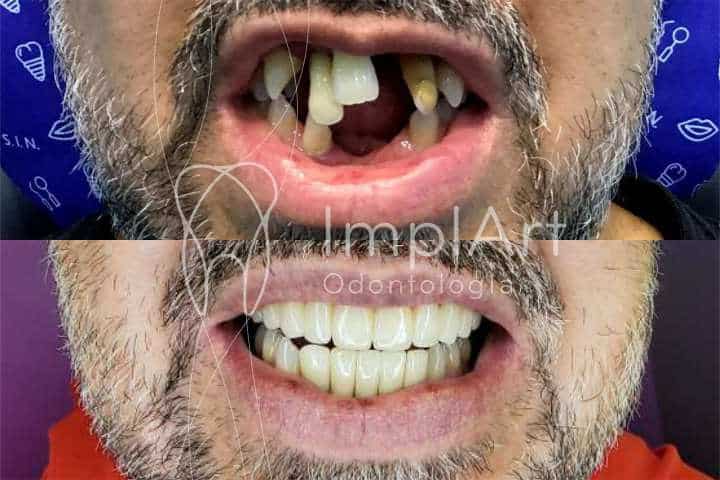
Zirconia prosthesis for dental implantsZirconia prosthesis for dental implantsZirconia prosthesis for dental implantsZirconia prosthesis for dental implantsZirconia prosthesis for dental implantsZirconia prosthesis for dental implantsZirconia prosthesis for dental implantsZirconia prosthesis for dental implantsZirconia prosthesis for dental implantsZirconia prosthesis for dental implantsZirconia prosthesis for dental implantsZirconia prosthesis for dental implantsZirconia prosthesis for dental implantsimage of a fixed zirconia prosthesisZirconia prosthesis for dental implantsimage of a zirconia prosthesis – protocolZirconia prosthesis for dental implantsZirconia prosthesis for dental implants
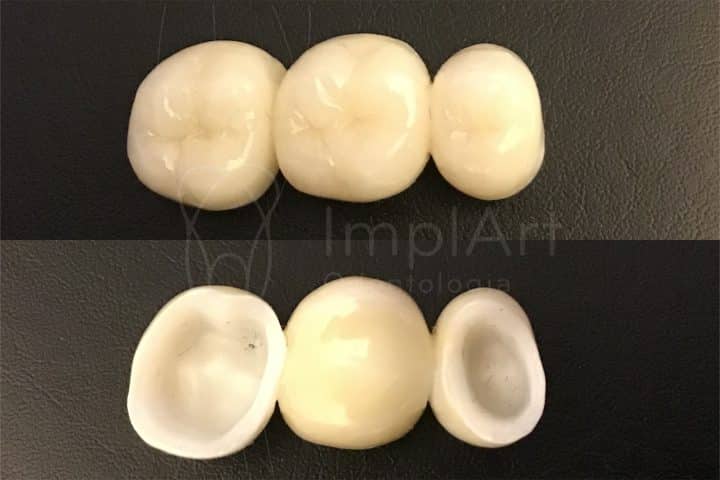
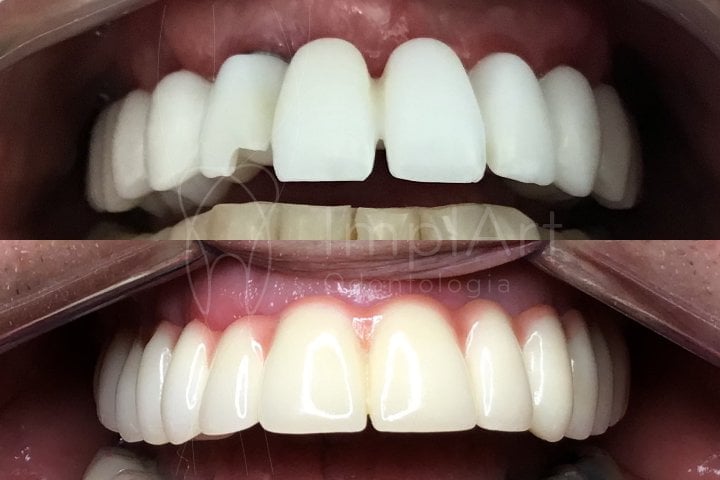
Zirconia implant prosthesis with porcelain applied. Above: bare zirconia framework ready for application. Below: porcelain applied to achieve proper form, color and function.
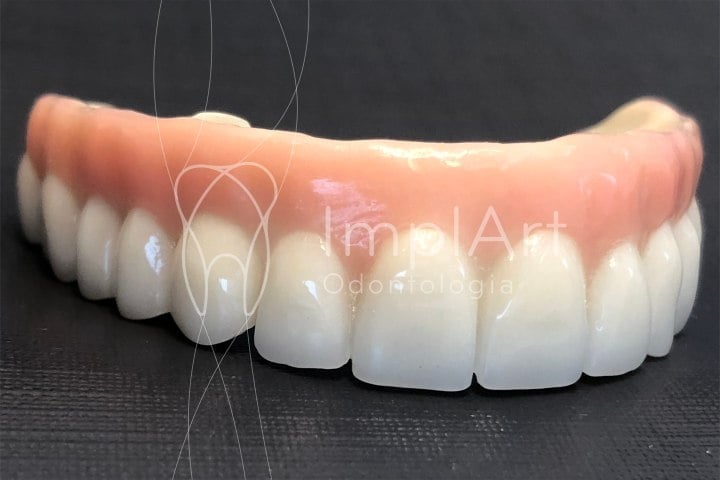
Thezirconiaprotocol prosthesis for the complete upper jaw is a fixed aesthetic prosthesis on a titanium dental implant for oral rehabilitation. It involves computerized design methods, and has become the most requested option among patients looking to combine the strength of the material with its superior aesthetic result in a total dental implant and protocol prosthesis treatment.
Designed using computerized technology and a 3D scanner, zirconia protocol prostheses with full dental implants are the most modern option for replacing completely lost teeth. Combined with fast-healing implant types, such as the Straumann implant, they allow for complete rehabilitation in a short space of time.
Why is the zirconia protocol the best material today?
Zirconia protocol prosthesis treatment is fully computerized. In addition, it allows for faster results, much more predictability in treatment, as it relies on computer graphics. It also allows for an aesthetically impeccable result and a lot of resistance. In addition, the treatment is carried out using only 3D scanners, without the need for the old conventional molds.
The absence of teeth certainly compromises aesthetics and the patient’s quality of life, which is why the placement of implants with prostheses is able to give the person peace of mind when chewing, speaking and smiling.
The zirconia protocol has many advantages over the conventional resin protocol with a metal structure. Its main qualities are aesthetics and high resistance.
Dental zirconia (pre-sintered zirconium oxide) is a translucent, light-colored material that allows light to pass through, just like natural teeth, and therefore offers an aesthetic result. In this sense, the structure of the Zirconia protocol prosthesis looks discreet inside the prosthesis, even if exposed in brightly lit environments. Certainly the most modern materials are the Zirconia protocol and the porcelain protocol on a total implant.
Zirconia is made using a computerized 3D method and is not a manual job
The structure of the zirconia prosthesis is a single piece, obtained by milling a rough block on a machine that works like a 3D printer. In other words, the treatment is planned on a computer using CAD/CAM technology. The milling machine then wears away the zirconia block until it reaches the shape of the structure of the prosthesis designed to be installed on a dental implant.
Finally, the zirconia structure is characterized with porcelain and the shade is obtained by brushing on specific coloring liquids for this purpose. It is possible to reproduce various shades that make up the same tooth, leaving the prosthesis looking very natural.
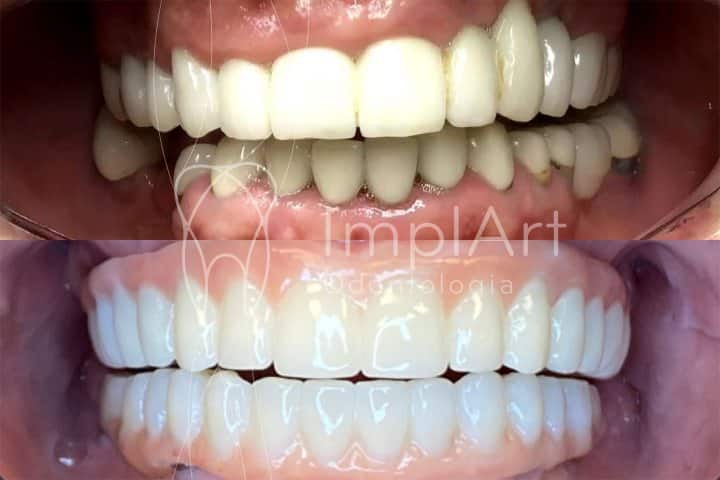
Protocol zirconia prosthesis for complete upper jaw full dental implantimage of a complete oral rehabilitation in zirconiaProtocol zirconia prosthesis for complete upper jaw full dental implantProtocol zirconia prosthesis for complete upper jaw full dental implantProtocol zirconia prosthesis for complete upper jaw full dental implantProtocol zirconia prosthesis for complete upper jaw full dental implantProtocol zirconia prosthesis for complete upper jaw full dental implantProtocol zirconia prosthesis for complete upper jaw full dental implantProtocol zirconia prosthesis for complete upper jaw full dental implantProtocol zirconia prosthesis for complete upper jaw full dental implantProtocol zirconia prosthesis for complete upper jaw full dental implantProtocol zirconia prosthesis for complete upper jaw full dental implant
The zirconia prosthesis is then screwed onto the dental implants, which are strategically placed in the jaw. The fixed zirconia protocol on implants can bring great relief, especially for patients who wear dentures. What’s more, this model of prosthesis leaves the roof of the mouth free and the patient feels more comfortable chewing and speaking.
Another great advantage of the zirconia protocol prosthesis over the resin protocol is its resistance to staining. In principle, resin is a material that can stain or yellow over time and with pigmented foods.
Materials that are biocompatible with the human body
Indications for fixed zirconia dental prostheses – Zirconia Protocol
In principle, the patient needs to go for a consultation with an implant dentist at the ImplArt Dental Clinic, so that clinical criteria such as bone volume and general oral conditions can be assessed.
Maxillary rehabilitation with a zirconia protocol can be indicated for people with total upper edentulism, even those who have been wearing removable prostheses for a long time.
If you have any questions, please contact our team through one of the channels below. We, at the ImplArt dental clinic, are a reference in the field of modern dentistry, and we have a team ready to serve you with high technology and knowledge. We’ll be happy to help you!
Contemporary dentistry continually seeks solutions that combine the highest functional performance with unparalleled aesthetics, especially in dental implant rehabilitations. In this context, Pure Emax crowns emerge as the material of choice for cases demanding maximum naturalness and seamless integration with the patient’s smile.
Unlike other materials, Pure Emax, a type of lithium disilicate, offers a translucency and opalescence that perfectly mimic natural tooth structure, making it the ideal choice for crowns over implants in highly aesthetic areas. It’s important to highlight that these cutting-edge solutions are crafted in Brazil, reflecting our Clinic’s commitment to excellence in dental technology and artistry. Discover how this advanced technology, with its roots in Brazil, is revolutionizing dentistry, providing results that exceed expectations and restore confidence and beauty to smiles.
Contents
The digital all-porcelain crown is a highly efficient ceramic system used to make prosthetic crowns for dental implants.
What are digital pure porcelain crowns made of?
Lithium disilicate ceramics have aesthetic and resistance properties comparable to natural teeth. They are the best and most technologically advanced materials for achieving aesthetic teeth because they are white and translucent, which makes the crown look natural even in the brightest of environments.
e.max ceramic was developed for use in Digital Dentistry Systems, with a 3D printer that sculpts dental prostheses. With this system, the all-porcelain crown can be made quickly, with more strength and naturalness than other materials made by hand.
What is the best material for pure porcelain digital prostheses?
The digital porcelain crown is made as a monoblock, i.e. it has no internal reinforcement layers, as the computer will create the crown from a prefabricated block of dental porcelain.
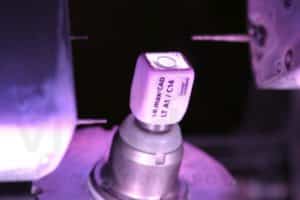
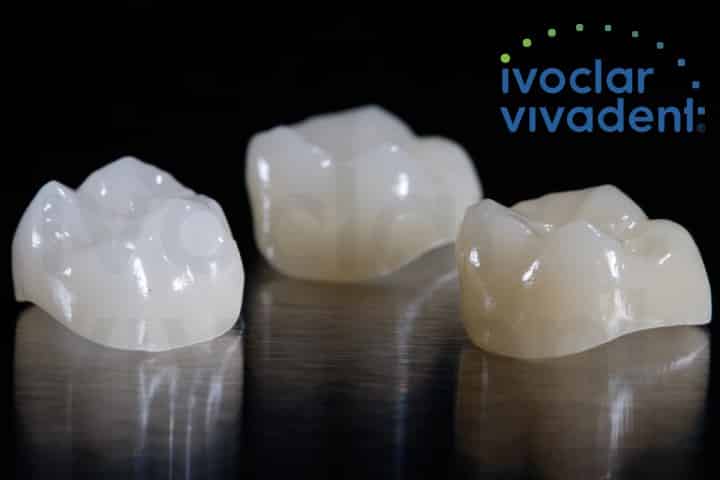
Example of raw material blocks for computerized dental porcelain EMAX CAD
The Pura Digital porcelain crown is an evolution in the materials used in dental prostheses. With it, it is possible to reproduce details that make the prosthesis similar to natural teeth. With the Cerec System, the e.max crown is made more quickly and precisely, because it is designed on a computer and sculpted by robots.
Very aesthetic look, comparable to a natural tooth;
Range of blocks with different colors and types of resistance for different uses;
Stain-resistant material;
It can be made using the Metal Free technique (no metal in the internal structure). This makes the crown look translucent and much more aesthetic in bright environments.
It can be designed and built quickly thanks to the Cerec system.
To make digitalpure porcelain crowns , we use CAD/CAM techniques:
1 – Intraoral scanner: It all starts with the digital molding of the dental implant with a high-precision color camera that takes images of the oral interior and sends them to the computer.
2 – Computer and software: receives the information captured by the intraoral scanner and carries out the simulation and personalized planning of the dental crown using three-dimensional images.
3 – Machine manufacturing: robots mill the e.max ceramic block based on the computerized design until the shape of the crown is achieved. The result is certainly a piece that is strictly compatible with the patient’s needs.
Pure porcelain crown for natural teeth
It is common for a temporary crown to be made before finalizing the permanent tooth to test whether the computer modeling is correct. Immediately after milling, the piece undergoes a crystallization process at approximately 850°C for 20 to 30 minutes and acquires high resistance, shade and translucency.
When the crown is finished, it is attached to the previously installed dental implant. For your convenience, the Cerec System and e.max ceramics are available at ImplArt Dental Clinic in Brazil. As an alternative to the pure porcelain crown, we now have an even more resistant material, translucent pure zirconia.
If you have any questions about this or other techniques and prices, please make an appointment or contact us. We are located in the Paulista Avenue area/Downtown of São Paulo. We will be happy to assist you.
Emax Cad crowns are prostheses used in oral rehabilitation and dental restoration to cover, protect and strengthen teeth that have been extensively damaged by decay or root canal treatment.
Ceramic crowns in Emax Cad
Developed by the German company Ivoclar, the technical name of the Emax material is lithium disilicate and it has the ability to offer high aesthetics and high resistance.
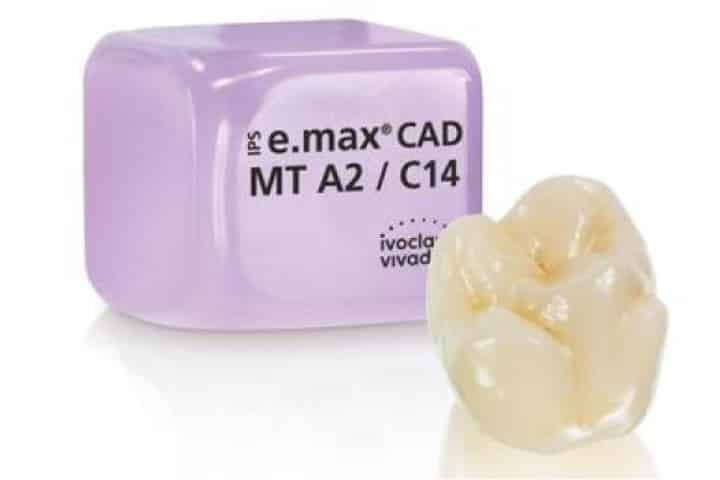
Raw material blocks for Emax CAD computerized dental porcelain
Digital emax crowns guarantee the best aesthetic results
EMAX crown applications
Dental crowns can also be placed on dental implants to replace missing teeth. They can be made from different materials such as temporary resins, but the main one is Emax Cad ceramic. What are the main advantages of the Emax Cad crown?
High resistance and durability;
Very aesthetic look, similar to a natural tooth;
Range of blocks with different colors and types of resistance for different uses;
Minimally invasive restorations;
It can be made using the metal-free technique (no metal in the internal structure). This makes the crown look translucent and much more aesthetic in bright environments.
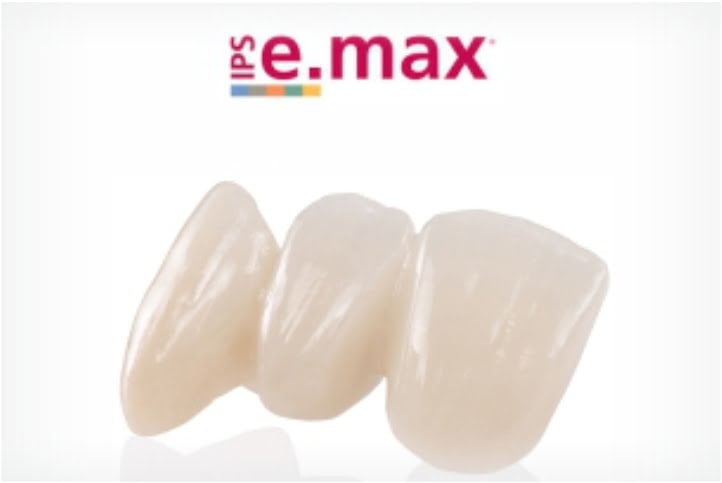
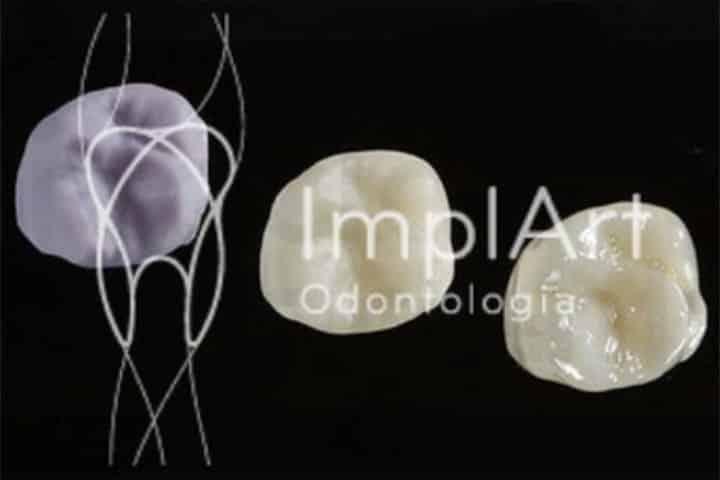
The digital emax crown is milled by robotic machines in the blue phase, when the material is still soft. The material is then crystallized at over 700 degrees to achieve the final color. On the right, it has received the final polish that guarantees the smoothness of the structure and final pigmentation (even in black light environments).
Emax porcelain crowns in digital dentistry – how are they made?
1 – Intraoral scanner: high-precision color camera that makes digital molds of the patient’s teeth and sends them to the computer.
2 – Computer and software: receives the information captured by the intraoral scanner and carries out simulation and personalized treatment planning using 3D images.
3 – Machining bay: robots mill the Emax Cad ceramic block based on the computerized design until the shape of the crown is achieved. The result is a piece that is strictly compatible with the patient’s needs.
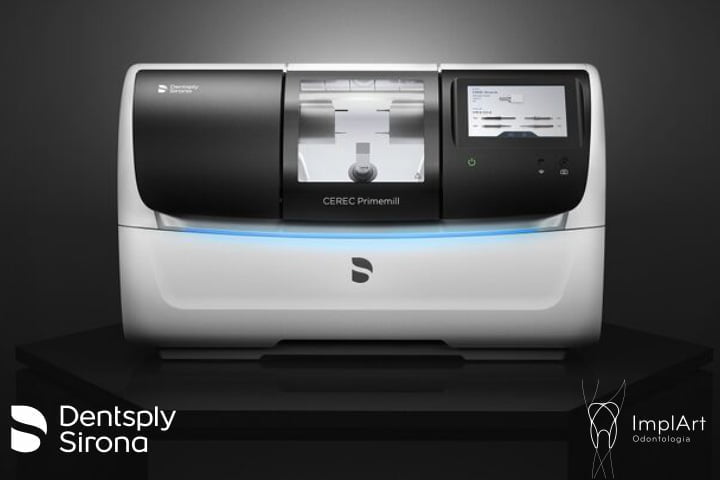
ImplArt has the most up-to-date version of the Cerec system milling machine. This German technology allows us to produce metal-free crowns, restorations and dental lenses much faster and with greater detail.
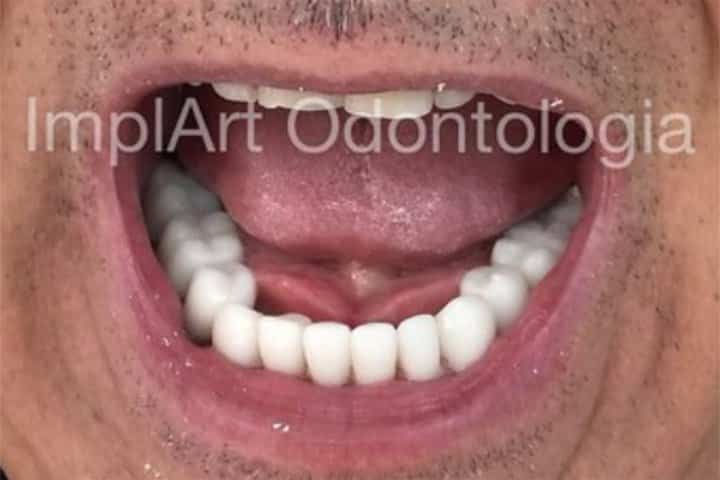
Complete oral rehabilitation of the lower arch using emax computerized porcelain
When the milling is complete, the piece undergoes a sintering process at approximately 850°C and acquires high strength, shade and translucency. The CEREC 3D system certainly speeds up treatment, even allowing it to be carried out and finalized in Day Clinic planning.
With it, it is possible to make crowns and restorations that are very precise and customized to the needs of each case. Contact us and make an appointment to find out if your case could benefit from this technique.


 Agende sua consulta agora por WhatsApp