Dental contact lenses are a type of ultra-thin porcelain veneer (0.2 mm) used to correct certain aesthetic problems with the teeth.
Dental contact lenses to transform the appearance of your teeth
Aesthetic treatment for stained, misaligned, asymmetrical or broken teeth
Dental lenses work like “covers” that are glued onto one or more teeth to cover stains, small fractures and other defects, or to change the shape and size of teeth. Dental contact lens treatment is the smile of the famous.
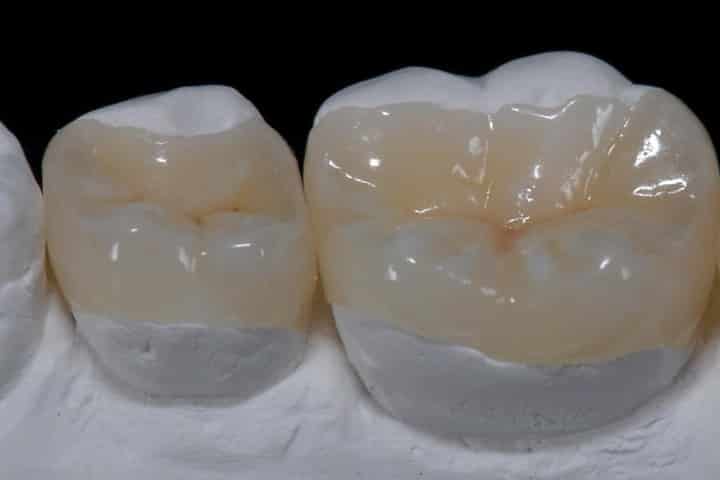
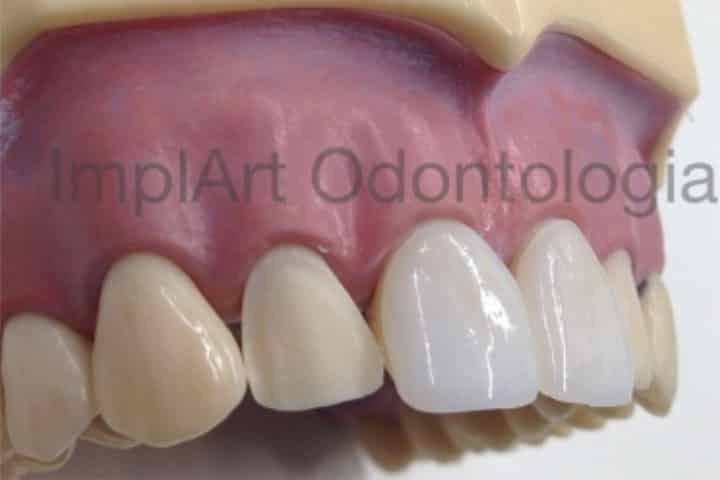
Dental contact lenses are completely computer-designed and then made from dental porcelain using milling machines (3D printers). Dental porcelain is a vitreous ceramic material (lithium disilicate) that is very resistant and mimics the texture and shade of natural teeth.
It is also a safe material and therefore totally biocompatible with the human body. The computerized design is based on images taken by an intraoral scanner – a high-precision camera.
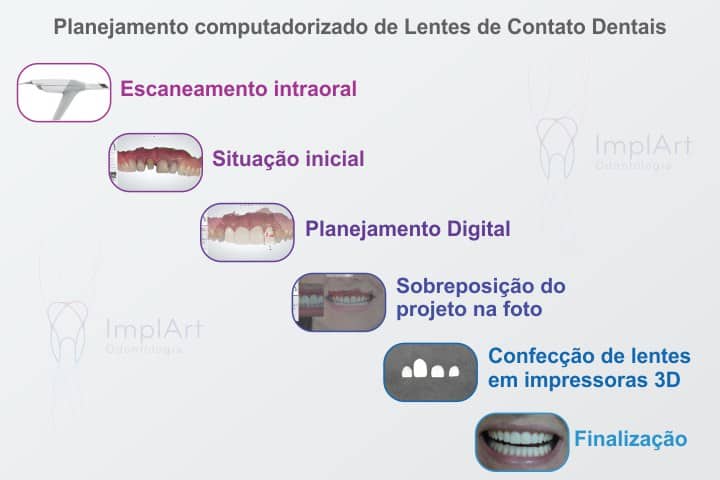
Dental contact lenses step by step (in case of dental asymmetry)
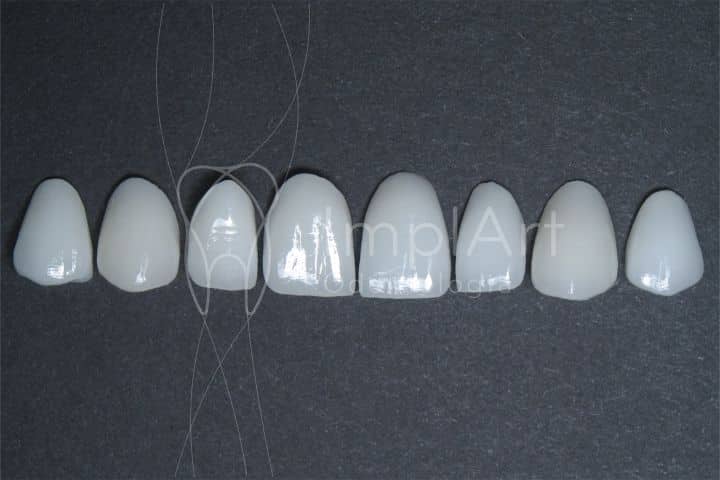
At the end of the milling process, the dental contact lenses have a shape, color and texture comparable to natural teeth, even imitating the characteristics of neighboring teeth. Because they are ultra-thin, installation requires little or no wear on the natural teeth.
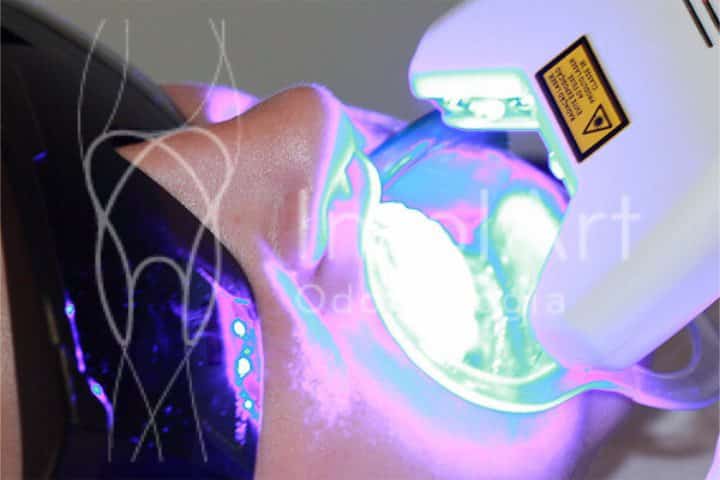
The lenses are then bonded with dental cement activated with a light-curing device. ImplArt uses one of the best contact lens light-curing devices on the market, making treatment more efficient and safer. Find out more.
Indications for dental contact lenses:
Covering stains
Change in the shape of the teeth
Change in tooth color
Enlargement of small teeth
Aligning crowded teeth
Covering small fractures
Uniformization of uneven and asymmetrical teeth
Advantages of lenses:
High resistance and long durability of the dental contact lens
Very aesthetic look, comparable to natural teeth
Minimally invasive restorations
Completely painless procedure
They don’t require much tooth grinding to be installed
Preserves the structure of the teeth
No discomfort in chewing function
Porcelain doesn’t change color over the years
Incredibly natural and harmonious result
It can be designed and executed in a short time, in some cases even in a Day Clinic.
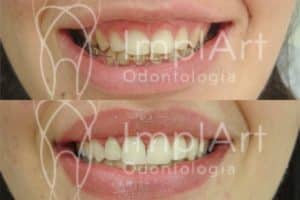
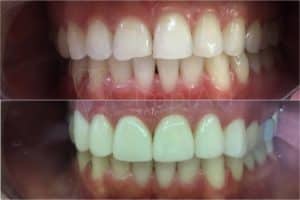
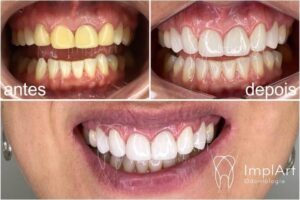
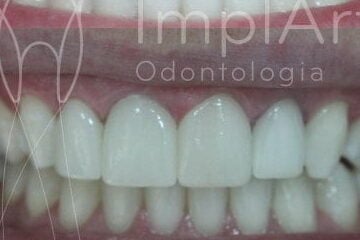
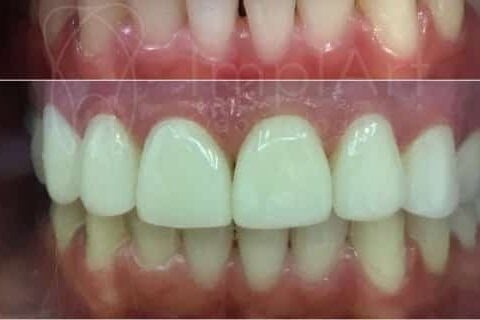
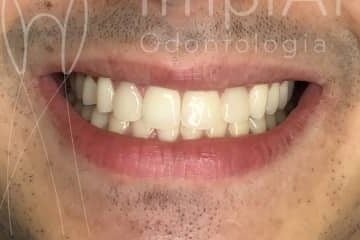
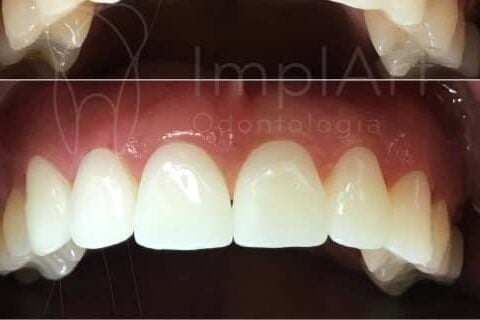
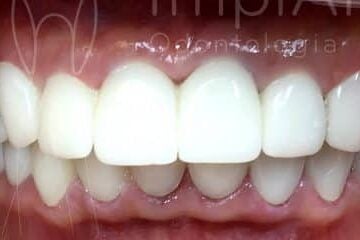
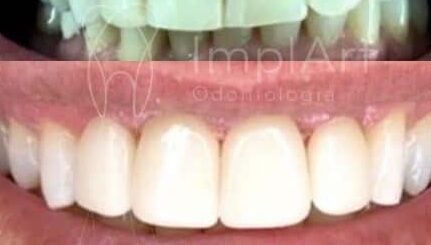
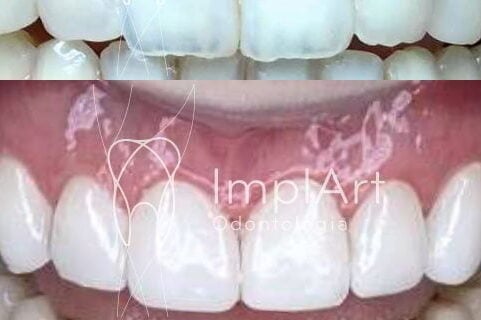
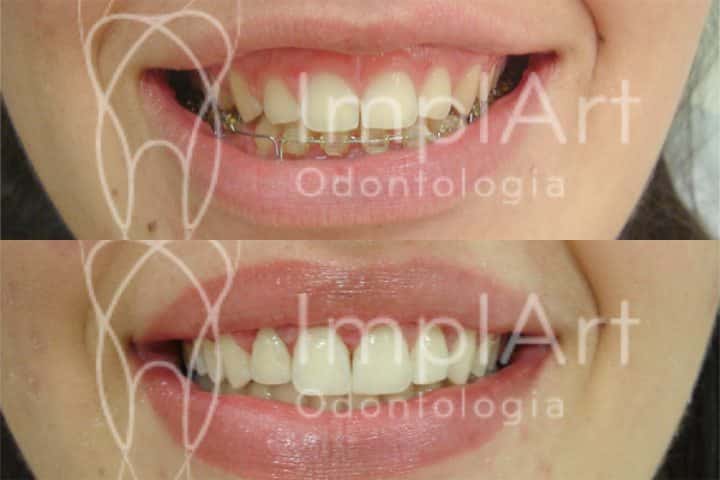
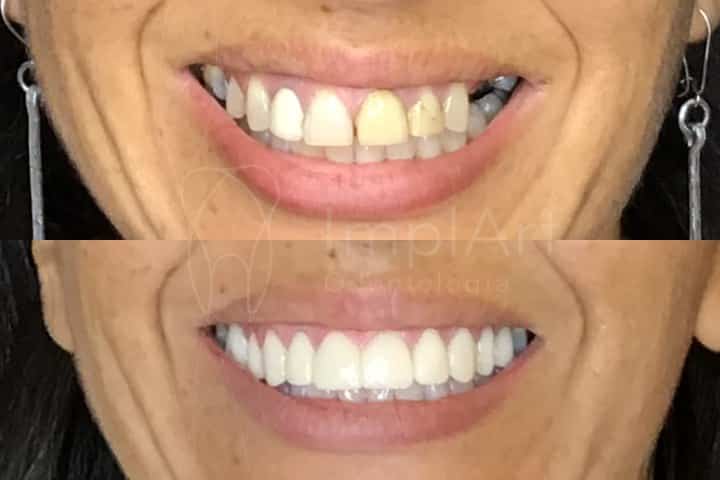
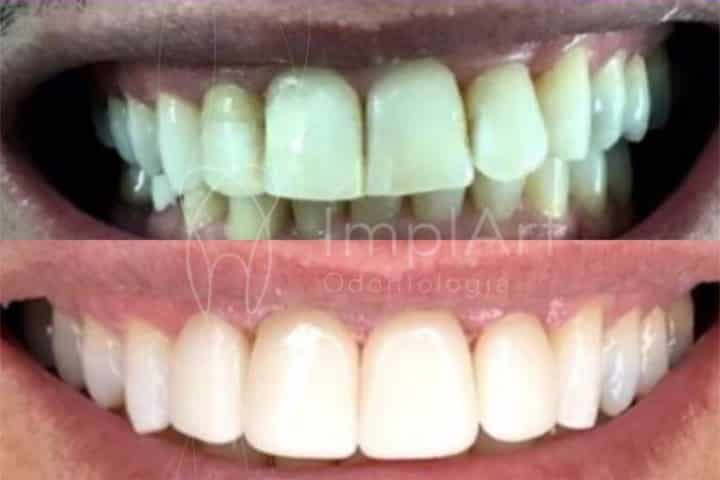
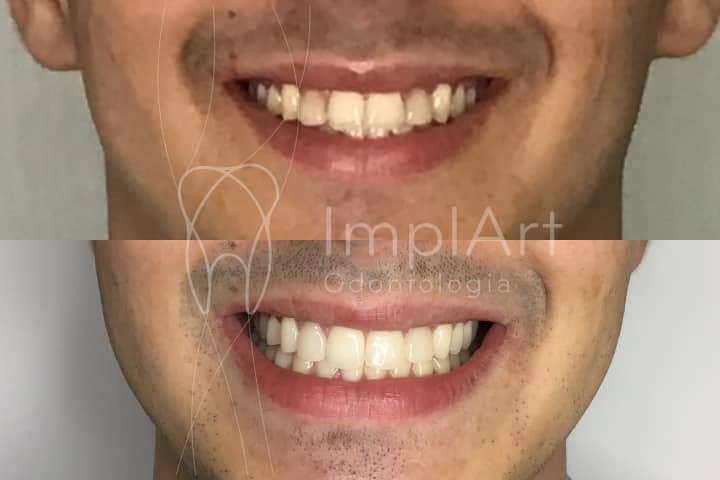
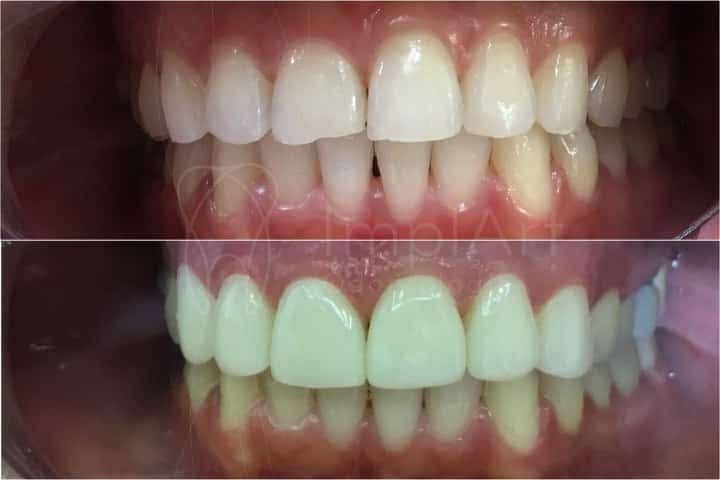
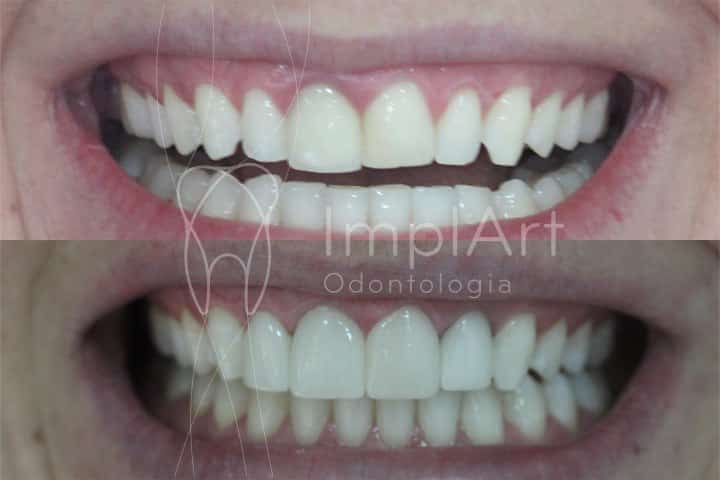
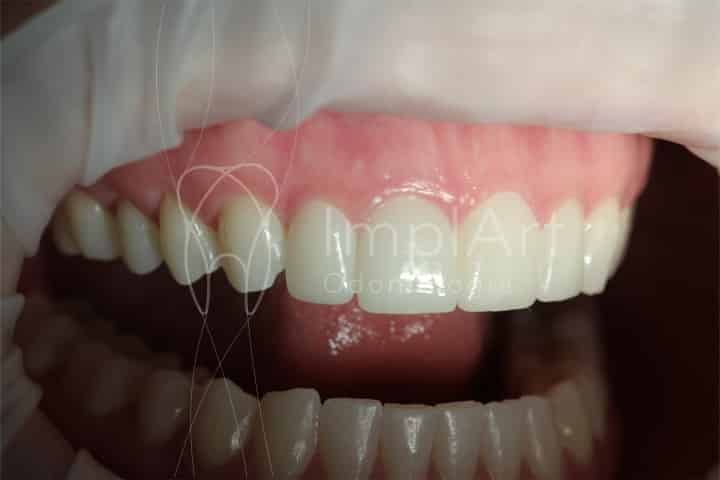
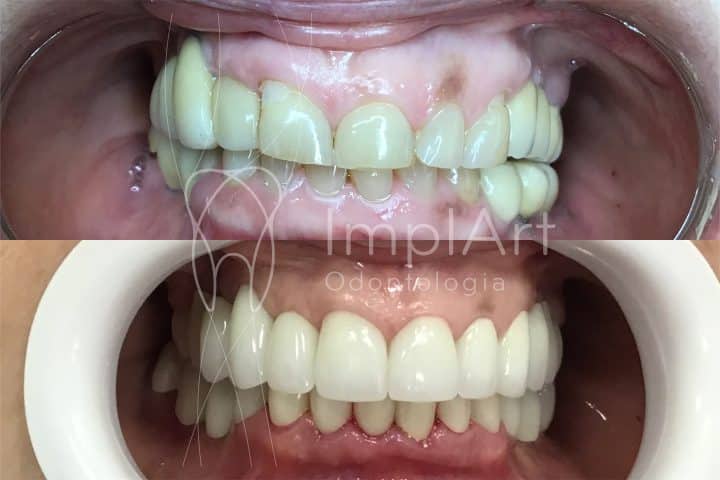
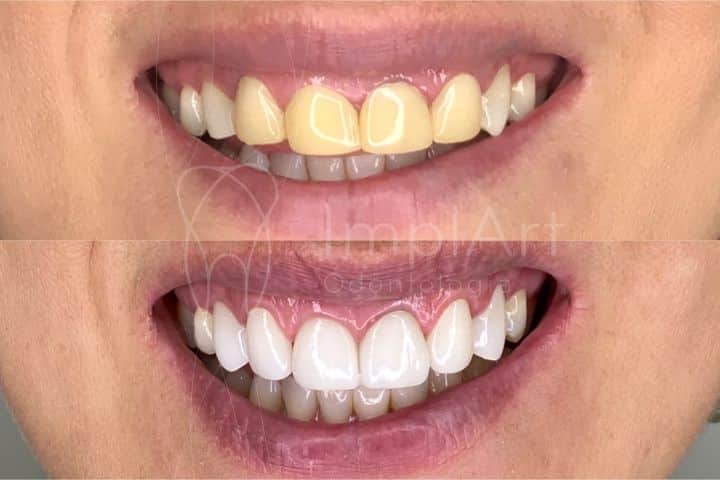
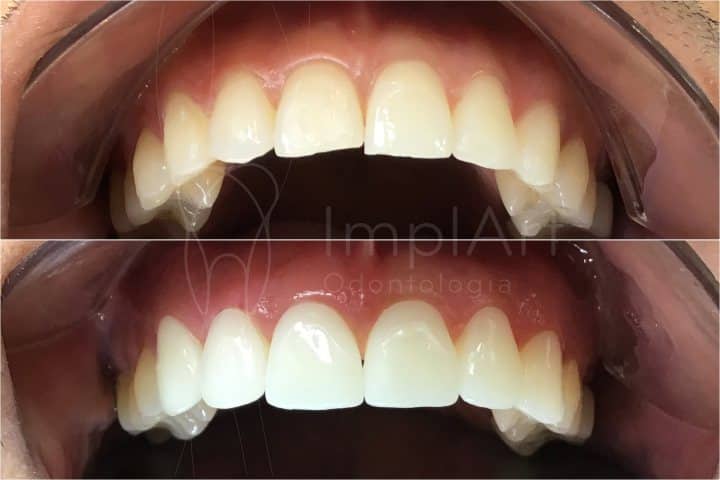
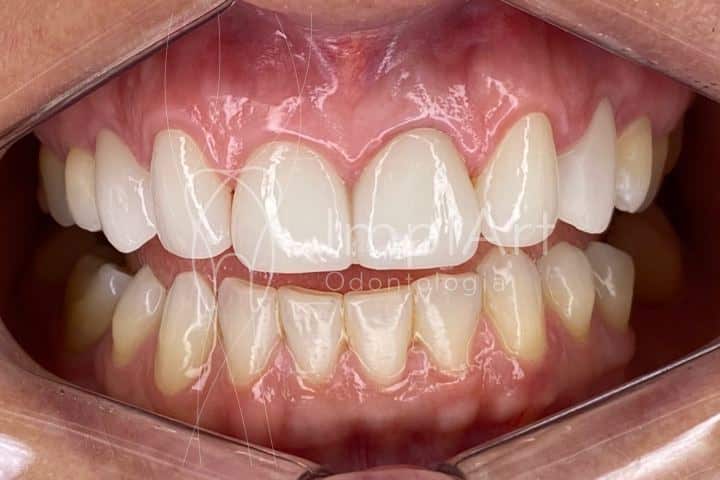
Before and after contact lenses: find out about some of the treatments performed at ImplArt:
At ImplArt Odontologia, all this work is certainly done in a precise and personalized way for each patient. This is only possible because we have CAD/CAM-based technologies on our premises, which not only carry out the computerized design of the treatment, but also the execution of the dental contact lenses. If you have any questions, please contact us.
Contact lenses are bonded to the front of the teeth individually and are used to correct certain aesthetic problems, such as misaligned teeth, stained teeth, pigmented teeth, cracked teeth, improperly shaped teeth, unwanted pain, irregular tooth size and correcting the position of the teeth.
They are bonded to the front of the teeth, individually, in order to correct certain aesthetic problems.These are cases of misaligned teeth, stained teeth, pigmented teeth, cracked teeth, improper shape, unwanted color, irregular tooth size, correction of tooth position.
Lenses are not recommended for unhealthy teeth, such as decayed teeth or teeth with periodontal disease. Contact lenses for teeth are capable of revolutionizing the aesthetics of smiles. Today we see many celebrities who have undergone the treatment and have undoubtedly had their smiles transformed.
Do I need dental contact lenses?
Contact lens treatment involves the use of advanced dental technology. It starts with taking a mold of the teeth. The digital impression is taken using an intraoral scanner that captures images of the teeth and gums and creates a three-dimensional model on the computer screen.
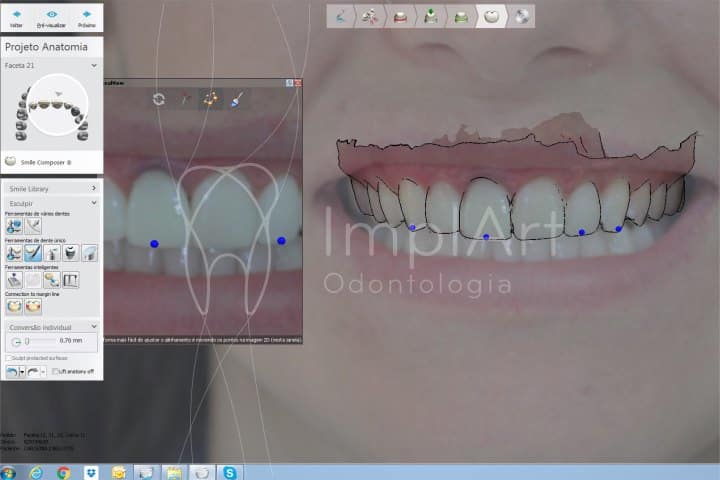
Based on these images, the dentist uses software that designs the dental contact lenses with customized shapes and shades for each patient.
Planning
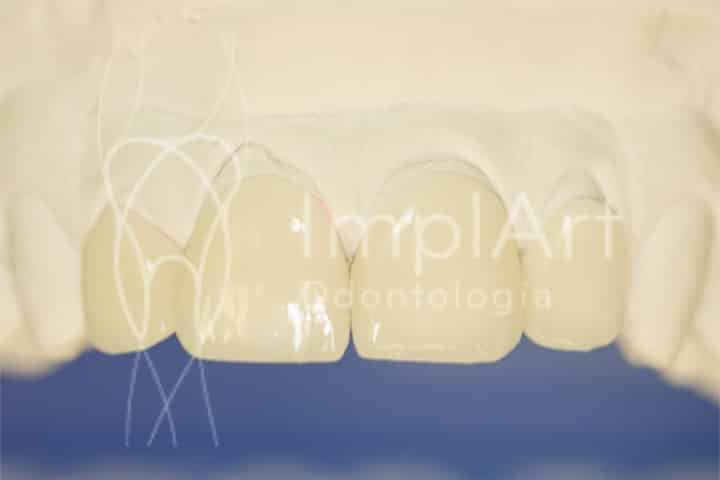
The design can be for a single tooth or more. The approved computerized design is then sent to the digital prosthetics laboratory to make the dental lenses. A block of porcelain is placed in the 3D printer and the milling process begins until the block acquires the shape of the designed dental lenses.
Dental contact lenses are approximately 0.2mm thick. This ultra-thin thickness does not require any or little wear to the tooth surface in order for the lenses to be applied. They therefore differ from porcelain veneers.
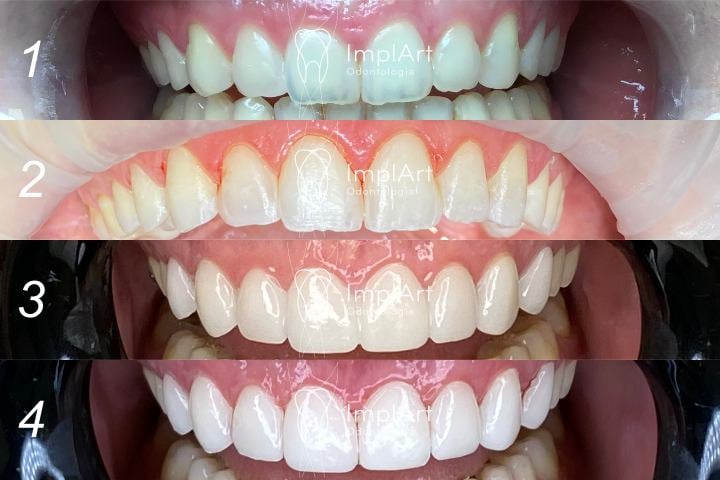
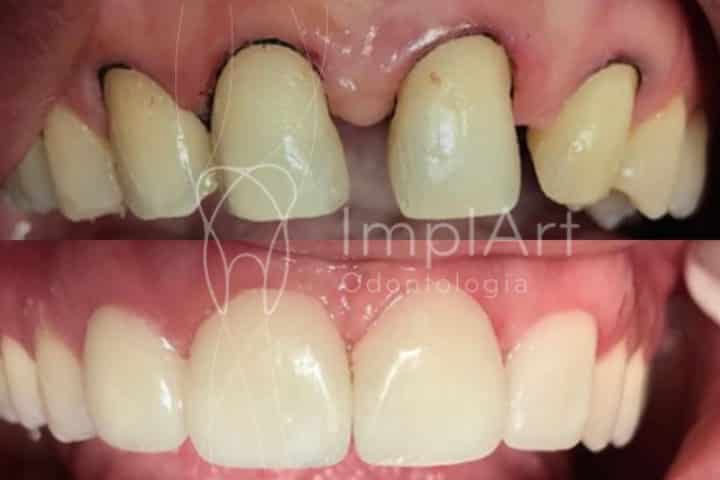
Example of a treatment with dental lenses: 1 – Initial situation, 2 – Tooth preparation (wear) and gingivectomy (removal of excess gum), 3 – Temporary lenses, 4 – Installation of definitive porcelain lenses.
Bonding dental contact lenses
Bonding is carried out after the tooth has been prepared, which involves professional cleaning to remove possible plaque and tartar buildup. The lenses are then bonded with cement specifically for dental use, without pain or the need to apply an anesthetic.
It’s a quick treatment and can even be carried out in a Day Clinic. The durability of dental contact lenses is undetermined. Porcelain is a very resistant material and has very similar characteristics to natural teeth.
Its surface is stain-resistant and does not require the patient to be cautious with highly pigmented foods and drinks, such as beet, carrots, wine, coffee, teas, etc.
Porcelain veneers for front teeth
This ultra-thin thickness does not require the tooth surface to be worn down in order for the lenses to be applied, so they differ from porcelain veneers. They are applied after the tooth has been prepared, which involves professional cleaning to remove possible plaque and tartar buildup.
The lenses are bonded with cement specifically for dental use, without pain or the need to apply an anesthetic. It’s a quick treatment which, in some cases, can be carried out in a Day Clinic. The durability of dentalcontact lenses is undetermined.
Porcelain is a very resistant material and, above all, has very similar characteristics to natural teeth. Its surface is resistant to stains and does not require the patient to be cautious with highly pigmented foods and drinks, such as beet, carrots, wine, coffee, teas, for example.
The average price of dental contact lenses can only be given in a dental consultation, as it depends on a face-to-face clinical examination, and the Federal Council of Dentistry prohibits non-face-to-face consultations. If you have any questions, please contact us through one of our service channels.
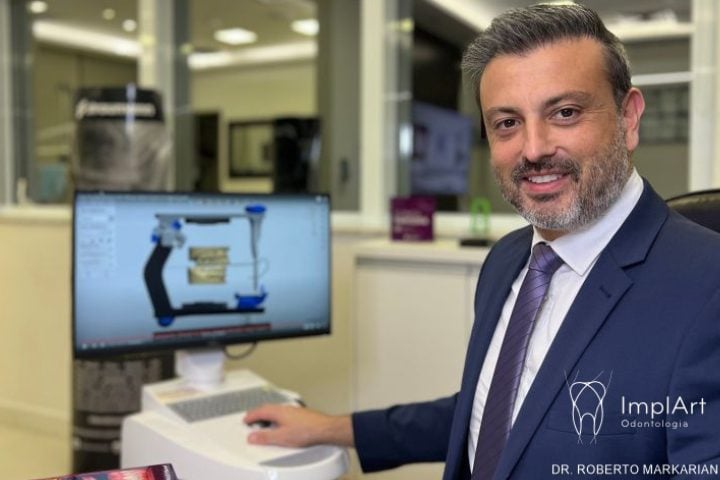
Dr. Roberto Markarian is a reference in dental implants and computerized dental prostheses in Brazil. As well as having more than 10,000 implants installed, he is a researcher and produces knowledge that is published worldwide in renowned scientific journals in the field of dentistry. He is responsible for promoting knowledge and high technology applied in all the treatments offered by the ImplArt Clinic.
Dentistry or aesthetic dentistry is the area of dentistry that works to restore dental aesthetics. In short, the resources available to improve the aesthetics of the smile include tooth whitening, dental crowns, resin or porcelain restorations, gum surgery (gingivectomy), and the application of modern dental contact lenses.
Contents
A more beautiful, white and harmonious smile is possible thanks to dental contact lenses and other aesthetic resources
Or even after wearing braces, when you want to improve some aspects of your smile, because during treatment you can’t change the aesthetics of your teeth.Modern dental contact lenses are ultra-thin porcelain veneers, suitable for correcting aesthetic problems with the teeth, for example:
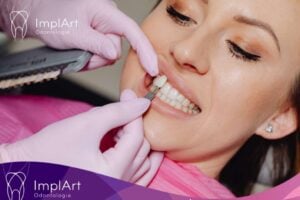
Dental contact lenses are bonded to the surface of one or more defective teeth in a safe and non-invasive way. Because the lenses are ultra-thin, installation requires little or no wear on the teeth before they can be bonded.
The lenses are made from porcelain, the best bio-safe material used to make dental prostheses, which is similar to natural teeth in terms of its texture and shade, as well as its translucency.
This way, if the dental contact lens is applied to just one defective tooth, it won’t contrast with the neighboring natural teeth. It is certainly an aesthetic procedure that has come to completely change your smile for the better.At ImplArt, the lenses are designed and made by better computerized systems and 3D printers.
In conclusion, the last stage of the procedure is the preparation of the tooth, the application of dental cement and the bonding of the dental contact lens. Dental contact lenses are very durable, as long as the patient takes care not to bite down on hard objects and makes regular visits to the dental practice. Alternatively, veneers can be made from resin with a lower finish.
Dental contact lenses can improve the aesthetics of front teeth
Porcelain dental crowns for aesthetic purposes
Dental crowns and porcelain blocks can be made in cases of tooth damage such as broken teeth. It is very common for patients with bruxism to need cosmetic treatments as they can lose part of their enamel or even entire teeth due to the force applied to their teeth.
An aesthetic composite resin restoration is a dental aesthetic procedure in which a resin composite material is used to repair or rebuild the structure of an aesthetically compromised tooth.
This technique is often used to correct cavities, fractures or discolorations in order to restore the shape, function and natural appearance of teeth.
During the process, the dentist removes the damaged part of the tooth, prepares the affected area and applies layers of composite resin, carefully shaping them to ensure a perfect fit with the dental anatomy.
The resin is then hardened with special ultraviolet light.
The advantage of composite resin lies in its ability to mimic the color and texture of adjacent teeth, providing an aesthetic and long-lasting end result while preserving the structural integrity of the restored tooth.
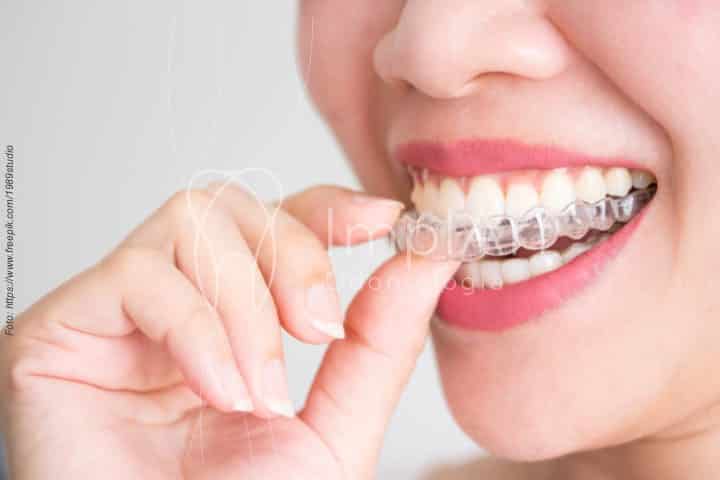
Discover more discreet and transparent orthodontic braces to move your teeth without having pieces glued to your teeth.
Dental aesthetics and smile harmony
ImplArt Odontologia has a team specialized in carrying out aesthetic dental treatments, especially the application of dental contact lenses, including model treatments. What’s more, thanks to its own prosthetic laboratory, the best design and manufacture of dental contact lenses can be carried out very quickly, without intermediaries.
The three-dimensional design of the lenses is personalized for each patient, so that the patient can better participate in the process of choosing the shape and shade together with our team.
If you have any questions about the prices of cosmetic dental and gum treatments, as well as planning, please contact our team or come and visit us. We’ll be happy to help you!
Dental contact lenses in São Paulo to improve the aesthetics of your smile
Contact lenses for teeth are ultra-thin porcelain veneers (0.3 to 0.7 mm) used to correct certain aesthetic problems in the teeth. They work like “covers” or ceramic fragments, which are bonded to one or more teeth to better cover stains, small fractures and other defects, as well as to change the shape and size of teeth. Dental contact lens treatment is often used to beautify the smiles of famous people.
At the ImplArt Clinic, dental contact lenses are completely designed on computer and then better executed in dental porcelain by milling machines (3D printers) in our digital laboratory. This method is far superior to the traditional manual method of working with dental porcelain. Dental porcelain is a vitreous ceramic material (lithium disilicate) that is very resistant and mainly imitates the texture and shades of natural teeth.
It is therefore an aesthetic material, safe and totally biocompatible with the human body. The computerized design is based on images obtained by an intraoral scanner – a high-precision camera available at ImplArt Odontologia.
Dental contact lenses step by step (in case of dental asymmetry)
Dental contact lenses before and after: See some of the work carried out at ImplArt Odontologia
Contact lenses for teethContact lenses for teethContact lenses for teethContact lenses for teethContact lenses for teethContact lenses for teethContact lenses for teethContact lenses for teethContact lenses for teethContact lenses for teethContact lenses for teethContact lenses for teeth
They don’t require much tooth grinding to be installed
Preserves the structure of the teeth
No discomfort in chewing function
Porcelain doesn’t change color over the years
Incredibly natural and harmonious result
It can be designed and executed in a short time, in some cases even in a Day Clinic.
At ImplArt Odontologia, a specialized clinic, we make dental contact lenses with work that is precise and personalized for each patient. This is only possible because we have a prosthetic laboratory on our premises, and the best CAD/CAM-based technologies, from the computerized design of the treatment to the execution of the dental contact lenses.
In most cases it can be done quickly by Dayclinic. Ask about fast dental lenses at Dayclinic. If you have any questions about the price of lenses, forms of payment, planning, and a better approximate value or treatment time, then please contact us.


 Agende sua consulta agora por WhatsApp