

Are you thinking about getting a dental implant but still have questions? Before getting a dental implant, it’s important to determine whether the treatment is right for you, what alternatives are available, and what care may be necessary.
A dental implant is a structure placed in the bone that serves as a support for a crown or denture and replaces the function of a missing root. Its suitability requires an individual evaluation: teeth, gums, bone, bite, and overall health all influence the treatment plan.
This guide provides advice for those in the decision-making phase, drawing on the experience of Clínica ImplArt in São Paulo, led by implant dentist Dr. Roberto Markarian, PhD, who has placed over 12,000 implants throughout his clinical career.
Something we often hear during the first consultation: many patients were unaware that there are various types of dental implants or that they can have a say in choosing the material for their future crown or prosthesis. At ImplArt, Dr. Roberto presents the clinically recommended options from that very first evaluation, explaining their differences and the implications for treatment duration, aesthetics, and maintenance. The decision is made jointly, with professional guidance.
Who might be a candidate for dental implants?
Treatment may be considered for people who have lost one tooth, several teeth, or all the teeth in an arch. It can also be part of a rehabilitation plan when a tooth is severely compromised and cannot be properly preserved.
The first decision is to assess whether the tooth can still be saved. Not every situation requires extraction: restorations, crowns, periodontal treatment, or root canal therapy may still be viable alternatives. Understand this choice between root canal therapy and a dental implant.
Dental Implants or Other Alternatives: How to Decide?
Before choosing a technique, it is necessary to distinguish between two situations: a tooth that can still be saved and a space where the tooth has already been lost. The options differ, and the decision must take into account the health of the adjacent teeth, the gums, the bone, and future chewing function.
| Alternative | When to Consider It | What to Consider |
|---|---|---|
| Preserving the natural tooth | When restorative, periodontal, or endodontic treatment is still possible. | Remaining tooth structure, root condition, bone support, and prognosis. |
| Conventional fixed bridge | To replace a missing tooth by using adjacent teeth as abutments, in selected cases. | Condition of the abutment teeth and the need to prepare them. |
| Removable denture | To replace missing teeth when a removable solution meets the patient’s needs. | Retention, comfort, hygiene, and adaptation to chewing. |
| Implant with a crown or prosthesis | When bone-supported replacement is clinically feasible and desirable. | Surgery, bone anatomy, gum health, custom-designed prosthesis, and maintenance. |
There is no universally best solution. The American Dental Association also lists bridges and removable dentures among the alternatives that can be discussed for missing teeth. The individual recommendation depends on the clinical examination.
What should be evaluated before getting a dental implant?
Gum health
Inflammation and periodontal disease may require management and monitoring so that treatment can be planned under appropriate conditions.
Bone Volume
Bone anatomy and volume are assessed through examinations, as indicated. In specific situations, a bone graft may be necessary.
Bite and Adjacent Teeth
The available space, tooth position, and masticatory forces help determine the implant and crown design.
General Health
Medications, chronic diseases, smoking, and other health-related factors should be disclosed to the implant dentist. No single diagnosis can replace a professional evaluation.
At ImplArt, the evaluation can rely on our in-house radiology center and digital planning resources. X-rays and CT scans help assess the anatomy, as clinically indicated. See the tests used for dental implants.
How do I choose the professional who will perform my surgery?
Before agreeing to a treatment plan, it’s important to learn about the training, credentials, and experience of the professional who will perform the procedure. Dr. Roberto Markarian emphasizes that the choice of professional influences the recommendation for an implant, the preservation of teeth that can still be treated, risk assessment, and long-term follow-up. Advanced technology does not replace surgical experience or prosthetic planning.

Important: Having insufficient bone or a specific health condition does not automatically mean that an implant is impossible. Some patients require preparation, disease management, additional evaluation, or an adjustment to the treatment plan.
Benefits, Risks, and Aftercare Following Dental Implant Surgery
- Restoring chewing function: A well-planned prosthesis aims to restore function and stability.
- Improved aesthetics: The crown can be designed to match the remaining teeth and the patient’s smile.
- Preventing wear on adjacent teeth: In many cases, a single implant allows for the replacement of a tooth without having to anchor a bridge to the adjacent teeth.
- Facilitating extensive rehabilitation: Implants can support a fixed prosthesis when a person has lost many teeth.
Before getting a dental implant, it is important to understand that the outcome depends on the initial condition, the treatment plan, and ongoing care. Implants involve surgery, require maintenance, and may present complications: there is no 100% guarantee of success. Learn about ImplArt’s approach to single-tooth implants and protocol-based prostheses.
Maintenance begins before surgery: it is important to control inflammation, learn how to clean the area, and understand the expected follow-up visits. After the prosthesis is placed, check-ups and preventive care are scheduled according to individual needs. At ImplArt, semiannual checkups may be part of the routine, but patients at higher risk may require checkups at different intervals.
How does the treatment work, in a nutshell?
Broadly speaking, treatment involves evaluation, planning, implant placement, healing when necessary, prosthesis fabrication, and maintenance. The sequence and intervals are individualized and may include preliminary treatments.
To learn about each phase in detail, see our article “Dental Implants Step by Step: From Evaluation to the Final Prosthesis.”
Dental Implant, Crown, and Prosthesis: What’s the Difference?
The implant is placed in the bone and replaces the function of the root. The crown or prosthesis, on the other hand, is the part that restores the tooth’s shape and aids in chewing. At ImplArt, crowns and prostheses can be fabricated using CAD/CAM technology and materials such as zirconia, depending on the treatment plan.
Can I choose between different types of implants and porcelain or zirconia crowns?
Yes, within the options appropriate for your case. Among implant systems, there are designs, materials, and surfaces with different indications and healing protocols. During the initial consultation, Dr. Roberto explains which options can be used and how bone conditions, potential bone grafts, and surgical stability influence the timeline. Technologies such as Straumann iEXCEL implants may be considered in specific protocols, but they do not guarantee accelerated healing or immediate loading in all patients.
In the prosthetic phase, CAD/CAM zirconia crowns and porcelain crowns offer distinct aesthetic and functional possibilities. For those who need a protocol prosthesis, the choice is not limited to resin: there are metal-ceramic (with porcelain) and zirconia options, depending on the design and clinical condition. Many patients only discover this when they speak with their implant dentist. See our explanation of protocol prostheses with or without artificial gingiva and the impact of the material on treatment planning.
Research conducted by Dr. Roberto Markarian: In a study published in the Journal of Prosthetic Dentistry, he and his co-authors evaluated, in a laboratory setting, the strength and wear of prosthetic components produced using different CAD/CAM methods. This research helps demonstrate why materials and connections need to be technically evaluated; it should not be interpreted as a guarantee of clinical durability for a specific prosthesis. Refer to the scientific publication.
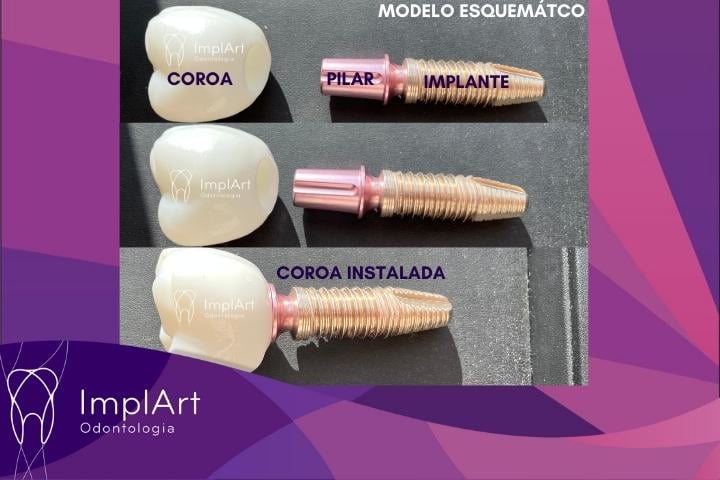
To learn about the available options for shapes and materials, see our guide on types of dental implants.
What should you ask during your consultation before starting treatment?
A checklist for discussing with your implant dentist:
- Can the tooth still be saved?
- Is there enough bone, or will any additional procedures be necessary?
- What types and brands of implants are recommended for my case, and how does this affect the timeline?
- What material options are available for the crown or prosthesis: resin, porcelain, or zirconia?
- Who will perform the surgery, what is their experience, and what will the follow-up care entail?
- Will there be a temporary restoration? When will the permanent prosthesis be placed?
- What risks, precautions, and follow-up visits apply to my case?
- What will the oral hygiene routine be like, and what is the maintenance plan after the prosthesis is placed?
- Does the proposed plan cover all the expected steps?
These questions help you compare proposals based on treatment planning and clinical needs, not just on the type of implant or the estimated timeline.
Next step: After choosing your treatment and clarifying these issues, consult our guide on how to prepare for dental implant surgery, including medications, sedation, fasting, and postoperative care.
Frequently Asked Questions for Those Considering Dental Implants
Can anyone get dental implants?
There is no one-size-fits-all answer. People with specific medical conditions may require additional evaluations and care. Eligibility is determined by the dentist after examining your oral health and medical history.
Does dental implant surgery hurt?
It is generally performed under local anesthesia. There may be some discomfort and swelling after the procedure, varying in intensity. At ImplArt, intravenous sedation may also be considered in select cases following an evaluation.
If there is insufficient bone, is treatment impossible?
Not necessarily. Depending on the case, bone grafts, implants of specific dimensions, and other strategies may be considered. A CT scan helps assess the options.
Is a dental implant the same as a dental prosthesis?
No. The implant is the support structure placed in the bone. The prosthesis is the element that replaces the visible tooth or a set of teeth.
Does the treatment have to be done all at once?
The timeline varies from person to person. Some steps may occur in quick succession; others depend on healing or preparation of the area.
Can I get a temporary tooth on the same day?
In select cases, this may be possible. Whether this is recommended depends on the stability of the implant, bone conditions, and bite alignment, among other clinical criteria.
Does the implant require follow-up care afterward?
Yes. Good oral hygiene and regular checkups are important for evaluating the crown, gums, bite, and overall health around the implant.
Can someone who has had periodontal disease receive an implant?
In many cases, the possibility can be evaluated once the disease is under control. A history of periodontal disease influences treatment planning and follow-up, because the health of the tissues surrounding the implants requires ongoing attention.
Do all dental implants heal in the same amount of time?
No. The system used, the condition of the bone, the stability of the implant, the need for bone grafts, and the patient’s overall health all influence the timeline. During the initial consultation, Dr. Roberto presents the recommended options and explains the difference between implant placement, healing, a temporary prosthesis, and the final restoration.
What is the best prosthetic material: resin, porcelain, or zirconia?
There is no single answer. The materials differ in aesthetics, strength, reparability, the design of the artificial gum line, maintenance, and space requirements. At ImplArt, patients receive information about the relevant alternatives, rather than assuming that every prosthetic crown will be made of resin.
Continue reading: information to help you plan your treatment
References for Further Reading
- American Dental Association. Dental Implants — MouthHealthy. Patient information on indications, alternatives, and steps involved.
- International Team for Implantology (ITI). Systemic Conditions and Treatments. Consensus on systemic conditions and risk assessment.
- European Federation of Periodontology. Peri-implant disease: prevention. Guidelines on the prevention and maintenance of peri-implant tissues.
- Markarian, R. A.; Galles, D. P.; França, F. M. G. Dental implant-abutment fracture resistance and wear induced by single-unit screw-retained CAD components fabricated by four CAM methods after mechanical cycling. Journal of Prosthetic Dentistry, 2022. In vitro experimental study on CAD/CAM components.
Where is the ImplArt Clinic located?
ImplArt Clinic – Dental Implants · Rua Cincinato Braga, 37 – Suite 112 – Bela Vista, São Paulo – SP, 01333-011
Phone and WhatsApp: (11) 3262-4750
View location on Google Maps


Leave a Reply