

Zirconia Crown on an Implant: Is It Durable? Dr. Roberto Markarian Explains the Scientific Research
Crowns on Implants • USP Research • Dr. Roberto Markarian
People considering dental implants often ask: Is a zirconia crown on an implant strong enough to chew safely? Zirconia is one of ImplArt Clinic’s preferred options due to its high mechanical strength, aesthetic appeal, and the possibilities for high-precision digital fabrication. But there’s another essential question: How do the forces of the bite reach the implant?
Quick answer: Can a zirconia crown on an implant withstand chewing?
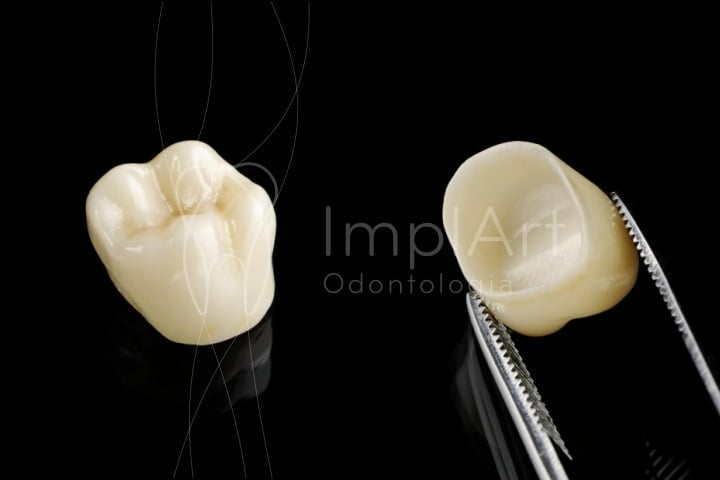
In general, zirconia is a highly resistant material and a well-established option for implant-supported crowns when properly indicated. Monolithic zirconia, fabricated as a single structure, can also reduce the risk of chipping associated with thick layers of porcelain. The material’s strength does not eliminate the need to evaluate the bite, the implant’s position, and the crown’s fit.
At ImplArt, the preference for CAD/CAM zirconia crowns stems from an approach that combines scientific research, clinical experience, and our in-house digital laboratory. Dr. Roberto Markarian, clinical director at ImplArt, has been studying the biomechanics of implants since completing his master’s degree in Dental Prosthetics at the University of São Paulo (USP) in 2005.
This article is not just another catalog of dental crown types. Our goal is to explain, in simple terms, why the strength of zirconia and the behavior of masticatory forces deserve special attention, and how this knowledge relates to the criteria used at ImplArt Clinic.
What happens to a zirconia crown on an implant during chewing?
When you chew, the force exerted on the crown travels through the assembly consisting of the dental crown, prosthetic abutment, implant, and bone. A natural tooth has a periodontal ligament that plays a role in perceiving and responding to forces; an osseointegrated dental implant does not function exactly in this way.
For this reason, it’s important to consider not only the appearance of the new tooth but also how the crown fits into the bite, its contact with adjacent and opposing teeth, the available space, and habits such as clenching or bruxism.
Strength
The material must withstand the mechanical demands of the region where it will be used.
Precision
Scanning, CAD/CAM design, fabrication, and finishing must follow appropriate protocols.
Function
Bite adjustment and prosthetic planning must be considered from the outset.
It is precisely this relationship between material and force transmission that makes Dr. Roberto’s master’s thesis particularly relevant.
What did Dr. Roberto Markarian research at USP?
In 2005, Dr. Roberto submitted his master’s thesis in Dental Prosthetics to the USP School of Dentistry, under the supervision of Prof. Dr. Claudio Luiz Sendyk, entitled “Biomechanics of Load Transmission to Single Implants as a Function of Prosthetic Materials—Photoelastic and Dynamic Analysis.”
The scientific question was clear: would using a more flexible crown material reduce the stresses transmitted to the implant? This hypothesis seemed interesting because a less rigid material could, in theory, act as a shock absorber during chewing.
How was the comparison conducted?
In a scientific abstract published by the researchers in 2004 regarding the study, laboratory models of implants subjected to controlled forces were described. The study compared three configurations:
Metal-ceramic crown
This represented the group with the stiffest material in the comparison.
Acrylic resin crown
This allowed for testing a relatively more flexible material.
Experimental setup with EVA
An elastomer was used to investigate potential damping.
The researchers applied axial forces of 50 and 100 newtons (N) and observed, using photoelasticity, the stress patterns in the models around the implants. Photoelasticity is a laboratory technique that uses materials and polarized light to make areas where forces are concentrated visible.
The main result, explained without complicated terms
Under the conditions of this experiment, crowns of different stiffnesses produced similar stress patterns in the model around the implants. In other words, simply making the material more flexible did not demonstrate the expected “shock-absorbing” effect under the axial loads tested.
Source: Markarian RA, Sendyk CL, Lima RG, Souza RM. Abstract Pb333 presented at the 21st Meeting of the Brazilian Society of Dental Research, published in the proceedings of Brazilian Oral Research (2004).
Does this mean that any material is suitable for an implant-supported crown?
No. The study evaluated force behavior under specific laboratory conditions. Different materials continue to have distinct properties regarding strength, wear, aesthetics, finish, and maintenance. The result should not be interpreted as if all crowns had the same durability or the same indication.
The value of this research lies in demonstrating the importance of investigating the forces transmitted to the implant and of basing prosthetic decisions on biomechanical knowledge, rather than relying on intuitive explanations.
Why does this matter for those choosing a zirconia crown on an implant?
Because a durable prosthesis must work in harmony with the bite and the components that support it. At ImplArt, the selection of a zirconia crown takes into account both the material’s properties and the treatment plan, always respecting the unique clinical characteristics of each patient.
Why does ImplArt prioritize CAD/CAM zirconia crowns?
Dental zirconia is a high-performance ceramic used in crowns, bridges, and other restorations. At ImplArt Clinic, digitally milled zirconia crowns on implants are the preferred choice for many treatments, especially due to their combination of high strength, aesthetic possibilities, and computer-aided fabrication.
1. High strength for masticatory function
Zirconia possesses mechanical properties that make it particularly suitable for restorations subjected to significant masticatory forces. This characteristic is one of the reasons why ImplArt values this material for implant-supported crowns.
2. Monolithic zirconia: fewer layers susceptible to chipping
A monolithic zirconia crown on an implant is primarily fabricated as a single ceramic structure. Unlike a crown with an extensive outer layer of applied porcelain, it avoids a broad veneer interface that is prone to chipping. A 2025 scientific guideline recommends preferring monolithic designs or those with reduced veneering when the goal is to minimize this type of complication.
This does not mean that monolithic crowns are indestructible. The choice of zirconia generation, thickness, finish, and occlusal fit remain important.
3. High-Precision Digital Design and Fabrication
In the CAD/CAM workflow, scan data is used to design the zirconia implant crown on the computer and guide the milling process. This process promotes standardization, repeatability, and control over each step. Clinical precision depends on all phases of the work, including scanning, design, processing, fitting, and final verification by the professional.
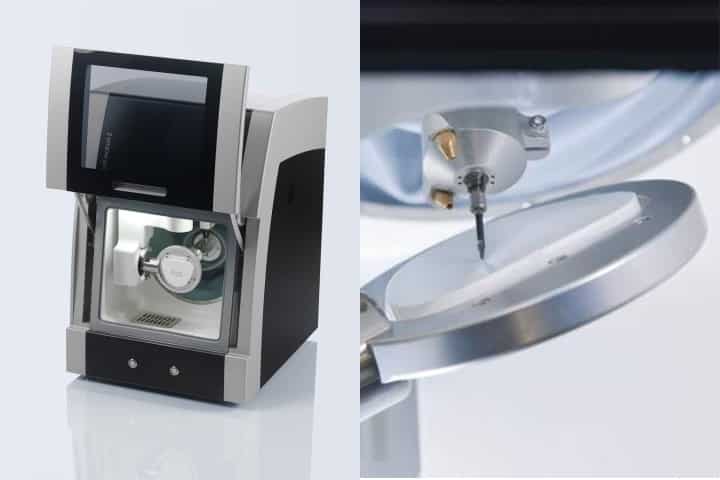
See also a clinical case of a single-tooth implant with CAD/CAM zirconia crowns, featuring the treatment steps performed at the ImplArt Clinic.
4. Natural appearance and metal-free crowns
Dental zirconia offers options for color and translucency. In a zirconia crown on an implant, the choice of material aims to balance strength and aesthetics, even without a metal framework in the crown. The degree of translucency and strength vary depending on the material’s formulation, which is why indications must be tailored to each individual case.
Want to learn about the differences between the models?
Our dedicated page explains the difference between pure zirconia and zirconia with porcelain overlay. Here, the focus is on the relationship between strength, chewing function, and scientific research.
How does scientific research relate to the quality of ImplArt Clinic?
What sets Dr. Roberto Markarian, DDS, PhD—who holds a master’s degree in Dental Prosthetics from USP and a doctorate in Implant Dentistry—apart is his ability to combine clinical experience with research into the mechanisms that influence implants and prostheses. His career path was not limited to his master’s degree: he also participated in research on the fit and strength of CAD/CAM prosthetic components, and in 2026, he co-authored the chapter “Artificial Intelligence in Prosthodontics,” published by Springer Nature.
At ImplArt, this scientific background is complemented by a facility featuring its own radiology center and digital laboratory, TRIOS intraoral scanning, and CAD/CAM production systems. The integration of diagnosis, planning, surgery, and prosthetics facilitates communication between these stages and the monitoring of necessary adjustments.
With more than 12,000 dental implants placed, Dr. Roberto’s clinical experience is complemented by ongoing scientific education, careful selection of materials, and care for patients from Brazil and abroad. These are concrete distinctions in terms of infrastructure and training; they do not, in and of themselves, represent a measurable success rate or a guarantee of results.
A choice grounded in science, not just in appearance
At ImplArt, we recommend CAD/CAM-fabricated zirconia crowns on implants for many restorations because we value their high strength, aesthetics, and the possibilities for high-precision digital fabrication. Dr. Roberto’s scientific training in biomechanics ensures that this choice is integrated into the analysis of the bite and prosthetic planning—not presented as an automatic solution for all cases.
Learn more about our in-house digital lab and our page on dental implant planning.
Frequently Asked Questions About Zirconia Crowns and Chewing
Can a zirconia crown on an implant break?
Yes. Although it is a highly resistant material, a zirconia crown on an implant is not indestructible. A fracture or other complication may occur, for example, due to overloading, inadequate thickness, accidents, or the specific characteristics of the case. Proper placement and follow-up remain essential.
Is a zirconia crown on an implant better than a resin crown?
At ImplArt, CAD/CAM zirconia is preferred in many permanent restorations due to its strength, color stability, and aesthetic possibilities. Resin has other applications, primarily in temporary stages, such as prototypes. The comparison should take into account the type of prosthesis and the treatment objective.
What is a monolithic zirconia crown?
It is a crown made predominantly from a single zirconia structure, often milled using CAD/CAM technology. The absence of a thick porcelain veneer layer reduces certain risks of chipping, depending on the clinical indication.
Does a softer crown better absorb forces from the implant?
Not necessarily. In the photoelastic experiment presented by Markarian et al. in 2004, materials of different stiffnesses produced similar stress patterns under axial loads of 50 and 100 N. This result should not be automatically extended to all clinical conditions.
Can patients with bruxism use a zirconia crown on an implant?
Yes. In cases of bruxism, a monolithic zirconia crown is usually the most appropriate option due to its high strength, following an individualized evaluation. Bruxism can increase the risk of mechanical complications, and treatment planning may include bite contact adjustments, modifications, maintenance, and protective measures as needed.
Does ImplArt’s in-house digital lab make a difference?
It allows for the integration of the scanning, design, fabrication, and verification stages within the same clinical-prosthetic workflow. The final quality depends on the equipment, materials, work protocols, and the assessment of the professionals involved.
Scientific Research and References
- Markarian RA. Biomechanics of load transmission to single-tooth implants as a function of prosthetic materials—photoelastic and dynamic analysis. Master’s Thesis in Dental Prosthetics. School of Dentistry, University of São Paulo (USP); 2005. Author’s academic record.
- Markarian RA, Sendyk CL, Lima RG, Souza RM. Biomechanics of stress transmission to implants as a function of prosthetic crown stiffness—photoelastic analysis. Brazilian Oral Research. 2004;18(suppl.), abstract Pb333. Read the original scientific abstract.
- German Clinical Guideline (DGI/DGZMK). German S3 guideline on implant-supported all-ceramic restorations. 2025. View scientific guideline.
- Systematic review. Monolithic zirconia as a valid alternative to metal-ceramic for implant-supported single crowns in the posterior region. 2023. View on PubMed.
- Springer Nature. Artificial Intelligence in Prosthodontics. Co-authored by Dr. Roberto Markarian. 2026. View the scientific chapter.
Transparency note: The detailed description of the 50- and 100-N experiments in this article is based on scientific abstract Pb333, published in 2004. The clinical discussion on zirconia draws on literature published after the master’s thesis and is independent of that research.
Scientific Knowledge and High Technology at ImplArt Clinic
For those considering a zirconia crown on an implant, Dr. Roberto Markarian and the ImplArt team evaluate each case to recommend materials and solutions tailored to the patient’s functional and aesthetic needs. The clinic is located in the Avenida Paulista area of São Paulo and welcomes patients from Brazil and abroad.
Schedule an evaluation via WhatsAppMeet Dr. RobertoImplArt Clinic – Dental Implants · Rua Cincinato Braga, 37 – Suite 112 – Bela Vista, São Paulo – SP, 01333-011 · (11) 3262-4750
What our patients say about ImplArt Clinic
“After many years of suffering from dental problems and searching for a solution, at age 68 I regained my joy, my confidence to smile, and all my energy.”
“It’s rare to find a place where technical excellence goes hand in hand with such care and respect for the patient.”
João Souza Excerpts from Google reviews
Learn more about the treatments offered by ImplArt Clinic
To learn more about the treatments offered by ImplArt Clinic – Dental Implants , check out our photos, videos, and content on social media.
ImplArt Clinic—Dental Implants is located in São Paulo, in the Paulista Avenue area , and welcomes patients from around the world seeking its clinical expertise, specialized knowledge (know-how), and modern technologies in Implant Dentistry, Dental Prosthetics, and Oral Rehabilitation.
In various editions of the international GCR (Global Clinic Rating) ranking , ImplArt Clinic has been recognized among the highest-ranked Brazilian dental clinics, including in the 2026 edition. This track record reinforces its legacy in Implant Dentistry and Digital Dentistry.


Dr. Roberto Markarian, implantologist
Director of ImplArt Clinic – Dental Implants · Implant Dentistry · Dental Prosthetics · Digital Dentistry
Dr. Roberto Markarian, PhD
Founder and Director of ImplArt Clinic – Dental Implants . – Dr. Roberto’s LinkedIn profile
Dr. Roberto Markarian is an implant dentist and researcher practicing in São Paulo. His practice focuses on dental implants and computer-aided dental prosthetics in Brazil.
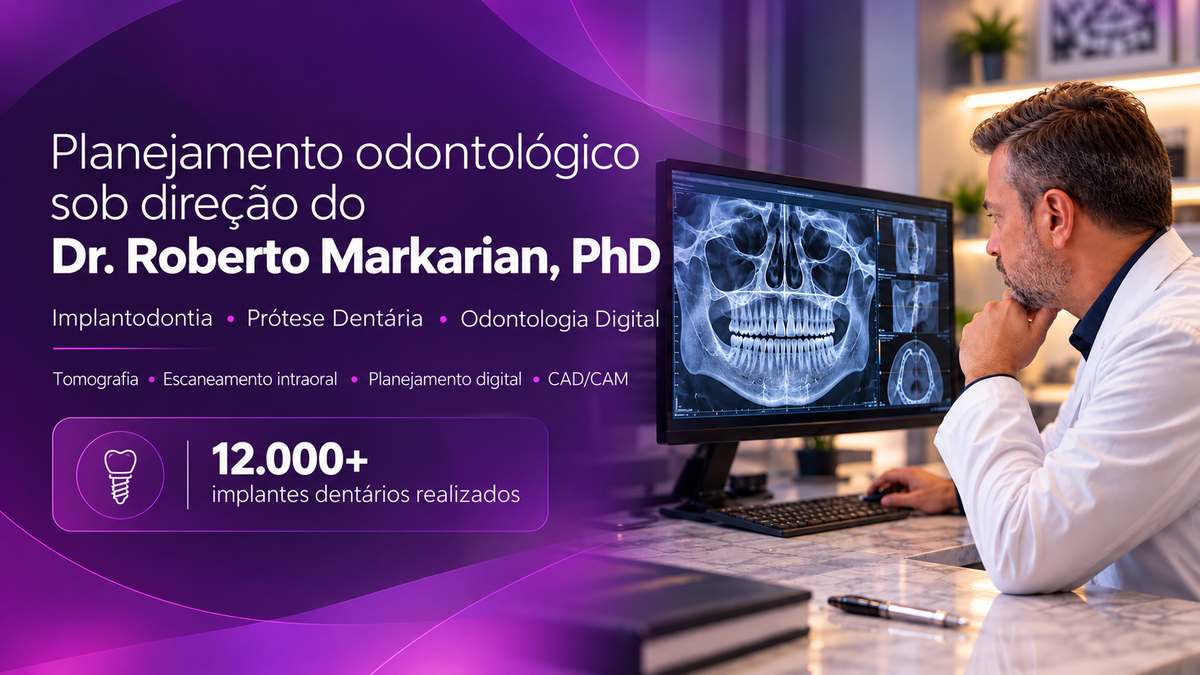
In addition to having experience with over 12,000 implants placed , he conducts scientific research with international reach, with papers published in scientific journals and books in the field of dentistry . He is responsible for promoting knowledge and cutting-edge technology applied to all treatments offered by Clínica ImplArt – Dental Implants .
Dr. Roberto Markarian contributed to an internationally renowned publication featuring cutting-edge research on the use of Artificial Intelligence in the production of Dental Prosthetics , in the chapter “Artificial Intelligence in Prosthodontics , ” published by Springer Nature / Springer , Cham, in the book *Dental Clinical Procedures using Artificial Intelligence*.
Leave a Reply